 My wife has always told me that every patient getting medical treatment needs an advocate to speak up on their behalf with health care professionals.
Paula has been a great advocate for me in the past when I had some major surgeries.
However, we discovered on Christmas night that the COVID pandemic has thrown up walls that prevent people from advocating for a loved one.
Let me start at the beginning.
About 7 p.m. Christmas night, Paula received a phone call from some close friends of her mother in western Oklahoma. Mother-in-law, as I will call her, was sitting down to eat Christmas dinner with her friends when she began having an apparent severe medical issue.
It might have been a heart issue or perhaps gall bladder or an infection of some sort. A nurse who was at the dinner checked her vital signs and was concerned.
Ultimately, an ambulance was called and mother-in-law as transported to a hospital in Weatherford.
After receiving the call, Paula immediately threw some clothes in a bag and drove to Weatherford. She knows that her mother often is anxious and confused during a medical crisis, and unlikely to share critical information about meds she is taking or where she has traveled recently.
So, Paula arrived at the hospital and immediately went to the emergency room waiting area ready to share what she considered important information. Her mother routinely takes several ongoing medications that might be an underlying cause to her distress.
The ER gatekeeper told her she could not go back to visit with health care staff because of COVID protocols. That was expected.
However, the anti-advocacy wall grew even higher and more unrelenting when Paula asked if a physician or nurse could come out to the lobby so she could share critical information.
The answer was ‘no,’ because they were all too busy.
“I said ‘I have information that you need that my mother is not going to tell you or give you,’ Paula told me as she recalled the confrontation. ‘The (gatekeeper) said ‘oh, the doctor’s real good at knowing patients are holding things back.’ “
Paula’s pleas to advocate for her mom fell on deaf ears. Eventually, she got in her car and drove back to Edmond.
Fast forward about five hours. Paula was back at the Weatherford ER to pick up her mother after the hospital called and informed her that her mom was being dismissed.
As Paula walked in to the ER, the gatekeeper saw that she brought clothes for her mom to change into.
“She said, ‘come on back’ and opened the door,” Paula said. “I just stopped and said ‘you’ve got to be kidding me. You wouldn’t let me come back here when she was admitted to give you information, yet you want me to go back there now? Am I all of a sudden not contagious?’ “
“We’re just following the COVID protocols.”
Paula translated the real meaning.
“The COVID protocol is ‘we don’t want you in the way when we have our patients back here, so we are using that to keep you out.’
“I didn’t have a problem in the world standing in the lobby and having a nurse come out and ask me ‘what do you want us to know that you think is important,’ and I would have been on my way and happy.”
Instead, a long night of frustration finally ended when Paula and her mom arrived at her family’s farm near Hammon about 4:15 am.
As Paula reviewed the information the hospital printed out when her mom was dismissed, she read the section that lists medications patient is taking.
It said ‘none.’
The wall had done its job filtering out critical information.

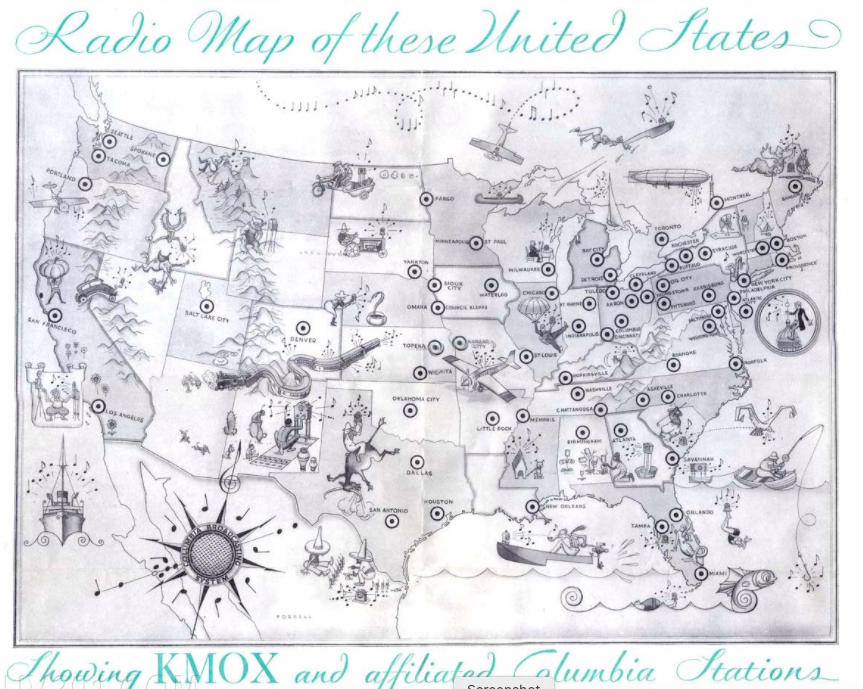 I was driving in eastern Oklahoma way back in the early 1990s when my wife had enough. “Turn off that static!” she demanded.
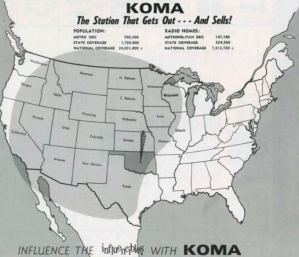 It wasn’t only the distant sports stations that I tuned into as a teenager. WLS in Chicago was my go-to station to listen to the latest Top 40 hits.
 I like to say that Oklahoma’s life science cluster stretches from Ardmore in the south through Oklahoma City to Stillwater, to Tulsa and on to Ponca City in the north.
 MaxQ was founded by a team of then-Oklahoma State University students in 2012, and has since gained equity investment led by i2E, along with grant funding from the National Science Foundation. Saravan Kumar is MaxQ’s CEO.
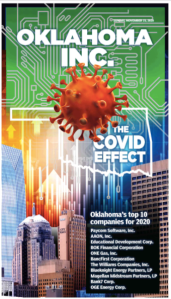 If you’re not familiar with it, Oklahoma Inc. ranks all 28 public companies in our state based on three key categories: one-year return to shareholders, revenue growth and earnings per share growth.


 Huge exhale.
 Jim Stafford's BlogOKC