The opportunity cost of a new OKC Thunder arena

Paycom wide
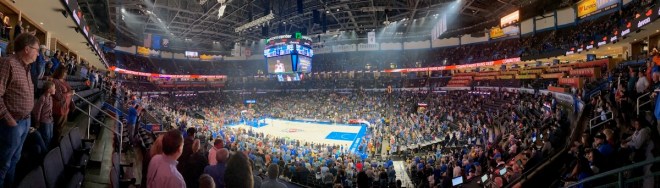
A wide shot of Paycom Center during a Thunder game early this past season.

I admit that I was caught off guard when Oklahoma City Mayor David Holt alerted us to impending negotiations with the NBA Thunder about a new arena.

I shouldn’t have been.

The NBA and its franchises can be incredibly demanding of hosts cities as far as facilities they use. Here’s a list of every NBA arena and the years they were built. 

In Holt’s book, “Big League City,” written in the afterglow of the Thunder franchise relocating to OKC, he talks about how critical a $120 million arena improvement special tax package was to that decision.

But that was 14 years ago, and there’s been a lot of Thunder games under the bridge, so to speak. I never gave the length of their lease agreement a second thought.

So, last week’s announcement came as both a surprise and a disappointment. Seems like Paycom Center was built only yesterday, but turns out it is already 20 years old.  Arenas must age in dog years.

After my initial anger subsided, I’ve come to accept the reality that OKC — and Thunder fans like me — find themselves in.

For all sorts of reasons — amenities, size, not built specifically for the NBA, perceived second-rateness — the city must build the Thunder a new arena within the next decade.

A new showcase arena will set us back at least a half billion dollars, if not much more.

Consider that American Airlines Arena in Dallas was built in 2001 at a cost of $420 million (and the Mavericks already are pushing for a new arena). How high will inflation drive the cost past that?

Holt’s job now becomes that of selling OKC residents on another special financing package, whether it’s part of a new MAPS deal or a special sales tax like that passed in 2008. I hope the city can negotiate a deal that requires the Thunder to share some of that cost.

But I’m not holding my breath.

paycom1
Paycom Center exterior (Oklahoman photo)

It’s not a scenario I’m rushing out to embrace, but I do see the reality of the OKC’s situation. Remember what happened to Seattle when that city refused to build a new arena to the Sonics’ specifications?

Thank you very much, Seattle.

And you know there are cities all over the nation that would jump at the chance to claim our franchise as their own and build it a billion dollar Taj Mahal.

Find out more about the perceived need for a new arena from this column by Berry Tramel published in Sunday’s Oklahoman.  Berry, like some other folks I know, speaks of Paycom Center as if it’s a tarpaper shack.

Anyway, I got a glimpse this morning of what Holt is up against in convincing voters to accept a new arena. I was at church chopping up the arena prospects with a friend when someone overheard us and wanted to know the topic.

We told him we were discussing the prospects of a new arena for the OKC Thunder.

“What?” he asked. “No way. Paycom is how many years old? No way will that happen.”

And this guy is the former CEO of an OKC-based company with two college-age kids. He’s not even in the demographic that I see as most opposed to a new arena.

So that brings me to the real purpose of this blog post. Who will be most opposed and who will support the new arena? I’m weighing in with my totally non-scientific observations.

I’ll start with those I see as most likely to oppose a new arena built by OKC for the Thunder:

First, it’s people in my demographic who are over the age of 65. Or what I call the get-off-my-lawn crowd. That includes many people who live in suburban areas of the city and have never attended a Thunder game. These folks poo-poo’d the whole MAPS initiative beginning back in the early ’90s and continue to disparage it today. Apparently, they were fine with our downtown the way it was in 1989 because they never went down there. And remember, statistics show that older citizens are far more likely to show up at the voting booth whenever a new arena hits the ballot.

Second, up-and-coming young people from the urban core who are focused on social issues. They are asking ‘why would we spend half a billion dollars or more on an arena for a professional sports team while we ignore the plight of hundreds of our citizens who are without shelter, food, sanitation and health care?’ That’s a legitimate and tough question to answer .

Third, people who recognize the opportunity costs of building a new arena. If we pour half a billion dollars (or more) into a new arena, we’re limiting the potential of other legitimate economic development drivers in our community. On Facebook, one pundit cited articles that show publicly built sports arenas don’t return the promised economic impact. Another example I saw: If we tear down the old Cox Center to build a new arena, our best facility as a set location for the film industry disappears. And that’s an industry just now gaining some real momentum in Oklahoma.

So, who supports a new arena?

The first group is pretty easy. They’re the 30-year-old Thunder fans who obsess over the team’s tanking philosophy, where the Thunder will end up in the draft lottery each year and over-analyze who will be the team’s next pick. Naturally, they will support a new arena because they are offended that our players have to play home games in an obvious shanty like Paycom Center. HAVE YOU NOT SEEN CHASE CENTER IN SAN FRANCISCO? But this is a pretty small voting block, all in all.

I see the second group as led by Oklahoma City business and community leaders who endured the OKC of the 1980s and enjoy what the city has become in 2022. They can point to both the MAPS projects and the arrival of the Thunder as critical elements to turning our city from eyesore into a showcase. If we refuse to build a new arena, there’s a risk that the team could be sold and relocated to one of dozens of cities salivating for the opportunity to become their own Big League City. And we turn back the clock on two decades of economic development. I believe this is a sizable, influential voting block.

Finally, I see the third group of supporters as being that large block of Thunder fans and season ticket holders. The NBA season has become as much a part of their lives as going to church on a Sunday or taking the kids to school. It’s what they do. They schedule their lives around the Thunder season, whether it’s watching the games on TV or driving down to Paycom Center 41 times a season. There’s a legion of loyal Thunder fans whom I believe will be a major source of support for a new arena.

Mayor David Holt and OKC civic leaders have a big job ahead to gain majority support of a new arena. I don’t envy you.

But as I told my friend Steve Buck last week, I’ll grit my teeth and support a new arena, because that’s our only real option.

Let’s not risk taking OKC back to the 1980s.

paycom2

The ‘first’ video game, Pong turns 50 this summer

Atari logo screenSomewhere in the early 1970s, I stumbled upon a video game called “Pong,” and was immediately infatuated. I couldn’t get enough, playing the game against my cousin on an old black and white television.

If you remember Pong, you know it was a simple game that featured two paddles and a sort of ball-like squarish blip that made a cool sound when it connected with the paddle. You connected Pong to your television and used simple controls to move the paddles to return the “ball” to your competitor in a crude table tennis simulation.

That’s all Pong could do, but the world had really never seen a game like this that could be played on your TV. Pong even kept score for you at the top of the screen.

Pong screenTurns out, Pong is hailed as the world’s first video game and it was released 50 years ago this summer. It was created by a young inventor and entrepreneur named Nolan Bushnell, who founded Atari to market Pong and other games.

I recently saw a Q&A published with Bushnell on the Daring Fireball website. The Q&A caught my eye because I had the opportunity to interview Bushnell during an appearance at the Oklahoma History Center in 2006.

Click here to read the story I wrote for The Oklahoman from that event. 

Anyway, Atari became a huge hit after it licensed Pong to Sears and the national retailer sold 150,000 units of the game. That led to other popular Atari games.

Bushnell eventually sold Atari in 1976 to Warner Communications for a reported $28 million.

Pong was such a ground-breaking innovation that today Bushnell is known as the “Father of the Video Game” and was named to Newsweek magazine’s list of “50 Men Who Changed America.”

Bushnell
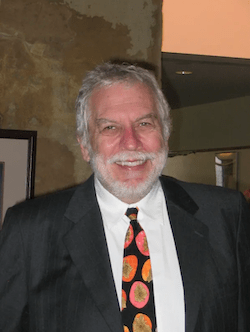
Nolan Bushnell in 2006 (Oklahoman photo)

In his Oklahoma City appearance back in 2006, Bushnell talked about how Pong was created and designed on the circuit board to do only one thing.

“What I did was create the video game out of digital building blocks,” Bushnell said. “But it was architected in such a way that this board was designed to play Pong and that was all that it would ever do.”

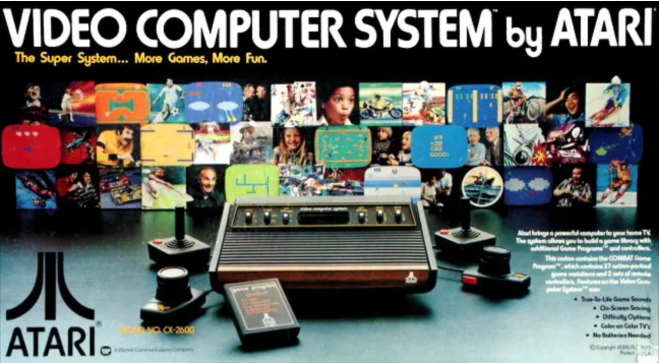
Atari released many other game titles, including Breakout and Combat, after its success with Pong and eventually produced a popular personal computer. The Atari 2600 game console is considered one of the most successful game platforms in history.

An aside: I’m also a Steve Jobs fan, and discovered a connection between Jobs and Bushnell from reading the Walter Isaacson biography of Jobs published in 2011. Bushnell hired a 19-year-old Steve Jobs to work at Atari to develop another game known as “Breakout.” Read more on the Bushnell-Jobs relationship here. 

So, Nolan Bushnell created Pong, founded Atari and single-handedly launched a multi-billion dollar industry. But I can’t forgive him for one thing.

He also founded the Chuck E. Cheese restaurant chain.

BONUS:  Read this fascinating Wired magazine story about the creation of Pong and how Bushnell scammed a young software engineer to come to work for him to make the game a reality. https://www.wired.com/story/inside-story-of-pong-excerpt/

Atari system

The Thunder Way sets the NBA gold standard

Thunder presser
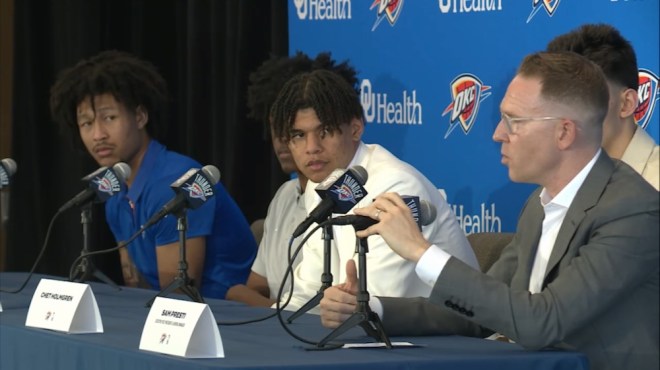
Thunder GM Sam Presti introduces the team’s 2022 draft class to the OKC community as the players listen.

I‘m not sure how other NBA teams welcome new talent to their community, but the OKC Thunder way may be the gold standard.

On Saturday, the Thunder welcomed their four 2022 draftees to Oklahoma City with a special press conference at the Clara Luper Center just west of downtown.

The event was streamed on the Thunder app, so we all had a chance to watch it. And it was an intriguing hour that provided some insight into the team’s new players — Chet Holmgren, Ousmane Dieng, Jalen Williams and Jaylin Williams.

Paula Daigneault
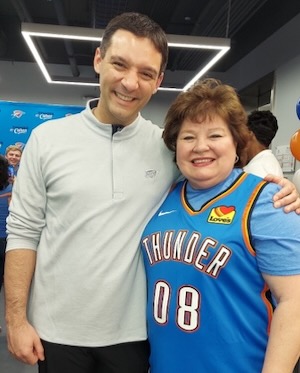
Thunder coach Mark Daigneault and Paula Stafford at introductory press conference

But for me, it afforded an opportunity to see and hear Sam Presti describe what he saw in each player well before the draft that ultimately brought them to the team.

It’s obvious that Presti pours a huge amount energy in learning all he can about the players, their personalities and their families, in addition to assessing their level of talent.

I loved the way he described watching the players in various settings months or years before the moment their names were announced. 

And how he uses locations of historical significance to introduce new players to the community.

All of that’s probably the reason broadcaster Dan Patrick described Presti last year as “the best GM the NBA has seen in a long, long time.”

I agree with that assessment, even if I’ve complained about every inch of the Thunder’s tanking strategy over the past couple of years. I don’t think that playing to lose is fair to their fans, players or corporate sponsors.

But that’s just me.

Thunder capFolks like my friend Steve Buck are all in on losing on purpose because they say the end justifies the means. I’m just hoping the NBA will come up with a way to nullify tanking as a strategy.

Anyway, I thought the press conference was a huge success, and the players said all the right things, as did Presti.

I also had a secondary reason for watching the Thunder introductory press conference. My wife, Paula, was invited to attend as a “community draftee” by the Thunder through her role as an employee of NAMI Oklahoma.

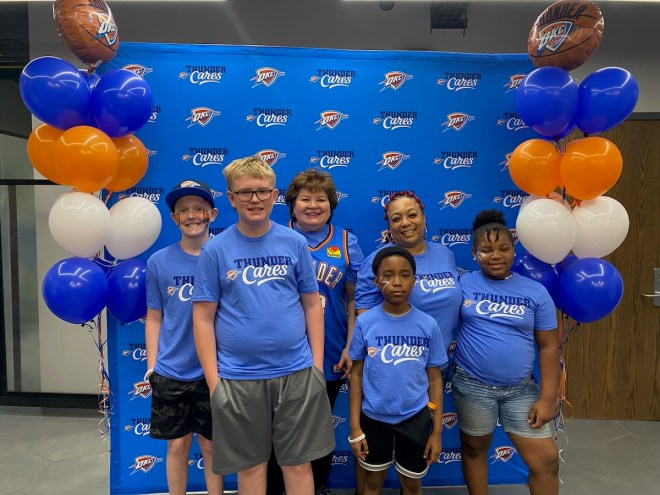
She sat on the front row during the press conference, and had the opportunity to meet Thunder coach Mark Daigneault and the new players. And Steve Buck’s middle school-age boys went with her, so it was a win-win-win for everybody.

“It was an awesome experience,” she said. “I gained a whole new respect for Coach Daigneault and for the way the Thunder introduce their players to the community. It was a great event.”

Paula group
The NAMI Oklahoma “community draft picks” that attended the Thunder news conference on Saturday.

When a line was drawn on the price of gas

gas prices
The sign shows gas prices at the OnCue at Western Ave. and Edmond Road on Tuesday morning.

As I fueled up my vehicle the other day with unleaded gas priced at the bargain price of $4.57.9 a gallon, it stirred a memory that I clearly recalled from 1973.

Gas prices were suddenly rising in the early ’70s when I heard an angry young man defiantly declare the line he was drawing in the sand.  It was in a time when Americans had been comfortable for years paying 30, 40, 50 cents a gallon.  

“I’ll never pay $1 for a gallon of gas,” he said.

So, how did that work out for you, fella?

I was living in Western Arkansas at the time, two years out of high school. A Sunday afternoon of what I will call sandlot football brought me into contact with a dozen or so local yahoos.

Somehow, the topic of the Arab oil embargo and gas prices became the focus of discussion among the group, when one guy defiantly declared what he would never pay for a gallon of gasoline.

Nearly 50 years later, I can still clearly hear his defiant tone and how I wondered at the time how a young man living in small town Arkansas could be so delusional. 

Would he beat the $1 gas price by purchasing fuel with a gun? Hunting down robber barons in the oil industry? Committing suicide just before the price crossed over the $1 rainbow from $.99.9?

Turns out, gas prices topped $1 a gallon not too many months after the bravado that I heard on that Sunday afternoon.

So, nearly half a century later, we find ourselves in another situation where gasoline prices are setting all-time highs. I’m not assigning blame like I read from so many who think President Biden should just pull a lever and prices will fall back to $1 and some change.

In today’s world, we’re at the mercy of Putin’s war, limited refining capacity, and, well, the robber barons who control the flow.

I will say this. Climbing fuel prices are a great incentive to get people to try public transportation.  Or electric vehicles.

Surely, in 2022 there’s no one foolish enough to declare that he will “never pay, uh, $6? $7?, for a gallon of gas.”

It could happen tomorrow.

Dr. Charlie Marler & the divine coincidence

marler office
Portrait of Dr. Charlie Marler in his office/ACU photo

I was sitting in a pew in the next-to-last row at Oklahoma City’s Quail Springs Church of Christ one Sunday in 1991 when someone tapped me on the shoulder.

I glanced back and almost fell out of the pew.

Sitting directly behind me was Dr. Charlie Marler, my favorite professor from my days as a student at Abilene Christian University. Dr. Marler taught most of the journalism courses I took at ACU and led the university’s journalism and mass communications program for many years.

Turns out, Dr. Marler was traveling through the state that Sunday morning and randomly decided to attend the Quail service. Quail was a large church, but somehow he ended up sitting directly behind me.

I took it as divine coincidence.

I had only been attending at Quail for about a year and had begun dating the woman who would become my wife, Paula Bottom. She was sitting next to me at that service, so I introduced her to Dr. Marler.

“Oh, you need to stay away from this guy,” he said with a smile.

I was at Quail because of the influence of Dr. Charlie Marler. Not only did he help guide me and motivate me to stay the course to graduation at ACU, he also modeled a life of faith for me that led me to Quail Springs church decades later.

I grew up in a church tradition different but similar to the Church of Christ, and had always been a religion skeptic. I’m not a smart man, but I always wondered why there were no professionals — no doctors or lawyers or college professors — in our little church growing up.

We had plenty of blue collar people who worked with their hands, and we were proud of it.

Anyway, Dr. Marler showed me that you could be highly educated and still have faith in a God of the universe. Years later, I recalled Dr. Marler’s faith when a friend invited me to Quail.

I attended the church reluctantly, but slowly came to accept the faith myself.

Along the way, I met Paula, we married and have been members of the Quail Springs church — now known as The Springs Church of Christ — ever since.

So, when Dr. Marler passed away late in May, it was a very personal loss to me even though I saw him only on rare occasions over the last 40 years or so.

I’m writing this to share how one life was influenced by his academic guidance, gentle patience and faith.

My college career at ACU also was a divine coincidence, I guess.

I wasn’t recruited to ACU in the 1970s. I wasn’t recruited by any college. Poor academic record. Poor study habits. Little involvement in my high school community.

But I had a dream. I wanted to go to college and study journalism. I wanted to be a sportswriter. I aspired to be Blackie Sherrod of the Dallas Morning News.

Somehow, life’s circumstances led me to Abilene, Texas, in the Spring of 1976. So, I sort of turned up on ACU’s doorstep with 30 hours at community college to my credit.

That twist of fate brought me into Dr. Marler’s sphere of influence for the next two-and-a-half years. I recall his teaching style with fondness because he seemed to involve everyone in each class but never singled anyone out for embarrassment.

He was notorious for marking up papers I wrote and articles I attempted for ACU’s student newspaper, The Optimist, with his red editing pen. Every ACU journalism student was subjected to the red editing pen .

Optimist3
Me (front row, right) with colleagues from The Optimist in 1978

However, that red pen helped shape my writing style, and I slowly grew in confidence and ability.

And he talked about how Christians could — and should — work in newsrooms, keeping the faith while pursuing careers in a secular world.

It took years for the message to really sink in, but it finally hit home with the skeptic that I am.

Thanks to Dr. Marler, I had a 30-year newspaper career, and a decade-plus beyond that in the marketing office of a company.

Now, multiply the influence that Dr. Marler had on my life and career with thousands of other students over his 50-plus year academic career. That’s why he was a towering figure in journalism education and the Christian faith.

There is so much more to his story — read ACU’s wonderful tribute to him here — but this was the part of his life that touched mine.

The deal was finally sealed, you might say, when Dr. Marler tapped me on the shoulder at a random Sunday church service in Oklahoma City.

A divine coincidence.

It’s NOT your 19th nervous breakdown

NAMI Walk1
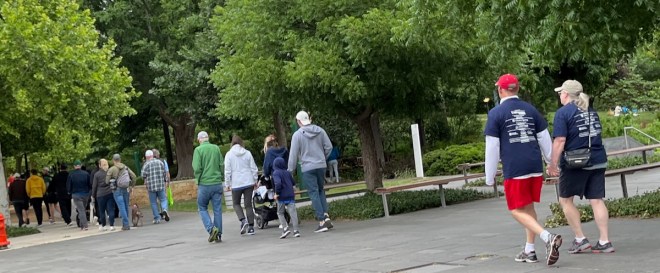
Walkers begin their trek around the Myriad Gardens this morning in the annual NAMI Walks event

‘You better stop, look around
Here it comes, here it comes, here it comes, here it comes
Here comes your nineteenth nervous breakdown…’

— 19th Nervous Breakdown, the Rolling Stones

When I was a kid, I don’t recall anyone around me described as suffering from a mental illness. But I do recall plenty of discussion about little old ladies at my Grandmother’s church or my aunt having a “nervous breakdown.”

I didn’t know what it was, but I assumed it was awful.

Fast forward 60 years or so. Now I realize that my aunt or those little old ladies from the church actually suffered from some form of mental illness.

It’s just that back in those days there was such a stigma about mental illness that no one would ever admit it. Depression, anxiety, bipolar disease or even Schizophrenia were topics that were never discussed in polite company.

Here’s how the Mayo Clinic describes a ‘nervous breakdown:’

‘The term “nervous breakdown” is sometimes used by people to describe a stressful situation in which they’re temporarily unable to function normally in day-to-day life. It’s commonly understood to occur when life’s demands become physically and emotionally overwhelming. The term was frequently used in the past to cover a variety of mental disorders, but it’s no longer used by mental health professionals today.’

Today, my eyes are open.

Every family — mine included — likely has first hand experience with some form of mental illness. I long ago decided that it’s my job to support my loved ones who suffer from mental illness, try to get them professional help and not make rash judgments or punish them for what’s out of their control.

I say all of that because today was the annual NAMI Walks Your Way event down at the Myriad Gardens. It went off without a hitch amid unseasonably cool weather but with no rain to hamper the program or the walkers.

NAMI Walk 3

The important thing about the NAMI Walks event is that it is designed not only to raise money to support the efforts of NAMI Oklahoma — the National Alliance on Mental Illness — but to help end the stigma of mental illness.

When one out of every five people in our society endures their own personal battle with mental illness, It’s important that we be upfront about the illness and support those afflicted in tangible ways.

It’s more than a nervous breakdown, even if we didn’t know what to call it back in 1962.

Thank you, NAMI, for shining a light.

(Full disclosure: my wife, Paula, is employed by NAMI Oklahoma, which introduced me to the NAMI Walks Your Way event and its purpose)

NAMI Walk2

Oklahoma legends and a spelling disaster

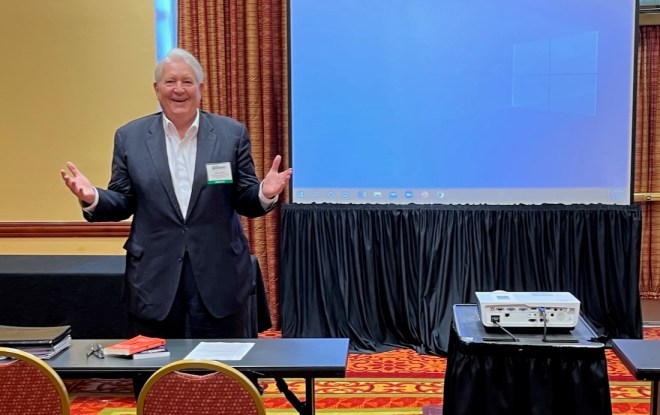
Mike Turpen before leading an educational session at a convention last week in Norman.

Life can take a surreal turn at times. Like this: One day almost two decades ago, I was standing outside a wireless telephone store across from Penn Square Mall when a big black limousine pulled up.

A door opened and I hopped in, where I was greeted by former OU football coach Barry Switzer. The King himself.

I am not making this up.

Turns out, I was the technology reporter at The Oklahoman at the time.  My editor asked me to accompany Switzer as he surprised the lucky winner of a prize offered as a promotional special by the wireless telephone company.

As I sat in the seat next to Coach Switzer, he began to ask me what I did at the paper, about my family and where I grew up. When I said “Arkansas,” he reacted as though he had just found a long-lost relative.

You probably know that Switzer is an Arkansas native, the son of a bootlegger. He’s also friendly, conversational and full of stories.

We had a great time as we rode to Midwest City to pick up the winner. Switzer told me stories from his life in Arkansas and people he knew from Fort Smith, which is my hometown.

By the time the assignment was over, I felt I had known Barry Switzer for years. It was like saying goodbye to a favorite uncle as I got out of the limo.

I’ve written all of that because I met another Oklahoma legend with a big personality this past week, and it felt like deja vu all over again. 

My friend Steve Buck asked me to serve as a room monitor in Norman at the spring convention of the organization he leads.

As I was stationed outside the door to my assigned room before the workshop began, I turned and found myself face to face to Mike Turpen.

If you’ve lived in Oklahoma any time at all, you know Turpen is long-time co-host of the Flashpoint issue/debate show on KFOR in OKC. He is also a former Oklahoma Attorney General and chairman of the Oklahoma Democratic Party.

“I’m the last Democrat in Oklahoma,” Turpen joked after we introduced ourselves.

As Switzer had done years ago, Turpen wanted to know about where I worked and what I had done for a career, where I was from, who my wife was and what she did. Her name is Paula, I said, and she was a school principal before retiring and now works for a non-profit organization.

“Oh, she’s famous,” he said.

I laughed. My wife later told me she’s certain she has never met Turpen.

As we stood talking in the hallway of the convention center, Turpen opened his briefcase and handed me a little booklet he has written. It is entitled “10 Qualities for Survival and Success in the New Millennium.”

I admitted to him that I had misspelled his name in the paper years ago. He brushed it off as no problem.

Turpen was a presenter at one of the workshops at the convention, so he headed to his assigned room, which was just down the hall from mine.

“May I come in and take your picture,” I asked?

“Sure,” he replied. “Just email me a copy.”

So, I took the photo that is at the top of this page and later sent him a copy from my iPhone.

“Hello Mr. Turpen” I wrote with my thumb as a greeting before spell-correct on my phone got ahold of it.

It came out “Hello Mr. Turpentine.”  I failed to self-edit and hit “send.”

Turpen later sent me a “thank you” for the photo. He didn’t mention that I had misspelled his name AGAIN.

However, I quickly sent him an apology.

I got it right the third time.

Fun at the ol’ ballyard with game on the clock

Altuve
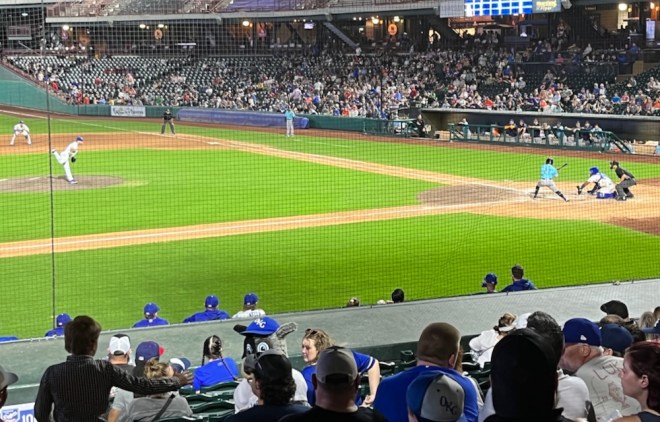
That’s Houston Astros star Jose´ Altuve batting for Sugar Land against the OKC Dodgers on Friday night.

I saw something Friday evening at an Oklahoma City Dodgers game at Chickasaw Bricktown Ballpark that I’ve never witnessed before: A 9-inning professional baseball game played in 2 hours and 14 minutes.

And it was a fun, action-filled game between the Dodgers and the Sugar Land Space Cowboys that was won by OKC 3-2.

Thanks to new rules that mandate no more than 14 seconds between pitches — 18 if runners are on base — the game moved incredibly fast.

There seemed to be no complaints by players or managers over the mandated fast pace. However, there appeared to be a Sugar Land player called out at one point because he wasn’t ready for the pitch in time.

I was able to witness the Dodgers game thanks to my friend Steve Buck and two of his children. Steve had an extra ticket and invited me at the last minute.

Bucks
Steve Buck, along with Kenzy and Isaiah Buck at the Dodgers game Friday.

We had a blast and got to see the most exciting play in baseball — a triple — hit by Dodgers outfielder Drew Avans. The next time up Avans surprised the Space Cowboys by laying down a bunt and getting an easy single out of it.

We saw OKC’s Jake Lamb hit a 2-run home run in the third inning. We saw future baseball hall of famer José Altuve bat for Sugar Land on a rehab assignment. Altuve got a couple of singles, but also was called out on strikes.

Steve and I began to notice the incredible pace of the game after about three innings, which had taken maybe 40 minutes of playing time. We were headed into the fifth when the game reached an hour of playing time.

We saw three OKC pitchers hold Sugar Land to only single runs in the fifth and sixth innings, and nothing more. Then we watched Sugar Land’s Zac Rosscup shut down the Dodgers over the last 1.2 inning and noted that Rosscup has not given up a single run this season over 9 innings. Nothing but zeros.

We celebrated the seventh inning stretch by singing badly, then Googling the history of the seventh inning stretch because we wanted to know how it started. If you must know, it was started by President William Howard Taft at a game in Pittsburgh in 1910.

You can look it up yourself.

Even though we were tracking the swift pace of the game, the final three outs came so quickly in the 9th it caught us by surprise. We headed to our cars at 9:19 pm on a game that started at 7:05.

I can’t tell you how many times I’ve sat through games that started at 7:05 and by 10 pm were only in the 7th or 8th innings.

It was a refreshing change, and appears to be more than a short-term trend.

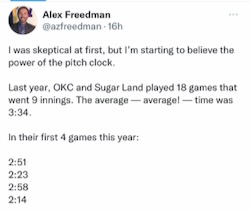
FreedmanFor reference, here’s an article I found that shows just how much the pitch clock has impacted the length of games throughout the minor leagues.

Dodgers radio announcer and communications director Alex Freedman later tweeted that the Dodgers and Sugar Land games averaged — AVERAGED — 3 hours and 34 minutes last year. So far this year, the first five games have gone 2:51, 2:23, 2:58, 2:14 and 2:32.

Big difference.

I’m hoping that Major League Baseball will embrace the pitch clock ASAP.

Average time of MLB games this year so far: 3:07.

Cattlemen’s: A birthday tradition like no other

cattlemens sidewalk
A sidewalk selfie outside of Cattlemen’s Steakhouse on the occasion of my birthday.

“Nobody goes there anymore. It’s too crowded.”

This quote is attributed to baseball Hall of Famer Yogi Berra after he was once asked about eating at a famous restaurant in New York City.

Yogi could have been speaking about Cattlemen’s Steakhouse in Oklahoma City in 2022.

Credited as being the oldest restaurant still operating in OKC and which once allegedly changed ownership at the roll of some dice, Cattlemen’s remains incredibly popular and busy.

Lunch at Cattlemen’s on my birthday with my wife has been a family tradition of ours for more than a decade.

So, today, on the occasion of my 69th trip around the sun, we made our pilgrimage to the mecca of OKC restaurants.

Located in the Stockyards City area adjacent to the Oklahoma National Stockyards, Cattlemen’s was playing to a full house this afternoon.

Of course.

And we didn’t arrive until 1:30.

But since there were only two of us, we were escorted to a table after a wait of only a couple minutes. Larger groups waited outside on the sidewalk.

The meal was awesome, as always, but what I really go for is the giant yeast roll that comes with the steak. It is my downfall. Oh, and the basket of melba toast that comes out with the salad.

Our waitress was so accommodating and took our photo as we sat at the table, then we followed up with a selfie on the crowded sidewalk outside.

cattlemens inside
Paula and Jim inside Cattlemen’s Steakhouse

As we were pulling out of the lot behind the restaurant after enjoying the meal, we looked around at the many western-themed businesses in the Stockyards City area.

“There wouldn’t be all these businesses without Cattlemen’s,” Paula said as she looked acoss the intersection of Agnew and Exchange.

You’ve got that right. Cattlemen’s definitely is the engine that drives the Stockyards City economy.

It IS too crowded. But people (like us) keep coming year after year. And it’s worth the wait.

An infield fly and the ‘archaic’ rules of baseball

double shift
Albuquerque’s infielders are playing a radical shift during Saturday’s game with only one player between second and third base.

A fun thing about watching a baseball game is you can count on seeing an outstanding fielding play or an unusual circumstance during any given game.

It happened Saturday night in the bottom of the fourth inning at Chickasaw Bricktown Ballpark in the game between the Albuquerque Isotopes and our OKC Dodgers.

As I sat with my friend Casey Harness, the infield fly rule was called on a popup by OKC’s Kevin Pillar with runners on first and second base.

Albuquerque’s first baseman attempted to field the high popup, but it bounced off his glove. The umpire’s fist and thumb were already up signaling an out. The runners never moved.

play by playI’ve witnessed many similar situations at games throughout the years, but can’t recall when an infielder missed the ball with runners on base and the infield fly rule was invoked.

It’s not that I was unaware of the infield fly rule or knew that it was in effect on a popup with runners on base and less than two outs.  Read more about the infield fly rule here.

It’s that it is so rarely invoked because fielders at this level rarely misplay a popup in the infield like that.

Casey, who is a long-time Dodgers season ticket holder and has attended far more games in recent seasons than me, questioned the call. Why was the batter out before the ball even hit the ground? Why weren’t the runners running?

Well, if the fielder purposely dropped the ball and there was no infield fly rule, the Isotopes could have easily turned a double play. Maybe a triple play if things fell right.

Casey was not satisfied with that answer.

“This is archaic, unnecessary and downright confusing,” he said.

OK, but baseball was created in the 1800s and the rules were developed long ago. They (mostly) make sense to me.

casey
OKC Dodgers season ticket holder Casey Harness at the April 9 game between the Dodgers and the Isotopes.

Turns out, Casey has other ideas to make the game more interesting. He’s been watching a lot of women’s softball because the OU women’s team has been so dominant in recent years. Especially this year, when they are still undefeated and currently 36-0.

“Why not eliminate the pitching mound so pitchers don’t have the advantage of throwing downhill?” Casey opined at one point during the game.  “Softball pitchers don’t need that advantage.”

“Are you going to let them move up to 43 feet?” I asked?

“Sure, if they want to pitch underhand.” (Smirk).

OK, Casey, you’ve gone a bridge too far.

Instead of the infield fly rule or the pitching mound, we could be arguing over the dramatic infielder shift that has gained popularity in recent years. If you squint at the photo at the top of this post, you will see that there is only one infielder to the left of second base.

The shift is designed to take away hitting lanes for left handed batters and has a lot of detractors. Rules changes may be soon coming.

Meanwhile, let’s enjoy softball for what it is and let baseball continue to entertain us with its sometimes quirky rules like the one that results in an automatic out when the ball is put in play.

We can live with the infield fly rule.