Friends, colleagues honor Michael McNutt in NonDoc retirement celebration

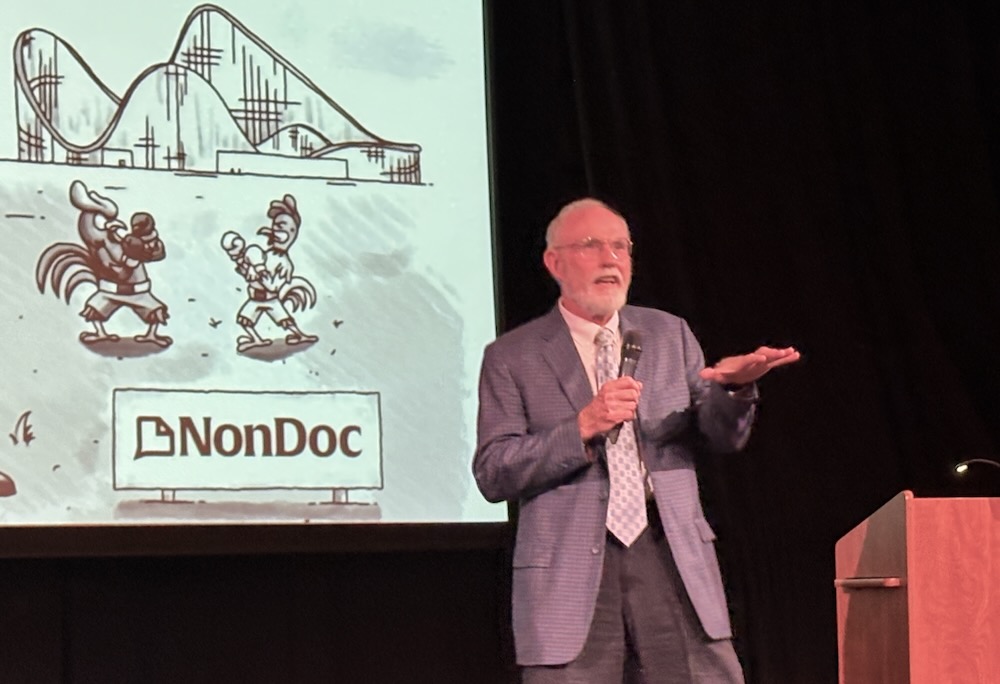
Michael McNutt tells a story as he addresses the audience at his Nondoc retirement ceremony

Michael McNutt’s retirement celebration from the NonDoc online news organization was under way earlier this week when he shared a story with me from almost 30 years ago and said I played a role.

A story for which I had no recollection.

Michael is a friend and former colleague at The Oklahoman who served as the newspaper’s Enid correspondent for probably a decade before moving to the Oklahoma City newsroom.

McNutt’s retirement ceremony, organized as a fund raiser for NonDoc, was outstanding.  I’ll come back to it.

As for the memory that he shared with me, McNutt recalled that I was assigned to help him conduct a focus group for The Oklahoman in northwest Oklahoma in advance of the 1996 presidential election. Michael said that I called him on the day of the focus group and alerted him that I was going to be a no-show because my wife and I were having a baby — in Abilene, Texas.

I don’t recall the focus group assignment, but I do recall that on June 18, 1996, Paula and I received a call that the baby we hoped to adopt was to be born that very day in Abilene. We jumped into the car, drove 330 miles and arrived at Abilene’s Hendrick Medical Center in time for the birth of our son, Ryan.

Anyway, it was a story that took me back to that milestone event, and obviously was an event that stuck in McNutt’s mind over the remainder of his reporting and editing career.

A St. Louis native, McNutt worked as a reporter and editor for The Oklahoman for nearly 30 years. He had a distinguished post-newspaper career, as well, working for an Oklahoma governor and a state agency, before the recent tour with Nondoc.

NonDoc honored Michael with this week’s celebration because he is retiring as managing editor of the enterprising, not-for-profit online news organization that fills a lot of holes left behind by the decline of traditional newspapers.

McNutt’s retirement celebration brought me and about 75 others to the Will Rogers Theater events center on Monday evening.
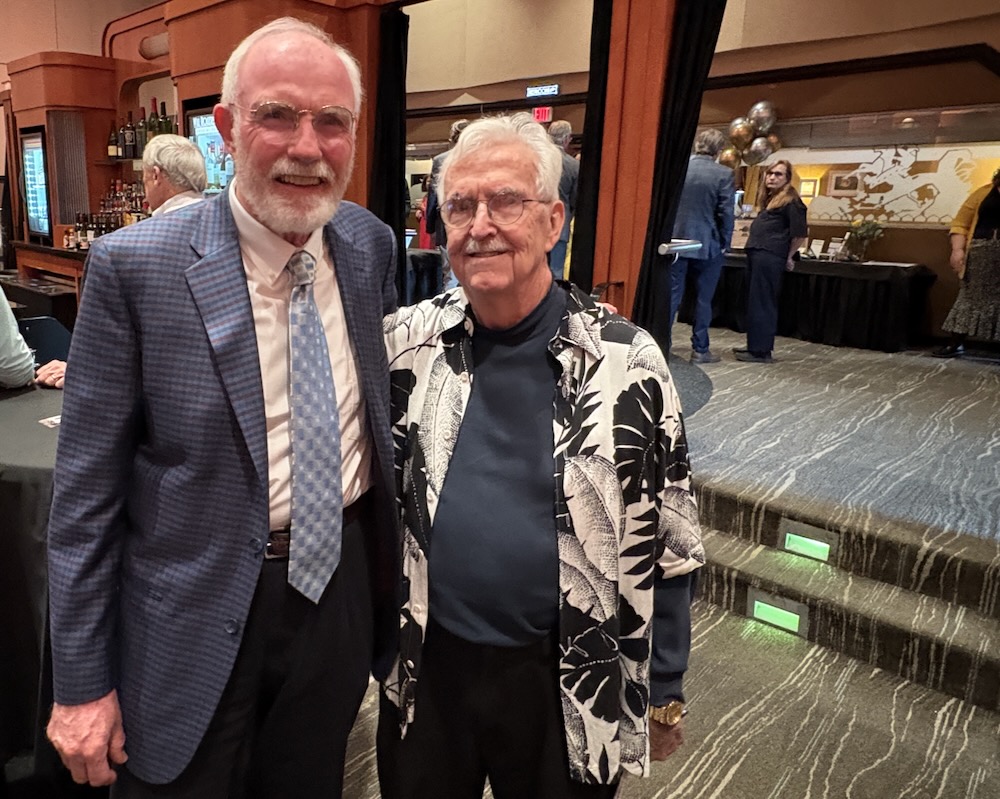
Michael McNutt with Mick Hinton, a former colleague at The Oklahoman.

Throughout his 40-year journalism career, Michael earned the respect of his colleagues, as well as elected officials across the state and of the people he really served — readers of his reporting and editing through the years.

I didn’t work on a day-to-day basis with Michael at The Oklahoman, but I got to know him as a thoughtful, approachable, empathetic person, as well as a baseball fan who remains devoted to his St. Louis Cardinals in both good times and bad.

A University of Missouri graduate, McNutt began his journalism career for the Rolla, Mo., newspaper before taking a job at the Enid News & Eagle in the 1980s. His wife, Kathryn McNutt, is also a longtime editor/reporter and veteran of The Oklahoman who now works at OKC’s Journal Record.

McNutt told me that he left The Oklahoman’s Enid bureau position in 2000 to become an editor and reporter in the paper’s OKC newsroom. He held editing positions on the state and city desks, and also covered the state capitol for eight years.

After leaving The Oklahoman in 2013, Michael served as spokesman and communications officer for Gov. Mary Fallin, before assuming the role of  communications director for Oklahoma’s Office of Juvenile Affairs. He took the Nondoc position about two years ago.
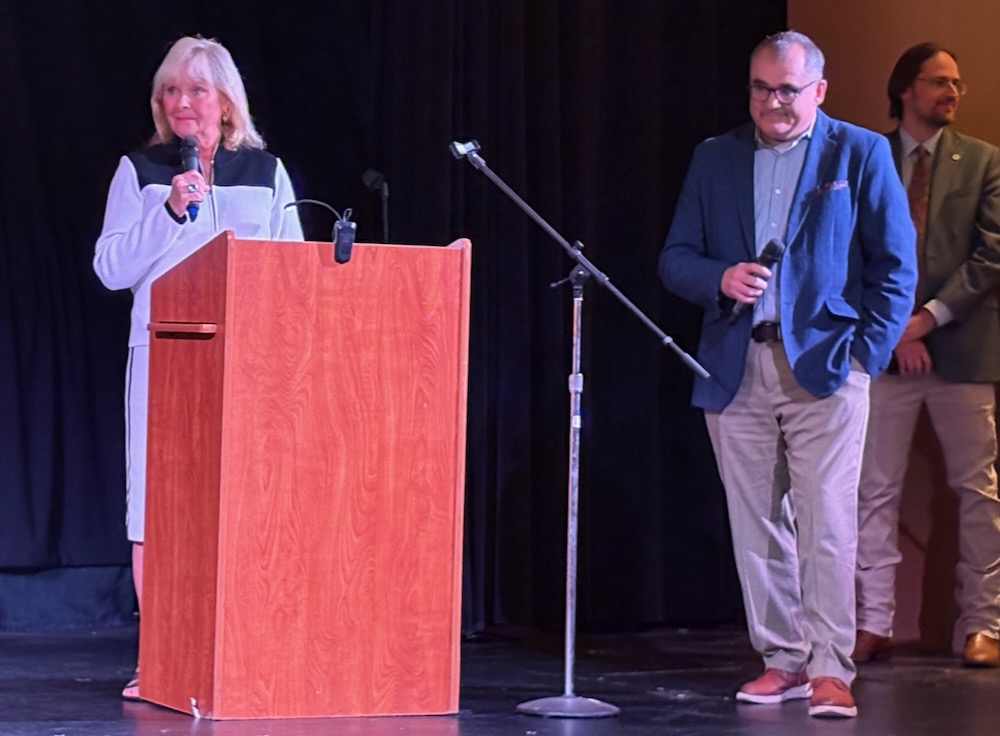
Former Gov. Mary Fallin shared the stage with Steven Buck, former administrator of the Oklahoma Office of Juvenille Affairs.

You could see evidence of the respect Michael earned in the audience at the NonDoc retirement ceremony. The room was filled with former newspaper colleagues, as well as state agency and elected officials, including former Gov. Fallin.

In fact, Fallin was a featured speaker, hailing McNutt for the work he did on her behalf, but also sharing some funny moments from his years on her staff. She was joined on stage by Steven Buck, who was OJA Administrator when Michael moved from the Governor’s office to that agency.

Buck shared his thoughts with me on the experience of working with Michael at OJA:

“When I found myself seeking a communications director for the Office of Juvenile Affairs, Michael quickly emerged as the best candidate. I had known him previously and greatly respected his work ethic but to serve as a lead advisor to me, I needed some one with great discernment, communication ability, confidence to hold me accountable and, of most importance, a commitment to mission and serving kids. There was not a single day in our work together that I regretted hiring him; he far exceeded my expectations and remains one of my most trusted colleagues.”

That’s the highest of praise.

I thought Tres Savage, NonDoc’s editor-in-chief, did a terrific job as emcee of the event, which served as a fundraiser for the Sustainable Journalism Endowment. The endowment provides funding for NonDoc to operate.

McNutt was the final speaker of the ceremony and told an intriguing story about how he was ‘almost fired’ from his job as a new reporter for the Enid newspaper just because he did his job. Michael said he received a tip that Enid city councilors met in secret at a local restaurant before each Council meeting and, along with a newspaper photographer, he “crashed” the meeting.
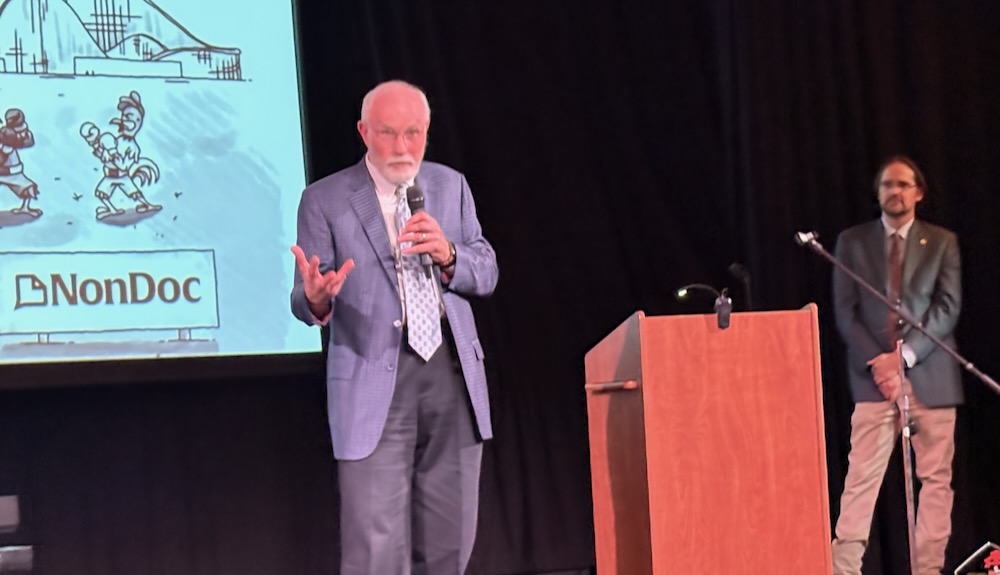
Michael McNutt speaking as Tres Savage, Nondoc’s Editor-in-Chief, looks on.

After his story appeared in the next day’s newspaper, a group of councilors marched into the editor’s office demanding that he be fired. The editor stood behind his reporter and told the elected officials to “follow the law.”

As for me, I had a terrific time at McNutt’s sendoff, greeting lots of my former Oklahoman colleagues, sharing time with both Michael and Kathryn and laughing at some of the stories I heard.

It was like a grand reunion.

Thank you, NonDoc, for giving him such a well deserved retirement recognition and to my friend, Steve Buck, for inviting me to sit at your table.

We’re all better off because of the work that Michael McNutt did over his career.

BONUS CONTENT — While Michael told me a story about an event I didn’t recall, I also shared with him about the first — and only — time I visited his office at The Oklahonan’s Enid bureau. Since I was from the “home office” of the paper and worked in the opulent (now former) newsroom along Broadway Extension, I had visions of McNutt working out of a similar abode in Enid. However, it turned out that he worked in a tiny office in a corporate building that was like a 1960s time capsule. I’m not sure exactly what I expected, but today all I can see in my mind is the bright green shag carpet in his office.

DOUBLE BONUS CONTENT — As I was visiting with Kathryn McNutt, along with other well wishers, someone brought up Michael’s avocation of making a daily, early morning run, no matter the weather. She told us that when the weather turned cold and the terrain ice covered, she made sure he wore baseball cleats on his run. One of the speakers at the retirement event spoke of once confronting a man in his neighborhood who was running in early morning darkness and wearing a ski mask, hockey jersey and baseball cleats. It was, of course, Michael McNutt.
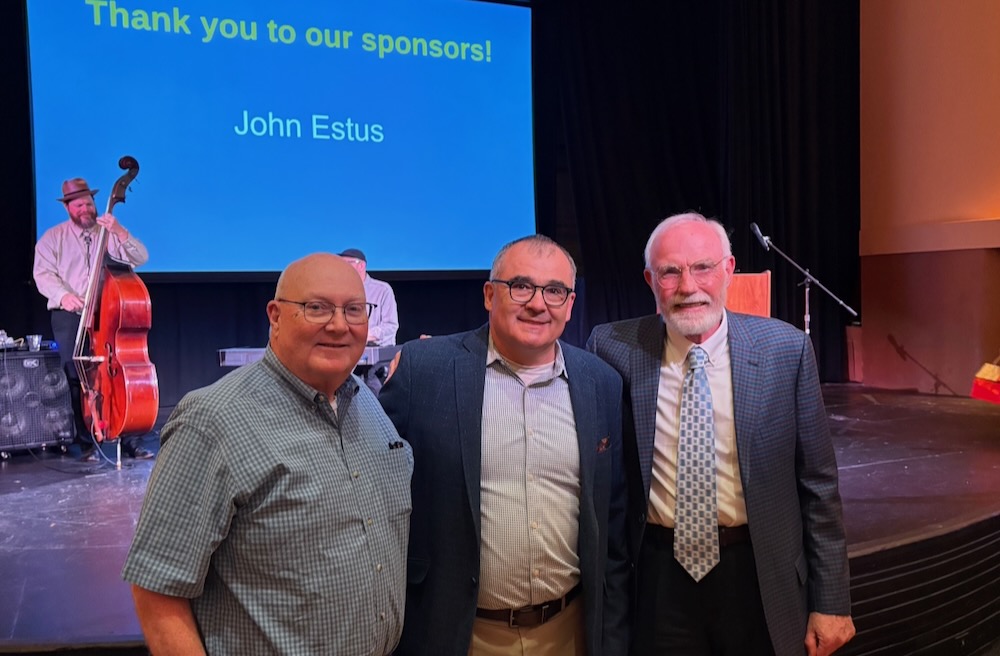
From left, Jim Stafford, Steven Buck, Michael McNutt

Looking back at my BlogOKC favs of 2024

EDITOR’S NOTE: In what has become an annual column of its own, I look back over BlogOKC in 2024 and list my 10 favorite posts. Not most popular, but those that meant the most to me. I went back and forth, adding some then eliminating them, because each of them meant something to me. I hope you enjoy browsing the list and clicking on the headlines to read the full post. My list of personal favorites also includes a wonderful guest post by my friend, Don Mecoy. Enjoy!

Major League Baseball Commissioner Rob Manfred said the ‘Golden At-Bat’ is being discussed

Major League Baseball’s terrible, horrible, no good, very bad idea

Dec. 11

When I was a young would-be sports writer just out of college working for the Southwest Times Record newspaper in Fort Smith, Ark., my editor sent me out to cover the state small school baseball tournament.

I had not seen much high school baseball through the years, so I was caught by surprise by one particular rule the small schools played by.

It was called the “Courtesy Runner.”

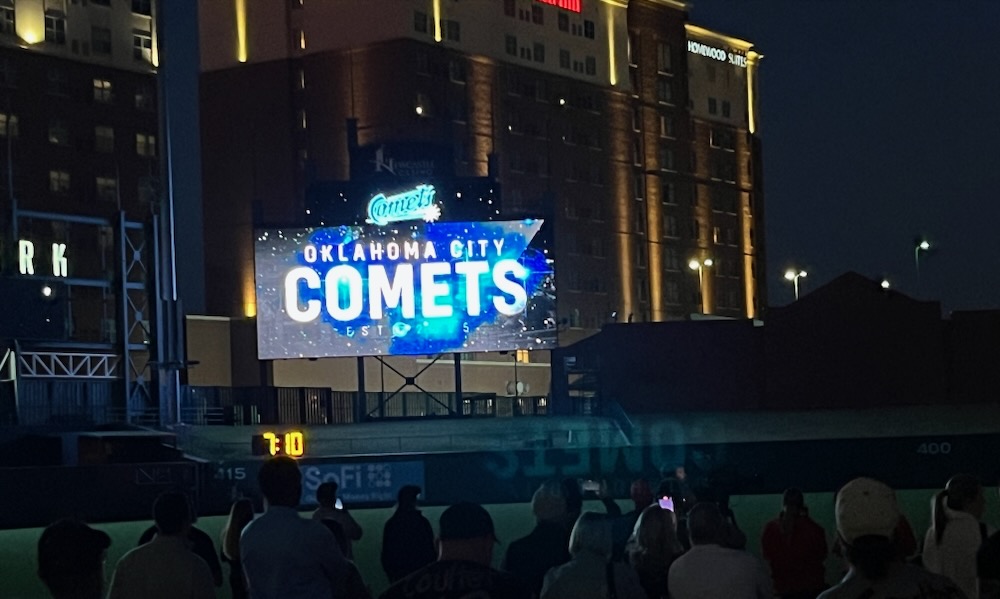
The Bricktown Ballpark scoreboard shows the team’s new name at reveal event.

What’s in a name? Apparently, a lot in OKC Baseball Club rebrand to ‘Comets’ … Or not much

Oct. 28

The Oklahoma City Baseball Club revealed its new name, “Comets,” in a ceremony Saturday evening at the Chickasaw Bricktown Ballpark witnessed by at least a couple thousand enthusiastic fans.

I was among those who showed up for the Big Reveal, so I can attest to the collective cheer that went up when the “Comets” name and logo appeared on the scoreboard screen.

I was not expecting “Comets,” although I’m not sure what I expected. Maybe “Flycatchers,” which my friend Ed Godfrey had predicted as the future team name. Or the “Waving Wheats” or something that related to Oklahoma.

acu group
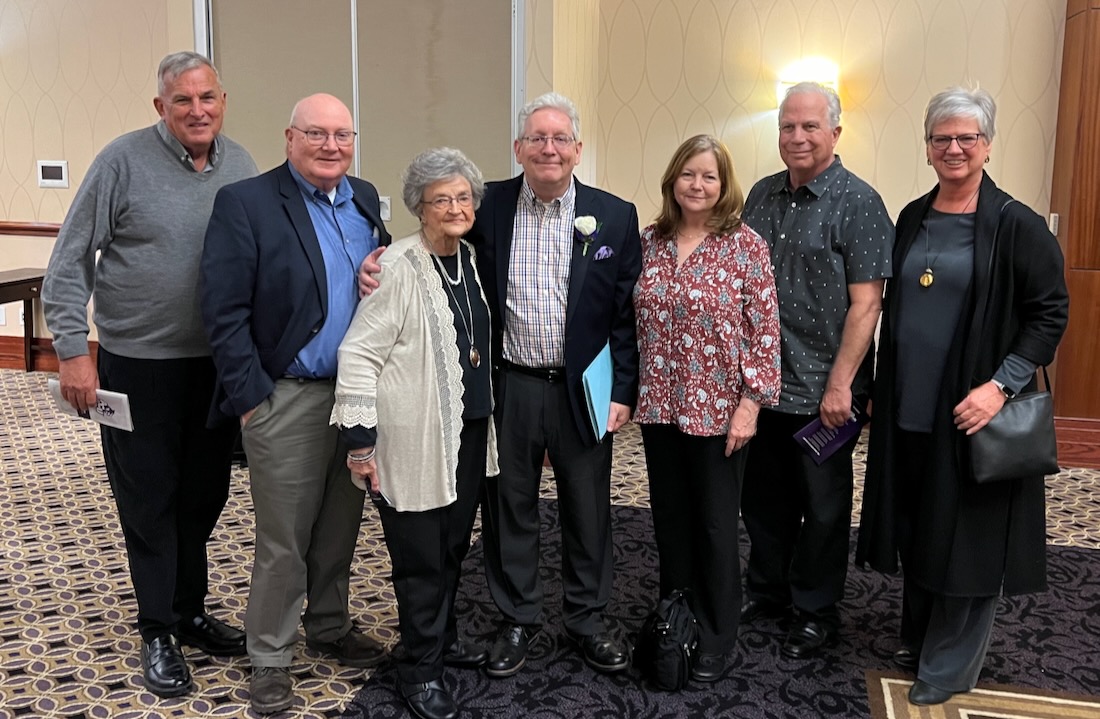
From left, Scott Kirk, Jim Stafford, Peggy Marler, Ron Hadfield, Corliss Hudson Englert, Brad Englert, Cheryl Mann Bacon

ACU Hall of Fame recognition for my friend Ron Hadfield … and a grand reunion

Oct. 22

Ron Hadfield is a long-time friend who was my student editor on the Abilene Christian University newspaper, The Optimist, in 1977. Ron recently was recognized with a Lifetime Achievement Award at the ACU Athletic Hall of Fame ceremony that I was privileged to attend.

I showed up on ACU’s doorstep in 1976 as a transfer student with a dream to some day become a newspaper sportswriter, but with virtually no writing experience.

Ron likes to tell the story that on the first assignment he sent me out on, I turned in some terrible copy and proudly showed him the quotes I made up.

I deny the accuracy of his memory.

Brady and John
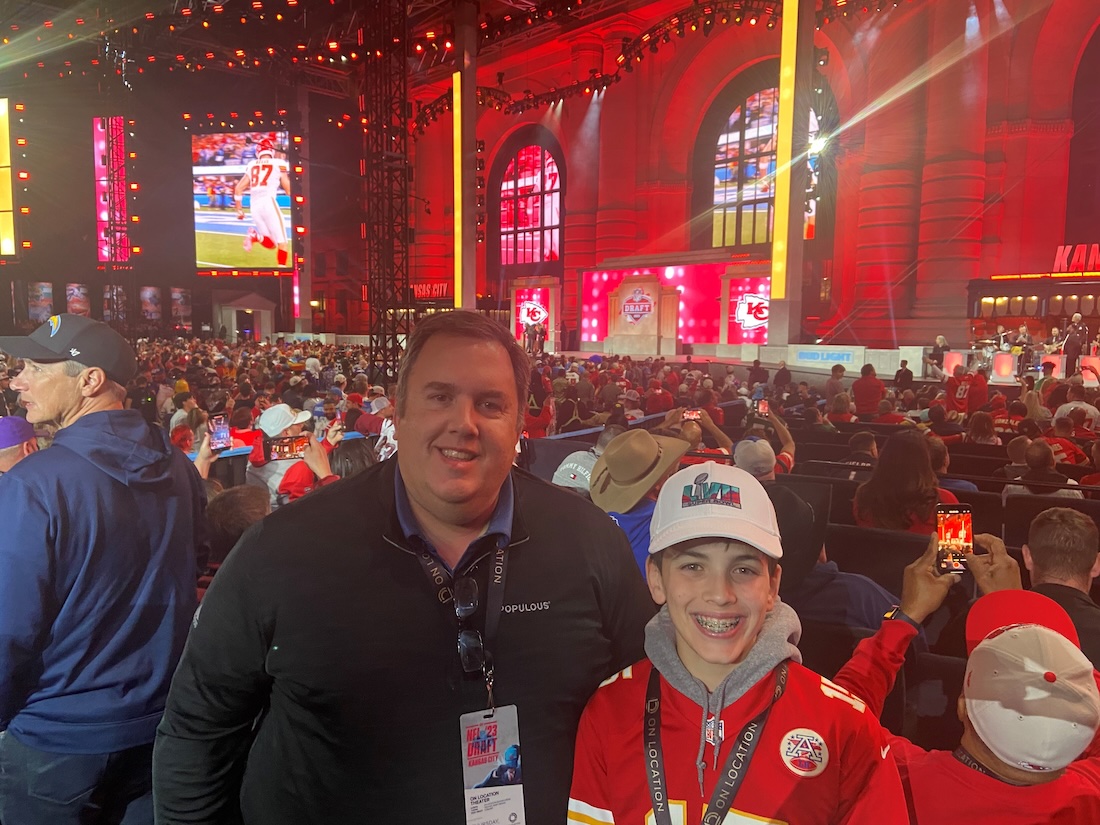
Brady Spencer with his son, John, outside Kansas City’s Union Station during the 2023 NFL draft.

The Populous impact on OKC sports venues & my friend, Brady Spencer

Sept. 17

A recent update in The Oklahoman newspaper on the new OG&E Coliseum under construction at the State Fairgrounds identified it as a venue designed by a firm named “Populous.”

In an even more recent story, I learned that Populous has been hired to design the new $71 million soccer stadium just south of OKC’s Bricktown.

I think I’m noticing a trend.

So, what exactly is Populous?

Solomon walking
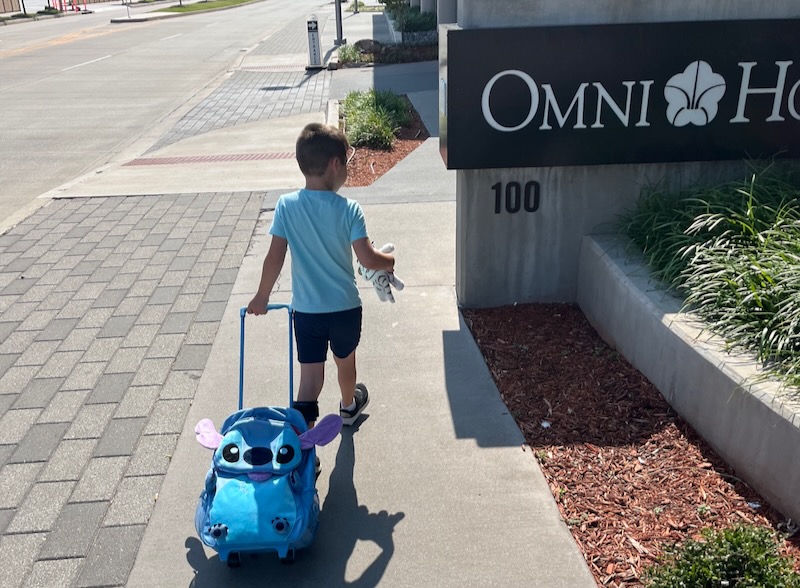
Solomon rolls his new backpack up to OKC’s Omni Hotel on Friday morning.

Solomon’s ‘road trip’ to OKC’s Omni Hotel

July 12

This is what happens when his GiGi is out of town on business and Papa is left in charge of entertainment on a Friday for our grandson, Solomon.

So, when it was just us two early Friday, Solomon said he wanted to go on a road trip. He suggested “the beach” and then Branson.

I said we couldn’t do either of those today, but maybe we could drive up to Guthrie and find a place to eat.

Solomon sort of accepted that, but later told me he wanted to go to that “nice Thunder hotel downtown.” All of us had stayed the night at OKC’s Omni Hotel last year when my wife, Paula, was booked there for a convention meeting.

Screenshot
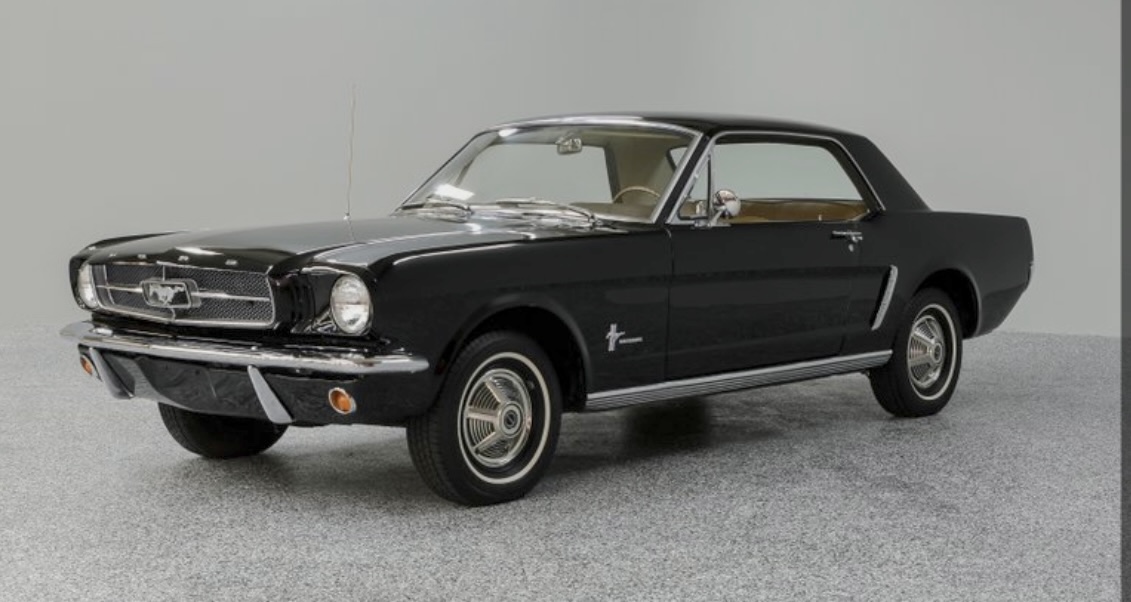
A black ’65 Mustang that looks exactly as I remember the one driven by my Aunt Dee.

The ’65 Mustang was my Aunt Dee’s ride or die

June 28

This is a story of the Ford Mustang. Or, rather, two Ford Mustangs. One of them did not have a happy ending, and I was in it.

If you are hazy on your Ford Mustang history, I’ll catch you up to date a bit. The Mustang was conceived by team at Ford led by Lee Iacocca, who later gained fame as the man who saved Chrysler.

The first Mustang was introduced to the public in April 1964, as the “1964-1/2” Mustang. It was an instant hit. The public fell in love with it because it had a unique, sporty body style compared to what U.S. autos had been, which were cars shaped like boxes and quite unattractive.

My dad was among the millions of Americans who were taken by the Mustang and eventually bought one when he was stationed on the island of Okinawa while in the military. I’ll come back to that.

Screenshot
Another shot of the ‘two Steves’ in the 1970s

Apple in 2024: Nobody likes a bully

March 23

I read a magazine article when I was in college in the 1970s about a scrappy startup called Apple Computer, founded by two guys named Steve who built their first computers in the garage at the home of one of the Steves.

I couldn’t get enough of their story; the David-vs.-Goliath way that Apple blazed the personal computer trail that forced the industry behemoth at the time, IBM, to play catchup. Steve Jobs and Steve Wozniak were my entrepreneurial heroes.

So, I admit that I am a long-time Apple fanboy and remain one today.

But my fandom has run smack into some ugly reality. Apple is no longer the scrappy industry underdog. In fact, it is one of the world’s largest companies by market value. Yet, it has begun to flex its financial muscles like a bully that nobody likes.


Screenshot

In my hometown, the long decline of a Fort Smith institution

Feb. 22

Here’s a bit of nostalgia for you. When I walked into the Southwest Times Record newsroom for the first time as an employee in 1978, I encountered a bustling community of talented writers, editors and photographers all scrambling to publish local news seven days a week.

The Fort Smith newspaper was a great place to learn the craft as my first job out of college. There are many folks among my former colleagues there whom I will never forget. I worked at the SWTR for five years in a variety of positions before moving to Oklahoma City and working for The Oklahoman for almost a quarter of a century.

So, it’s been disheartening to watch the SWTR decline as a community force over the past few years as the number of subscribers declined and employees were laid off. It’s a situation not unlike that in many other cities across the nation.

Evard and car
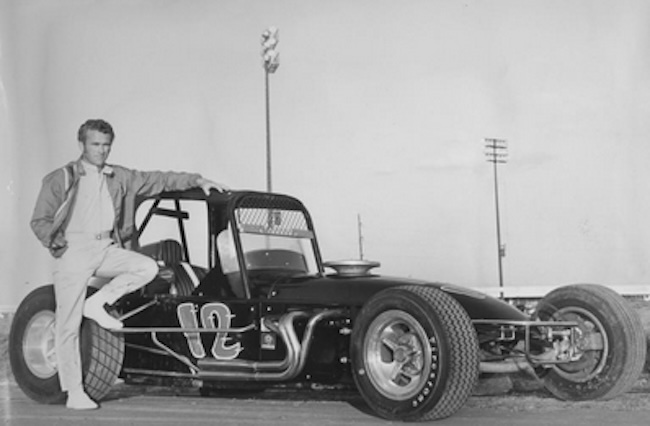
Evard Humphrey and his No. 12 super-modified sprint car

Why Evard Humphrey remains a sprint car hero to this child of the ’60s

Feb. 16

Editor’s Note: Don Mecoy is a friend and former colleague at The Oklahoman who retired as the newspaper’s managing editor at the end of 2022. A recent conversation about sports heroes from our youth when Don was a guest on the 3 Old Geezers podcast sparked his memory about a local race car driver fromthe late 1960s. Don wrote this guest blog post about that driver and those memories.

By Don Mecoy

I had my share of sports heroes when I was a kid. Roger Staubach, Lou Brock, Johnny Bench and Joe Washington were among my faves. But my personal hero — and it truly was personal — was a guy you probably never heard of: Evard “Kerfoot” Humphrey.

Evard was the driver of the No. 12 super-modified sprint car that ran every Friday night at State Fair Speedway during my youth in Oklahoma City.

tarps1
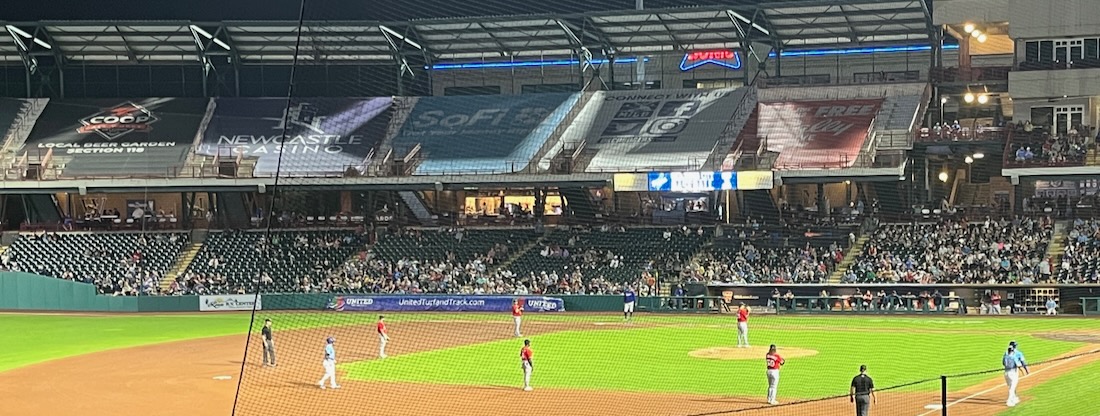
Advertising banners cover the entire upper deck seating area down the first base line of the Bricktown Ballpark.


Fading glory: Bricktown Ballpark needs upper deck rehab

Feb. 2

I was enjoying a summer evening at the Chickasaw Bricktown Ballpark with a friend last year, savoring the crowd, the game and the park’s immaculate green pasture.

Then my eyes landed on the upper deck along the first baseline that extends out into right field. There were no seats or bleachers visible. Only advertising banners draped across each section.

Don’t get me wrong. Oklahoma City has a beautiful ballpark that has retained its attractiveness since it opened in April 1998. However, the tarps do nothing but detract from the ballpark’s charm.

Major League Baseball’s terrible, horrible, no good, very bad idea

Screenshot
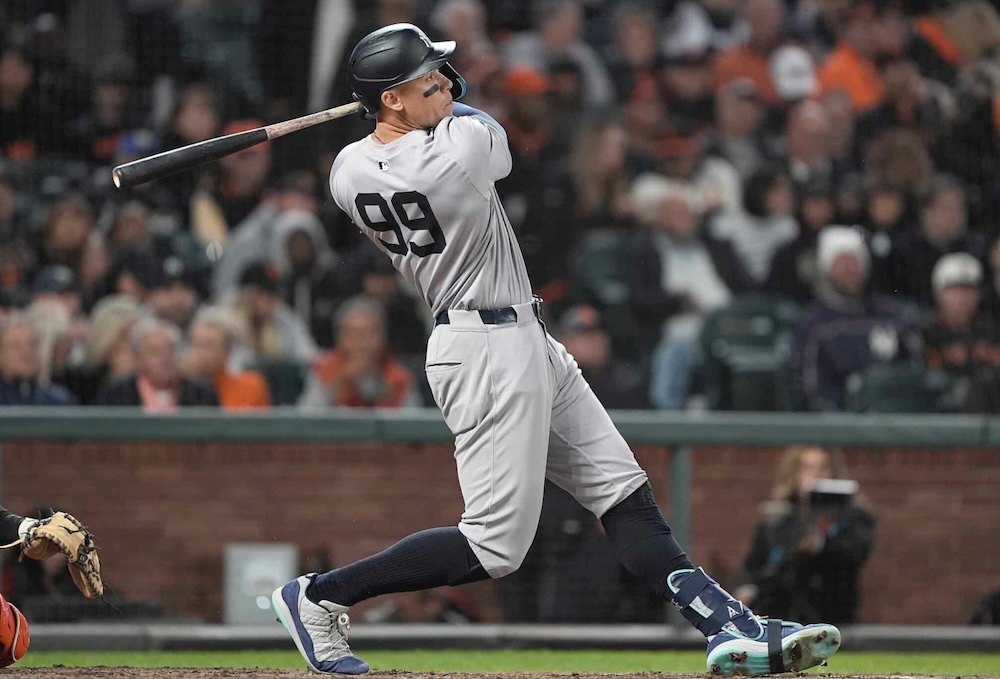
A ‘Golden At-Bat’ in future for New York Yankees star Aaron Judge?

When I was a young would-be sports writer just out of college working for the Southwest Times Record newspaper in Fort Smith, Ark., my editor sent me out to cover the state small school baseball tournament.

I had not seen much high school baseball through the years, so I was caught by surprise by one particular rule the small schools played by.

It was called the “Courtesy Runner.”

That rule allowed coaches to sub in a faster runner when a slower player got on base. But the player who was substituted for could remain in the game. Usually, the coach subbed in his fastest guy for the big, slow catcher.

I was offended by the Courtesy Runner, because I grew up following Major League Baseball and knew that once a player was substituted for, he was out of the game. No coming back in.

But the Courtesy Runner seemed popular with high school coaches in back in 1979, even if it messed up my boxscore at the end of the game. It remains in play for high schools, softball and even Little League Baseball.

And now the Courtesy Runner has been joined by other earthshaking changes infiltrating Major League Baseball itself as the game seeks a younger demographic. The pitch clock. Bigger bases. Fewer mount visits.

More is coming.

Recently, MLB Commissioner Rob Manfred discussed the possibility of baseball using what he called a “Golden At-Bat.”

“You put your best player out there out of order at a particular point in the game,” Manfred said. “That rule and things like that are only in the conversational stage right now.”

Screenshot
Major League Baseball Commissioner Rob Manfred said the ‘Golden At-Bat’ is being discussed

Here’s a scenario:

Let’s say the Yankees are down two runs in the 9th inning vs. the hated Red Sox with two men on base and two outs. The Golden At-Bat rule would allow them to bring Aaron Judge — their best hitter — to the plate even if his place in the batting order was six at-bats away.

I’m offended by the Golden At-Bat idea, just like I was offended by the Courtesy Runner all those years ago.

Call me a Geezer shouting GET OFF MY LAWN, but the Golden At-Bat concept seemed to come right out of left field, so to speak. It’s goofy. It’s unneeded. It’s a terrible idea.

Baseball already places a runner on second base to start the inning in extra innings. Now this?

Like me, much of the world of MLB fans reacted with horror to a rule that would skew baseball’s beloved statistics, which have withstood the test of time for more than 100 years.

There has been a chorus of boos across the nation from baseball fans, among them radio talk show host Dan Patrick. I listen to the podcast version of the DP Show daily, and heard Patrick’s reaction last week. 

“I hate it,” he said. “Hate it. I hate the runner at second base to start extra innings. Don’t go too gimmicky. Does baseball need that? It felt like baseball had a good year, a great year.”

In the spirit of the Golden At-Bat, Dan asked his entourage of co-hosts, collectively known as the Danettes, to come up with some “even dumber” ideas for baseball. The guys were happy to oblige.

“Count the Golden At-Bat as two outs if the batter fails to get a hit.”

“if your team is up by 10 runs or more you have to pitch blindfolded.”

“If you throw a pitch 100 mph or more, it’s not a strike, it’s a ball.”

“One time a game, you can require the opposing team to remove one outfielder during an at-bat.”

The Danettes struck Dumb and Dumber gold with their ideas.

But, you know what? They didn’t mention the Courtesy Runner.

And I’m still offended by the Courtesy Runner after all these years.

So GET OFF MY LAWN.

In my hometown, the long decline of a Fort Smith institution

Screenshot
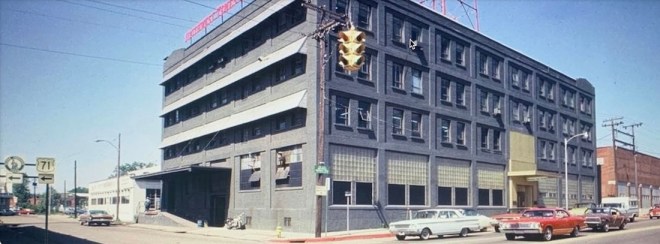
The Southwest Times Record building in what appears to be the early 1960s. (Photo courtesy of Southwest Times Record former employees Facebook group)

Here’s a bit of nostalgia for you. When I walked into the Southwest Times Record newsroom for the first time as an employee in 1978, I encountered a bustling community of talented writers, editors and photographers all scrambling to publish local news seven days a week.

The Fort Smith newspaper was a great place to learn the craft as my first job out of college. There are many folks among my former colleagues there whom I will never forget. I worked at the SWTR for five years in a variety of positions before moving to Oklahoma City and working for The Oklahoman for almost a quarter of a century.

My parents were among the 40,000 or so SWTR subscribers who fetched the newspaper off their driveway every morning. Established as the Fort Smith Times in 1884, the SWTR had a strong following not only in Fort Smith, but across a multi-county region of Western Arkansas and Eastern Oklahoma.

So, it’s been disheartening to watch the SWTR decline as a community force over the past few years as the number of subscribers declined and employees were laid off. It’s a situation not unlike that in many other cities across the nation.

Now owned by industry giant Gannett, I’m not sure there remains a single Fort Smith-based editor or reporter chasing down local news stories.

In fact, my 90-year old mother, who subscribed to the SWTR in our hometown of Fort Smith for more than five decades, finally gave it up a couple years ago because the paper had so little local news. Sometimes she still reads the obituaries published online.

As for me, I’ve stayed connected to the SWTR by subscribing to the paper’s free emailed daily newsletter that allows a peek at its headlines and free access to the obituaries.

It all makes you wonder when the hammer will fall and Gannett will halt publication of a physical paper for any remaining subscribers, leaving only online access.

Well, we’re close.

Screenshot

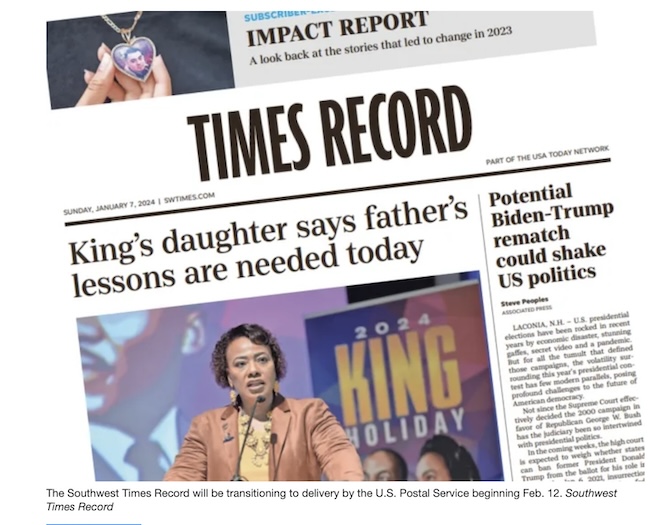
I received a notice recently that the SWTR was transitioning to a “mail only” newspaper with no more home delivery. Here’s what the email said, in part.

“Beginning tomorrow, look for your copy of the Southwest Times Record and our other regional publications to arrive with your daily mail. As announced in the Jan. 10 edition and in letters mailed to subscribers, the U.S. Postal Service will be delivering the Southwest Times Record to optimize resources amidst increasing digital readership demand.”

Now subscribers can read ‘news’ that is already at least 24-hours old when it arrives in the mail. What’s that old saying about nothing as stale as yesterday’s newspaper?

So, why am I writing this?

Well, it’s not a diatribe against the current ownership, because I see what’s happened to my old employer as a product of emerging technologies and a big change in how the public consumes news. Online access to news — much of it free — has removed the incentive to subscribe to a daily newspaper that lands on your driveway every morning.

I’m mourning the SWTR for its former employees and the folks who subscribed to the paper for decades. It’s like watching a close relative slowly fade away from an incurable cancer.

Here in OKC, I’m still a subscriber to The Oklahoman’s physical newspaper, which is delivered to my driveway every day but Saturday. Yet, when I look up and down my street as I pick up the newspaper each morning, I see no other papers on my neighbors’ driveways. None.

However, I’m confident the path determined for the Southwest Times Record won’t be a template for The Oklahoman. It remains an enterprising news organization, despite repeated rounds of staff reductions.

That notice I received of the SWTR’s “all mail” newspaper delivery prompted me to ask a couple of former colleagues and longtime SWTR employees who still live in the Fort Smith area their thoughts on what has become of their former newsroom.

Patti Cox was a longtime news editor at the SWTR with whom I worked on the news desk. She shared her perspective with me as both a former employee and a current subscriber.

“It is very sad turn of events for Fort Smith,” she said. “We still are taking the day-late-in-the-mailbox paper but not sure for how long or why. End of so many meaningful things like insightful, timely local news and commentary. Long gone are noisy newsrooms filled with reporters, editors, interns with common purpose and multiple deadlines.”

Carrol Copeland, longtime SWTR photographer and creator of a Facebook group called Southwest Times Record former employees that has 162 members, also shared his thoughts with me.

“Back in the day, we covered local news, and there was very little worldwide or nationwide news in it,” Carrol said. “Probably 80 to 90 percent of it was local news. At one point we had the Poteau office and the Van Buren office, and somewhere around 150 employees.”

That was then. This is now.

“There’s not even a physical location anymore,” Carrol said, who recalled tornadoes, spectacular crimes and criminal trials that he covered over the years. “I think it comes down to a lack of income. If you can’t sell advertising you can’t have people to work for you.

“Now that people are going to the Internet or Youtube for their news, no one is advertising anymore. The technology overtook them.”

How will the daily newspaper voice be filled for former SWTR subscribers who loved its local news angle? Digital news services that focus on local news offer some hope.

Here in Oklahoma City, we have Oklahoma Watch and Nondoc, among others, which are sort of complementary to The Oklahoman, for now.

In Fort Smith, there’s an online site called Talk Business & Politics that focuses on Fort Smith and Northwest Arkansas. It was started by a former SWTR editor. I read it first thing each morning five days a week.

Actually, as I think about it, I’m not sure folks aged 30 and younger will miss holding an actual newspaper because it’s likely they never read one on a daily basis anyway.

But for those who grew up with ink-stained hands, it’s a difficult transition.

“I just know I loved newspapers and the dedicated (mostly young) quirky stressed out folks who worked for them,” Patti Cox told me. “Grateful for the lifetime lessons learned there.

“Good memories, my friend.”

We’ll carry those memories with us long after the final edition is published. It’s coming.

Say it ain’t so

SelloutAs I was sitting in the stands at OKC’s All Sports Stadium in roughly 1987 watching the Big 8 baseball tournament with my Daily Oklahoman colleague, Tom Kensler, a lanky young man sat down with us.
Kensler, now deceased, was the paper’s OSU beat writer in 1987. He introduced me to the newcomer.

“Jim, I want you to meet the newest member of our Sports staff, Berry Tramel,” Tom told me as I shook Berry’s hand.

Although I had worked as a copy editor on the Sports desk at the Oklahoman since 1983, I didn’t know Tramel, who worked as a sports writer at the Norman Transcript.

Something happened, however, and Berry did not become a member of The Oklahoman’s Sports staff until 1991. Maybe the Transcript offered him a raise or he still had things to accomplish at the Norman paper.

But Berry eventually joined The Oklahoman staff and became our lead sports columnist. He quickly established himself as one of the top sports writers not only in Oklahoma but across the nation.

I don’t remember much of that first conversation with Berry at the ballpark, but eventually I found him to be warm, empathetic, approachable and the most prolific and hard-working writer I’ve ever known.

Berry writes in what I consider a folksy manner that carries the reader along. He has an incredible ability to uncover the critical issue that may be plaguing — or helping — a team, a coach, a school, a state, whatever. And he’s a walking encyclopedia of sports history.

Berry’s most influential article of them all may be the infamous “Taco Bell” column from the late 1990s when he compared OU’s hiring of John Blake to a company that put a management trainee in charge of the entire business.

You can read the column here. 

Berry Taco Bell

Not everyone loves his style — ask my friend, Casey — but he’s attracted a huge following far and near over the years. Including me.

Berry was joined on The Oklahoman Sports staff in the late 1990s by Jenni Carlson, a Kansas native who brings a unique point of view to whatever she’s writing about. I’ve come to know Jenni, as well, and love reading her intriguing takes that often focus on people who have overcome long odds to become successful.

I’ve written all of this because, as most people know by now, both Berry and Jenni are leaving the paper. They’re joining a new online venture called The Sellout, Sellout Crowd, or something like that. It should debut later this month, from what I understand.

I got wind of Berry’s impending exit about three weeks ago and immediately sent him an email with the subject line “Say It Ain’t So.”

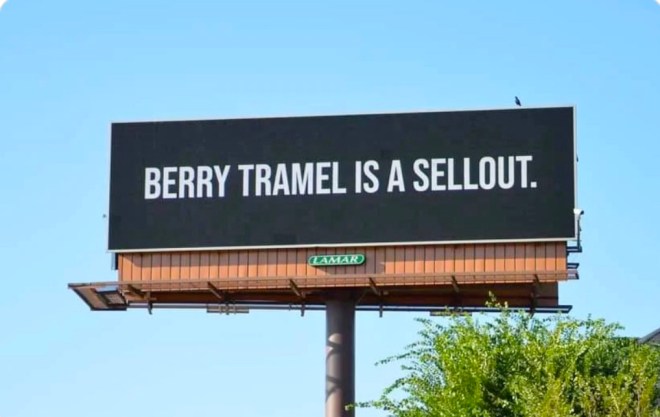
Berry responded and said it was so. He said it’s a good thing, not bad, because readers who follow him and Jenni will be able to read their work in a free online newsletter. He even wrote about his impending departure from the paper after billboards appeared saying “Berry Tramel is a Sellout.”

But I’m mourning for the newspaper because of the loss of such immense talent.  I was part of that newsroom as a writer and editor for over two decades.

Although I’ve been gone from The Oklahoman for almost 15 years, I’m still a subscriber and a daily reader of the newspaper. I still pick it up off my driveway every morning (except Saturday).

We all know that the Internet has changed the way people consume news, sending the newspaper industry into a long decline, including The Oklahoman. In my opinion, the paper has done a great job of building its online enterprise while still keeping print alive.

For now.

But the loss of Berry and Jenni is a huge blow to readers like me who look forward to unfolding the paper every day (but Saturday) and seeing what one or both have written for us. Who can replace them?

So, what’s next? I’m anxiously watching as the leaves continue to fall from the tree and the newsroom branches become bare.

Say it ain’t so.

Berry Jenni1

The teacher who nurtured a high school dreamer

TO editing
In a 1971 yearbook photo, Tom Oliver is shown editing students’ work as yearbook/newspaper advisor

As do a lot of communities around the country, someone from my hometown maintains a Facebook group called “If You Ever Lived in Fort Smith, Arkansas.”

I’m not on the Group’s page often, but it’s fun to occasionally scroll through and see what people are talking about.

Certain topics dominate the Fort Smith page: Dragging Grand Ave. in the ’70s … Enjoying a giant Worldburger of the past … and remembering stores like Hunt’s and The Boston Store that were once shopping mainstays.

About five years ago, a fellow Southside High School grad, Eddie Weller, posted about favorite Fort Smith teachers he recalled. Because I’m an Army brat, I only attended school in Fort Smith for three years.

But there was one teacher that certainly had an impact on my future. His name was Tom Oliver.

Mr. Oliver taught Journalism at Southside. I took Mr. Oliver’s class as a senior because I had a far-fetched dream of some day being a newspaper reporter.

So, I posted on the Facebook Group about Mr. Oliver being a memorable teacher, and it was like a call-and-response for a conversation that began five years ago and continues to stir memories today.

Here are some selected memories of Tom Oliver by his former students (Mr. Oliver died in the early 1990s, so it’s too bad he’s no longer around to read what his former students say.).

My original comment:

“My journalism teacher at Southside, Tom Oliver. Showed a lot of patience to a wanna be who had few skills in HS. I ended up making a career out of newspapers, so thanks to Mr. Oliver for encouraging me.”

Response from Eddie Weller:

“TO” as we called Mr. Oliver (but not to his face . . . ) … He did have patience. I remember senior year we rotated a column among the editorial board. I wrote a semi-funny one (tried to be humorous) for my first try. I used a phrase to get a chuckle that he asked me if I should use. He let me decide. He explained he was not sure my parents, for instance, would understand why I used the phrase. That was thoughtful on his part as a teacher. It made me really think — even a small phrase could make or break a mood you were trying to set. And “Ye Olde Pub” (the publications/journalism room for the uninitiated) was always a great place to be. He gave great freedom to the newspaper staff, yet knew when to reel it in. Truly an amazing teacher!”

From Sandra Curtis Kaundart:

“Tom Oliver, my mentor, was the greatest teacher ever!
… I majored in journalism because of him, worked at a couple of small papers, later did my practice teaching with him, and ended up teaching journalism and English for 31 years.”

From Scott Carty:

“Tom Oliver was one of my heroes. i found one of his old yearbook pictures in the storage room and put mirror-headed thumbtacks thru his eyes and labeled it EltonTom. Made him smile.”

From Jim Morris:

“I had too much fun in his class. Just ask Scott Carty”

From David Yarbrough:
“Tom Oliver didn’t do a lot of chalkboard teaching. He picked leaders (editors) and let those students fill their roles assigning stories and photos. He let them do the editing and design of the paper. Only occasionally did he make a quite suggestion. In the real world, you could compare him to a hand-off publisher who trusted his staff. He also encouraged students to explore all kinds of arts and studies. He took staffers to state and national conferences to open horizons.”

My own story isn’t anything spectacular. The student newspaper had a regular “Newsmakers” column of one-paragraph stories (emulating, I believe, a popular Page 1A “In the News” feature in the Arkansas Gazette), and I was assigned to write a Newsmaker item for each issue of the paper.

Did I tell you that I was terrible as a cub reporter? That one-paragraph Newsmaker assignment might as well have been a 10-page term paper.

But I managed to scrape something together for each edition, and Mr. Oliver gently edited my effort. Like all of my favorite teachers and professors over the years, he showed tremendous patience with me.

I remember Tom Oliver as being fairly young at the time and in tune with popular culture. His was a class that I looked forward to attending every single day. Similar to my favorite college professor, who also taught journalism.

I can’t tell you exactly what clicked for me, except perhaps the camaraderie of being around others that had an interest in journalism. Oh, and the thrill of seeing something you wrote in print.

In a touch of irony, years later, I served as Sports Editor of the Southwest Times Record in Fort Smith. Mr. Oliver worked part time for me on the Sport Desk on Friday nights during football season, helping us gather scores and write short summaries.

Mr. Oliver actually remembered me from my not-so-memorable one-year stint in his high school journalism class. He told me he was surprised that I pursued a newspaper career because he wasn’t sure that I had the interest as a student.

I guess my candle didn’t burn too brightly in high school. But I did have a dream.

Thank you, Tom Oliver, for being an encouraging teacher and not steering me away from the far-fetched dream of the 17-year-old me.

Tom Oliver yearbook
Tom Oliver’s (second from left) 1971 Southside High School yearbook photo

Dr. Charlie Marler & the divine coincidence

marler office
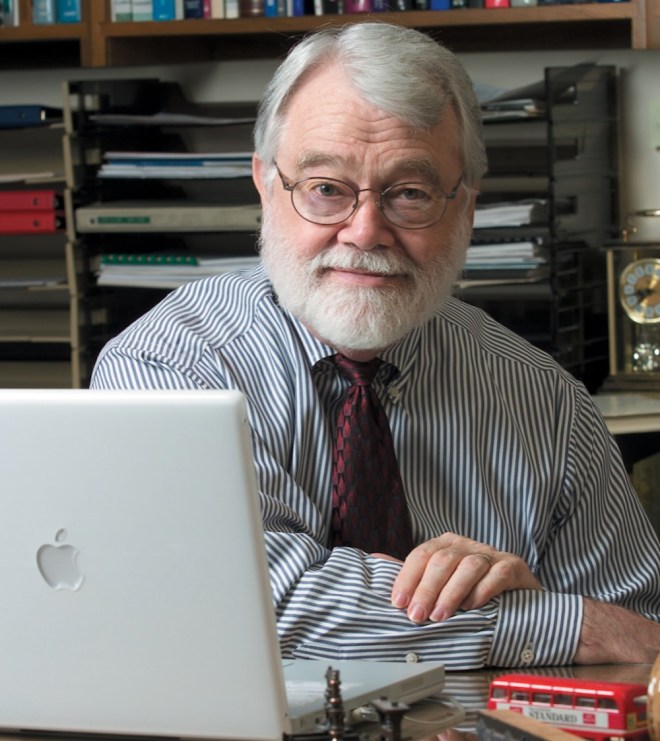
Portrait of Dr. Charlie Marler in his office/ACU photo

I was sitting in a pew in the next-to-last row at Oklahoma City’s Quail Springs Church of Christ one Sunday in 1991 when someone tapped me on the shoulder.

I glanced back and almost fell out of the pew.

Sitting directly behind me was Dr. Charlie Marler, my favorite professor from my days as a student at Abilene Christian University. Dr. Marler taught most of the journalism courses I took at ACU and led the university’s journalism and mass communications program for many years.

Turns out, Dr. Marler was traveling through the state that Sunday morning and randomly decided to attend the Quail service. Quail was a large church, but somehow he ended up sitting directly behind me.

I took it as divine coincidence.

I had only been attending at Quail for about a year and had begun dating the woman who would become my wife, Paula Bottom. She was sitting next to me at that service, so I introduced her to Dr. Marler.

“Oh, you need to stay away from this guy,” he said with a smile.

I was at Quail because of the influence of Dr. Charlie Marler. Not only did he help guide me and motivate me to stay the course to graduation at ACU, he also modeled a life of faith for me that led me to Quail Springs church decades later.

I grew up in a church tradition different but similar to the Church of Christ, and had always been a religion skeptic. I’m not a smart man, but I always wondered why there were no professionals — no doctors or lawyers or college professors — in our little church growing up.

We had plenty of blue collar people who worked with their hands, and we were proud of it.

Anyway, Dr. Marler showed me that you could be highly educated and still have faith in a God of the universe. Years later, I recalled Dr. Marler’s faith when a friend invited me to Quail.

I attended the church reluctantly, but slowly came to accept the faith myself.

Along the way, I met Paula, we married and have been members of the Quail Springs church — now known as The Springs Church of Christ — ever since.

So, when Dr. Marler passed away late in May, it was a very personal loss to me even though I saw him only on rare occasions over the last 40 years or so.

I’m writing this to share how one life was influenced by his academic guidance, gentle patience and faith.

My college career at ACU also was a divine coincidence, I guess.

I wasn’t recruited to ACU in the 1970s. I wasn’t recruited by any college. Poor academic record. Poor study habits. Little involvement in my high school community.

But I had a dream. I wanted to go to college and study journalism. I wanted to be a sportswriter. I aspired to be Blackie Sherrod of the Dallas Morning News.

Somehow, life’s circumstances led me to Abilene, Texas, in the Spring of 1976. So, I sort of turned up on ACU’s doorstep with 30 hours at community college to my credit.

That twist of fate brought me into Dr. Marler’s sphere of influence for the next two-and-a-half years. I recall his teaching style with fondness because he seemed to involve everyone in each class but never singled anyone out for embarrassment.

He was notorious for marking up papers I wrote and articles I attempted for ACU’s student newspaper, The Optimist, with his red editing pen. Every ACU journalism student was subjected to the red editing pen .

Optimist3
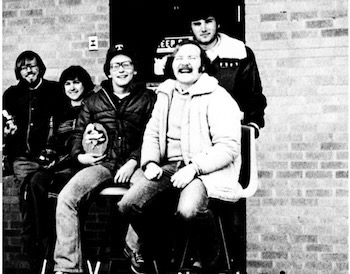
Me (front row, right) with colleagues from The Optimist in 1978

However, that red pen helped shape my writing style, and I slowly grew in confidence and ability.

And he talked about how Christians could — and should — work in newsrooms, keeping the faith while pursuing careers in a secular world.

It took years for the message to really sink in, but it finally hit home with the skeptic that I am.

Thanks to Dr. Marler, I had a 30-year newspaper career, and a decade-plus beyond that in the marketing office of a company.

Now, multiply the influence that Dr. Marler had on my life and career with thousands of other students over his 50-plus year academic career. That’s why he was a towering figure in journalism education and the Christian faith.

There is so much more to his story — read ACU’s wonderful tribute to him here — but this was the part of his life that touched mine.

The deal was finally sealed, you might say, when Dr. Marler tapped me on the shoulder at a random Sunday church service in Oklahoma City.

A divine coincidence.

The newspaper visionary and the skeptical student

Selectric
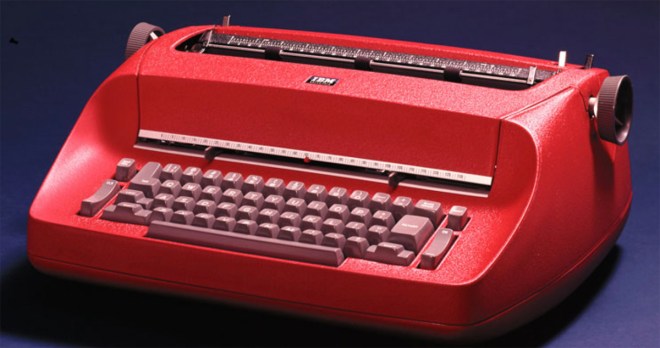
The 1970s vintage IBM Selectric typewriter

I was sitting in a news writing class at Abilene Christian University in 1977 when I heard something so preposterous that it has stuck with me for more than 40 years.

Our professor, Dr. Charlie Marler, speculated about the future of the newspaper industry. He said that some day we could get our news on a TV -like screen and have the choice to print out the stories that we wanted to read.

No one laughed out loud, but I had a good laugh to myself. Yeah, right, I thought. Not sure where Dr. Marler came up with this kooky idea.

At the time, the IBM Selectric typewriter was cutting edge technology for journalists. We were privileged to be able to type our stories on one in the late 1970s for The Optimist, ACU’s student newspaper.

Fast forward four decades.  We can now see how dead-on Dr. Marler’s prediction was in the 1970s.

The fact that most of the world now gets its news instantaneously via a screen attached to a computer, tablet or phone made my old college professor appear to be a modern-day Nostradamus.

The rapid decline of the newspaper industry has been well documented. From my perspective, it began in the late 1990s as the public began finding news sources online and accelerated in the 2000s when WiFi became ubiquitous and smart phone use proliferated.

In fact, I accepted an early retirement offer in 2008 because my employer, The Oklahoman, reduced its workforce that year by 150 people or so. That ended a 30-year newspaper career that I launched upon graduation from ACU in 1978.

The Oklahoman was (and I think remains) the largest newspaper in the state. It has undergone multiple rounds of reductions in the years since I left.

All of which led to this week’s announcement by The Oklahoman. Beginning on March 26, it would no longer print Saturday editions.

The paper will be “digital only” on Saturdays, meaning it will be found only on your screen. A host of other daily newspapers owned by the Gannett corporation have announced the end of print Saturday editions on the same date.

You called it 40-plus years ago, Dr. Marler. I’m pretty sure that the “digital only” newspaper model eventually will eliminate print publication on most other days of the week.

Maybe the Sunday edition will be the only day we can actually get our hands on a printed newspaper. If we’re lucky.

Perhaps I shouldn’t have been so skeptical of Dr. Marler’s prediction at the time I heard it. Because cartoonist Chester Gould, an Oklahoma native, had introduced an even bigger fantasy for his Dick Tracy comic strip back in the 1940s.

It was a two-way communications device worn on the wrist.

Dick Tracy
Dick Tracy using his two-way wrist communicator.

I was a huge fan of the Dick Tracy comic strip as a kid and infatuated by the device that Tracy wore on his wrist through which he had instantaneous communications.

The future was right there on the funny pages for decades and we didn’t recognize it.

Gould’s fantasy device became reality when the Apple Watch debuted in 2015. Today, millions of people wear Apple’s incredible two-way communication device on their wrists.

Not sure who laughed at Chester Gould’s vision when it appeared in the Dick Tracy comic in the 1940s.

Or who was laughing aside from me at the outrageous prediction of Dr. Charlie Marler in a 1970s ACU classroom.

But no one’s laughing now.