Shining a light on mental illness

NAMI Tulsa
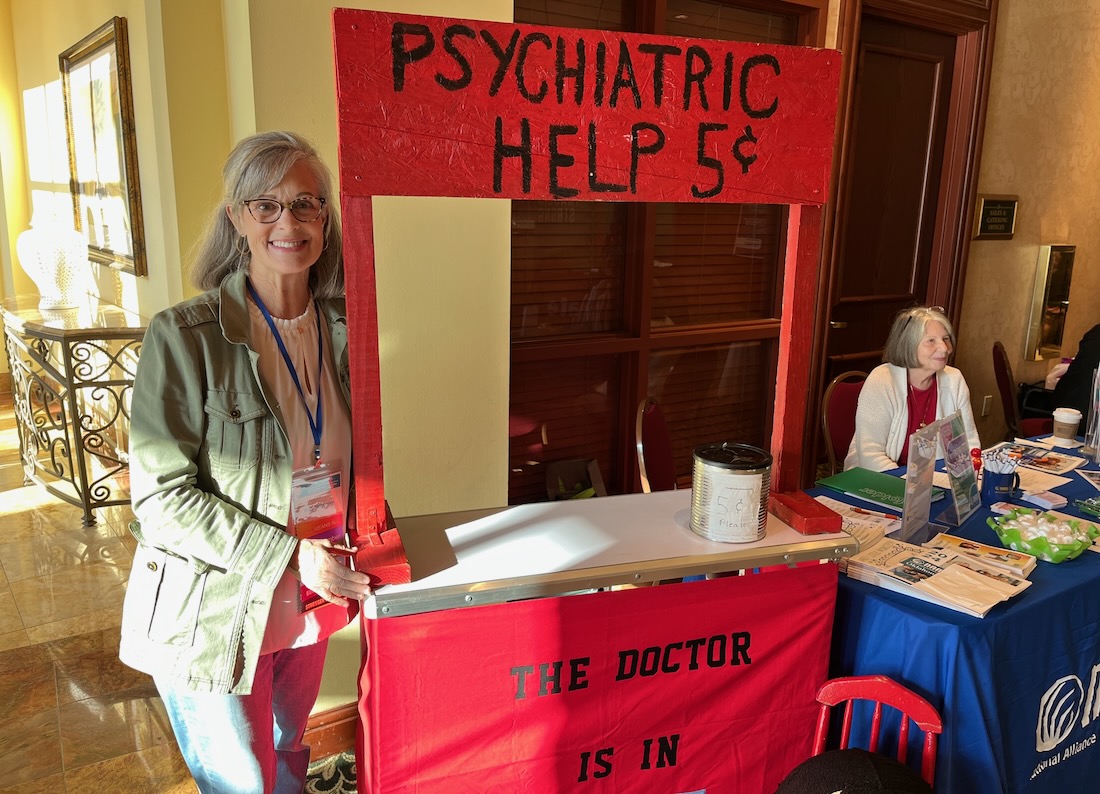
NAMI-Tulsa’s clever ‘psychiatric help’ display caught a lot of attention and photographers at the NAMI Oklahoma conference.

This past weekend, I heard stories about the heartache, disruption and pain caused by the impacts of mental illness on families and their loved ones.

I also heard that there is hope for those suffering.

NAMI Oklahoma held its 2024 Annual Conference in Tulsa on Saturday, and because my wife works for the organization, I tagged along. NAMI is the National Alliance on Mental Illness, an organization that works to end the stigma of mental illness.

NAMI doesn’t provide therapy, but helps connect those in need with critical services, as well as with support from their peers in similar situations.

Our family is among those that have been impacted by mental illness, so I found the conference and its many speakers and topics relevant to our situation.

There were roughly 150 folks in attendance, plus about two dozen vendors who showcased their support at tables outside the meeting rooms.

My intentions were to hear presentations by a couple of folks I know, then take care of our 5 year-old grandson, Solomon, who came with us.

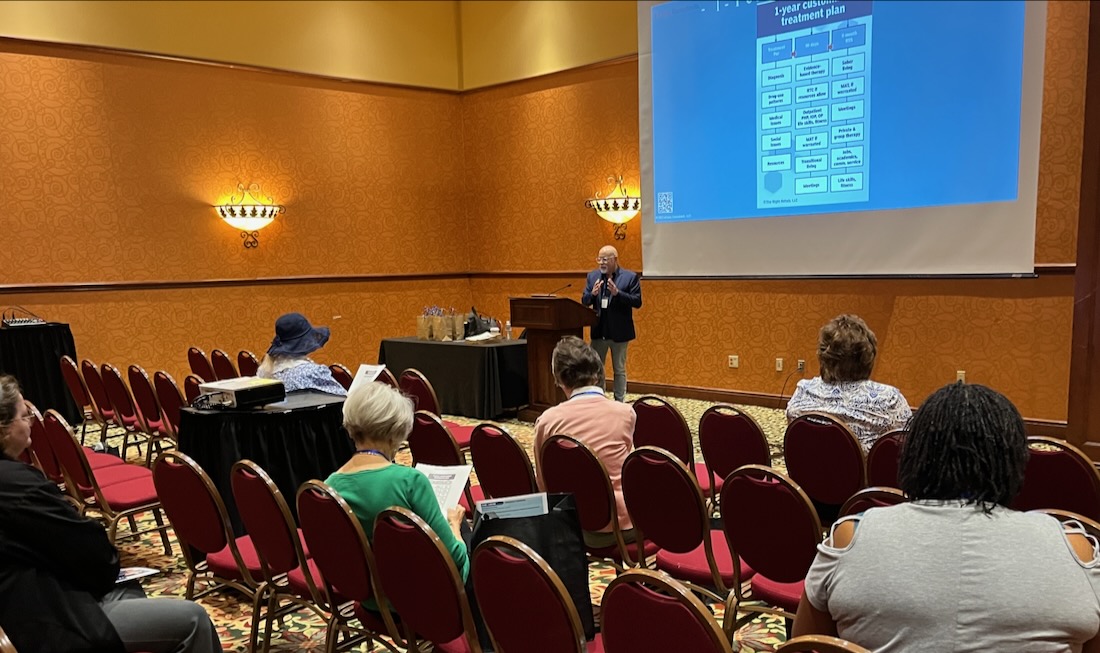
The first presentation I heard was that of Neal Nordlinger in the day’s first breakout session. I’ve had a lot of connections with Neal through the years, first when I worked at i2E, the OKC-based not-for-profit that mentors entrepreneurs and startups. And now I know him as the husband of my friend and former co-worker, Clytie Bunyan.
Neal speaks
Neal Nordlinger leads session at NAMI Oklahoma conference on finding the right rehab.

Anyway, Neal told his audience about how he was confronted with consequences of addiction at 3 a.m. one morning when he received a call that his son was in crisis. He needed to find a treatment center for his son, but didn’t know where to start.

That call started Neal down a path of discovery, where he learned about recovery and rehab centers that treat not only for drug and alcohol addiction, but also provide treatment for mental health conditions.

In his quest, Neal gained so much knowledge about the nation’s rehab industry that he wrote a book called “The Right Rehab,” and founded a business called InCrisis Consultants to help others.  He shared with us insight into finding a rehab center that has a good reputation, the required certifications and fits our insurance and financial situation.

It’s quite a maze, which I know from past experience of our family.

As an aside, my daughter, Sarah, has worked for rehab centers in Florida for the past couple of years. I’m proud that she’s discovered her mission in life from her own challenges.

After his presentation, I told Neal that everyone at the conference should have heard him speak, and for good reason. Everyone was there because they have a loved one with addiction, mental health challenges or have gone through them personally.

There is a big rehab knowledge gap for most of us that Neal addressed.

Later in the day, I heard my friend Preston Northcraft deliver an impassioned presentation on turning the pain associated with a mental health condition into something positive.
Preston
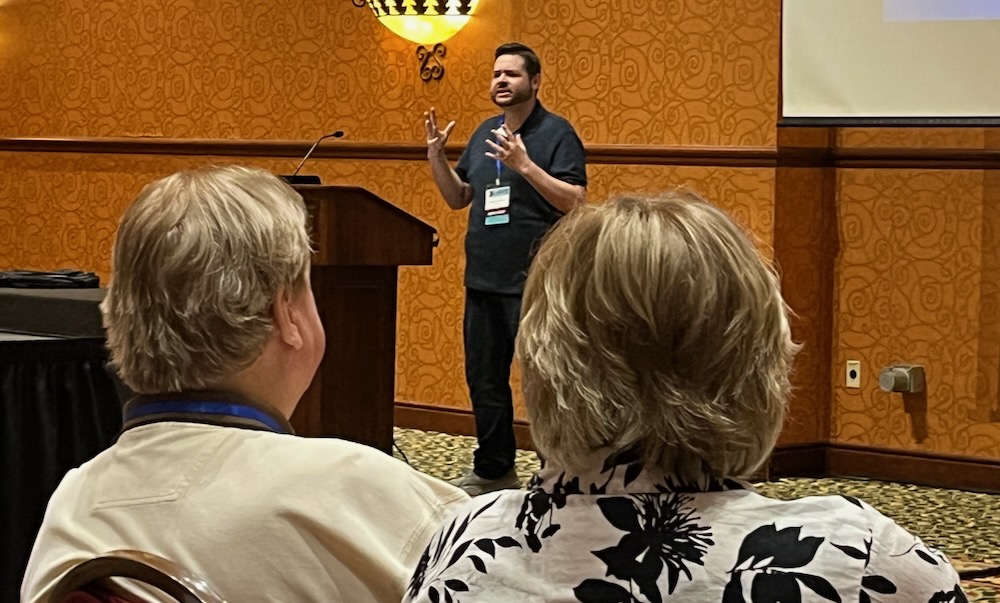
Preston Northcraft offers hope to those suffering from mental illness by his own experience.

That’s exactly what Preston, who suffers from a bipolar condition and gambling addiction, has done. He delivered a message of hope for other young people by assuring them they are not alone in their condition, and offered steps to overcome mental health challenges and live a successful life.

Preston has also written a couple of books about mental illness. HIs presentation showed that he has emerged as an engaging speaker. He turned his pain into a positive.

Finally, for me, the most impactful story I heard at the conference was that of keynote speaker, Dr. Christine Kunzweiler, a veterinarian and wife of Tulsa District Attorney Steve Kunzweiler.

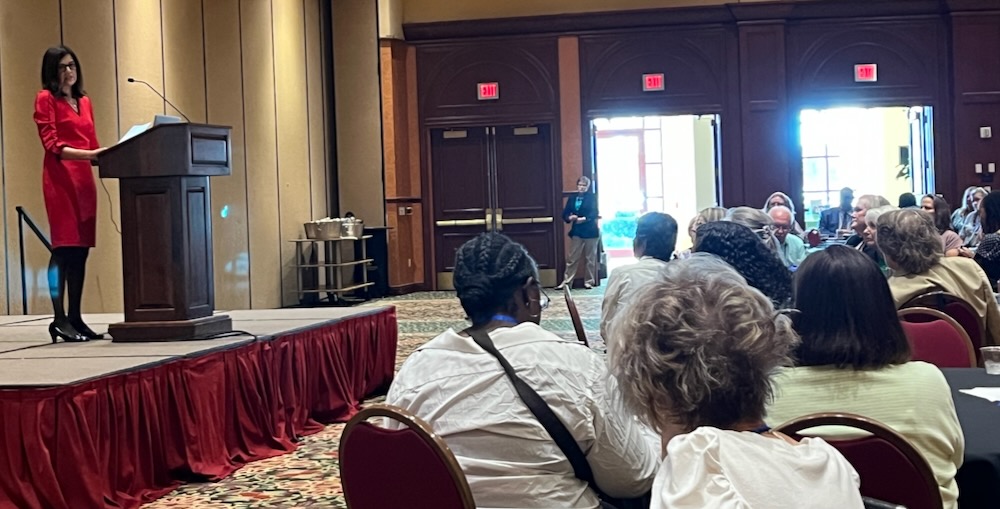
Dr. Kunzweiler shared the story of the journey her family has been on after her daughter, while in the midst of mental health crisis in 2022, stabbed her father, Steve Kunzweiler. The incident resulted in the Kunzweiler’s daughter serving a long period in jail before eventually being found not guilty by reasons of mental impairment.
Kunzweiler
Keynote speaker Dr. Christine Kunzweiler, shares how her family was challenged by the mental health condition of her daughter.

The mental illness her daughter suffered from and the family crisis it created inspired both Dr. Kunzweiler and her husband to become advocates for mental health reforms and services.

While Steve Kunzweiler survived the incident with minor wounds, it is a similar story — but less tragic — to that of Oklahoma Labor Commissioner Mark Costello. Many Oklahomans are familiar with the story of how Costello lost his life when he was stabbed to death by his son, who suffered from a severe mental illness.

Today, Mark Costello’s wife, Cathy Costello, has become a fierce advocate for crisis intervention and speaks frequently on the subject.

I came away from Dr. Kunzweiler’s speech grateful that she’s willing to share her family’s story in a public way when there is still such a stigma surrounding mental illness.

Her experience and story provided something her audience needed to hear — that we are not alone in our challenging situations. Many others face the same challenges.

She gave us hope that we can emerge from dark days with a new purpose and shine a light to help end the stigma of mental illness.
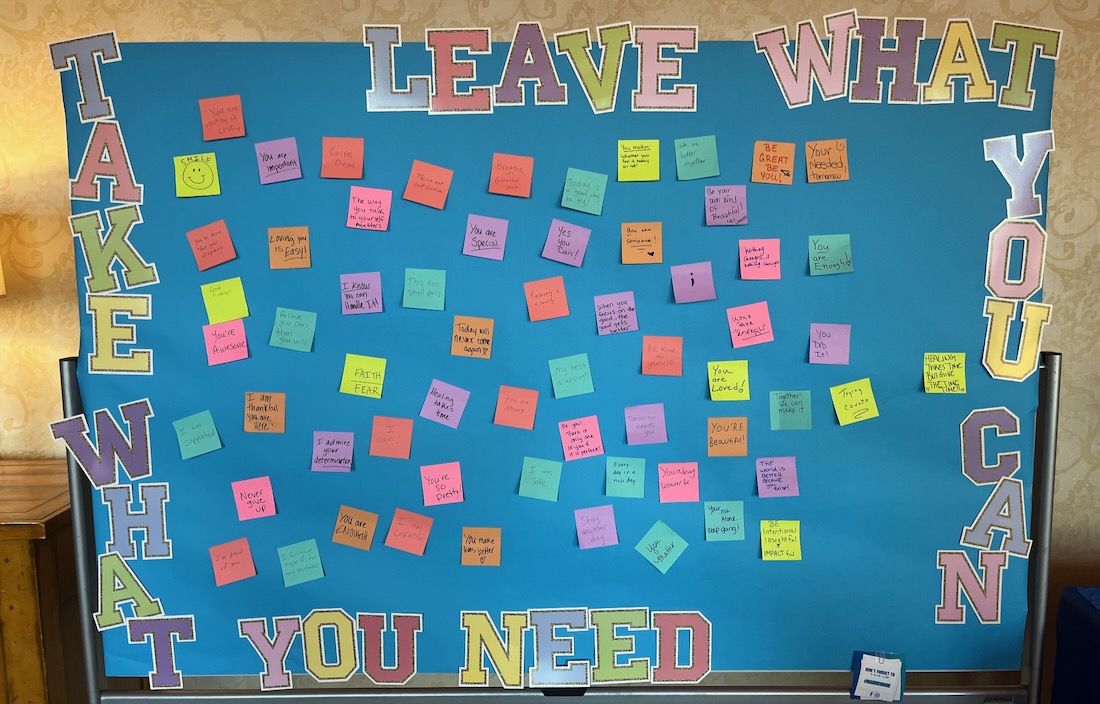
IMG_6418
The ‘Inspiration Board’ at the NAMI Oklahoma conference was filled with notes of encouragement

Walking tour showcases future impact of OKC’s Convergence project

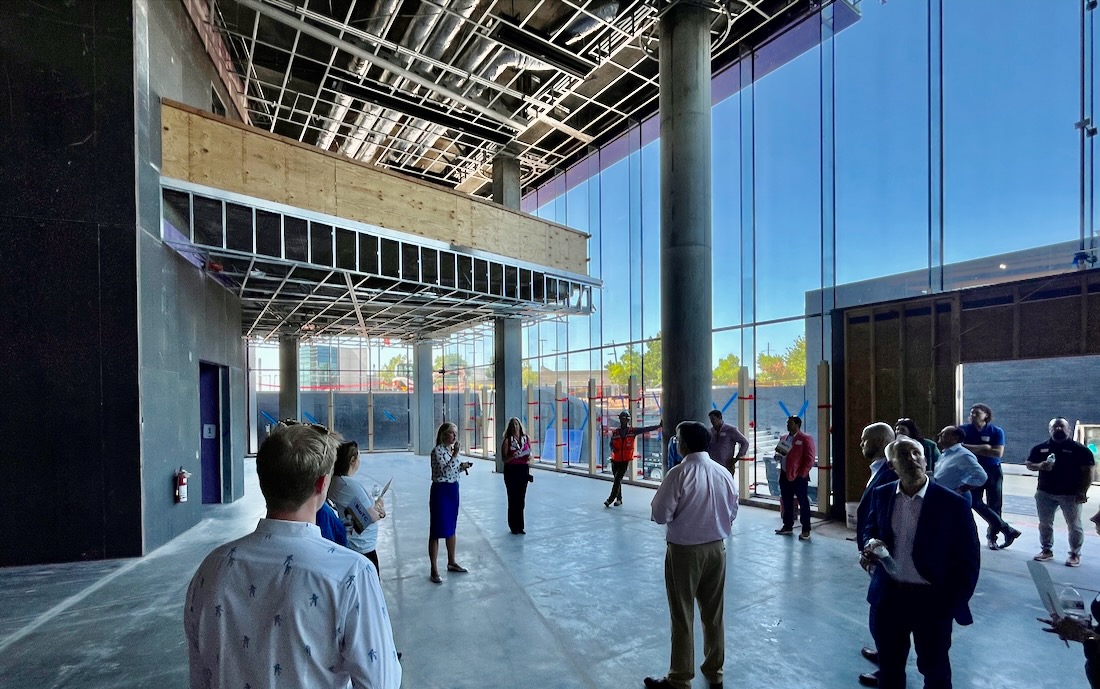
Convergence floor
Second floor of the Convergence tower under development in OKC’s Innovation District.

If you’re like me, you’ve been curious about the new Convergence tower rising from the ground the past couple of years along I-235 just east of downtown.

The eight-floor Convergence tower is a $200 million privately funded development in the heart of OKC’s Innovation District. The project includes the adjacent, MAPS funded Innovation Hall with a future hotel also planned for the site.

A pair of prominent OKC real estate investors/developers in Richard Tanenbaum, CEO of Tanenbaum Holdings, and Mark Beffort, CEO of Robinson Park Investments, have led the Convergence project.

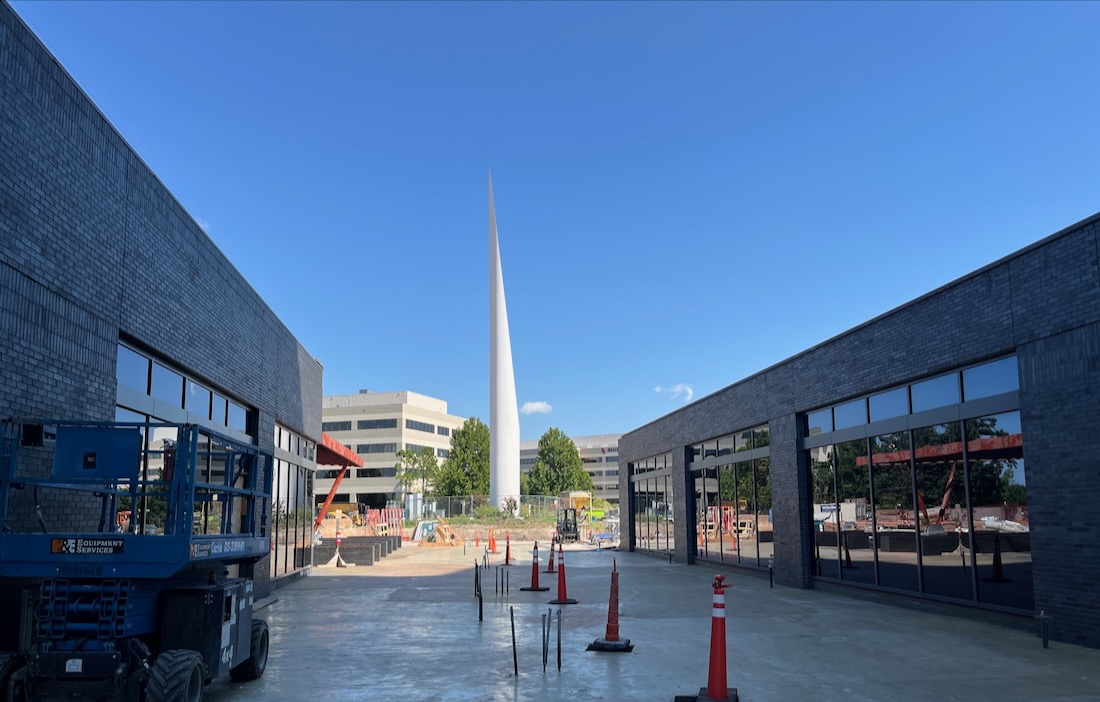
Convergence sits on a pretty small plot of land — 5.5 acres — that surrounds the tiny Stiles Park and its Beacon of Hope, which shines a green light into the night sky like a giant flashlight. The project will have underground parking.

Stiles park
Stiles Park holds its ground as part of the Convergence project

The Convergence website descibes the project as an “ecosystem reshaping Oklahoma City’s economy through innovation, collaboration, diversity and advanced technology.”

The project is certainly reshaping OKC’s Innovation District.

Anyway, I wrangled a ticket to attend the Greater OKC Chamber’s recent networking event and walking tour of the still-under-construction Convergence development.

My professional background includes many years of covering Oklahoma’s emerging biotech industry, first as a reporter for The Oklahoman newspaper and later as a writer and then freelancer for i2E, Inc., the not-for-profit that mentors and invests in many of the state’s entrepreneurial startups.

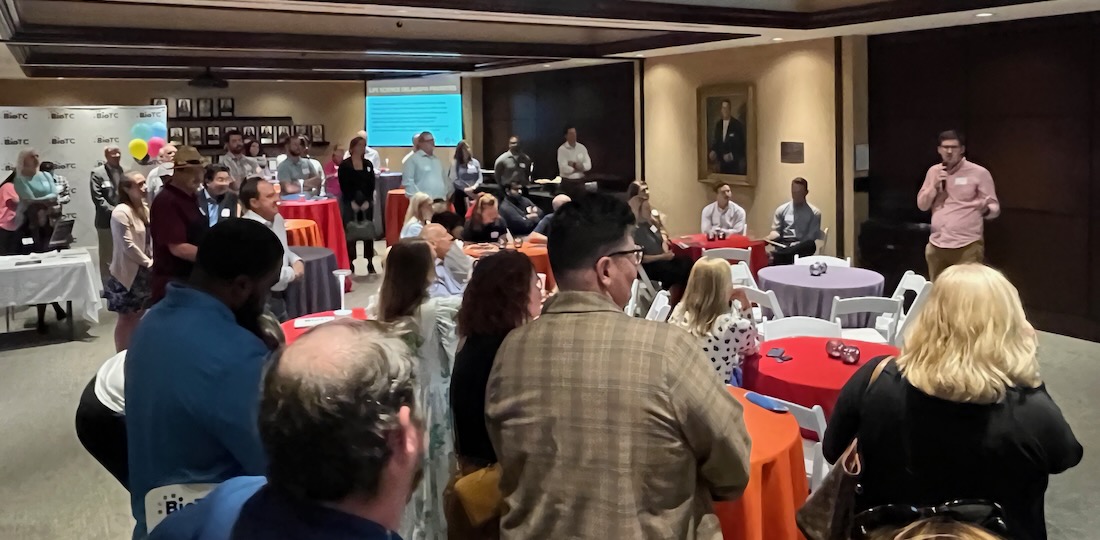
So, that led me to gather with about 75 folks at the Oklahoma  Our Blood Institute, which sits at the intersection of NE Eighth Street and Lincoln Blvd. It’s maybe a 50-yard walk from OBI to the new development.

Here’s what I learned that afternoon during the networking event and walking tour:

First, the Oklahoma Bioscience Association has been rebranded as Life Science Oklahoma, which made its debut at the annual BIO show in San Diego this past June. My friend, Dr. Craig Shimasaki, co-founder and CEO of OKC’s Moleculera Biosciences,  is co-chair of Life Sciences Oklahoma, along with Andrew Westmuckett, director of technology ventures at the Oklahoma Medical Research Foundation. 

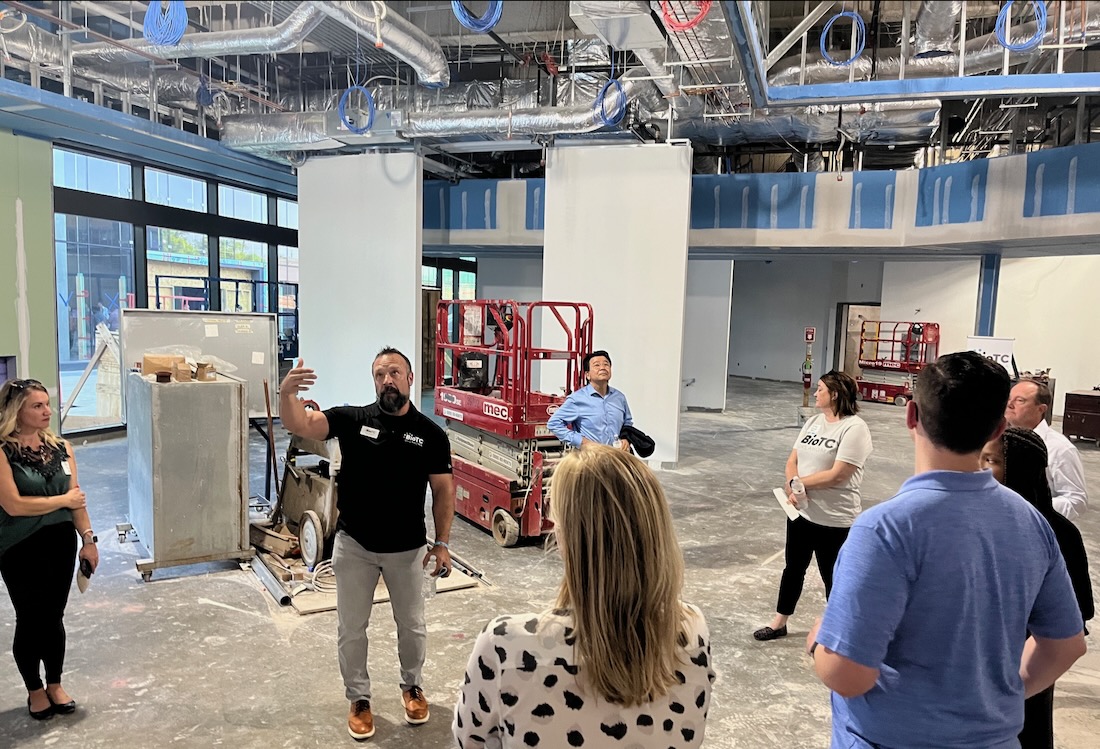
Education will play a major role at the Innovation Hall, which features a Bio Pharmaceutical Workforce Training Center called BioTC.  We received a good explanation of how the space will accommodate aspiring biotech workers from Koey Keylon, BioTC’s, executive director. It will offer one-week, hands-on short courses in biotechnology manufacturing in which students will learn the biotech process and how to use sophisticated technology involved. It also offers an advanced two-week certification curriculum.

BioTC
Koey Keylon, executive director of BioTC, shows off the educational space in the Innovation Hall

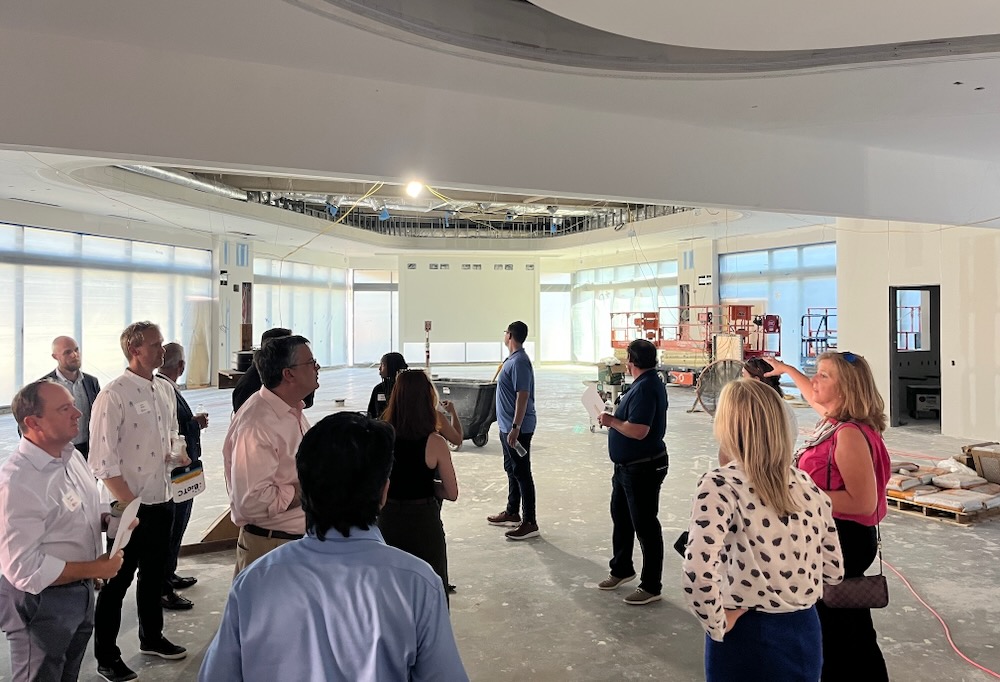
Innovation Hall also includes a large Event Hall, a cafe and lounge open to the public, four conference rooms and two small “phone booth” size work/meeting spaces.

Innovation Hall is part of MAPS 4 Innovation District funding, which contributed $11 million to the development, with another $10 million or so from non-MAPS sources, according to the City of OKC.

After we toured the Innovation Hall, we entered the first floor of the Convergence tower. Much of the first floor will be occupied by Wheeler Bio,  an up-and-coming contract development and manufacturing organization in the life sciences space. Wheeler Bio also will have administrative offices on upper floors of the building.

CrossFirst Bank has been announced as a tenant, while the University of OklahomaTinker Air Force Base  and an unnamed aerospace partner will occupy the eighth floor.

All this was empty space as we toured it, but you could see the possibilities and envision the future.

By the way, I highly recommend you crossing over I-235 onto Eighth Street to drive slowly past the Convergence project for a closer view, then meander through the Innovation District that includes OSU’s Hamm Institute for American Energy adjacent to Convergence on the north side, University Research Park to the south and OU Health Sciences Center to the north and east.

In a year or maybe less, Convergence tower and Innovation Hall should be filled with bioscience research and manufacturing professionals. as well as students aspiring for a biotech career, while offering great meeting and hangout space in the Innovation Hall.

I can’t wait to see it all in action.

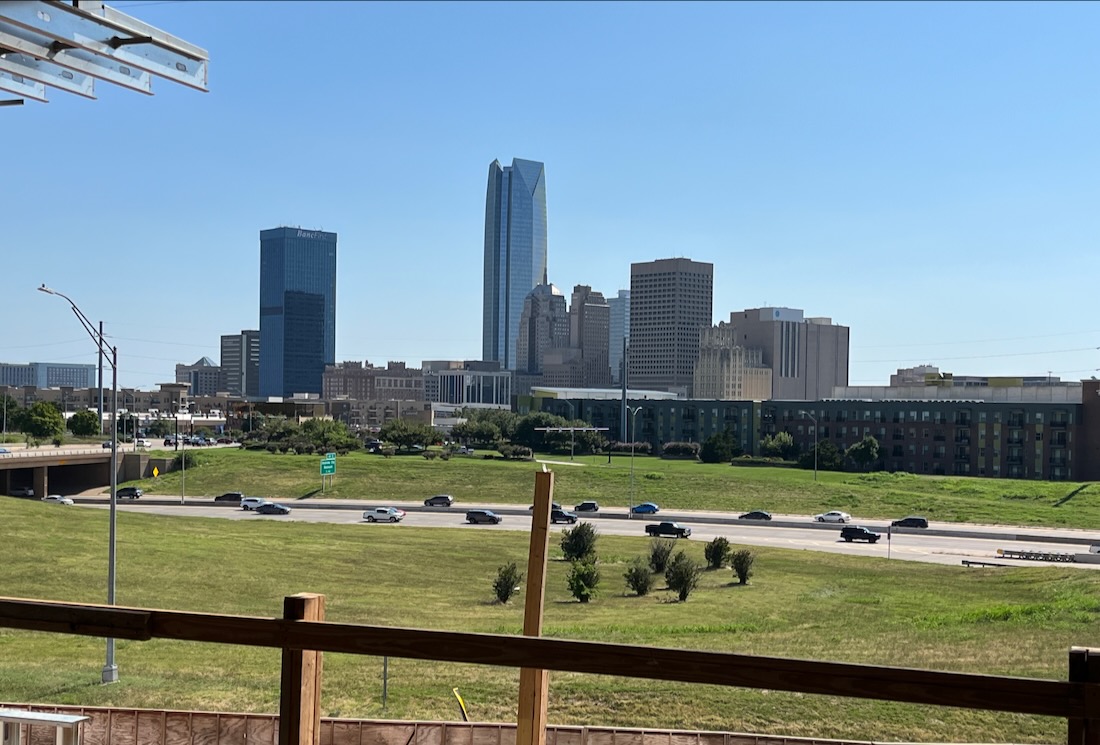
Downtown view
View of downtown OKC from second floor of the Convergence Tower
Innovation Events
Event space in the Innovation Hall
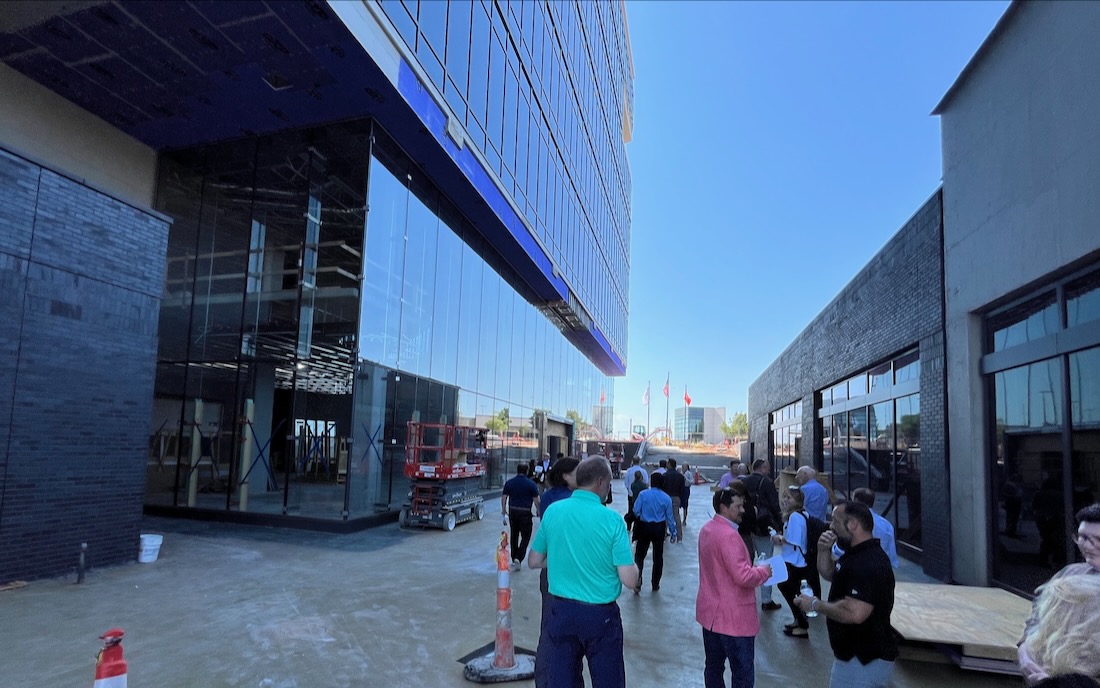
Buildings
Walking between buildings on a tour of the rising Convergence project in OKC.
Jeff Seymour
Jeff Seymour, executive vice president of the Greater OKC Chamber, welcomes guests to the recent networking event and Convergence project walking tour.

OKC’s Golden Age of Tweetups & OpenBeta

Screenshot

I came across the obituary last week of Oklahoma City business leader Phil Scaramucci. I never met him, but his name was familiar. As I read further into his life story, I came across the name of his wife, Avis.

I don’t know Avis, either, but I know of her as the founder of the now departed Nonna’s Ristorante in Bricktown. That was in the obituary, as well.

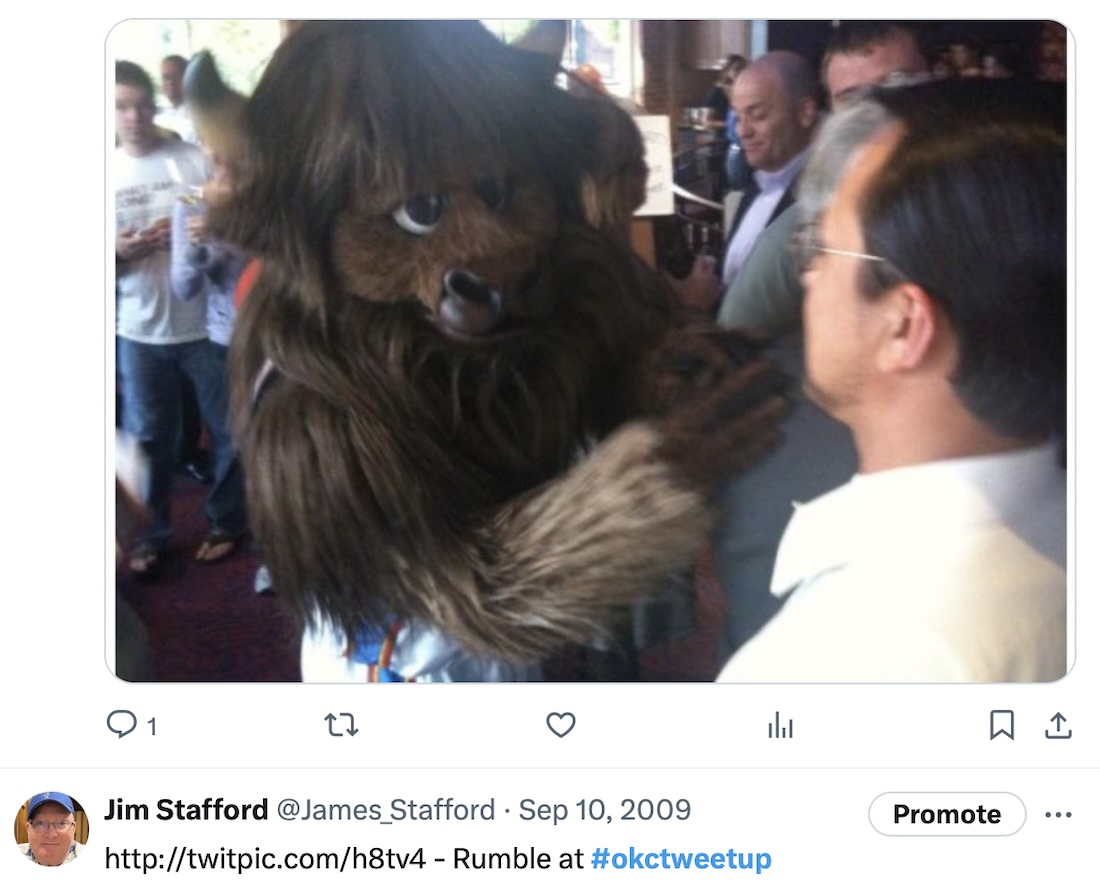
And THAT led me to recall an event I attended at Nonna’s in 2009. It was called a “Tweetup,” one among many such events that sprang up across OKC and elsewhere in that era, which provided the opportunity to meet my new Twitter friends in real life.

Screenshot

The Tweetup at Nonna’s was such fun. Probably well over 100 people attended, and, as I recall, there was free food and drink. I don’t know who paid for it. Great networking opportunities.

Tweetups became such a thing that I received an invitation to attend a Tweetup at the 2009 International BIO convention that I attended on behalf of i2E and the Greater OKC Chamber.

What set Tweetups apart — and what I call Early Twitter of the late 2000s — was how positive and upbeat everyone was. Folks were eager to lift one another up, and the concept of Twitter trolls had yet to appear to spoil the fun.

Social media was emerging in importance in that era. In fact, my friend Russ Florence, President and CEO of the Consulting and PR firm Schnake Turnbo Frank, recently told me that his firm was among the first to hire a social media and digital media specialist.

I found my way onto Twitter in the Spring of 2008 at Russ’s invitation. I worked as a Business News reporter at The Oklahoman, and discovered Twitter to be an incredible fountain of information and news.

So, I jumped into the deep end and have never left.

About that same time, another phenomenon occurred with the rise of co-working spaces. The first I recall was OKC CoCo — for Coworking Collaborative — created in downtown OKC by Derrick Parkhurst.

Derrick began hosting what he called “OpenBetas” on a semi-regular basis. OpenBetas were events where anyone could pitch their innovation or new business concept. There was food and drink and a festive upbeat atmosphere.

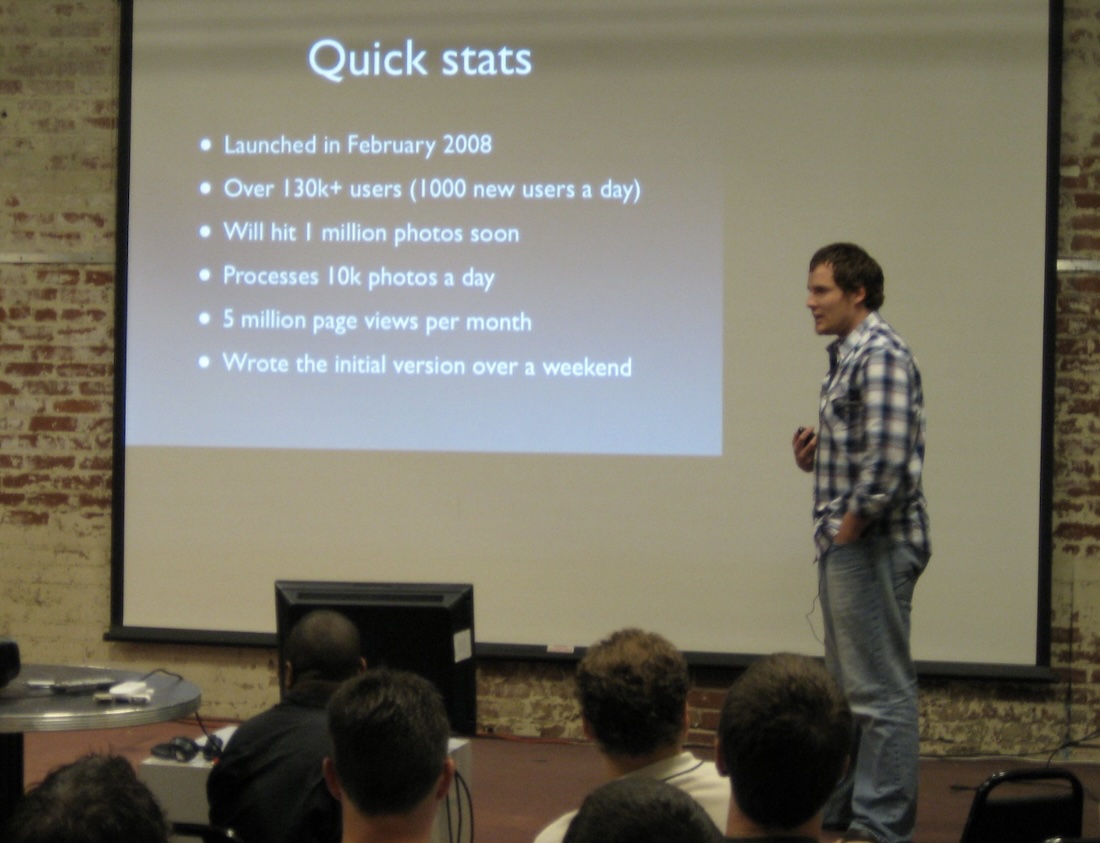
For example, Oklahoma native and entrepreneur Noah Everett shared details of his company called Twitpic at an OpenBeta event back in those days. Twitpic was huge in early Twitter as a way to post your photos.

Screenshot
Oklahoman and Twitpic founder Noah Everett discusses his venture at OpenBeta in 2009.

Another friend, Dan Lovejoy, today an Enterprise Architect Expert for OG&E, also fondly recalled the era of Tweetups and OpenBetas.

Screenshot“That really felt like an extension of the heyday of the blogosphere when so many people were blogging,” Dan told me. “I remember in those early days I would follow anyone from Oklahoma.
“I spoke at one of those (OpenBetas). They were fun.”

Fast forward to today’s Twitter, which is now known as “X” and owned by Elon Musk, who seems intent upon running into the ground. Many of my old Twitter friends have fled the site as the number of trolls increased exponentially and negativity is everywhere.

I’m still on Twitter (I refuse to call it “X”), if only because it remains a great source for breaking news, both local and beyond. I try my best to ignore the trolls, bots and MAGA acolytes.

But that’s where we are in 2024. Far removed from the naivety of Tweetups and OpenBetas.

So, I’m sorry for the loss of Phil Scaramucci, but I’m glad I got to read his life story in the paper. And how it reminded me of that 2009 Tweetup at Nonna’s.

Tweetups and Nonna’s are now only fond memories. Sadly, neither will ever be replaced.

Screenshot
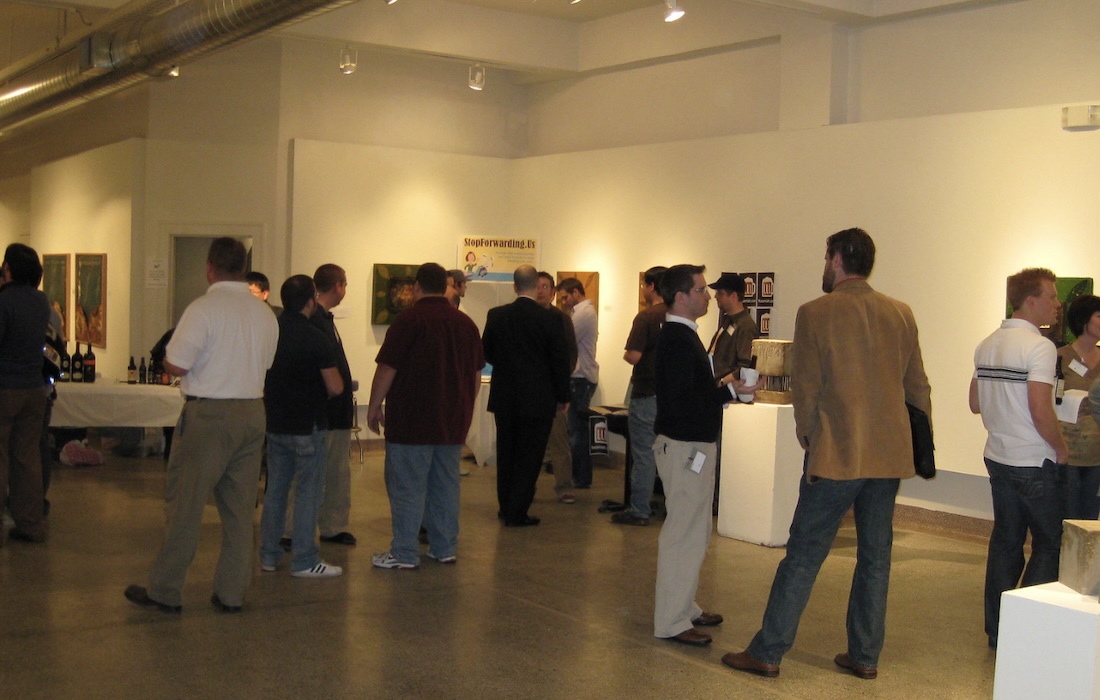
Networking at OpenBeta in roughly 2009.

The best reunions are always happenstance

RipStell2
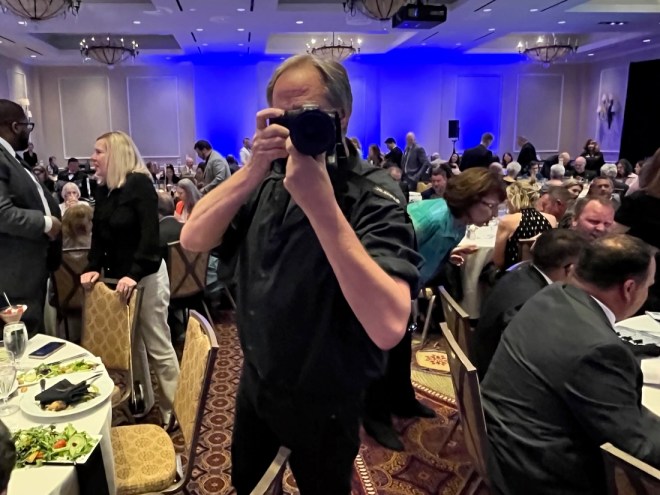
Photographer Rip Stell shoots my photo as we greet one another at a recent event in OKC.

First of all, let me say that I’ve never been to my high school reunion, not even the 50th anniversary reunion in 2021. I was sort of the invisible man at Fort Smith’s Southside High School.

So, it’s not like anyone is missing me.

Plus, my favorite teachers are now deceased. I loved you, Judy Massey and Tom Oliver.

I’m not so big on family reunions, either, although I’m not sure why. Maybe, it’s because you have to listen to your Crazy Uncle yammer on about what’s wrong with the world?

But there is a reunion that warms my heart every time. It’s the impromptu reunion of unexpectedly running into an old colleague or friend from your past life. It can set off shouts of joy and hugs all around.

That’s exactly what happened this week at the Journal Record’s event that honored Oklahoma’s Most Admired CEOs and Financial Stewards. My friend and boss, Steve Buck, President/CEO of Care Providers Oklahoma, was one of those honored at the event.

Anyway, as I was watching the honorees take the stage for a brief moment in the spotlight, I noticed a couple of photographers who were recording the event.

Although his back was to me the entire time, I recognized one of the photographers as Rip Stell, whom I knew from my tenure at i2E, Inc., here in OKC. I couldn’t miss him because he was taller than the other photographer and wearing his signature black shirt.

So, after Steve and all the other CEOs had been honored, I saw Rip sitting at a table not too far from where the Care Providers Oklahoma team was seated.

I jumped up and began walking toward Rip when he saw me and quickly jumped up himself. Rip gave me a big bear hug and then gave me a photographer’s pose with his camera to his eye while I shot my usual bad iPhone pic.

RipStell1

We had only a few seconds to chat, but it was a grand reunion.

Rip lives in Tulsa and was shooting this event on a contract. Over the years, he shot many  Love’s Entrepreneur’s Cup (now called Entrepreneur’s Cup Sponsored by Love’s Travel Stops) business plan competitions that I worked on behalf of i2E.

The Love’s Cup was sort of a rapid-fire event, which required Rip to be ready for group and individual shots one after the other. His photos were outstanding year after year, with an eye for both the posed and the candid shot.

You can check out his work at Ripstell.com. 

After sharing a moment, I quickly went back to the CPO table.

However, the Rip Stell reunion made my night. I’m so happy for the random encounter, Rip.

May fate bring us together again.

OKC’s TokenEx draws $100 million investment

ALEX1
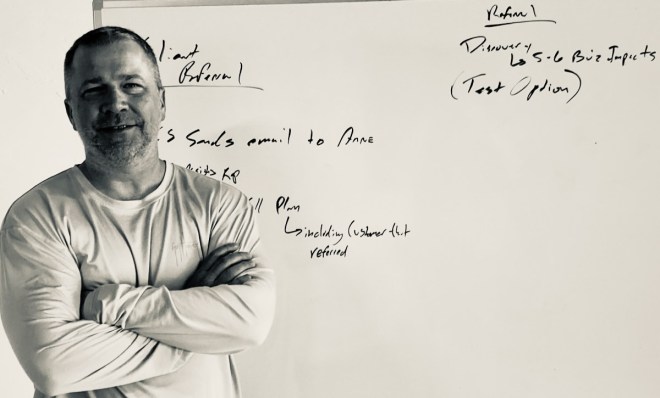
TokenEx co-founder Alex Pezold stands in front of a whiteboard in the company’s Oklahoma City offices

Something big for all Oklahomans recently flew under the radar locally, and I thought BlogOKC would be a great place to shine some light.

OKC’s TokenEx received a Series B investment round of $100 million.

$100,000,000. That’s a lot of zeros.

TokenEx logoIf you are unfamiliar with the company, TokenEx developed proprietary technology that “desensitizes” critical information by replacing it with tokenized placeholders that have no relation to the original inputs.
So, if a hacker breaks into a company’s server and steals sensitive data such as credit card or Social Security numbers, tokenization renders the information useless to the data thief.

Co-founded by Alex Pezold, CEO, and Jerald Dawkins in 2010, TokenEx is located in the Port164 office center in far northwest Oklahoma City. It employs 72 people who are constantly innovating improvements to the tokenization software.

I became acquainted with Pezold and Dawkins through past work with i2E, Inc., and the Oklahoma Center for the Advancement of Science and Technology (OCAST). TokenEx’s early development work was supported by funding from OCAST’s Oklahoma Applied Research Support program and the OCAST Technology Business Finance Program managed by i2E.

Read more on TokenEx in an article I wrote last year on behalf of OCAST.

The latest investment round was led by Manhattan Beach, Calif.-based K1 Investment Management, LLC, which led me to ask Pezold about location implications for TokenEx.

Pezold was adamant that TokenEx was, is and continues to be an Oklahoma-based venture.

“TokenEx always has been and always will be an Oklahoma-first business,” he said. “We continue hiring locally and actually relocating professionals into the state of Oklahoma! Of course, due to the pandemic, our hiring practices have adapted accordingly so our business can thrive. “

The latest investment round will allow TokenEx to expand its “go-to-market capabilities” while enabling it to continue to create new products and solutions, Alex told me.

Pezold and his team built this business amid an extremely competitive market, yet drew investor interest from more than 10 different potential equity partners before the K1 Investment Management deal.

“We selected K1 Investment Management because of their progressive practices around partnering with and growing their portfolio companies,” Alex said. “K1 has already been a great partner to TokenEx, and we expect our partnership to progress nicely as our cultures blend extremely well – and we are aligned as partners with our goals.”

Tokenization screenDemand for TokenEx’ tokenization solution continues to increase in urgency. There were 1,862 data breaches last year according to the International Association of Privacy Professionals.


Meanwhile, new legislation was proposed in Oklahoma designed to protect data privacy, and similar laws are being adopted around the nation and the world.

“As we’ve seen even here in Oklahoma recently, legislation around protecting privacy data for Oklahoma constituents is only increasing, which is the opportunity we will capitalize on in he next 2-5 years,” Alex said. “The good news, TokenEx is already protecting both payment and privacy data today, so it is only natural that we will continue growing in both addressable markets.”

I’m proud that TokenEx was created in Oklahoma and continues to be an Oklahoma-based company.

Click here to read an article from VentureBeat that details the investment.

Another big win for Stillwater’s XploSafe

Explosafe logos

For the last five years that I worked as a Business news reporter at The Oklahoman in the early 2000s, my job was to cover Oklahoma’s ‘tech’ industry.

It was exciting to see new Oklahoma technologies bubbling up all the time. Health care was big. Software. Products developed in labs of university professors.

Sometimes, I got an early look at an emerging technology through the Donald W. Reynolds Governor’s Cup collegiate business plan competition. Now called the Love’s Entrepreneur’s Cup, the annual event is managed by i2E, Inc., the not-for-profit corporation that provides business advisory services and investment to Oklahoma startups.

Students from campuses across Oklahoma compete annually in the Love’s Cup and pitch some amazing technologies.

Anyway, back in 2009 I met a young Oklahoma State University student named Shoaib Shaikh, who pitched a concept developed around explosive detection technology at the Love’s Cup. The intellectual property was developed in the labs of a couple of OSU professors.

The team did not make the finals of the event.

But guess what? The students and the professors continued to pursue the technology and launched a business to advance it. It was called XploSafe, LLC.

Today, more than 10 years later, XploSafe is an emerging Oklahoma success story and still based in Stillwater. And Shoaib is its CEO and chief financial officer.

XploSafe has broadened its menu of safety products to include homeland security and first responder applications, air monitoring for chemical and vapor detection, transportation security and hazmat safety.

space suitThe company continues to make groundbreaking news on a regular basis. Just two months ago I published news that XploSafe had been awarded the Green Chemistry Challenge Award by the Environmental Protection Agency for a sorbent product it developed for the removal of phosphorus and nitrogen from water.
This week, I received a news release from XploSafe that revealed it has been awarded a $750,000 Phase II Small Business Innovation Research (SBIR) program research contract from NASA. XploSafe will develop sorbents to protect astronauts from potentially harmful contaminants in their spacesuits.

It’s great to see this Oklahoma company continue to push the innovation envelope with groundbreaking products. Congratulations, XploSafe!

Here is the entire XploSafe news release about the NASA award:

XploSafe Wins $750K Phase II NASA SBIR Research Contract

Stillwater, OK – 19 August 2021 – XploSafe announced today that it has been awarded a $750,000 Phase II SBIR contract from the National Aeronautics and Space Administration (NASA) to advance the development of vacuum-regenerable sorbents for the next-generation of American spacesuits over the next two years.

The XploSafe sorbents shall keep the spacesuit’s internal air-flow free of potential toxic, trace contaminants, which can pose severe health threat to the crewmembers. This capability is necessary for NASA’s upcoming Artemis missions, in which the United States intends to return to the moon by 2024, and the XploSafe team is aiming to submit working prototypes to the team at NASA’s Johnson Space Center for testing within the first 12 months of the project. This can have major a positive impact on the logistics of future space missions by replacing the current non-regenerable sorbent with a vacuum-regenerable sorbent.

Dr. Moumita Bhattacharya, Research Scientist I at XploSafe, stated that “we felt that we had not only met, but greatly exceeded the goals set forth by the team at NASA during the Phase I. Winning a follow-up contract was validation that we had done just that.”

During this Phase II project XploSafe aims to develop and deliver prototypes of the new Trace Contamination Control System that can be directly integrated into the spacesuits’ life support system.

The new sorbent technology will advance the viability of NASA’s crewed deep space exploration objectives. To enable longer spacewalks, lighter launch payloads, and substantially improve time in-suit over the duration of upcoming missions.

XploSafe’s Operations Manager, Michael Teicheira, had the following to say: “the awarding of this Phase II contract shows just how special our research during the proof-of-concept phase was. Our team is excited to continue showcasing the research and development efforts of XploSafe here on the biggest stage, and we are grateful for another opportunity to show the world what Oklahoma can offer.”

XploSafe based in Stillwater, Oklahoma is a provider of critical safety solutions for homeland security and chemical safety. Their XploSens explosives detection, XPell peroxide safety products, and XCel+ chemical vapor sampling badges are used by first respondes, industrial safety officers, threat assessment officials, and laboratory and chemical manufacturing personnel all over the world. The company holds multiple patents for vapor nanoconfinement technology that facilitates high-capacity absorption, stabilization, and consistent recovery (removal) of a wide range of volatile, semi-volatile, and even reactive organic compounds.

For questions, please contact Shoaib Shaikh, Co-Founder and CEO, at Shoaib@XploSafe.com, or visit XploSafe online at www.XploSafe.com.

Oklahoma Innovation Model seeded invention of ‘Socket-less Socket’ for prosthetics

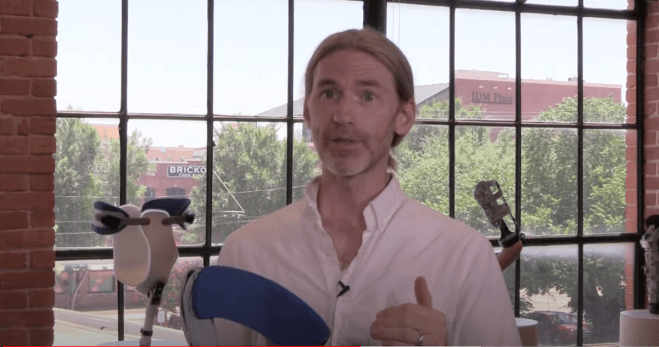
Jay Martin discusses his prosthetic invention during OCAST interview in 2018

In a recent appearance on the Innovate That podcast hosted by Lt. Gov. Matt Pinnell,  Oklahoma City inventor and entrepreneur Jay Martin told how his work with NASA inspired his company’s prosthetic innovation known as the Socket-less Socket.

Listen to the entire podcast sponsored by the Oklahoma Center for the Advancement of Science and Technology (OCAST) and hear Jay describe his work on NASA exoskeleton designs and how it carried over to his own company, Martin Bionics.

A recap of Jay’s comments that I wrote appeared in the March 17 edition of the Journal Record. (subscription required)

However, space limitations for that article prevented inclusions of several comments Jay made about the impact OCAST and the Oklahoma Innovation Model have had on his prosthetic design work over the years.

I thought they shed some light on how critical state support of innovators like Jay can be, so I’m posting his comments in this blog.

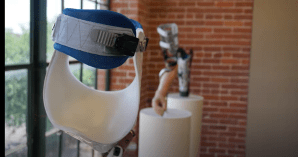
Prosthetics displayed at Martin Bionics

All of these comments are from Jay Martin made during the Innovate That podcast:

Martin on the value of OCAST

If you look back at the history of Martin Bionics, there are several significant pieces in that timeline, in that story line that have OCAST’s name on it. At the very beginning I was practicing clinical prosthetics and had some ideas for some new prosthetic designs and ended up discovering OCAST. I went to every workshop OCAST had. I learned how to write grants, taught myself how to write patents, along with OCAST’s help in some of those workshops, and ended up winning my first OCAST grant, I think, while I was either still in residency or just out of residency. That was really the launching pad for me.

That really shaped the entire trajectory of my career. I ended up winning a number of OCAST grants over the years for technologies we were developing, but the impact to the amputee community has been significant from OCAST funding. And, obviously, Martin Bionics’ growth and trajectory and all of our staff, we can all thank OCAST for so many of those significant pieces of our journey. It’s a great resource we have here in Oklahoma. It’s incredible. I’ve encouraged so many other entrepreneurs to check it out because it has really been lifeblood for us to really accomplish some things that otherwise we would not have been able to.

Martin on the Oklahoma Innovation Model

When I was first starting, I was green. I knew nothing about entrepreneurship, grants, patents or any of that, so I was hungry to find information.

(Editor’s note: The Oklahoma Innovation Model includes OCAST, i2E Inc., the Oklahoma Manufacturing Alliance, the New Product Development Center at Oklahoma State University and the Oklahoma Catalyst Programs at the University of Oklahoma.)

All of those are incredible resources. Anyone who is young on their journey on entrepreneurship or advancing or creating, they are incredible resources and I’ve always found there are staff members in each of those organizations who are standing by ready to help, ready to answer questions and ready to go to lunch with you and download information. They are there to help us be successful. Absolutely incredible resources.

We have a real gift here in Oklahoma that some other states don’t have.

Why locate Martin Bionics here in Oklahoma?

I was born in Oklahoma, grew up in Norman, worked in Oklahoma City in my adult life. Oklahoma is a great place, and from the standpoint of entrepreneurship, the resources we have, you have OCAST and all those other great organizations there, but in addition to that we have relatively low cost of living, we have really nice people, we have a really progressive city that is amazing. It’s not too big, just the right size. We have rush minutes, not hours. It’s just a great place to raise a family, to live, to work and to play.

There’s enough industry in Oklahoma that there’s really a talented pool of applicants for hiring. So we’ve been able to grow our business compared to the coasts for a fraction of the price.

Watch a video interview OCAST conducted with Jay Martin from 2018:

MaxQ-Oklahoma Blood Institute collaboration launched during pandemic

I like to say that Oklahoma’s life science cluster stretches from Ardmore in the south through Oklahoma City to Stillwater, to Tulsa and on to Ponca City in the north.
Many of the various entities in Oklahoma’s biotech corridor — research, academic and health care — are usually brought together one time a year at the annual BIO International Convention in whatever city  it is held.

Except for 2020, of course.

Like almost every other conference in the world, the COVID-19 pandemic forced the BIO show this year to become a virtual gathering instead of at the San Diego Convention Center.

However, the pandemic couldn’t stop a unique collaboration launched earlier this year between a Stillwater-based company called MaxQ and the Oklahoma Blood Institute (OBI) — the state’s largest blood collection agency.

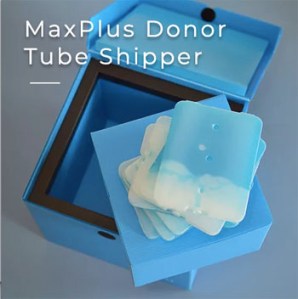
MaxQ invented a patented cold-storage packaging system that serves hospitals, research institutions and blood banks nationwide. OBI evaluated and began using MaxQ’s MaxPlus tube transport shippers earlier this year to ensure safe transport of critical blood products.

If you’re not familiar with MaxQ, here’s a story I wrote about the company on behalf of OCAST about five years ago.

MaxQ was founded by a team of then-Oklahoma State University students in 2012, and has since gained equity investment led by i2E, along with grant funding from the National Science Foundation. Saravan Kumar is MaxQ’s CEO.
MaxQ also won a $200,000 Oklahoma Applied Research Support grant from the Oklahoma Center for the Advancement of Science and Technology (OCAST) that supported development of foam insulation technology.

Today, the MaxPlus solutions are used in more than 520 hospitals, Level I trauma centers, emergency medical transport and blood centers globally.

Congratulations to MaxQ for developing an Oklahoma-made product that meets so many needs in the life sciences industry.

Below is a short story I recently received from MaxQ about its collaboration with OBI:

MaxQ, a Stillwater, Oklahoma, cold chain packaging solutions company, partnered with the state’s premier blood collection organization, Oklahoma Blood Institute (OBI), to deliver the most advanced blood packaging solutions. Oklahoma Blood Institute is the sixth largest, nonprofit blood collector in America. With 185,000 donors annually, OBI services approximately 230 medical facilities across Oklahoma, Texas, and Arkansas.

MaxQ, through its dedicated testing lab and validation services, assisted OBI in updating protocols to validate their packaging and shippers used to transport blood products. The collaboration has helped OBI save time and resources.

Through this collaborative relationship and in working with OBI’s operational team, MaxQ carefully studied blood center operations, the journey of a blood unit from a donor to recipient, and the impact of existing packaging solutions. The current industry standard bulky foam and cardboard boxes are heavy, cumbersome to pack and non-sustainable.

Using its proprietary Maxify™ technology, MaxQ developed the MaxPlus family of blood-specific packaging solutions that places donor blood product safety at its core. The smaller, lighter and highly reusable MaxPlus shippers are easy to pack, fully qualified against industry’s stringent standards, and generate significant savings.

The OBI team evaluated and successfully implemented the MaxPlus shippers for transport of donor specimen tubes early this year amidst the COVID-19 pandemic.

“The entire experience from concept to product delivery was fantastic,” said Carla Bartholomew, OBI Technical Operations Systems analyst. “We were replacing containers that were not very durable and were being replaced at an alarming rate. Enter the MaxQ team and their solution. Now the ubiquitous red tube boxes make me smile every time I see one in the hallway. The guys from MaxQ were very knowledgeable and passionate about transport containers. They listened to our concerns about size and weight and designed a solution tailor made for our needs. I look forward to working with them on future projects.”

The MaxPlus tube transport shippers employed by the major blood centers in the U.S. are quickly evolving as the new industry standard. This collaboration of two Oklahoma based entities is currently solving decades old blood transport challenges globally. The MaxPlus solutions are used today in over 520 hospitals, Level I trauma centers, Emergency medical transport and blood centers globally. Protecting and safely delivering every single unit of donated blood product to patients in need.

About MaxQ
MaxQ is Temperature Controlled Packaging Re-Imagined! Trusted by over 500 hospitals and clinics globally, MaxQ is revolutionizing the shipping of temperature-sensitive investigational drugs and other biologics with advanced breakthroughs in thermal insulation sciences and transparency. Its patented MAXIFYTM technology enables a new category of payload-specific, advanced packaging solutions with unprecedented features, thermal performance, and cost efficiency.  www.packmaxq.com/

OBI Media Inquiries
Contact Heather Browne, Marketing & Media Manager, at 405-419-1330 or heather.browne@obi.org with questions or to schedule an interview.

MaxQ contact:
Shoaib Shaikh
Office: 405 334 5720
Cell: 918 813 2955

Launching pad: Considering the potential of UCO’s Don Betz STEM Center

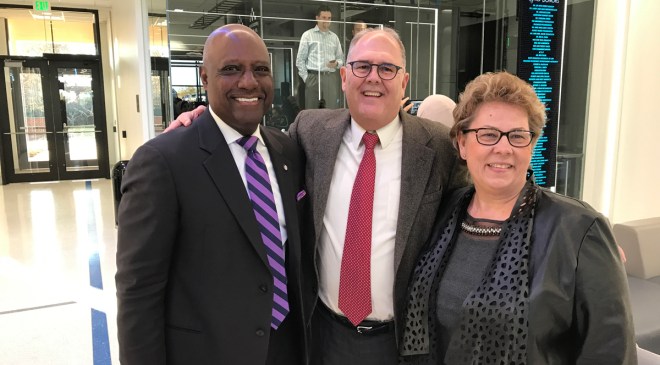
Michael Carolina, left, OCAST executive director, poses with Dr. Thomas and Carolyn Kupiec in the Don Betz STEM Research and Learning Center on the UCO campus.

I’ve always said that I would love to be involved in a STEM career, except for a few barriers – those being science, technology, engineering and math.

So, I’m content to write about those subjects on behalf of my friends at Oklahoma Center for the Advancement of Science and Technology (OCAST) and i2E, Inc.

But that doesn’t mean that I can’t admire an awesome new facility like the Don Betz STEM Research and Learning Center on the University of Central Oklahoma campus.

UCO officially opened the new 57,000-square-foot facility with a ribbon cutting ceremony this past Wednesday. I was among about 200 people fortunate to attend.

After the speeches and the ribbon cutting, we were invited inside to check it out.

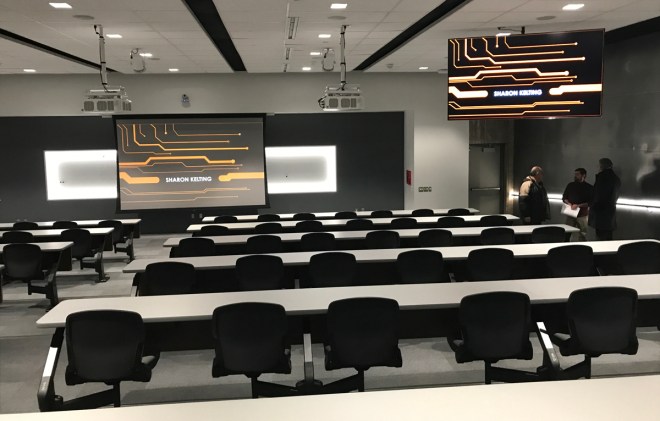
The Don Betz Center, named after the current UCO President, features state-of-the-art research and teaching labs for multiple academic disciplines and a striking lecture hall that can accommodate 80 students.
As I wandered the halls taking it all in, I encountered Dr. Thomas Kupiec, CEO of Oklahoma City’s ARL Biopharma and DNA Solutions. He and his wife, Carolyn, were visiting with Michael Carolina, OCAST executive director. I consider them all friends of mine and stopped to chat for a moment.

I knew that Dr. Kupiec was a UCO graduate, earning his undergraduate degrees there, but did not realize how involved he remains with the university. He is a member of the UCO Foundation Board of Trustees, and his Kupiec Family Foundation provided funding for the Betz Center’s lecture hall.

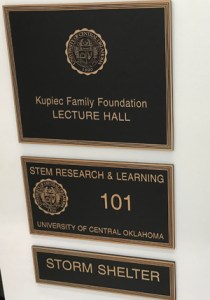
Dr. Kupiec pointed me to the lecture hall just across the corridor from where we were talking, so I walked over to check it out. A sign on the outside wall identified it as the Kupiec Family Foundation Lecture Hall, so I stepped inside.

The lecture hall is breathtaking, with theater style seating, sleek white tables and massive video screens scattered throughout.

The lecture hall also doubles as a storm shelter and is identified as such at the entrance.

The rest of the two-story Betz Center was equally impressive. I saw labs filled with microscopes and chemistry hoods. I toured a teaching facility for nurses that looked like an actual hospital room. I saw large racks of computer servers.

Hanging on the walls in the interior corridor were the original drawings of the building as envisioned by the architects at Elliot & Associates.

The Don Betz Center appears to be a perfect place to launch the next generation of chemists, health care professionals and research scientists for whom science, technology, engineering and math are no barriers.

Meanwhile, I’ll keep writing about it.

Inside the Kupiec Family Foundation Lecture Hall