MLB’s existential dilemma — why sharing the wealth for the Greater Good can save the game

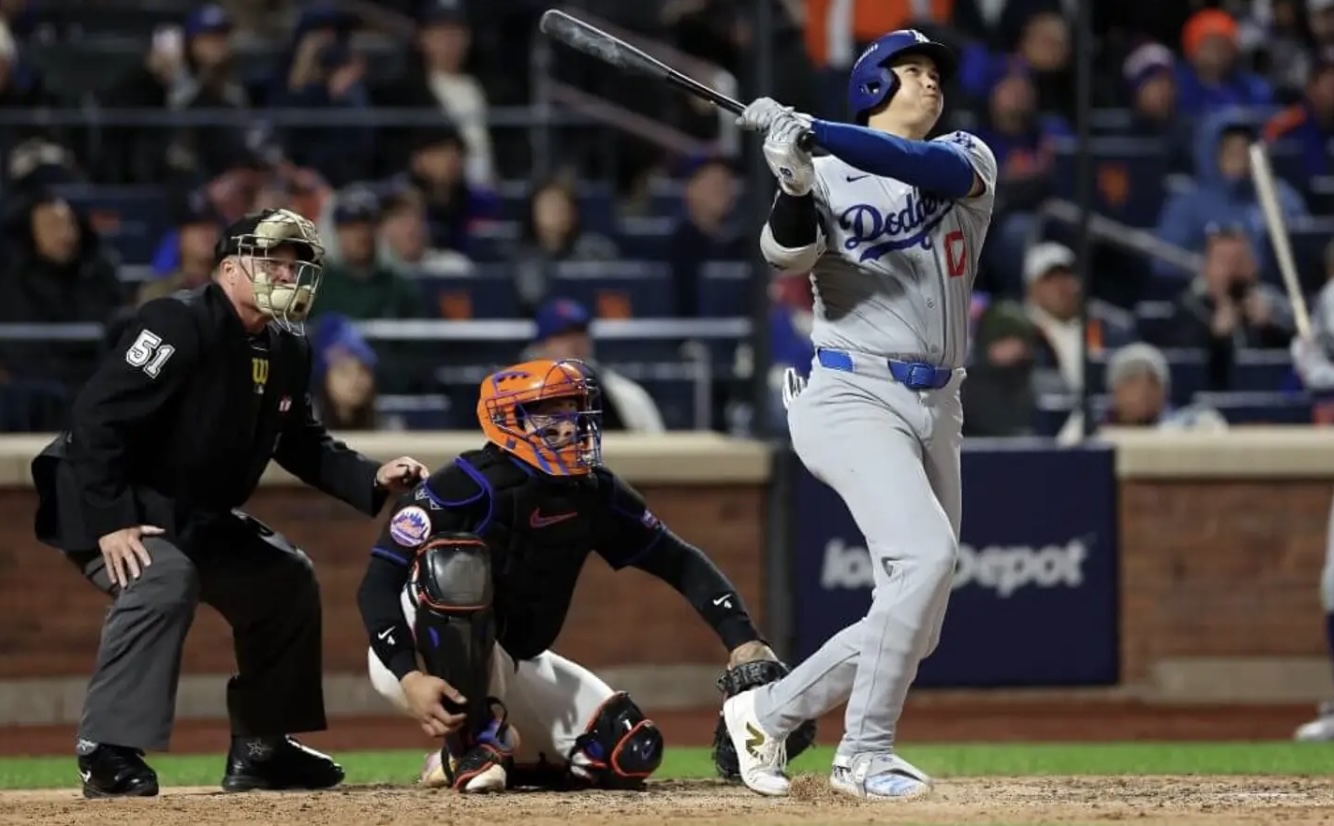
MLB’s brightest star, Shohei Ohtani of the Los Angeles Dodgers

As a longtime listener to the Dan Patrick radio show, I was incensed a couple years ago when I heard Dan say that Major League Baseball is no longer a national sport.

“It’s more of a regional sport today,” he said.

Dan followed up by saying that certain cities — St. Louis, Los Angeles, New York come to mind — have large fanbases, but that doesn’t translate into national interest in the game.

Plus, at that time baseball had no one player that had a national or global presence like, say, a LeBron James or Patrick Mahomes.

After I got over my initial righteous indignation, I came around to what Dan was saying about MLB. National ratings have slumped badly over the past couple of decades as young fans have put their focus on the NFL and NBA.

I couldn’t think of a single player that could command the attention of fans nationwide like LeBron or Mahomes.  Shohei Ohtani may be the closest baseball player to a true global superstar.

I’ve written about this before, but my sports passion has always been with baseball, first as a Little Leaguer and later as a fan of the St. Louis Cardinals and Texas Rangers.

Still, it’s clear that baseball, with its slow pace and not-made-for-TV presence — you can’t see all the players at once — has clearly been surpassed by the NFL and NBA.

So, when ESPN announced it would opt out of its MLB rights deal after the 2025 season, I was disappointed by not surprised. ESPN has been struggling with its viewership, too, and it is much more focused on NFL and NBA.

I was puzzled at how MLB Commissioner Rob Manfred planned to replace the ESPN revenue shared by all teams. What network would want to pay hundreds of millions to broadcast baseball and create surrounding programming?

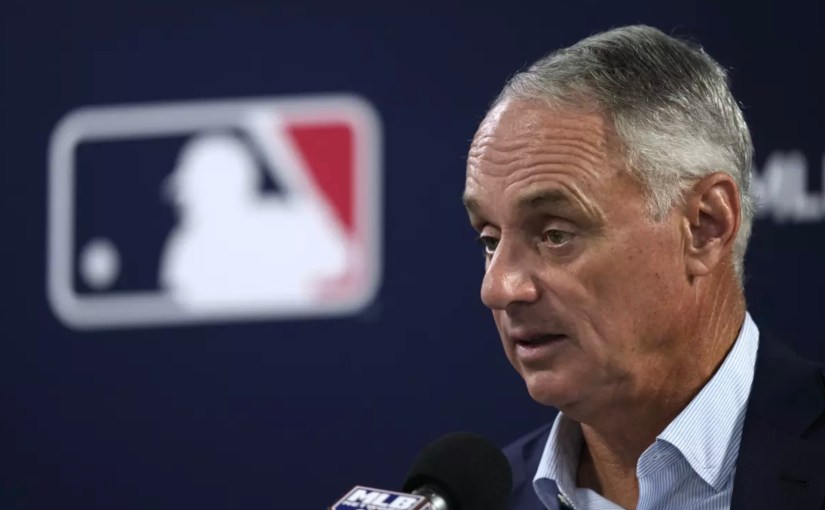
MLB commissioner Rob Manfred

Turns out, Manfred DOES have a plan, according to the Wall Street Journal article. In a lengthy and comprehensive article, the WSJ outlined the commissioners proposed scenario that appears to be a long shot.

Said the Journal:

“Manfred’s model would require teams to cede control of their local rights to the league office so that MLB could sell them collectively as a unified streaming package. Viewers would be able to purchase the games of teams they want to see without the blackouts that have long vexed devotees who actually live near where their favorite team plays.

“No cable subscription would be required. Revenue would be distributed among all teams, like it already is for national deals with Fox and Warner Bros. Discovery.

“The change that we’re talking about,” Manfred said in an interview, “is the only rational response to where the media market is today.”

There’s a huge problem with that plan.

MLB teams don’t share their local revenue with their baseball counterparts. Teams in Los Angeles, New York, Boston and Chicago all generate massive amounts of revenue through their local TV rights and are reluctant to give up any of that revenue for the Greater Good.

According to the WSJ, MLB teams lean on their local broadcast revenue more heavily than their NFL and NBA counterparts. Those sports have much larger national TV deals, and share the revenue across the league.

More from the WSJ:

“Cubs president Crane Kenney said in a recent interview at the team’s spring training facility last week in Mesa, Ariz., that his team would be willing to go along with a new TV model — as long as it accounts for his organization’s status as one of baseball’s highest-revenue teams.

“Treat us fairly,” Kenney said, “and we’re in.”

There’s little incentive for the big players to share their local broadcast revenue with their MLB brothers, unless they truly are concerned with the overall national decline of interest in the game. If a few teams folded, that might get their attention.

However, I can’t see the big market teams sharing their wealth with their small market counterparts — even if it helps sustain the sport.

This is 2025 America. Who does anything for the Greater Good?

Major League Baseball’s terrible, horrible, no good, very bad idea

Screenshot
A ‘Golden At-Bat’ in future for New York Yankees star Aaron Judge?

When I was a young would-be sports writer just out of college working for the Southwest Times Record newspaper in Fort Smith, Ark., my editor sent me out to cover the state small school baseball tournament.

I had not seen much high school baseball through the years, so I was caught by surprise by one particular rule the small schools played by.

It was called the “Courtesy Runner.”

That rule allowed coaches to sub in a faster runner when a slower player got on base. But the player who was substituted for could remain in the game. Usually, the coach subbed in his fastest guy for the big, slow catcher.

I was offended by the Courtesy Runner, because I grew up following Major League Baseball and knew that once a player was substituted for, he was out of the game. No coming back in.

But the Courtesy Runner seemed popular with high school coaches in back in 1979, even if it messed up my boxscore at the end of the game. It remains in play for high schools, softball and even Little League Baseball.

And now the Courtesy Runner has been joined by other earthshaking changes infiltrating Major League Baseball itself as the game seeks a younger demographic. The pitch clock. Bigger bases. Fewer mount visits.

More is coming.

Recently, MLB Commissioner Rob Manfred discussed the possibility of baseball using what he called a “Golden At-Bat.”

“You put your best player out there out of order at a particular point in the game,” Manfred said. “That rule and things like that are only in the conversational stage right now.”

Screenshot
Major League Baseball Commissioner Rob Manfred said the ‘Golden At-Bat’ is being discussed

Here’s a scenario:

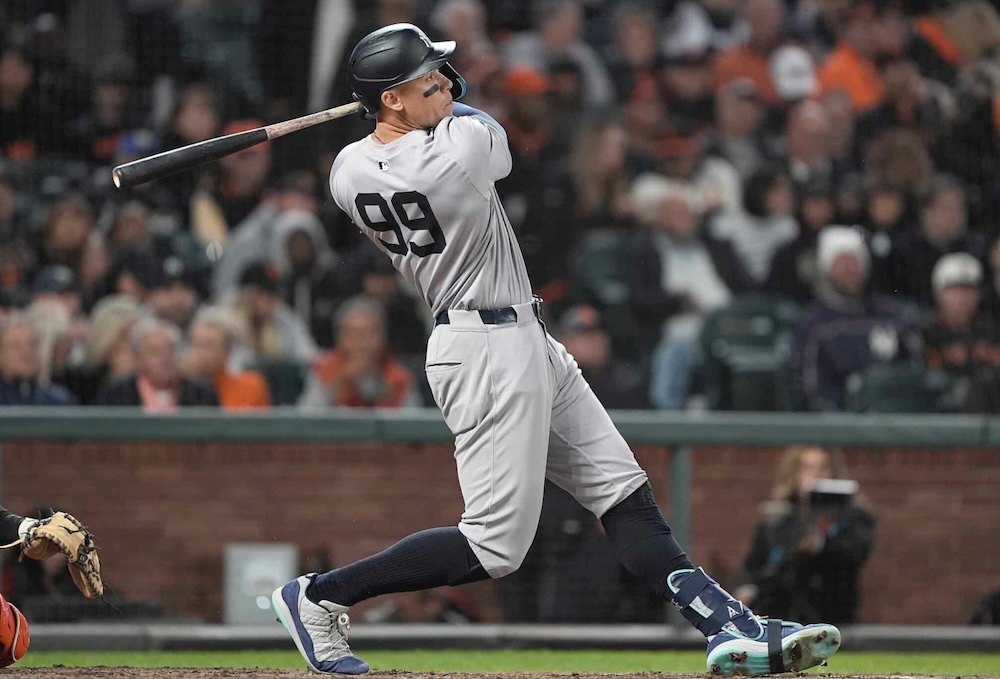
Let’s say the Yankees are down two runs in the 9th inning vs. the hated Red Sox with two men on base and two outs. The Golden At-Bat rule would allow them to bring Aaron Judge — their best hitter — to the plate even if his place in the batting order was six at-bats away.

I’m offended by the Golden At-Bat idea, just like I was offended by the Courtesy Runner all those years ago.

Call me a Geezer shouting GET OFF MY LAWN, but the Golden At-Bat concept seemed to come right out of left field, so to speak. It’s goofy. It’s unneeded. It’s a terrible idea.

Baseball already places a runner on second base to start the inning in extra innings. Now this?

Like me, much of the world of MLB fans reacted with horror to a rule that would skew baseball’s beloved statistics, which have withstood the test of time for more than 100 years.

There has been a chorus of boos across the nation from baseball fans, among them radio talk show host Dan Patrick. I listen to the podcast version of the DP Show daily, and heard Patrick’s reaction last week. 

“I hate it,” he said. “Hate it. I hate the runner at second base to start extra innings. Don’t go too gimmicky. Does baseball need that? It felt like baseball had a good year, a great year.”

In the spirit of the Golden At-Bat, Dan asked his entourage of co-hosts, collectively known as the Danettes, to come up with some “even dumber” ideas for baseball. The guys were happy to oblige.

“Count the Golden At-Bat as two outs if the batter fails to get a hit.”

“if your team is up by 10 runs or more you have to pitch blindfolded.”

“If you throw a pitch 100 mph or more, it’s not a strike, it’s a ball.”

“One time a game, you can require the opposing team to remove one outfielder during an at-bat.”

The Danettes struck Dumb and Dumber gold with their ideas.

But, you know what? They didn’t mention the Courtesy Runner.

And I’m still offended by the Courtesy Runner after all these years.

So GET OFF MY LAWN.

These crying eyes

Caleb Crying
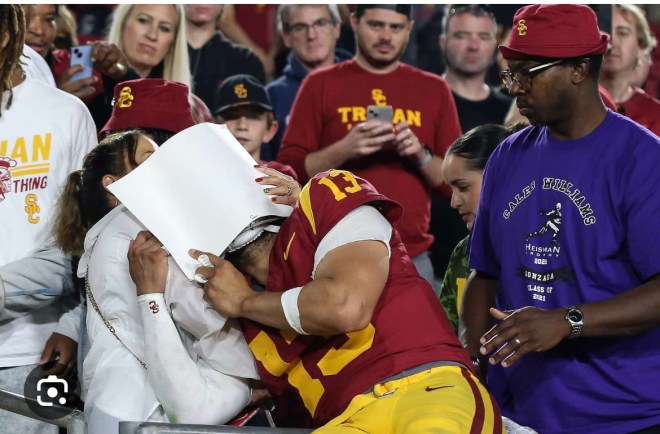
Caleb Williams sobbing in his mother’s arms after losing to Washington last week.

As a 12-year-old Little League baseball player in the mid-1960s, I pitched for a woebegone team named the Angels in Bryan, Texas. We didn’t win very many games.

Still, I wanted to win, so much so that often tears would fall as I stood on the mound late in a game in which we were hopelessly behind.

Near the conclusion of one game, our feisty third-baseman walked over to the mound and said something that has stuck with me for almost 60 years.

“Why do you always cry when you are pitching?” he demanded.

I don’t remember my answer, but I sure remember his question.

I’m writing this because of something that happened after the recent college football game between Southern Cal and Washington. You might have caught the clip of USC quarterback Caleb Williams going into the stands after the loss and being consoled by his mother as he sobbed.

Here’s a take on in the incident from CBS Sports.

I was listening to the Dan Patrick radio show this week when a caller to the show asked DP if the sight of Caleb Williams crying after the game would hurt his draft placement. The current reigning Heisman Trophy Winner, Williams is certain to be drafted among the top three picks, perhaps even first.

A self-proclaimed crier himself, Patrick reacted to the question as if it was intended to insult Williams (I’m certain it was, too).  He told the caller that there’s nothing about what the QB did that would diminish his draft status.

However, the incident and questions afterward stirred some emotions in me, because I still feel the sting of my third baseman’s confrontational question so long ago.

I’ve since thought about why I cried on the mound and concluded it was because I wanted so much to be successful and the frustration that it wasn’t happening. A lot.

But I don’t see that shedding tears after (during?) an emotional game diminishes an athlete. What other athletes are famous for shedding tears during or after a game?

I can remember a few. Michael Jordan lay on the locker room floor and shed tears after winning the 1996 NBA title that he dedicated to his late father. Serena Williams cried as she met the press after a hotly contested loss in the 2018 U.S. Open finals.

In fact, here’s a video compilation of some of the saddest athletic moments filled with tears.

My point with all of this is that there’s no shame in tears flowing in the wake of an emotional moment for an athlete. It happens.

The 2023 me is more apt to shed tears watching an emotional scene in a movie, like Roy Kent rushing to the stadium to take his place among the coaches in Ted Lasso while “She’s a Rainbow” plays in the background. Or when George Bailey discovers he really is the “richest man in town” at the conclusion of It’s a Wonderful Life.”

Of course, my career as a soft-throwing Little League pitcher ended in 1965.

Yes, there were tears and a pointed question from my third baseman. It’s a moment etched into my memory.

And that’s the only photographic evidence.

All in on Sam Presti & the Thunder season

Presti screen
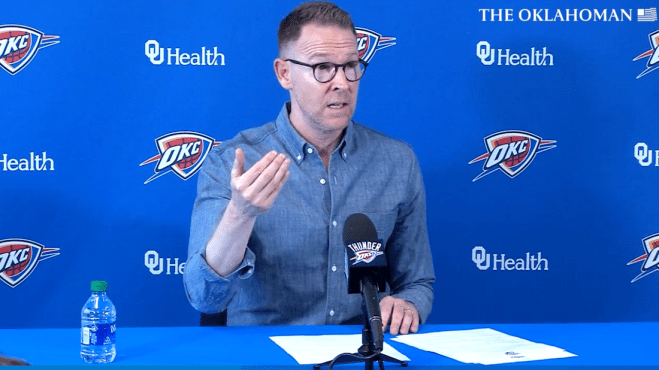
OKC Thunder general manager Sam Presti speaks to the media in the weeks leading up to the 2022-23 season.

As my friend and debate partner in all things OKC Thunder, Steve Buck has often accused me of being anti-Sam Presti.

It’s an accusation that I loudly protest even as I have questioned the Thunder’s apparent philosophy of losing games on purpose, otherwise known as tanking. Teams tank because losing positions them for better draft position as they work to build their roster.

As my friends at church would say, “love the sinner, hate the sin.”

Steve has described it to me as a “player development” philosophy rather than actual tanking, which the NBA frowns upon. In 2018, Dallas Mavericks owner Mark Cuban was fined $600,000 for admitting on the Dan Patrick Show that the Mavs lost games on purpose. 

In comments made on the Dan Patrick Show,, Cuban said that “once we were eliminated from the playoffs, we did everything possible to lose games.”

I’ve never heard Sam Presti say anything about losing on purpose. But I have heard him discuss “commitment to the process” and “not taking shortcuts.”

We saw how that played out as the Thunder went 24-58 in 2021-22, often keeping key players with minor ailments on the injury list and out of the lineup for long stretches. The team even cut a player late in the season who was playing above expectations, which threatened the team’s commitment to ‘The ProcessTM”

Frustration mounts for me when it’s apparent the Thunder are ‘exploring the roster’ with no interest in winning the game night after night. That’s what we’ve seen the last couple of years.

So, what have we heard from Presti leading up to the Oct. 19 season opener against the Timberwolves? Here are some sample comments from the Thunder GM over the past few weeks.

“What we’re looking for is overall improvement over a long period of time,” Presti said in a media appearance. “That’s not the most sexy, exciting thing that I could say to you.

“I’m not trying to mislead anybody, but it would be easier to try to find something that’s more catchy or exciting. But we just want a long-term, overall improvement. That doesn’t mean each season has to go the same way.”

As I did in a post a year ago, I’m asking the Thunder to play to win every game. I’m sure neither the franchise nor its sponsors enjoyed the nights last season when the Paycom Center was less than half full. 

It’s pretty apparent to me that people are not going to commit time or money to a team they perceive as not trying to win, even if there is a long (emphasize “long”) term goal of capturing the next unicorn in the draft.

My perception is that the fans come last in this tanking or “player development” scenario that’s played out over the past couple of years.

That’s a position that my friend Steve takes issue with.

“Strongly disagree on your last point,” he told me this week. “Presti wants to give a title to the city; isn’t that for the fans? It is fair to say he is not distracted by outside noise; he is focused on the long game.

“And he is accountable to Clay Bennett and he has likely set the goal of winning titles”

There’s a whole debate over whether fans would be more excited by a team that’s competing late in the season for the final playoff spot or if they would rather wait on an NBA title that may never come. 

That’s pie in the sky in the sweet bye and bye.

I’m definitely in the camp that wants the Thunder to play to win every night and be in the chase for a playoff spot, even if it’s the play-in game.

That would make the long, cold winter much more interesting for all of us.

But back to Steve’s original complaint. I’m a huge fan of Sam Presti. I am awed by his acumen for judging talent and finding diamonds in the rough at whatever position the Thunder are drafting. I love the way he welcomes new players to OKC and gets them involved with the community.  I love the way he represents the Thunder and OKC itself.

As Dan Patrick said last year, “Sam Presti is the best GM the NBA has seen in a long, long time.”

A last comment from Presti on the upcoming season: “Let’s wait for it to play out before we decide that’s what it’s going to be.”

I’m all in on that.

thunder tip2021
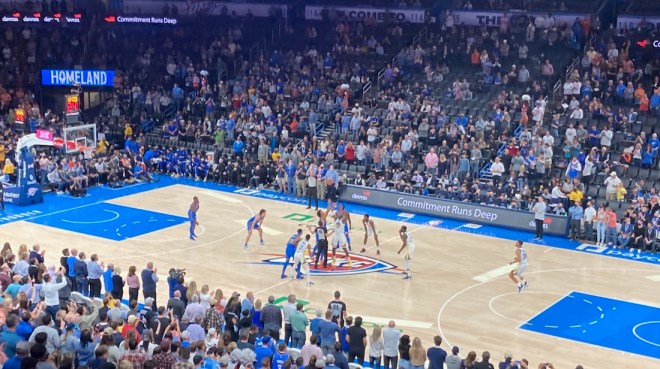
Thunder tip off in an early 2021-22 season game

The Thunder Way sets the NBA gold standard

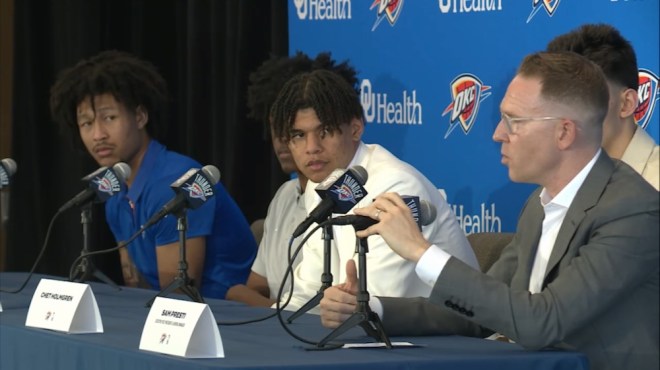
Thunder presser
Thunder GM Sam Presti introduces the team’s 2022 draft class to the OKC community as the players listen.

I‘m not sure how other NBA teams welcome new talent to their community, but the OKC Thunder way may be the gold standard.

On Saturday, the Thunder welcomed their four 2022 draftees to Oklahoma City with a special press conference at the Clara Luper Center just west of downtown.

The event was streamed on the Thunder app, so we all had a chance to watch it. And it was an intriguing hour that provided some insight into the team’s new players — Chet Holmgren, Ousmane Dieng, Jalen Williams and Jaylin Williams.

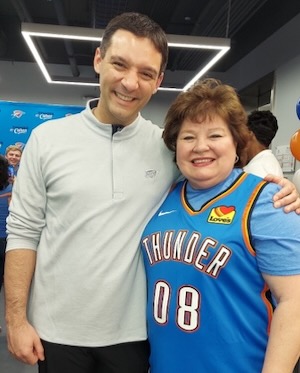
Paula Daigneault
Thunder coach Mark Daigneault and Paula Stafford at introductory press conference

But for me, it afforded an opportunity to see and hear Sam Presti describe what he saw in each player well before the draft that ultimately brought them to the team.

It’s obvious that Presti pours a huge amount energy in learning all he can about the players, their personalities and their families, in addition to assessing their level of talent.

I loved the way he described watching the players in various settings months or years before the moment their names were announced. 

And how he uses locations of historical significance to introduce new players to the community.

All of that’s probably the reason broadcaster Dan Patrick described Presti last year as “the best GM the NBA has seen in a long, long time.”

I agree with that assessment, even if I’ve complained about every inch of the Thunder’s tanking strategy over the past couple of years. I don’t think that playing to lose is fair to their fans, players or corporate sponsors.

But that’s just me.

Thunder capFolks like my friend Steve Buck are all in on losing on purpose because they say the end justifies the means. I’m just hoping the NBA will come up with a way to nullify tanking as a strategy.

Anyway, I thought the press conference was a huge success, and the players said all the right things, as did Presti.

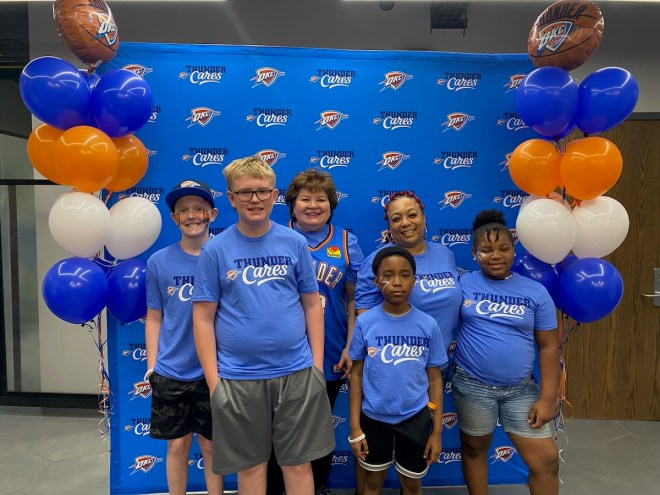
I also had a secondary reason for watching the Thunder introductory press conference. My wife, Paula, was invited to attend as a “community draftee” by the Thunder through her role as an employee of NAMI Oklahoma.

She sat on the front row during the press conference, and had the opportunity to meet Thunder coach Mark Daigneault and the new players. And Steve Buck’s middle school-age boys went with her, so it was a win-win-win for everybody.

“It was an awesome experience,” she said. “I gained a whole new respect for Coach Daigneault and for the way the Thunder introduce their players to the community. It was a great event.”

Paula group
The NAMI Oklahoma “community draft picks” that attended the Thunder news conference on Saturday.

A proposal: let’s destroy ‘The Process’ in the NBA

Thunder arena
Plenty of good seats available shortly before tipoff at a Thunder game in February this season.

Editor’s note: Although I attribute the concept described in this post to radio talk show host Dan Patrick, my friend Don alerted me to the fact that it was originally floated by sports guru Bill Simmons.  So, I want to give credit where it’s due, and a salute to Simmons for a worthy idea.

On the list of things in this world that make me crazy, you can put the concept of “tanking” by professional sports teams close to the top.

If you’re not a sports fan, you should know that tanking means a team is trying to maneuver for the best possible draft position. It does that by having as bad a record as possible at the end of the season.

Sometimes it’s called ‘The Process’ (wink, wink).

Teams tank not by asking their players to not play hard, but by manipulating the roster so their least experienced get most of the playing time. I offer the Oklahoma City Thunder’s mostly G-League lineup down the stretch this season as Exhibit A.

Oklahoman columnist Berry Tramel put it best last fall when he wrote “losing is the path to winning.” The idea is that if a team is horrible for two, three, four seasons it will eventually be able to draft the next ‘unicorn’ that will turn it all around.

Meanwhile, local fans lose incentive to follow their team and actually show up at games. The thousands of unused seats on a nightly basis at Paycom Center this season is a prime example.

I wrote about my opposition to tanking and the need to take a “win now” philosophy before the season began. You can read it here.

But today, I’m here to offer an alternative to the tanking strategy that will keep fans more engaged as the season concludes. I credit this idea to radio talk show host Dan Patrick,  who proposed something similar on his show earlier in the season.

Here’s how it would work as I envision it:

The NBA would create an in-season, six-week tournament for the bottom teams in the standings. The league would set an in-season cutoff date of February 28 with the six teams with the league’s worst records qualifying for the tournament.

Then for the remaining six weeks of the season, qualifying teams would play to win as many games as possible before the season ends. The team that has the best record in the season-closing “tournament” would be awarded the No. 1 pick in the draft.

Thunder actionTeams would have every incentive to put their best roster on the court. Fans would have a reason to show up and cheer their local team down the stretch.

The league could make a big deal out of the tournament, with separate nightly standings, maybe even a trophy for the winning team. The rest of the draft order for the bottom six would follow according to their finish in the tournament.

However, it needs a name. The Race to Save Face? Bottoms Up? Sprint to the Finish? I’ll let the marketers handle that.

My friend Steve poo-poos this concept because the league’s conferences are not balanced talent-wise. But he’s a tanking enthusiast and wears unicorn-colored glasses.

So, what does happen if the team with the seventh worst record on Feb. 28 loses so many games that it has the league’s worst record by season’s end?

That team is shut out of the tournament, so it only gets the seventh pick in the draft order. But it has no incentive keep losing, and that’s the point.

Thank you, DP, for sharing this idea.

So, what’s keeping the league from adopting The Race to Save Face and creating some excitement for bottom-feeding teams?

Nothing that I can see. Let’s destroy “The Process.”