Today is Opening Day for 22 Major League Baseball teams, including my Texas Rangers, who opened against Philadelphia this afternoon (Rangers lost, 5-3). Opening Day has always been one of my favorite days of the year, because it means the long Winter is finally over and there is the promise of new life, even for my favorite team.
A long ago Opening Day is one of those special days where I know exactly where I was.
And I’m not talking about the baseball.
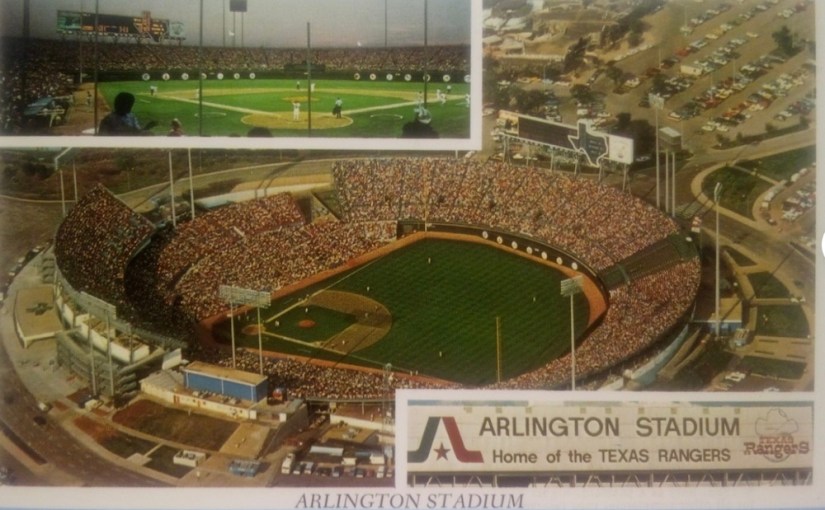
The year was 1983. The setting was the now departed Arlington Stadium in Arlington, Texas. The game was the season opener between the Rangers and the Chicago White Sox.
I looked it up, and it was a Monday night game . Only 13,140 fans showed up with few expectations for the Rangers that season.
I was in that crowd along with Eric Brooks, a fellow sportswriter at the Southwest Times Record newspaper in Fort Smith, Ark.. We drove to Arlington to catch the 1983 season opener because I was a Rangers fan and Eric was a fan of MLB in general.
It was my first — and only — MLB Opening Day game. And what a memory it became.
Here’s what I remember from the night: virtually nothing about the baseball game itself.
But it turned out to also be a night that many American sports fans recall because of an historic upset. North Carolina State beat Houston to claim the NCAA men’s basketball championship.
It was also special to me because Eric and I got to watch the incredible finish to that game while we were at Arlington Stadium with the Rangers game still in progress. You might remember that the Jim Valvano-coached Wolfpack scored one of college basketball’s greatest upsets when Lorenzo Charles scored the game winner at the final buzzer.
So, how were we able to watch that from the stands at Arlington Stadium?
While the NCAA game certainly wasn’t broadcast on the Rangers scoreboard, a fan seated in our section held a small, portable black-and-white television in his lap.
When we saw several people gather around the guy with the TV, Eric and I got up and joined the crowd. We could see the screen pretty well and knew that it was late in the NCAA championship game.
So, we stayed put to watch the frantic finish with that small crowd of college basketball crazies.
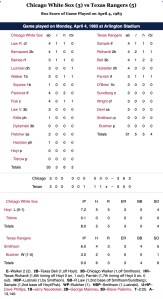
As for the Rangers game, Texas defeated Chicago starting pitcher Lamarr Hoyt that night, 5-3, in two hours and 25 minutes. I found the box score.
After the game, Eric and I headed over to the local Bennigan’s Restaurant for a late dinner. Eric spotted White Sox owner Jerry Reinsdorf seated at a table with team GM Roland Hemond.
I would not have known who they were, but Eric was a big MLB fan who recognized the baseball executives. He wanted to rush over and strike up a conversation, although I talked him into waiting until they were finished eating.
Fast forward 43 years.
Today was another season opening day for the Rangers, who will play their 2026 home opener on April 3. The expectations are certainly higher than they were in 1983, but I won’t be in Arlington next week when the Rangers open at home against the Cincinnati Reds.
No big deal. I’ll always have my memories of that long ago season opener and watching the NCAA finals on a tiny black-and-white portable TV in the Arlington Stadium stands.
I was listening to a late-night sports talk radio show recently when the host began talking excitedly about ‘robo umps’ coming to Major League Baseball. He was totally opposed to the concept because, as he said, ‘it takes the human element’ out of the game.
What?
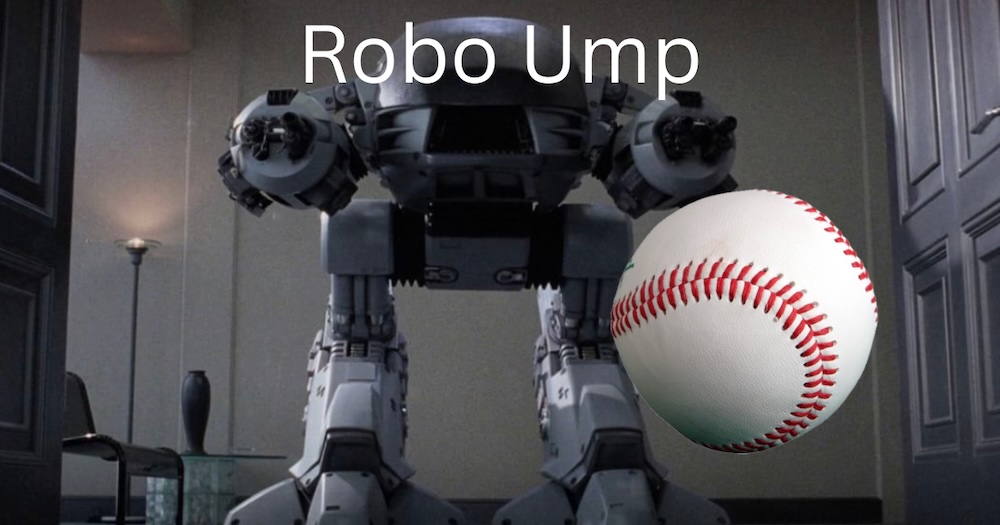
In my mind I saw images of a menacing, out-of-control robot standing behind the catcher.
Turns out that Major League Baseball IS implementing the Automated Ball/Strike Challenge System in the 2026 season. But there’s no resemblance to a robo ump.
Yet, that’s how it’s presented by broadcasters and headline writers across the World Wide Web. I wince every time I hear or see the words ‘robo ump’ used to describe the new system because of how misleading it is.
A sample of ‘robo ump’ returns from a Google search
So, what is the Automated Ball/Strike Challenge System, also known as ABS, if it’s not a robotic replacement for home place umps?
If you’ve attended any OKC Comets games at Chickasaw Bricktown Ballpark over the last couple of years, you’ve seen the ABS system in action. You may not even have noticed, because an umpire is still behind the plate calling every pitch.
However, each team can challenge two pitches per game, and then the ABS system takes over. Multiple cameras focused on home plate reveal whether the pitch crosses through the strike zone, and the results are shown on the park’s video board.
The whole process takes only a few seconds, is very low key, and the game quickly resumes. There are no hitters and catchers loudly complaining or angry managers charging home plate.
Don’t ask me how it works, because geometry is above my pay grade.
“The ABS Challenge System monitors the exact location of each pitch, relative to the specific batter’s zone. Players can request a challenge of a ball or strike call they feel the umpire got wrong, and, when they do, a graphic displaying the result is then transmitted over a 5G network from T-Mobile’s Advanced Network Solutions and nearly instantaneously shown to those in attendance via the videoboard and to home viewers via the broadcast.”
The MLB article goes on to describe the ABS System as a way to ensure calls are correct while keeping the human element.
“The Challenge System is seen as a way to get more of the most important calls correct without dramatically altering the sport overnight. It is a middle ground between full ABS and tradition,” MLB says in the article.
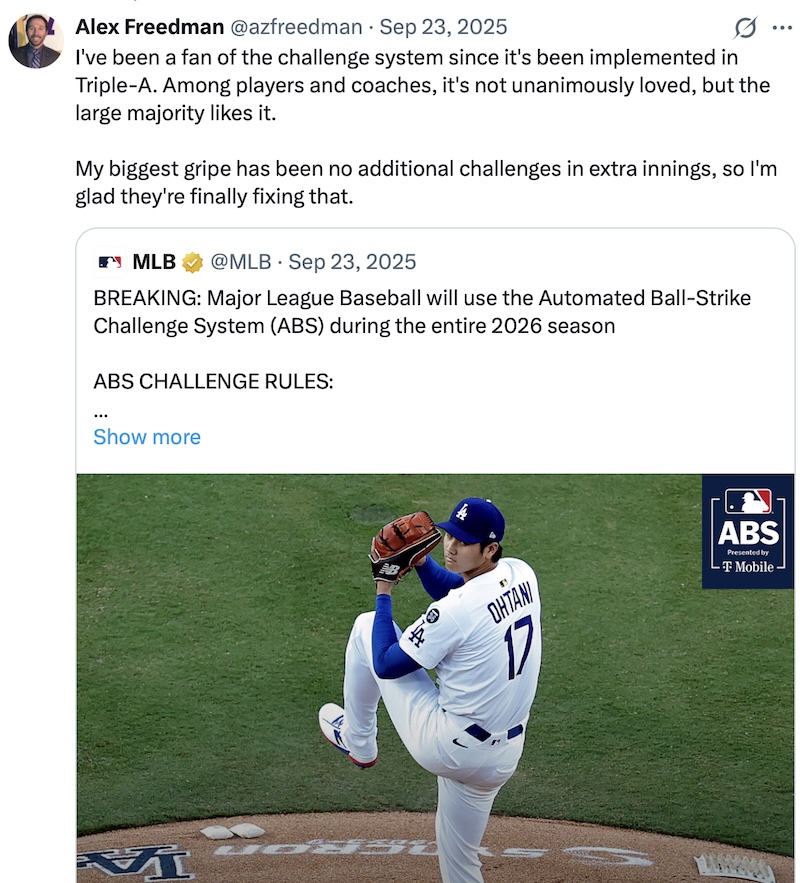
When MLB implementation of the ABS Challenge System was made last September, Alex Freedman, Broadcaster/Communications Director the OKC Comets, tweeted his support of the technology. He’s seen every Comets game in which it has been used, so he would be aware of any potential glitches.
“I’ve been a fan of the challenge system since it’s been implemented in Triple-A. Among players and coaches, it’s not unanimously loved, but the large majority likes it,” Freedman said on his X (formerly Twitter) feed.
I discussed my disdain of the term ‘robo ump’ to describe the ABS System on the most recent 3 Old Geezers podcast in which I participate. My fellow geezers scoffed at my dislike of the term, saying it’s no big deal.
Ed Godfrey said he objects more to the ‘ghost runner’ used in extra innings, but that argument can wait for another day.
Ed also reminded me that a ‘Robo Niner’ mascot once roamed All Sports Stadium back when the team was known at the 89ers.
So, call me the Robo Ump Police then, because I hate the term.
Here’s what Dan Patrick, my favorite sports broadcasting host, had to say about the ABS System and the way it’s been described on the Dan Patrick radio show, which is also simulcast on the Peacock Network:
“You still have to have an umpire. There’s not going to be a robot out there. It’s not going to be a robot; it’s going to be automated balls and strikes. Everybody thinks (it’s) like that Fox football robot’s out there.”
Yep, that’s how it’s presented in countless headlines and on sport talk shows. Go ahead and do a Google search for ‘robo ump,’ and see the dozens of headlines and videos proclaiming the coming of the robot
Well, it’s not. But the robo ump hype and hysteria is real, even if the robots are not.
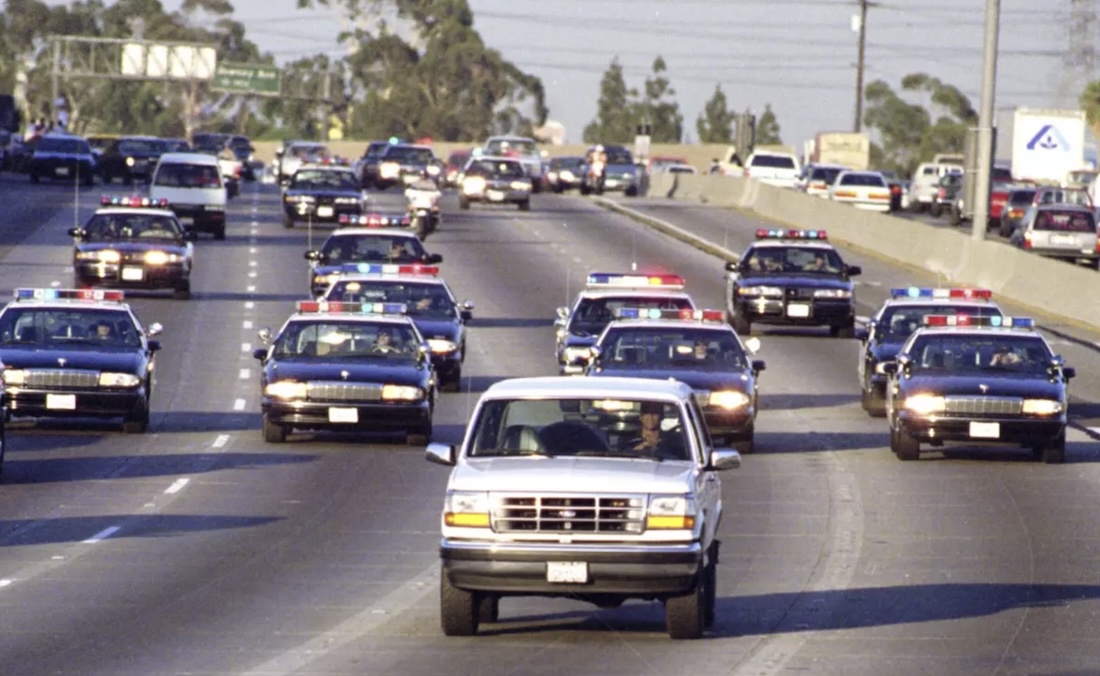
OJ Simpson car chase as seen on an LA freeway on June 17, 1994. LA Times photo
As I’m writing these words, it is the evening of June 17, 2025.
Do you remember exactly where you were 31 years ago, on June 17, 1994? I know where I was, because that’s the day of the infamous OJ Simpson ‘slow chase’ in the white Ford Bronco.
In case you are hazy on that event of three decades ago, authorities wanted to talk to OJ about the stabbing deaths of his ex-wife, Nicole Simpson, and her friend Ronald Goldman.
Maybe I should help you remember that OJ Simpson was a former record-setting running back with the Buffalo Bills of the NFL following an incredible college career at Southern Cal.
Anyway, OJ was supposed to turn himself to police in connection with the deaths in earlier in the day.
But late that afternoon he ended up in the Bronco driven by his friend Al Cowlings. Police suspected he was in that vehicle because he hadn’t shown up and Cowlings was his friend.
Strangely, though, Cowlings actually called police from the car and told them that OJ was in the back seat with a gun threatening suicide. Dozens of police cars pursued on an LA freeway, chasing at the breakneck speed of approximately 45 mph.
People lined freeway overpasses to wave and cheer OJ on.
The ordeal ended after 90 minutes when Cowling drove the Bronco back to OJ’s house, and OJ eventually gave himself up.
Well, my wife and I were in St. Louis on June 17. We went to a St. Loius Cardinals’ game that evening and got back to our hotel about 10 pm, dripping in sweat from a hot, humid night at the ballpark.
We were wiped out, ready for a shower and lights out. But we got pulled into the OJ chase when we clicked the television on.
Each of us was mesmerized, our eyes glued to the screen as the car drove along the freeway and eventually to OJ’s house, all broadcast nationwide on live TV.
Before that night, we had kept track of developments in Nicole Simpson’s murder and knew that OJ was allegedly in Chicago at the time, but a suspect.
Paula and I had discussed the case earlier in the day and we hoped that OJ had nothing to do with it because he seemed like such a likable person.
I can no longer remember who the Cardinals played that night.
But I can still see that white Ford Bronco slowly driving down an LA freeway with dozens of police cars giving chase.
It was memory that can’t be erased.
BONUS CONTENT: I looked it up and the Cardinals lost 7-4 that night to the Pirates. Game time temperature was 90. Humidity 110 percent (writer’s embellishment).
The author of this blog post ranks Fenway Park as his favorite MLB stadium.
Baseball-themed road trips have been a big part of fandom for decades. Major League Baseball fans will drive thousands of miles over a week’s time or more to watch as many games in as many different cities and stadiums as possible.
For instance, my friend Mike, along with his brother and his son, would drive from OKC to, say, Chicago to see a game at Wrigley Field one day, Comiskey Park on the south side the next. Immediately after that game, they would drive 300 miles to Detroit to catch a Tigers game the next day, then on to Milwaukee to see the Brewers the next.
Sounds exhausting, but a big part of the attraction was soaking in the atmosphere of different MLB stadiums, each of which offers a unique experience in architecture, food, fans and even dimensions of the field.
My MLB experience is much more limited. I’ve watched games in 13 different major league ballparks in my life, six of which are no longer in existence or in use. Read a post about my first MLB experience in the early 1960s at Houston’s old Colt Stadium,
But I think I’ve sampled enough to know which ones are my favorites for the in-stadium experience. So, in honor of the official opening of MLB season — even if it was in Tokyo — I’m ranking my three favorite MLB stadiums.
I’ve also asked four friends who have experienced a lot of baseball venues to weigh in with their top three, as well. Their rankings follow my list.
As for me, I was privileged to attend the annual Biotech Innovation Organization — BIO — Convention for 12 consecutive years with the delegation that showcases Oklahoma biotech industry at the show each year. Those trips created the opportunity to watch MLB games in six different cities, including San Francisco, San Diego and Boston, which are the top three venues for me.
Here’s how I’ve ranked them.
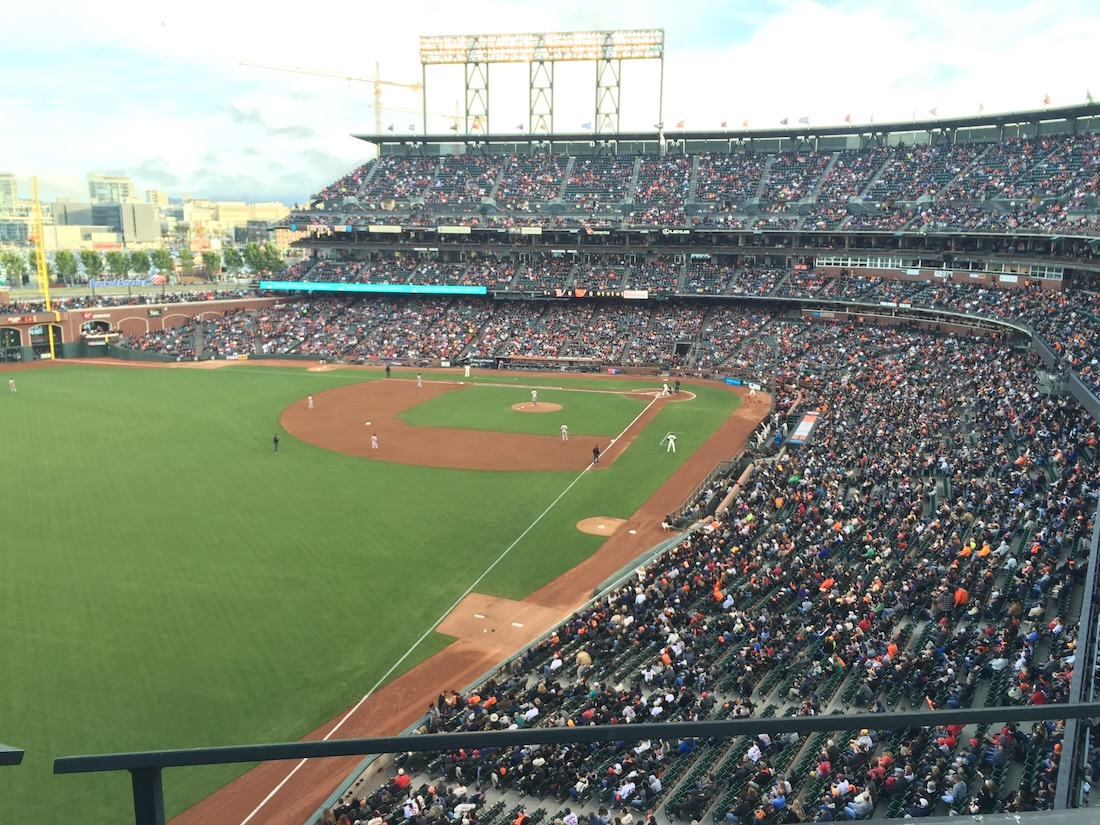
Oracle Park in San Francisco
No. 3: Oracle Park in San Francisco (opened in 2000 as PacBell Park). I was able to combine two of my passions — rail-fanning and baseball — on this trip. I caught the Muni Metro train on Market Street, and it delivered me and about 400 of my closest friends wedged into the car right outside the stadium. As far as Oracle Park, it’s in a beautiful setting, situated so close to the San Francisco Bay that many home runs to right field land in what is known as McCovey Cove in the bay. The park offered great food and drink options, as well as a display of Giants’ World Series trophies on the left field concourse. It was a great experience, despite the chilly San Francisco weather.
Petco Park in San Diego
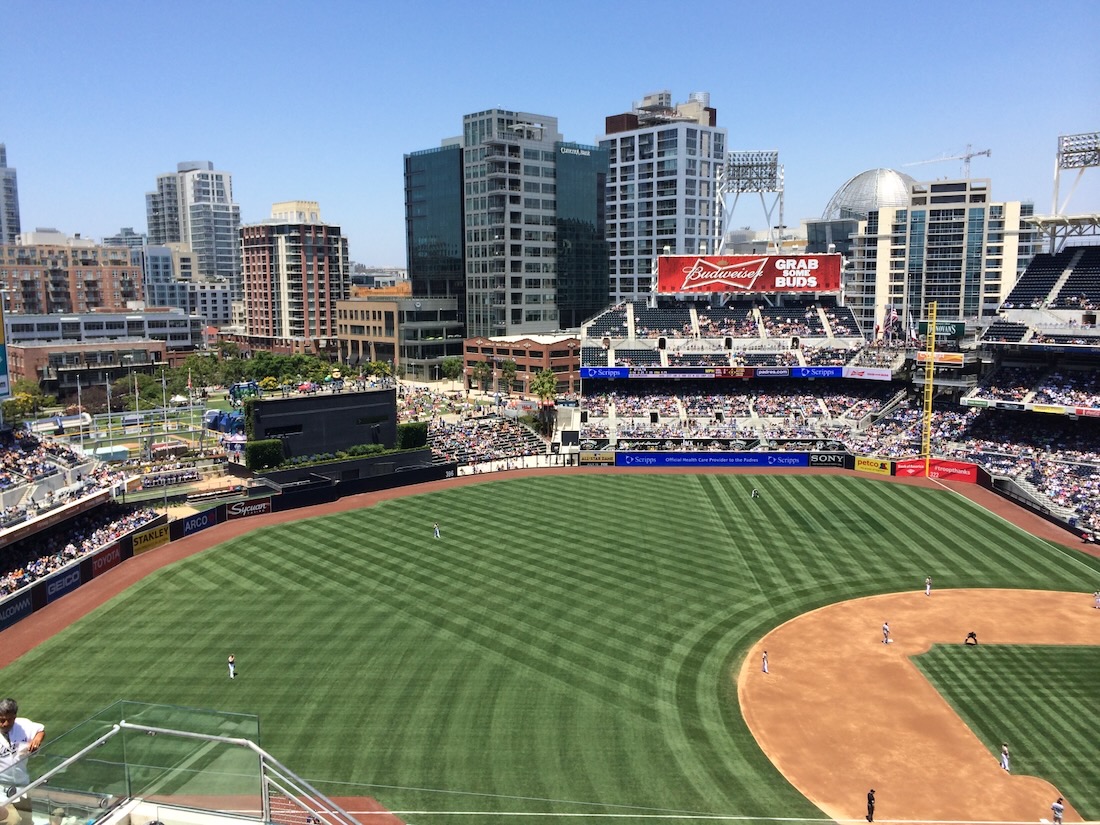
No. 2: Petco Park in San Diego. Another ballpark with great public transportation options. I attended a Padres game on two straight BIO trips to San Diego. Located in the heart of San Diego’s Gas Lamp entertainment district, I loved the Petco experience because it has a real open feel to it, with a great picnic area in right field, and an old downtown building incorporated right into the stadium down the left field line. It is renowned for fish tacos, but food options seemed endless.
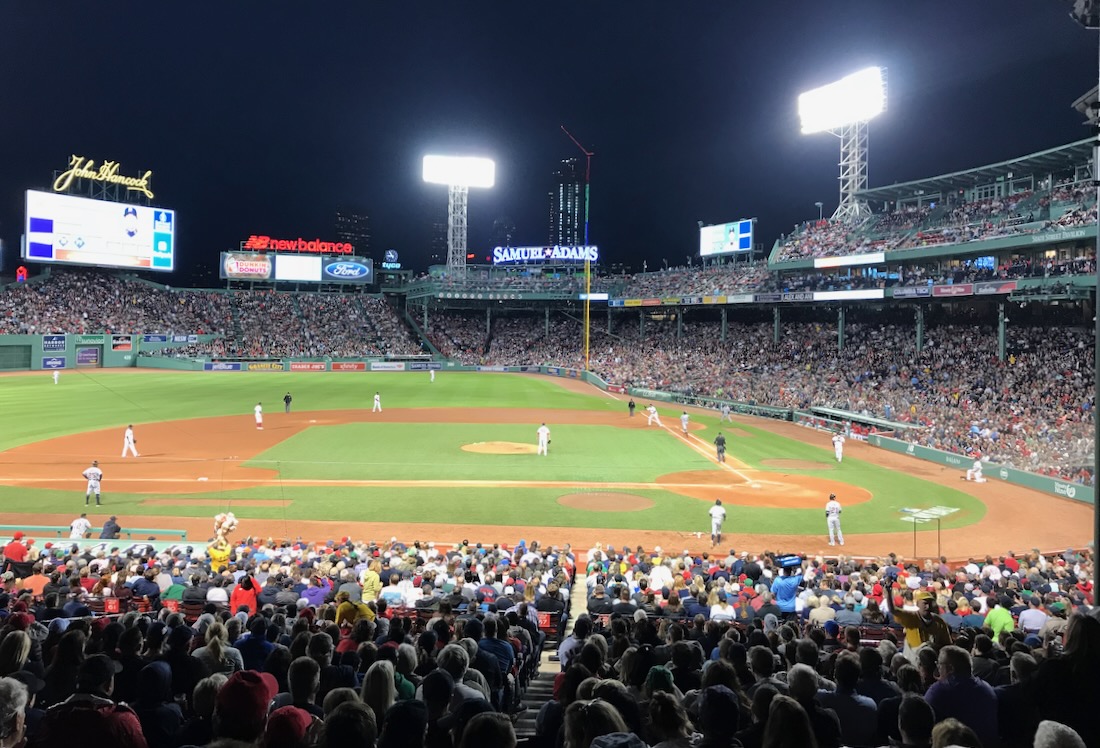
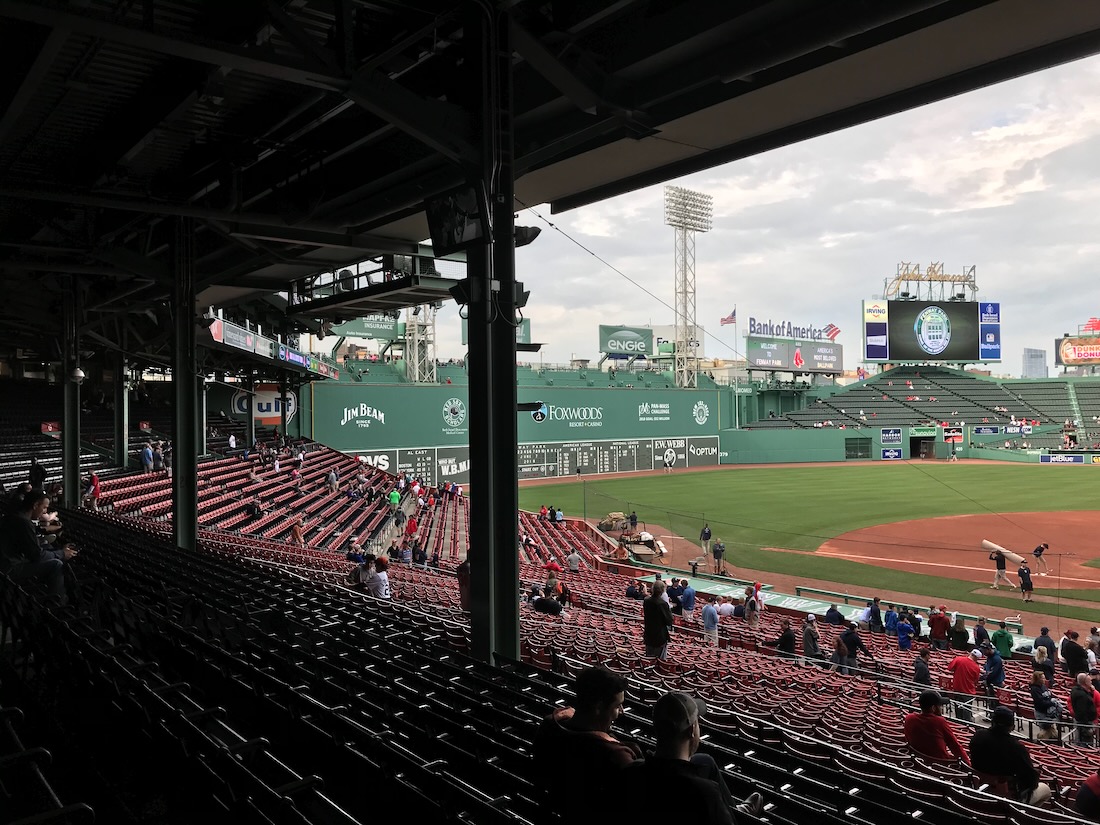
The Green Monster as viewed from lower deck seats behind third base at Fenway Park
No. 1: Fenway Park in Boston (opened in 1912). I was in awe of this ancient baseball cathedral when my former i2E colleague and fellow Oklahoman, Rick Rainey, and I attended a game while in Boston for the BIO show. Never mind that the Red Sox lost to the lowly Detroit Tigers, Fenway offers so much history that the score didn’t matter. Where do I start? Well, the atmosphere outside the ballpark was tremendous with hundreds of fans lined up to buy food and merchandise from dozens of vendors. Inside, the Green Monster taunts hitters in left field. The Pesky Pole in right. The Triangle in Center field. The Red Sox have the ultimate between-inning music, too, hitting right in my wheelhouse with a ’60s/’70s dominated playlist. And the near capacity house that night was primed and ready to belt out Sweet Caroline when it was played in the middle of the eighth inning. It’s a great memory.
Now, let’s see how my friends ranked their top three baseball stadiums. I asked two long-time newspaper reporters and editors — Mike Sherman and Bobby Ross Jr. — for their thoughts, as well as Steve Buck and Jeremy Ball, two people who have attended the same church as I do for many years.
Here are their rankings:
Mike Sherman
I’ve seen a baseball game in 25 MLB parks, including 14 still in service. Here are my rankings.
Tiger Stadium
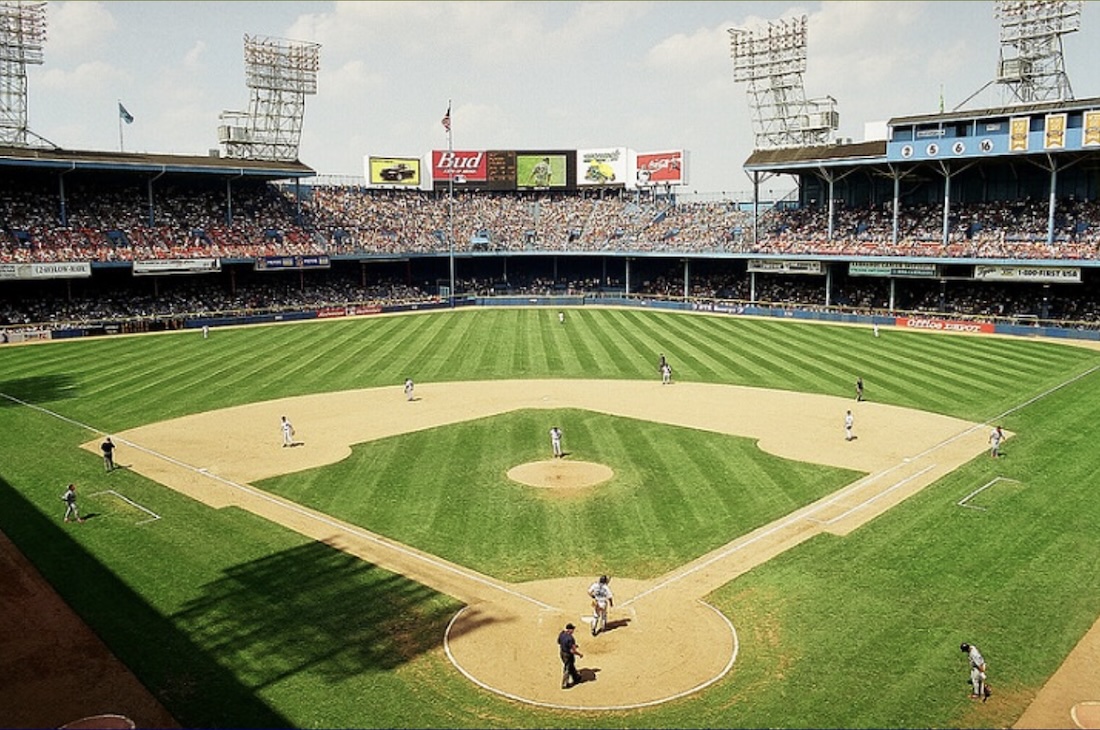
No. 3: Tiger Stadium. I could have picked a half-dozen parks in this spot, including the Ballpark at Arlington — the easiest place to get to the bathroom and back in your seat between innings without missing a pitch. But three things stick with me from a 1988 visit to Tiger Stadium: The greenest grass I ever saw. Sitting in the upper deck, first row, and feeling like I could snatch the cap off the third-base coach’s head. The sensation of watching baseball in a time capsule and eating my first Domino’s Pizza while my traveling companion obsessed over whether he’d ever see his car again.
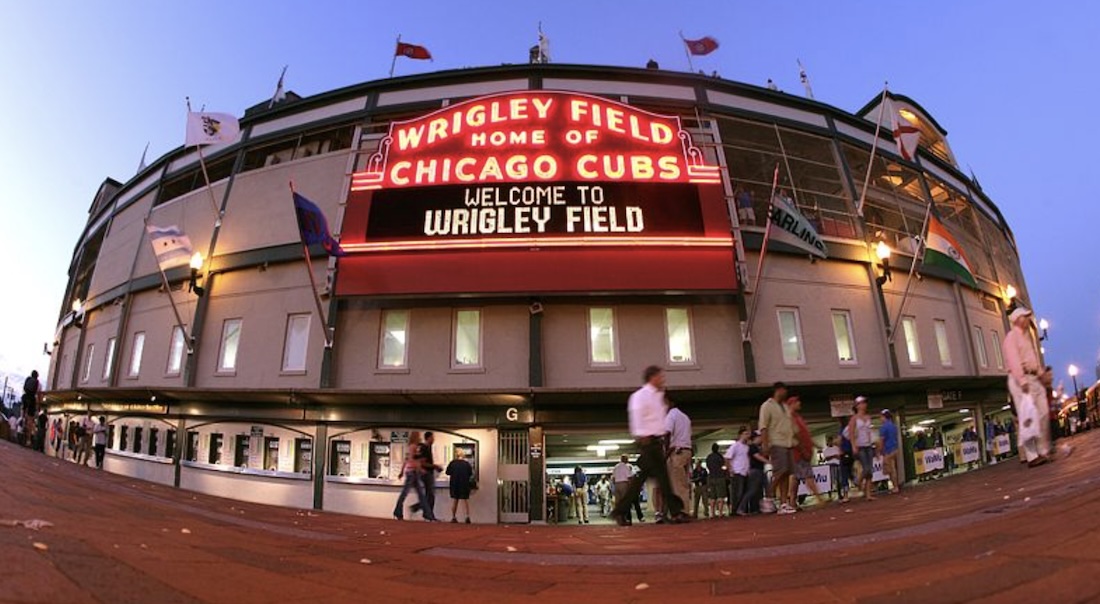
Wrigley Field
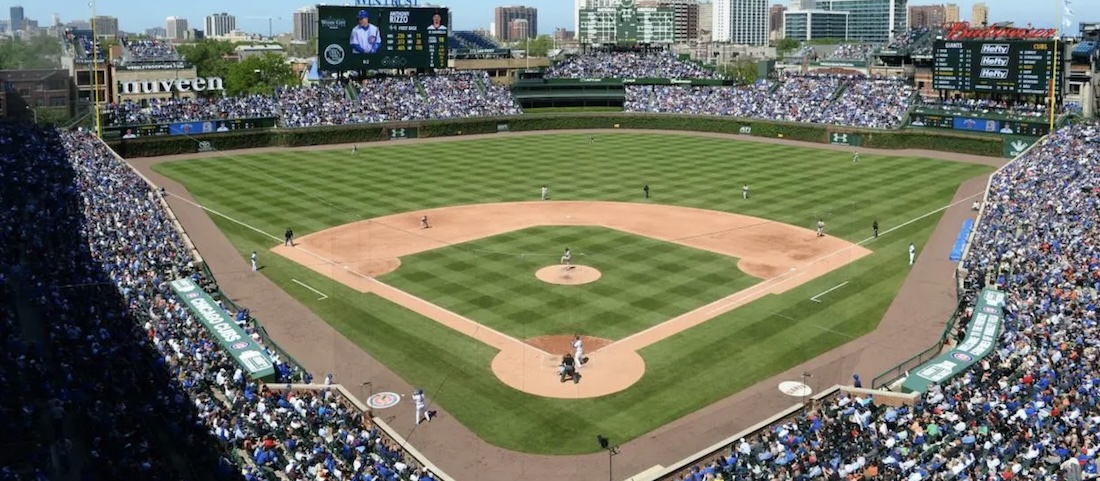
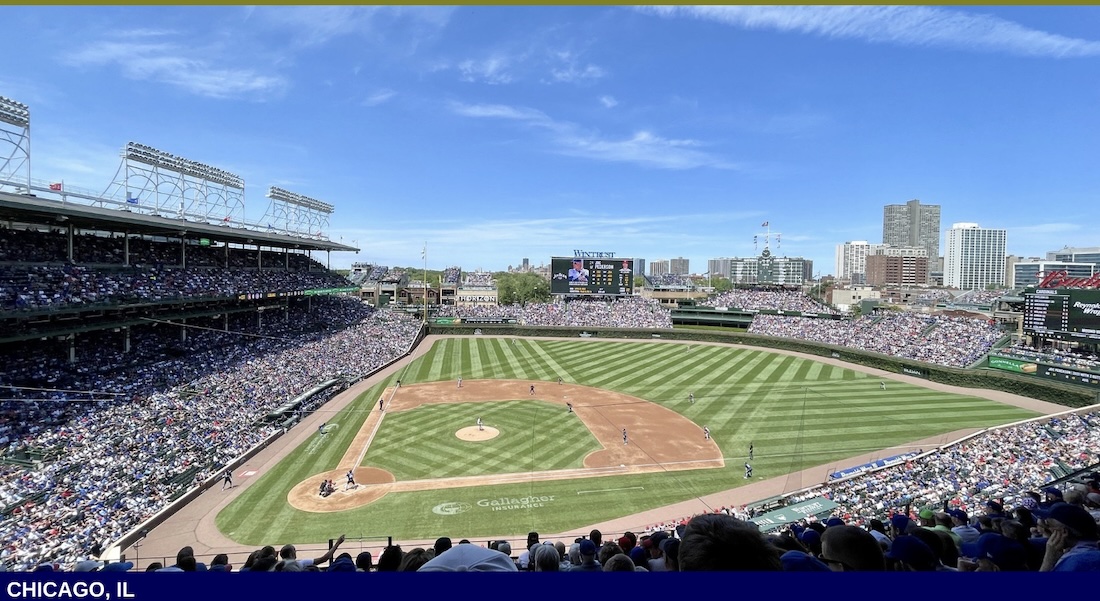
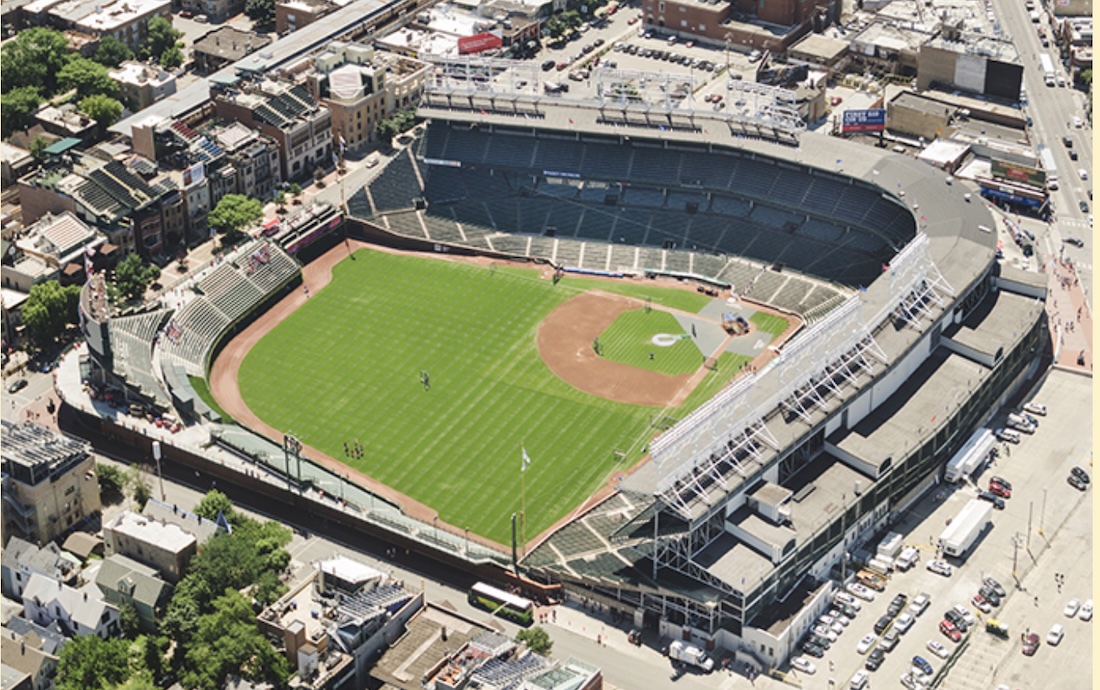
No. 2: Wrigley Field: This is where I’ve seen Pete Rose return from a 30-day suspension for bumping an umpire (1988) and watched Charles Barkley throw out the first pitch before a Jake Arrieta near-no hitter (2014). On Father’s Day 2023, my two sons and I watched a guy pour his grandfather’s ashes over the rail and on the ivy from the second row of the left-field bleachers. During a 2022 Orioles-Cubs series, Wrigley ushers kept giving my youngest son — Baltimore attire head to toe — Topps baseball cards of former O’s. People love this place and it shows.
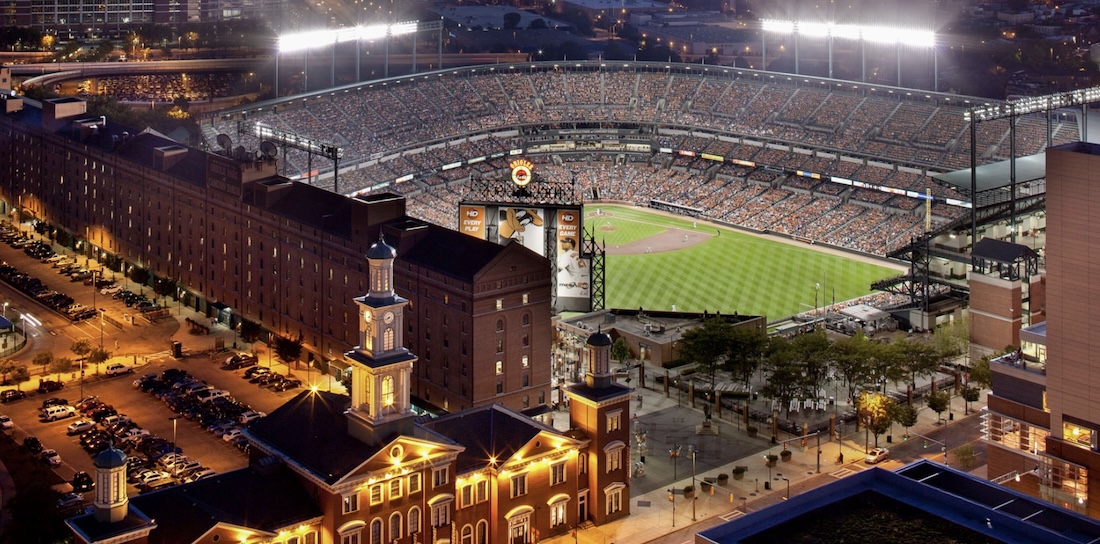
Camden Yards
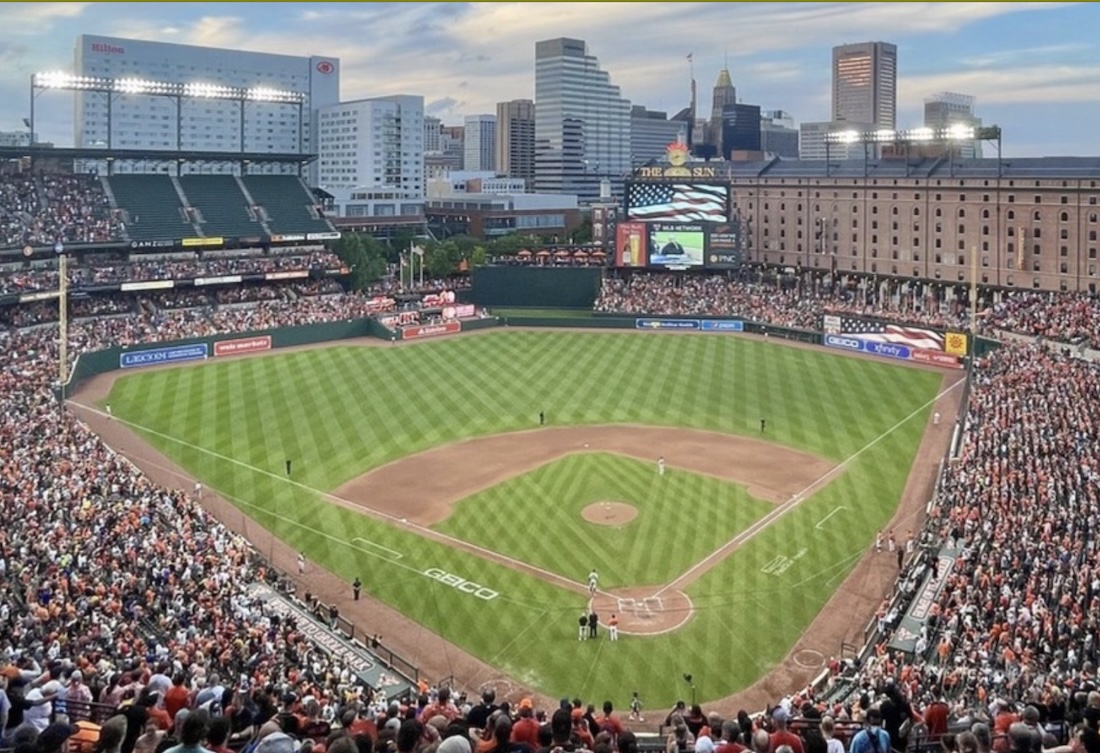
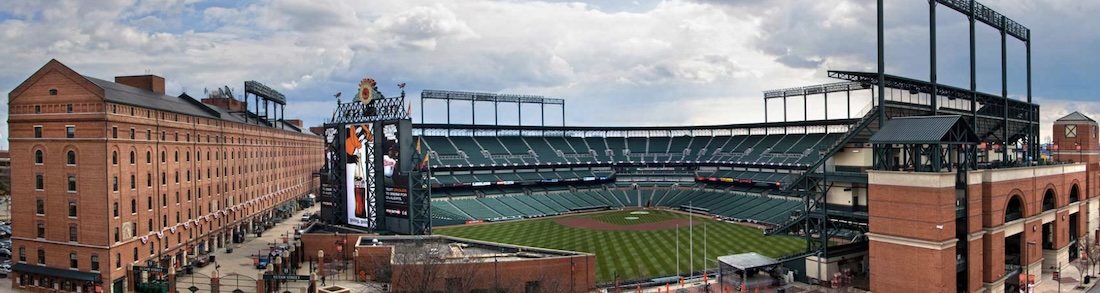
No. 1: Camden Yards. If you want to discount my opinion because my father once hauled boxes of cigarettes out of the Warehouse, go ahead. Or because I snuck in before it opened to pick out my mother’s 1991 Christmas present — Sunday-only season tickets in the left-field stands. Or because my wife’s surprise for my 40th birthday was flying me blindfolded to Baltimore (I am not making this up) and not removing the blindfold until we stood on Eutaw Street, where she handed me tickets to a weekend series with the A’s. (I can do this all day.) Camden Yards is the ballpark that re-started everything. Without it, there may be no Petco, PNC, etc. Oh, and crabcakes.
Bobby Ross Jr.
Wrigley Field
No. 3: Wrigley Field. I realize I’m cheating, and this is actually the fourth ballpark I’ve mentioned. But the historic nature of Wrigley — and the wide enough seats (unlike Fenway Park in Boston) to fit a 21st century human — make this one a must-visit stadium.
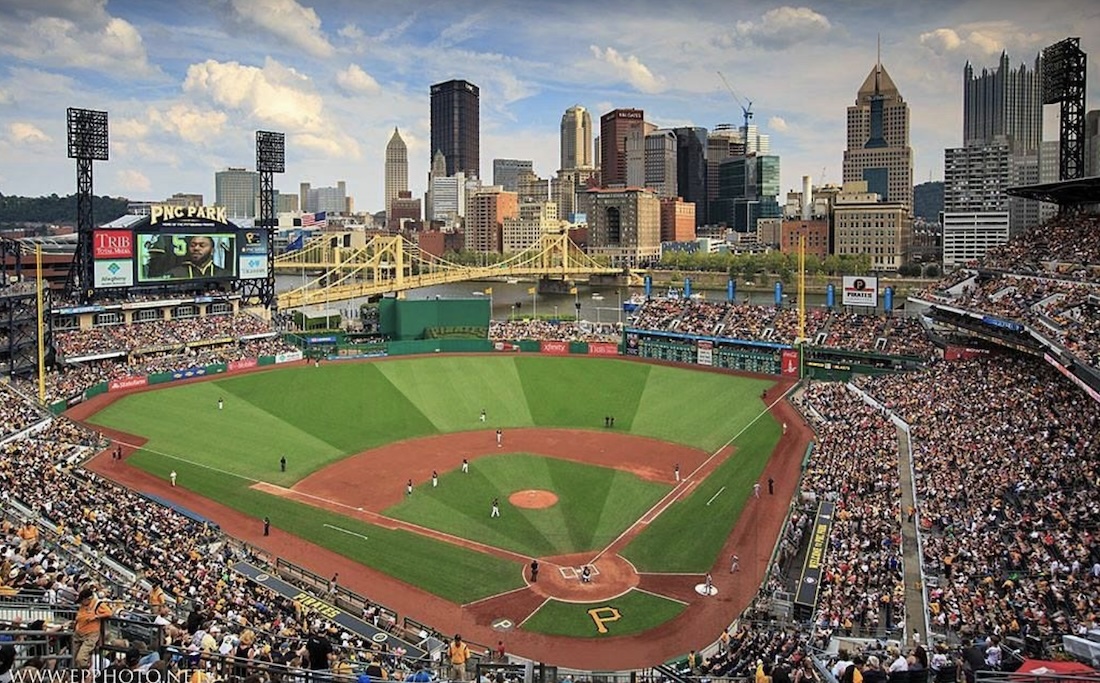
PNC Park
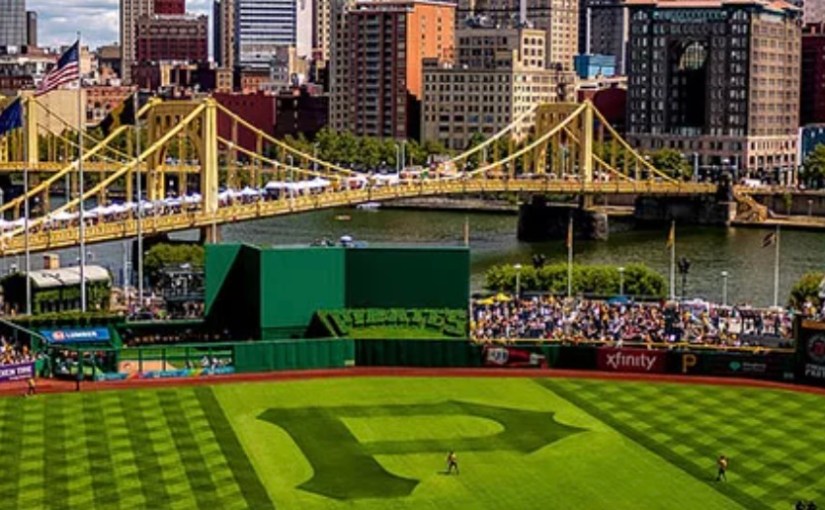
No. 2: PNC Park in Pittsburgh and Petco Park in San Diego (tie). Both of these are spectacular with incredible downtown backdrops. PNC’s setting on the northern bank of the Allegheny River may give it the slight edge.
Globe Life Field
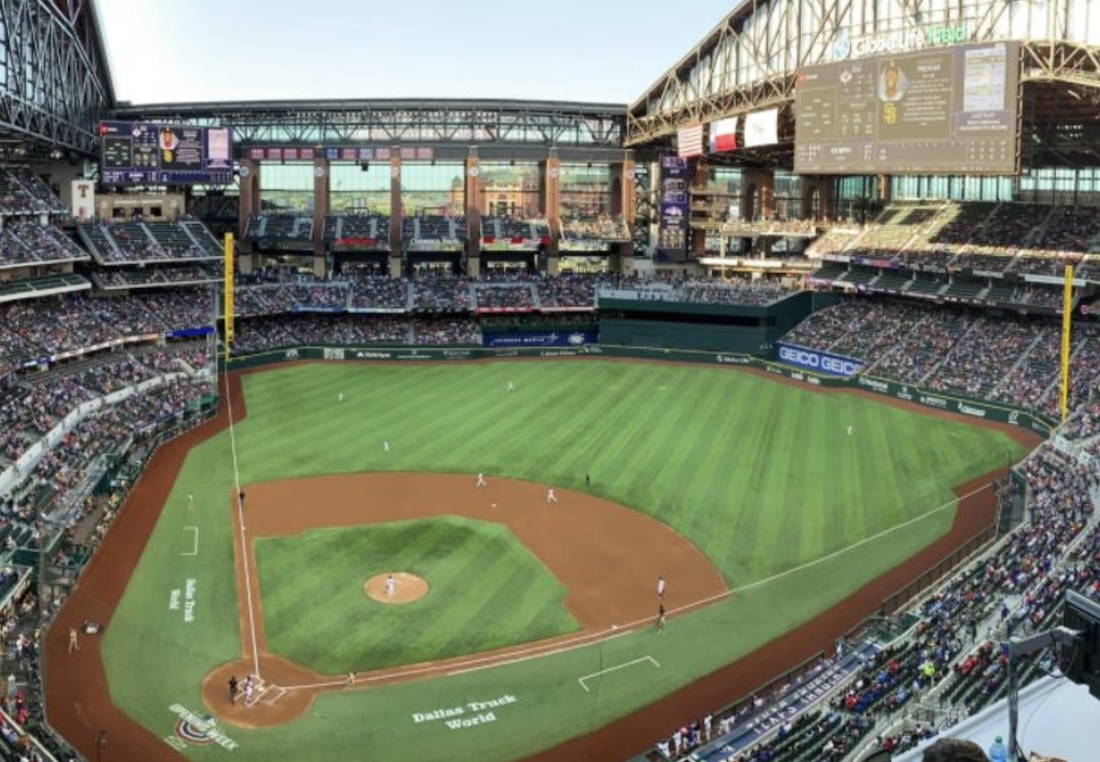
No. 1.: Globe Life Field. The Rangers’ home ballpark is in a league of its own. You might think I’m saying this just because I’m a Rangers fan, and you would be 99% right. This is, after all, the field of dreams where I witnessed the World Series Game 1 heroics (by Corey Seager and Adolis García) in 2023.
No. 3: PNC Park. This is largely based on location and cityscape visible from the stadium, the Clemente Bridge in particular is the best backdrop for a stadium available. Inside the stadium, has a good mixture of modern amenities/foods with more standard fare, and there isn’t a bad seat anywhere in the stadium.
Camden Yards
No. 2: Camden Yards. This is honestly the cleanest ballpark I’ve ever been to, this place literally looks like it was opened last year. This is a really intimate ballpark, soon as you walk in you are close to the seats and vantage points are great. The warehouse is a cool backdrop, even more interesting when you can walk right next to it.
Wrigley Field
No. 1: Wrigley Field. As a Cardinals fan, it pains me to say this, but the Wrigley experience is baseball heaven. The stands are really flat in the lower level, so I felt more connected to others, and the prevalence of one beer (Old Style) is a cool feature of the experience. Everything about the ballpark is intimate, and there’s something cool about how the stands are largely segregated from the concessions area. What probably sets Wrigley apart is the ‘Wrigleyville’ area outside the stadium; it’s a celebration before and after the game. It’s also the first place I ever shared a beer with my dad, so there’s a personal part for me.
A couple other notes on stadiums:
Best public transportation to a stadium: Target Field, Minneapolis — Rail drops you 100 feet from the East entrance!
Best food: Guaranteed Rate Field, White Sox — The stadium is nothing special except the wet beef sandwich with sweet peppers, OFF THE CHARTS GREAT.
Steve Buck
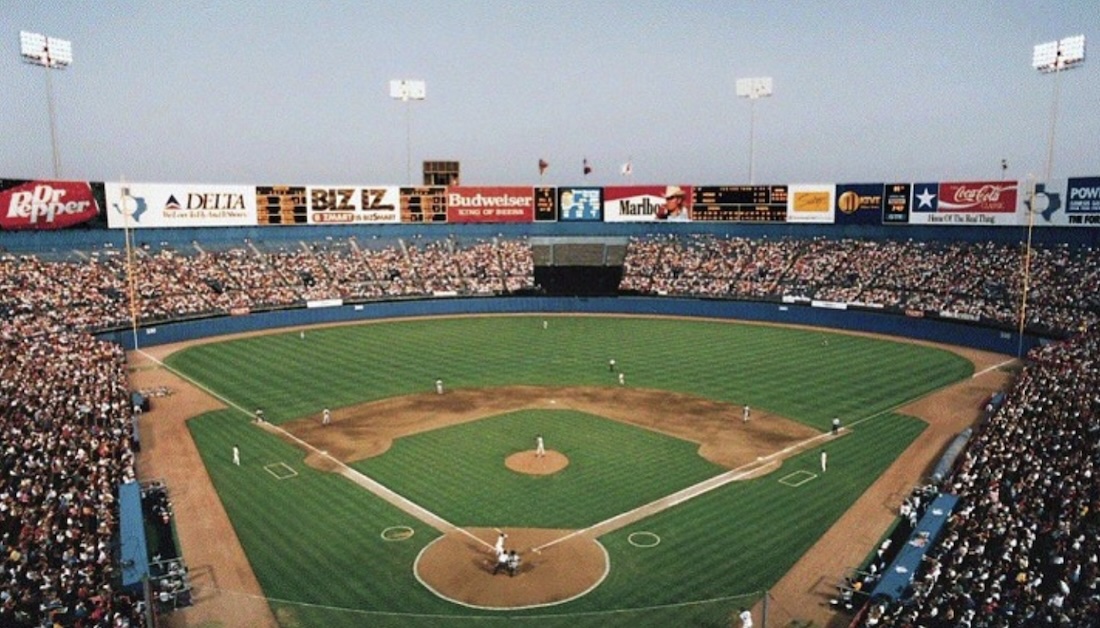
Arlington Stadium
No. 3: Arlington Stadium. Yes, it has been replaced twice now but I attended my first MLB game there on June 25, 1976. The Rangers played a doubleheader on a Friday night (yes, that used to be a thing). Toby Harrah, the Rangers shortstop, walked off the first game with a grand slam in the bottom of the 9th. Arlington Stadium was brutally hot and a miserable experience, but that first in-person game captured a certain 10 year olds attention and fueled my MLB enjoyment that resonates to this day.
Camden Yards
No, 2: Camden Yards. My all-time favorite baseball player is Cal Ripken, Jr. I attended games in Camden several times in the early 90’s. The unique architecture (at the time), the cool community surrounding the stadium and my passion for Ripken and his teammates made attending games there an absolute must-do. I wonder if I would see it the same way now that I no longer follow the team closely but I hope to catch Jackson Holiday soon and see if the magic still exists.
Wrigley Field
No. 1: Wrigley Field. Make no mistake, it is a dump. Outdated, inconvenient and lacking modern conveniences. All of that is true. But that is part of it’s character. Baseball in Wrigley is magic. A reminder of the game I fell in love with in my earliest years. I was never a fan of the Cubbies but attending a game there is easily a top 5, personally attended, sporting event in my life, and that includes multiple golf majors (including the Masters), seeing Gretzky skate and Jordan dominate, and several other sports historical moments. I am eager to attend a game in Fenway to compare it to the absolute rush that is baseball in Wrigley.
***
Thanks to these fans who shared their personal favorites. I love seeing the different perspectives, even if Camden Yards (in three ranking) and Wrigley Field (in four rankings) appeared early and often.
Must be a reason.
Let me know what MLB parks are your favorites in the comments to this post. I welcome your perspective. If you want to know more about the cathedrals of baseball, visit this website.
BONUS CONTENT: I ranked my three favorite stadiums, but couldn’t write this without listing my least favorite MLB venue.
Oakland Coliseum
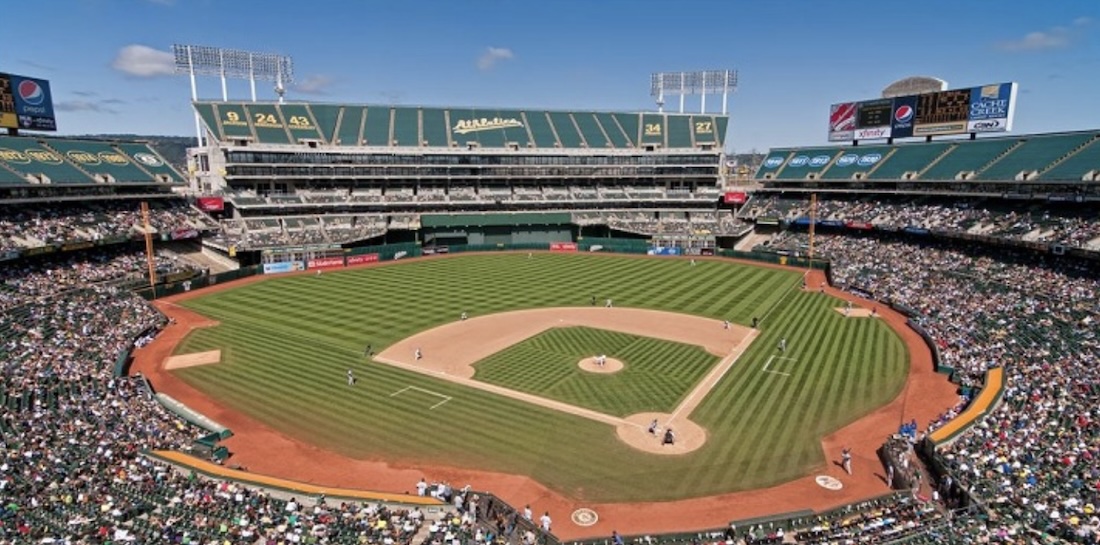
I saw a game in Oakland in 2004 between the A’s and the Reds, and I was appalled at the venue in which people paid good money to attend. The exterior of Coliseum (as I’ve always called it) was composed of plain concrete like you might see on a bridge or a highway. And the concrete facade was chipped and jagged. Inside, the concourse was narrow and dark. When more than a half dozen people waited in line at the concession stands, it was extremely difficult to navigate. And because it was (then) also home to the NFL Raiders, the outfield seating had been remade into a giant triple decker structure that felt out of place for the ballpark. Plus, the entire upper deck was closed off and covered in green tarp. Definitely, not an enticing atmosphere for baseball. You have to give it up to fans who stayed with the A’s despite their crummy stadium. No wonder they fled for Las Vegas with a 3-year stop in Sacramento’s triple A stadium.
Dan followed up by saying that certain cities — St. Louis, Los Angeles, New York come to mind — have large fanbases, but that doesn’t translate into national interest in the game.
Plus, at that time baseball had no one player that had a national or global presence like, say, a LeBron James or Patrick Mahomes.
After I got over my initial righteous indignation, I came around to what Dan was saying about MLB. National ratings have slumped badly over the past couple of decades as young fans have put their focus on the NFL and NBA.
I couldn’t think of a single player that could command the attention of fans nationwide like LeBron or Mahomes. Shohei Ohtani may be the closest baseball player to a true global superstar.
Still, it’s clear that baseball, with its slow pace and not-made-for-TV presence — you can’t see all the players at once — has clearly been surpassed by the NFL and NBA.
So, when ESPN announced it would opt out of its MLB rights deal after the 2025 season, I was disappointed by not surprised. ESPN has been struggling with its viewership, too, and it is much more focused on NFL and NBA.
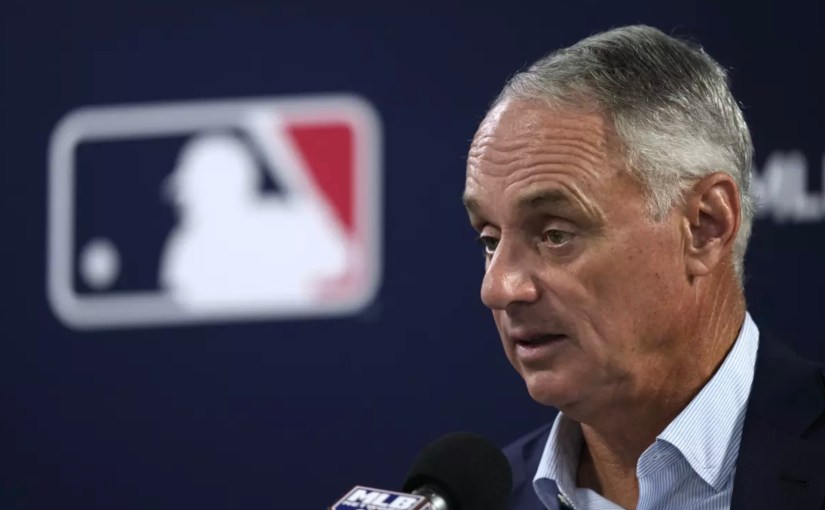
I was puzzled at how MLB Commissioner Rob Manfred planned to replace the ESPN revenue shared by all teams. What network would want to pay hundreds of millions to broadcast baseball and create surrounding programming?
MLB commissioner Rob Manfred
Turns out, Manfred DOES have a plan, according to the Wall Street Journal article. In a lengthy and comprehensive article, the WSJ outlined the commissioners proposed scenario that appears to be a long shot.
Said the Journal:
“Manfred’s model would require teams to cede control of their local rights to the league office so that MLB could sell them collectively as a unified streaming package. Viewers would be able to purchase the games of teams they want to see without the blackouts that have long vexed devotees who actually live near where their favorite team plays.
“No cable subscription would be required. Revenue would be distributed among all teams, like it already is for national deals with Fox and Warner Bros. Discovery.
“The change that we’re talking about,” Manfred said in an interview, “is the only rational response to where the media market is today.”
There’s a huge problem with that plan.
MLB teams don’t share their local revenue with their baseball counterparts. Teams in Los Angeles, New York, Boston and Chicago all generate massive amounts of revenue through their local TV rights and are reluctant to give up any of that revenue for the Greater Good.
According to the WSJ, MLB teams lean on their local broadcast revenue more heavily than their NFL and NBA counterparts. Those sports have much larger national TV deals, and share the revenue across the league.
More from the WSJ:
“Cubs president Crane Kenney said in a recent interview at the team’s spring training facility last week in Mesa, Ariz., that his team would be willing to go along with a new TV model — as long as it accounts for his organization’s status as one of baseball’s highest-revenue teams.
“Treat us fairly,” Kenney said, “and we’re in.”
There’s little incentive for the big players to share their local broadcast revenue with their MLB brothers, unless they truly are concerned with the overall national decline of interest in the game. If a few teams folded, that might get their attention.
However, I can’t see the big market teams sharing their wealth with their small market counterparts — even if it helps sustain the sport.
This is 2025 America. Who does anything for the Greater Good?
EDITOR’S NOTE: In what has become an annual column of its own, I look back over BlogOKC in 2024 and list my 10 favorite posts. Not most popular, but those that meant the most to me. I went back and forth, adding some then eliminating them, because each of them meant something to me. I hope you enjoy browsing the list and clicking on the headlines to read the full post. My list of personal favorites also includes a wonderful guest post by my friend, Don Mecoy. Enjoy!
Major League Baseball Commissioner Rob Manfred said the ‘Golden At-Bat’ is being discussed
When I was a young would-be sports writer just out of college working for the Southwest Times Record newspaper in Fort Smith, Ark., my editor sent me out to cover the state small school baseball tournament.
I had not seen much high school baseball through the years, so I was caught by surprise by one particular rule the small schools played by.
It was called the “Courtesy Runner.”
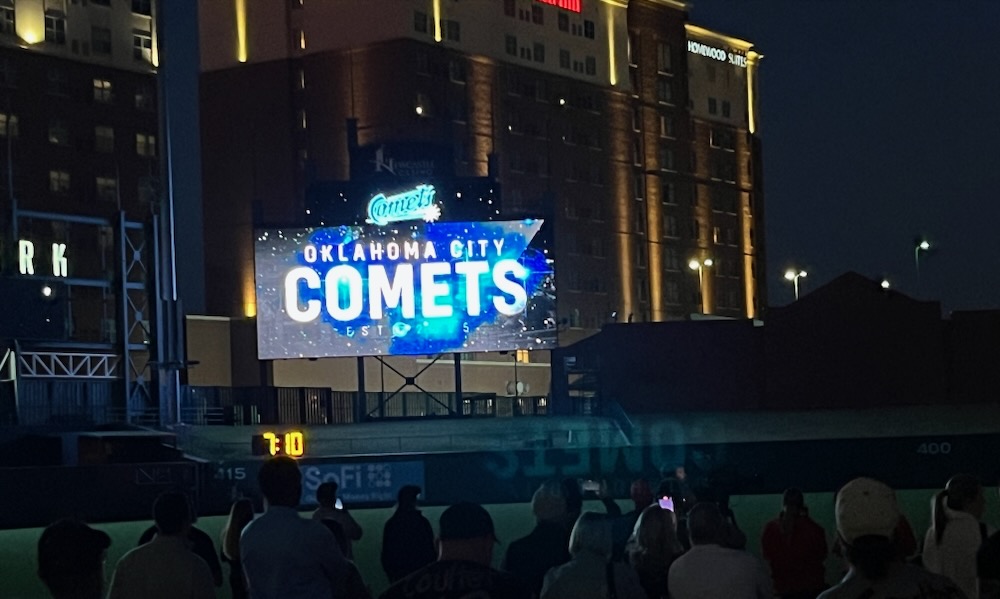
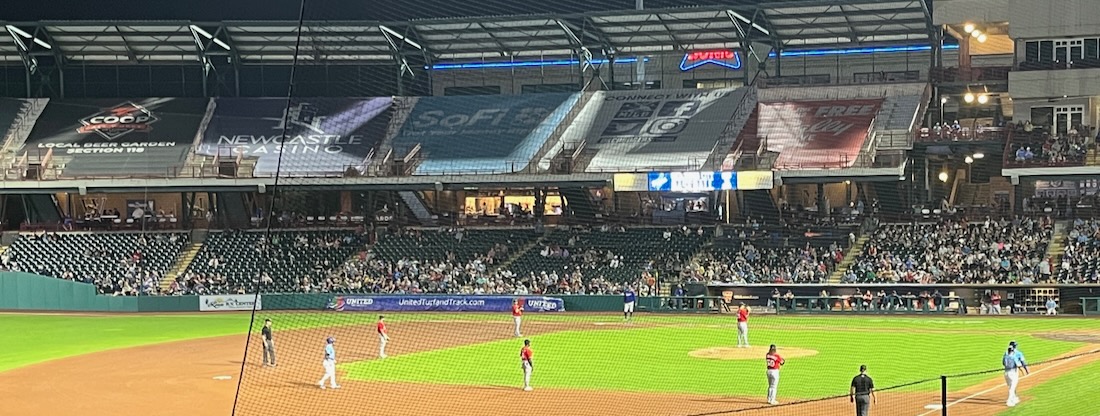
The Bricktown Ballpark scoreboard shows the team’s new name at reveal event.
The Oklahoma City Baseball Club revealed its new name, “Comets,” in a ceremony Saturday evening at the Chickasaw Bricktown Ballpark witnessed by at least a couple thousand enthusiastic fans.
I was among those who showed up for the Big Reveal, so I can attest to the collective cheer that went up when the “Comets” name and logo appeared on the scoreboard screen.
I was not expecting “Comets,” although I’m not sure what I expected. Maybe “Flycatchers,” which my friend Ed Godfrey had predicted as the future team name. Or the “Waving Wheats” or something that related to Oklahoma.
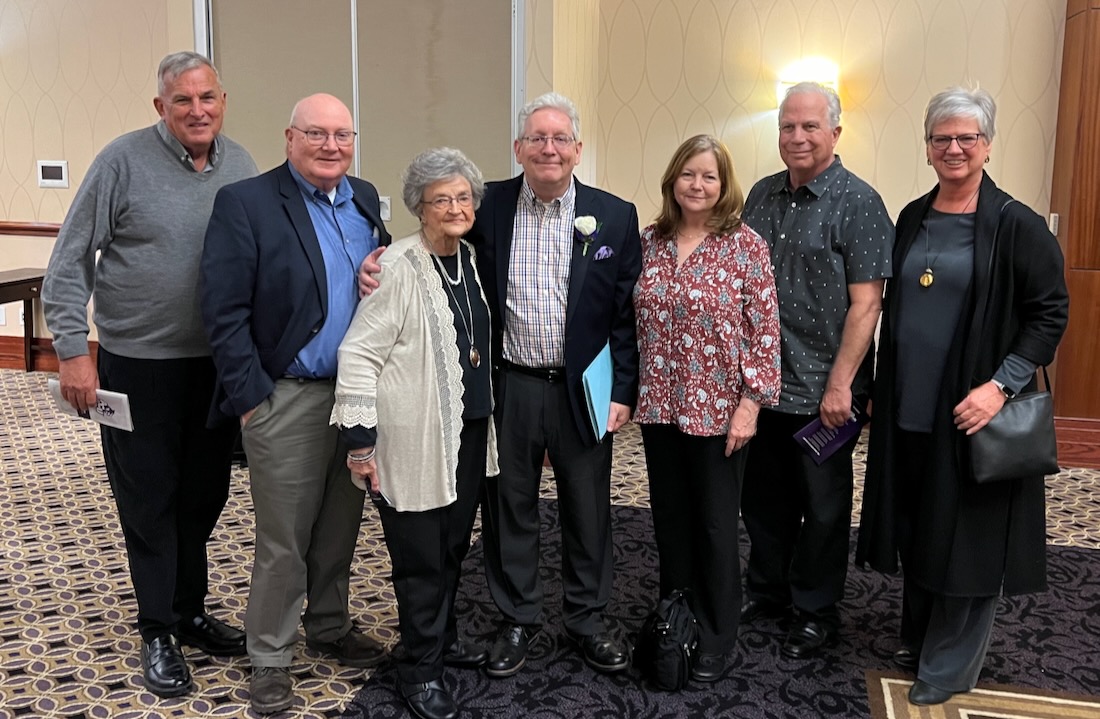
From left, Scott Kirk, Jim Stafford, Peggy Marler, Ron Hadfield, Corliss Hudson Englert, Brad Englert, Cheryl Mann Bacon
Ron Hadfield is a long-time friend who was my student editor on the Abilene Christian University newspaper, The Optimist, in 1977. Ron recently was recognized with a Lifetime Achievement Award at the ACU Athletic Hall of Fame ceremony that I was privileged to attend.
I showed up on ACU’s doorstep in 1976 as a transfer student with a dream to some day become a newspaper sportswriter, but with virtually no writing experience.
Ron likes to tell the story that on the first assignment he sent me out on, I turned in some terrible copy and proudly showed him the quotes I made up.
I deny the accuracy of his memory.
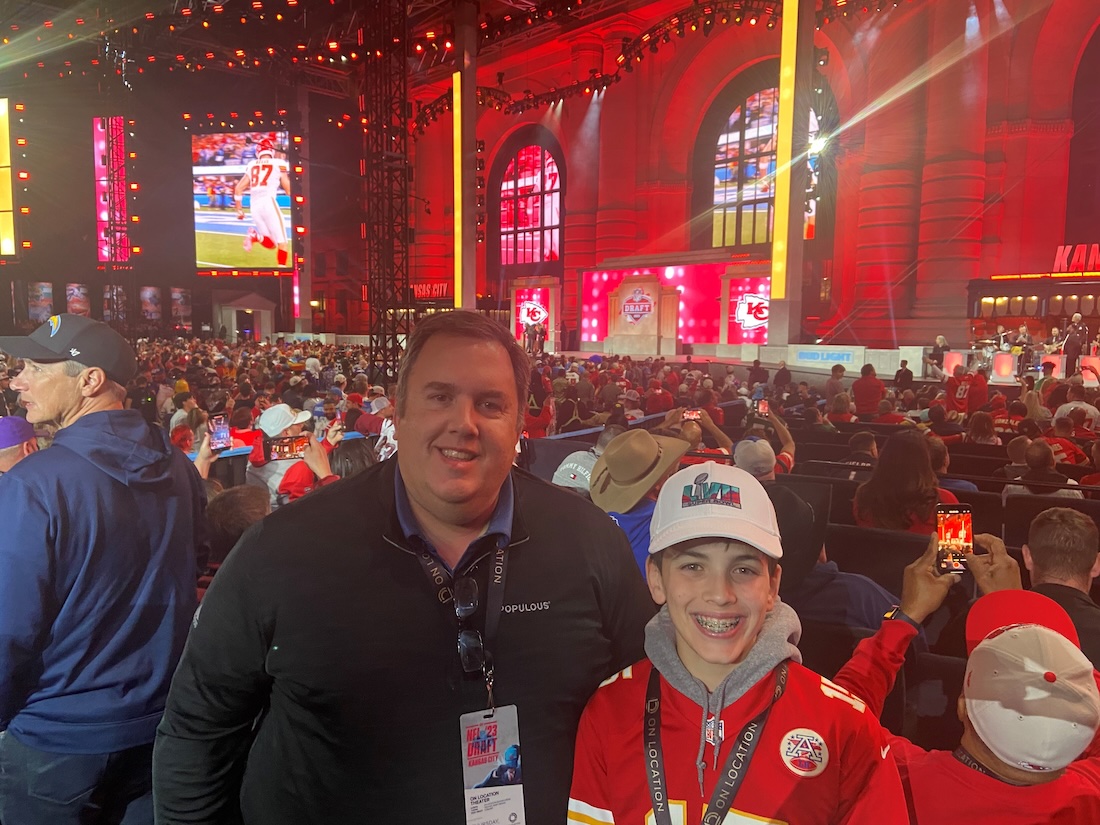
Brady Spencer with his son, John, outside Kansas City’s Union Station during the 2023 NFL draft.
A recent update in The Oklahoman newspaper on the new OG&E Coliseum under construction at the State Fairgrounds identified it as a venue designed by a firm named “Populous.”
In an even more recent story, I learned that Populous has been hired to design the new $71 million soccer stadium just south of OKC’s Bricktown.
I think I’m noticing a trend.
So, what exactly is Populous?
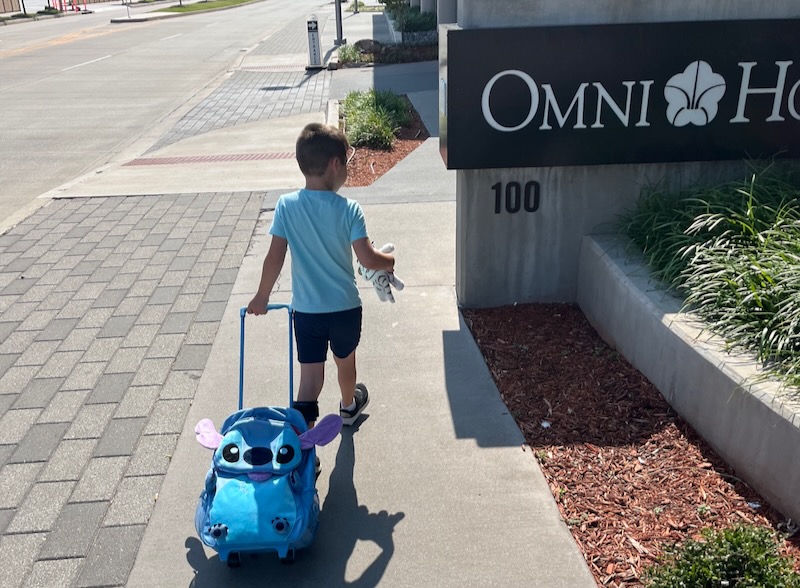
Solomon rolls his new backpack up to OKC’s Omni Hotel on Friday morning.
This is what happens when his GiGi is out of town on business and Papa is left in charge of entertainment on a Friday for our grandson, Solomon.
So, when it was just us two early Friday, Solomon said he wanted to go on a road trip. He suggested “the beach” and then Branson.
I said we couldn’t do either of those today, but maybe we could drive up to Guthrie and find a place to eat.
Solomon sort of accepted that, but later told me he wanted to go to that “nice Thunder hotel downtown.” All of us had stayed the night at OKC’s Omni Hotel last year when my wife, Paula, was booked there for a convention meeting.
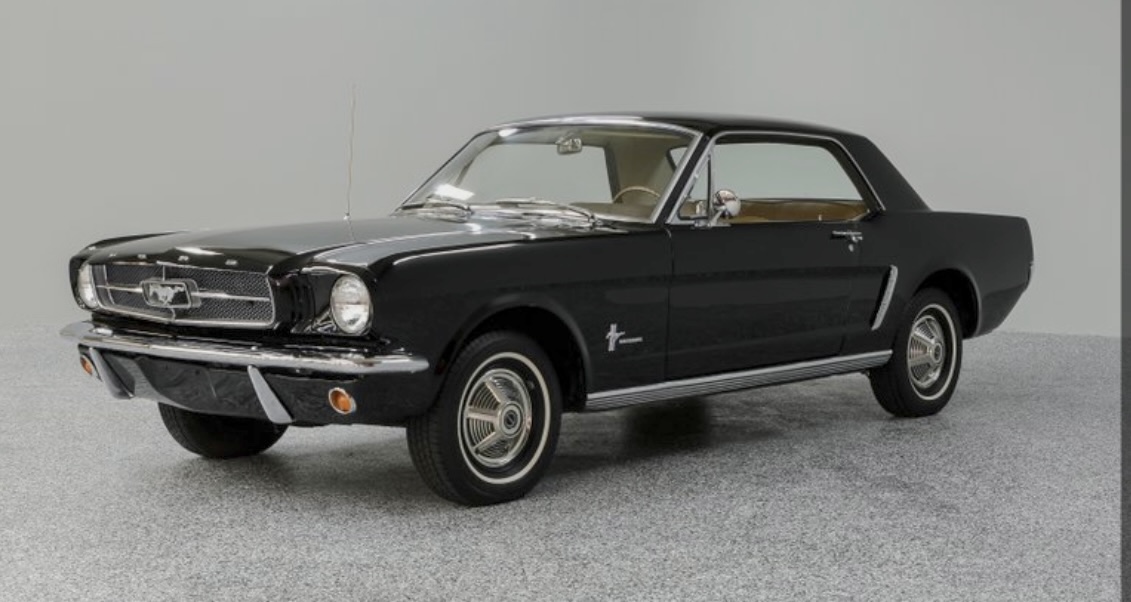
A black ’65 Mustang that looks exactly as I remember the one driven by my Aunt Dee.
This is a story of the Ford Mustang. Or, rather, two Ford Mustangs. One of them did not have a happy ending, and I was in it.
If you are hazy on your Ford Mustang history, I’ll catch you up to date a bit. The Mustang was conceived by team at Ford led by Lee Iacocca, who later gained fame as the man who saved Chrysler.
The first Mustang was introduced to the public in April 1964, as the “1964-1/2” Mustang. It was an instant hit. The public fell in love with it because it had a unique, sporty body style compared to what U.S. autos had been, which were cars shaped like boxes and quite unattractive.
My dad was among the millions of Americans who were taken by the Mustang and eventually bought one when he was stationed on the island of Okinawa while in the military. I’ll come back to that.
I read a magazine article when I was in college in the 1970s about a scrappy startup called Apple Computer, founded by two guys named Steve who built their first computers in the garage at the home of one of the Steves.
I couldn’t get enough of their story; the David-vs.-Goliath way that Apple blazed the personal computer trail that forced the industry behemoth at the time, IBM, to play catchup. Steve Jobs and Steve Wozniak were my entrepreneurial heroes.
So, I admit that I am a long-time Apple fanboy and remain one today.
But my fandom has run smack into some ugly reality. Apple is no longer the scrappy industry underdog. In fact, it is one of the world’s largest companies by market value. Yet, it has begun to flex its financial muscles like a bully that nobody likes.
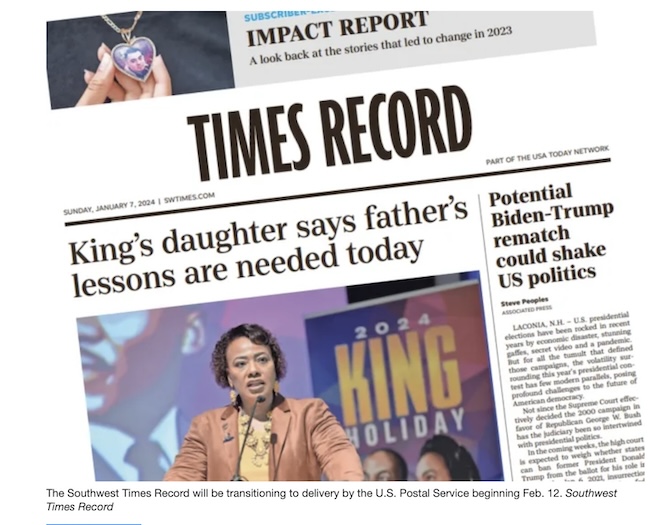
Here’s a bit of nostalgia for you. When I walked into the Southwest Times Record newsroom for the first time as an employee in 1978, I encountered a bustling community of talented writers, editors and photographers all scrambling to publish local news seven days a week.
The Fort Smith newspaper was a great place to learn the craft as my first job out of college. There are many folks among my former colleagues there whom I will never forget. I worked at the SWTR for five years in a variety of positions before moving to Oklahoma City and working for The Oklahoman for almost a quarter of a century.
So, it’s been disheartening to watch the SWTR decline as a community force over the past few years as the number of subscribers declined and employees were laid off. It’s a situation not unlike that in many other cities across the nation.
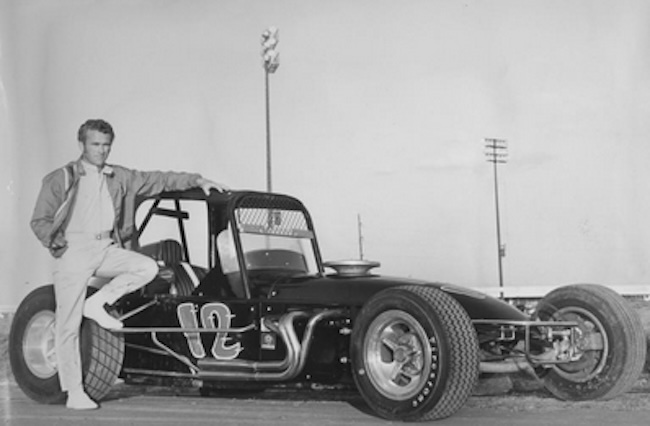
Evard Humphrey and his No. 12 super-modified sprint car
Editor’s Note: Don Mecoy is a friend and former colleague at The Oklahoman who retired as the newspaper’s managing editor at the end of 2022. A recent conversation about sports heroes from our youth when Don was a guest on the 3 Old Geezers podcast sparked his memory about a local race car driver fromthe late 1960s. Don wrote this guest blog post about that driver and those memories.
By Don Mecoy
I had my share of sports heroes when I was a kid. Roger Staubach, Lou Brock, Johnny Bench and Joe Washington were among my faves. But my personal hero — and it truly was personal — was a guy you probably never heard of: Evard “Kerfoot” Humphrey.
Evard was the driver of the No. 12 super-modified sprint car that ran every Friday night at State Fair Speedway during my youth in Oklahoma City.
Advertising banners cover the entire upper deck seating area down the first base line of the Bricktown Ballpark.
I was enjoying a summer evening at the Chickasaw Bricktown Ballpark with a friend last year, savoring the crowd, the game and the park’s immaculate green pasture.
Then my eyes landed on the upper deck along the first baseline that extends out into right field. There were no seats or bleachers visible. Only advertising banners draped across each section.
Don’t get me wrong. Oklahoma City has a beautiful ballpark that has retained its attractiveness since it opened in April 1998. However, the tarps do nothing but detract from the ballpark’s charm.
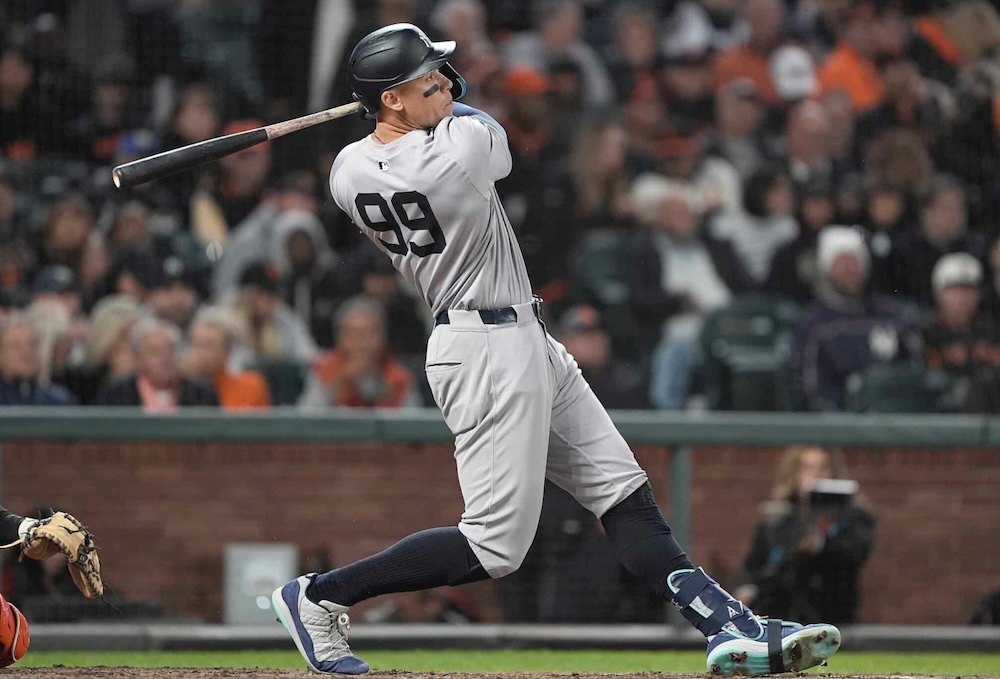
A ‘Golden At-Bat’ in future for New York Yankees star Aaron Judge?
When I was a young would-be sports writer just out of college working for the Southwest Times Record newspaper in Fort Smith, Ark., my editor sent me out to cover the state small school baseball tournament.
I had not seen much high school baseball through the years, so I was caught by surprise by one particular rule the small schools played by.
It was called the “Courtesy Runner.”
That rule allowed coaches to sub in a faster runner when a slower player got on base. But the player who was substituted for could remain in the game. Usually, the coach subbed in his fastest guy for the big, slow catcher.
I was offended by the Courtesy Runner, because I grew up following Major League Baseball and knew that once a player was substituted for, he was out of the game. No coming back in.
But the Courtesy Runner seemed popular with high school coaches in back in 1979, even if it messed up my boxscore at the end of the game. It remains in play for high schools, softball and even Little League Baseball.
And now the Courtesy Runner has been joined by other earthshaking changes infiltrating Major League Baseball itself as the game seeks a younger demographic. The pitch clock. Bigger bases. Fewer mount visits.
More is coming.
Recently, MLB Commissioner Rob Manfred discussed the possibility of baseball using what he called a “Golden At-Bat.”
“You put your best player out there out of order at a particular point in the game,” Manfred said. “That rule and things like that are only in the conversational stage right now.”
Major League Baseball Commissioner Rob Manfred said the ‘Golden At-Bat’ is being discussed
Here’s a scenario:
Let’s say the Yankees are down two runs in the 9th inning vs. the hated Red Sox with two men on base and two outs. The Golden At-Bat rule would allow them to bring Aaron Judge — their best hitter — to the plate even if his place in the batting order was six at-bats away.
I’m offended by the Golden At-Bat idea, just like I was offended by the Courtesy Runner all those years ago.
Call me a Geezer shouting GET OFF MY LAWN, but the Golden At-Bat concept seemed to come right out of left field, so to speak. It’s goofy. It’s unneeded. It’s a terrible idea.
Baseball already places a runner on second base to start the inning in extra innings. Now this?
Like me, much of the world of MLB fans reacted with horror to a rule that would skew baseball’s beloved statistics, which have withstood the test of time for more than 100 years.
There has been a chorus of boos across the nation from baseball fans, among them radio talk show host Dan Patrick. I listen to the podcast version of the DP Show daily, and heard Patrick’s reaction last week.
“I hate it,” he said. “Hate it. I hate the runner at second base to start extra innings. Don’t go too gimmicky. Does baseball need that? It felt like baseball had a good year, a great year.”
In the spirit of the Golden At-Bat, Dan asked his entourage of co-hosts, collectively known as the Danettes, to come up with some “even dumber” ideas for baseball. The guys were happy to oblige.
“Count the Golden At-Bat as two outs if the batter fails to get a hit.”
“if your team is up by 10 runs or more you have to pitch blindfolded.”
“If you throw a pitch 100 mph or more, it’s not a strike, it’s a ball.”
“One time a game, you can require the opposing team to remove one outfielder during an at-bat.”
The Danettes struck Dumb and Dumber gold with their ideas.
But, you know what? They didn’t mention the Courtesy Runner.
And I’m still offended by the Courtesy Runner after all these years.
The Bricktown Ballpark scoreboard shows the team’s new name at reveal event.
The Oklahoma City Baseball Club revealed its new name, “Comets,” in a ceremony Saturday evening at the Chickasaw Bricktown Ballpark witnessed by at least a couple thousand enthusiastic fans.
I was among those who showed up for the Big Reveal, so I can attest to the collective cheer that went up when the “Comets” name and logo appeared on the scoreboard screen.
I was not expecting “Comets,” although I’m not sure what I expected. Maybe “Flycatchers,” which my friend Ed Godfrey had predicted as the future team name. Or the “Waving Wheats” or something that related to Oklahoma.
An aside: There’s is already a “Flycatchers” team in Oklahoma in the Pecos League team Blackwell Flycatchers. Yes, Blackwell.
The OKC club tried hard to make “Comets” make sense for OKC baseball fans by linking it to Commerce, OK, native and MLB Hall of Famer Mickey Mantle. If you are like me, over the age of 60 and a long-time baseball fan, you know that Mantle was known as the “Commerce Comet.”
But if you are, say, 30 years old and a casual baseball fan, you may not even know who Mickey Mantle is or that he was from Oklahoma or that he had the “Comet” nickname.
In its presentation that night at the ballpark, the team also pointed out that stadium is located on Mickey Mantle Drive.
I thought it was a pretty big reach to link the “Comet” name to Mantle, but not entirely out of order. The team also linked the “Comets” name to the number of astronauts who were native Oklahomans.
Now THAT is a reach.
Ed Godfrey attended the event with me, and he was pretty ambivalent to the “Comets.” If I remember correctly, he said “meh.”
But our mutual friend, Steve Buck, had a much stronger reaction. About two minutes after the “Comets” name reveal, Steve unloaded on the name in our group text.
“Comets!!!! Why? Help me understand please? I hate it”
Yes, but how do you really feel, Steve?
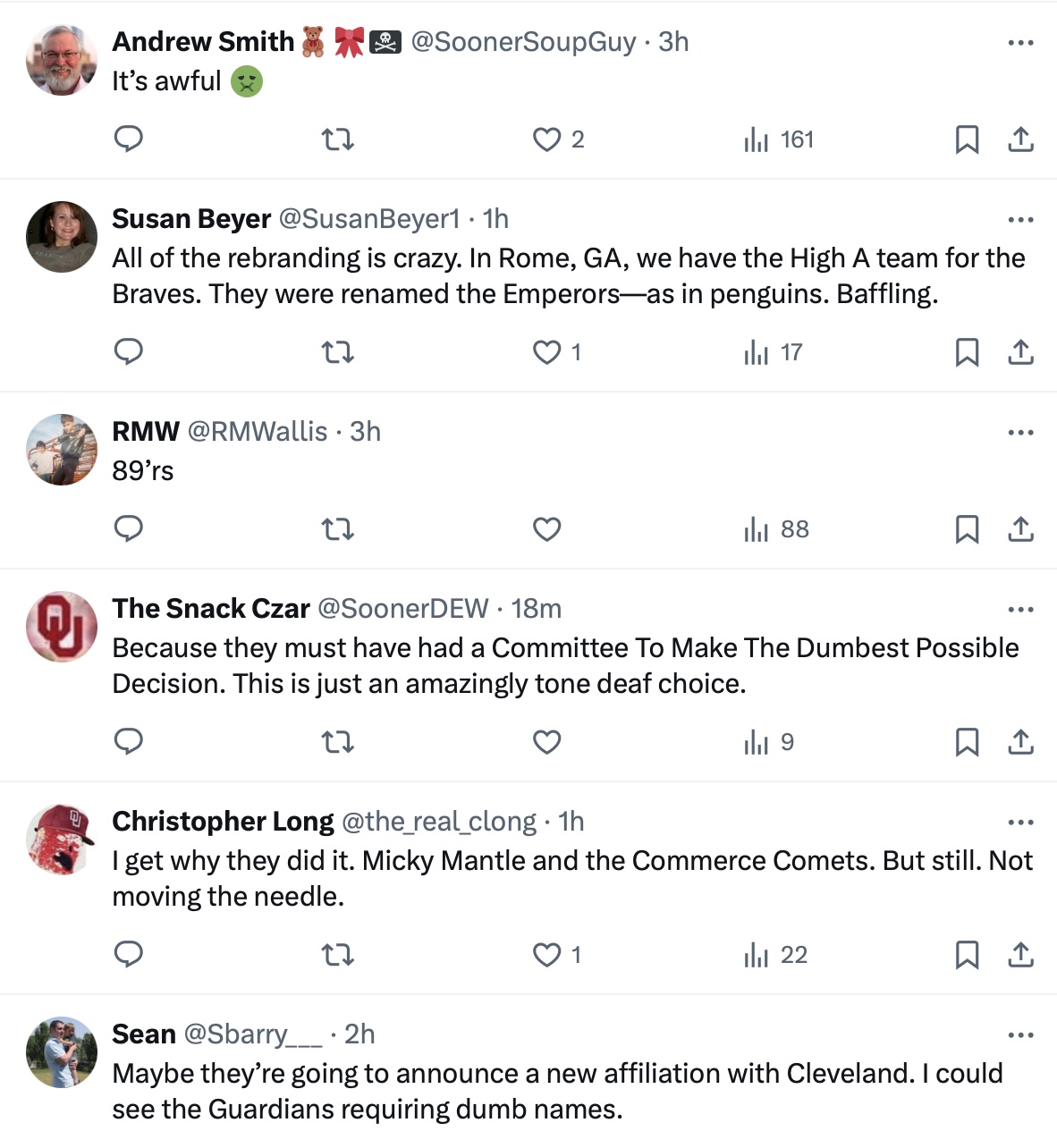
The reaction on social media was similar, with dozens of folks posting on Twitter (now X) their opposition to the new name.
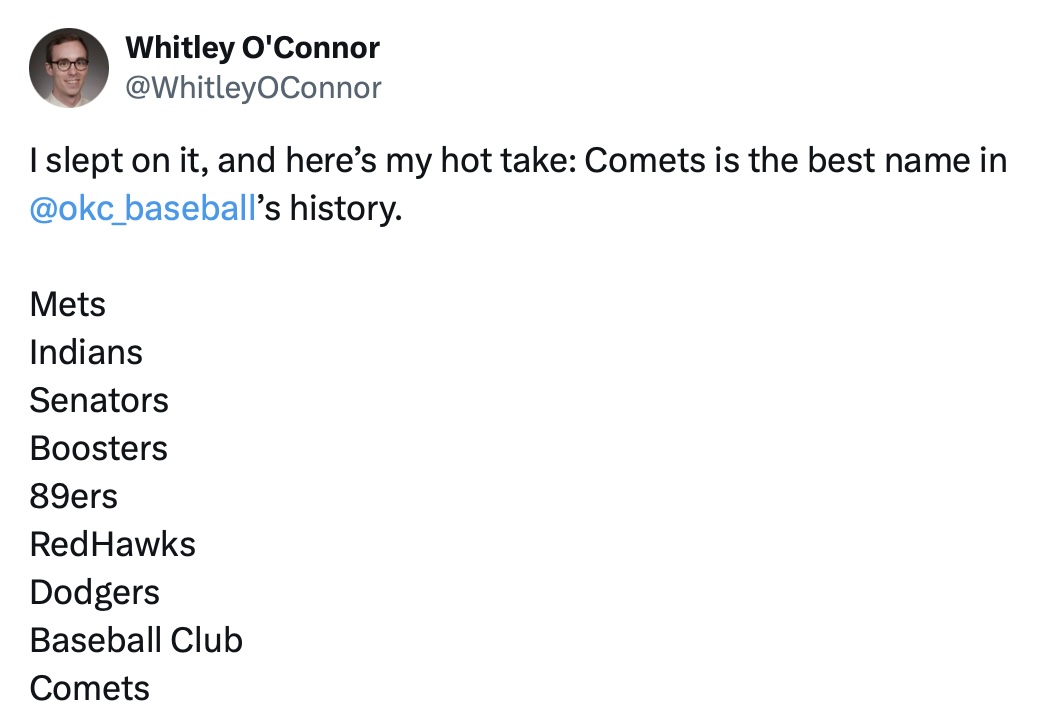
However, they aren’t ALL negative. In fact, Whitley O’Connor, co-founder of the Curbside Chronicle, went so far as to declare it the “best name in OKC Baseball’s history.”
Whitley makes a good point.
Before we left the “Comets” name reveal event on Saturday night at the Ballpark, I ran into my friend Russ Florence, and his son, Luke. Russ was all in on the new name, so I told him about Steve’s instant reaction.
“He’ll love it by the end of next season,” Russ predicted.
Bottom line: I’m pretty sure the actual name of the team won’t lure more people to the ballpark next year or drive any away. (Full disclosure: Steve Buck and I are both partial season ticket holders; and the team name won’t influence our decisions to follow the team)
Those of us who attend Comets games will be there just to watch some good ball, as my old editor, the late Bob Colon, would say.
As Ed and I were walking out of the stadium afterward, Ed said the name really didn’t matter because the team would change it in three years, anyway (presumably for the boost in merchandise sales, for you cynics).
If that is true, then the “Comets” name is perfect, I replied. A comet appears in the sky one night, and a few nights later it has disappeared.
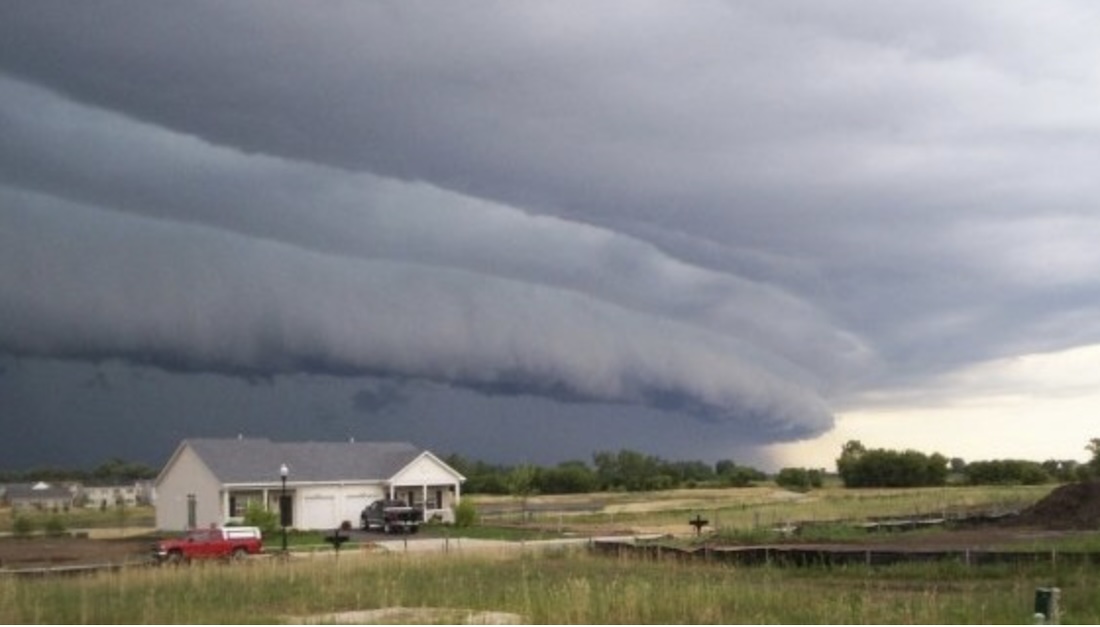
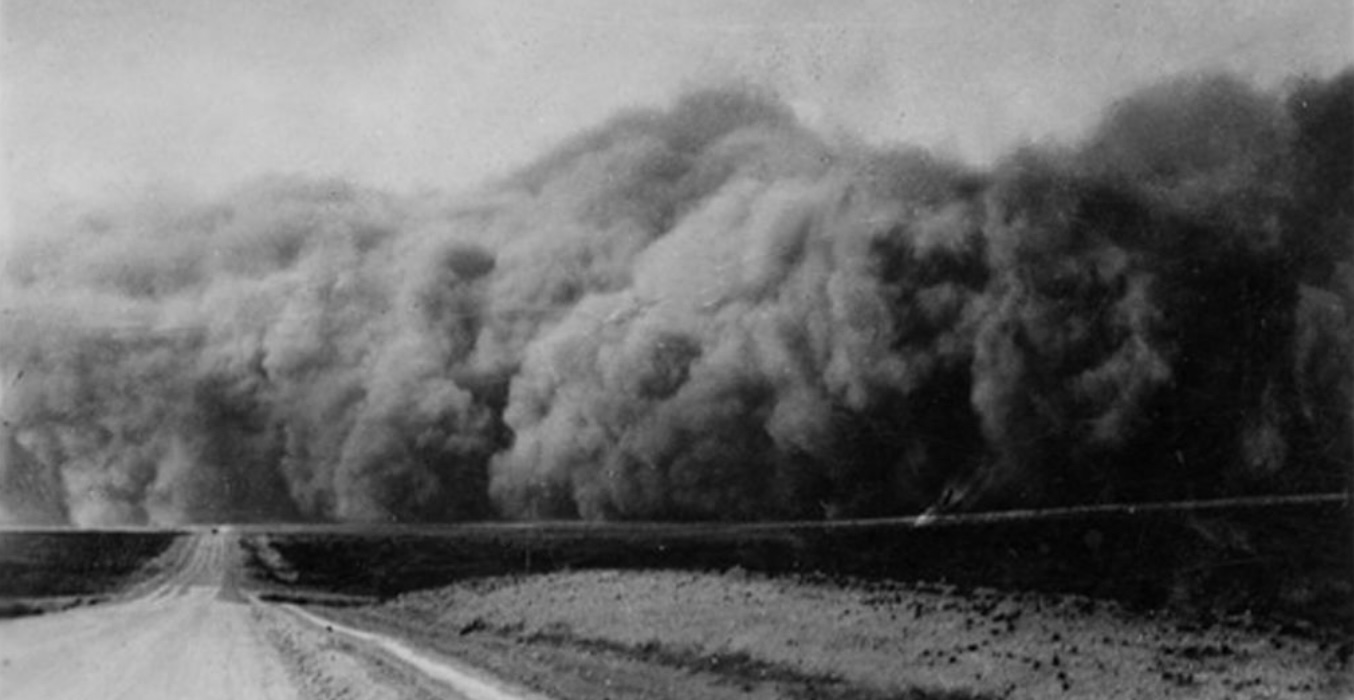
A ‘derecho,’ disguised as a big thunderstorm, is about to roll in. (National Weather Service photo)
Warning: Old Man rant ahead.
I’m not really a Get-Off-My-Lawn! guy, but sometimes things really bring out the Geezer in me. And chief of among them are hip new words or phrases that come into vogue out of nowhere.
Derecho, for instance. I’ve already debated this on the 3 Old Geezers podcast with my fellow cohost, whom I will call “Geezer Steve.” Steve argues that derecho has been in play for years and I just haven’t noticed.
I object to that, because it’s only in the last, maybe a year, that I ever saw or heard the word. And I consume a lot of media.
If you are like me and confused as to what a derecho is, think of it as a big thunderstorm. That’s what we called them back in my day.
“Wow, look at that line of clouds, I’m pretty sure a big thunderstorm is about to hit.”
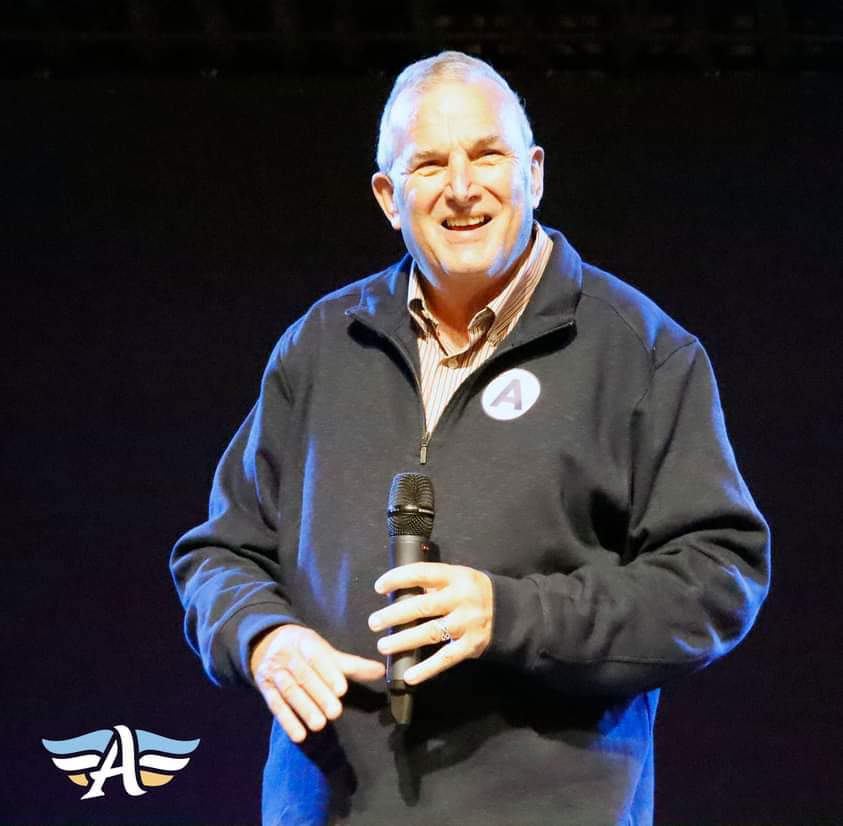
Scott Kirk, president of the Abilene Flying Bison, introduces the new development league team on Dec. 14.
It’s funny how your memory can distort the facts over the years. When I first met Scott Kirk on the campus of Abilene Christian University in the fall of 1976, I was impressed because he had actually worked for a minor league baseball team in his hometown of Harlingen, Texas.
At least, that’s what I remembered from a distance of almost 50 years.
Scott recently corrected the historical record for me.
In reality, he actually worked as a sportswriter for the Valley Morning Star, covering the Rio Grande Valley WhiteWings baseball team that was based in Harlingen. He even took a year off from college to focus on the job as WhiteWings beat writer.
But I’m not letting the facts get in the way of my warm memory.
I remember Scott Kirk as a fellow student who was committed to sports journalism and loved the sport of baseball above all sports. He was and is one of my favorite writers both in college at the Optimist student newspaper and through a long career with the Abilene Reporter News after graduation. He closed out his career as a high school journalism teacher in Abilene.
By comparison, I was far behind Scott in my writing and reporting abilities when I landed on campus in 1976. But I loved baseball, and that sort of bonded us as members of the Optimist staff. We watched baseball on TV, talked baseball and drove to Arlington to watch the Texas Rangers play.
Scott and I have stayed in touch through the years, each of us playing a role in the other’s wedding, meeting in Dallas or Houston to watch baseball, and once playing a round of golf in 100+degree weather during a scorching Abilene summer.
Although he’s retired from roles as reporter and teacher, Scott continues to pursue his passion for baseball not only as a fan, but as someone working hard to bring a professional or semi-pro revival to Abilene. The west Texas city has been home to professional and independent baseball teams in both the distant and recent past.
Back in the 1940s and ’50s, it was home to a minor league team named the Abilene Blue Sox. There were two versions of the Abilene Prairie Dogs, one that played on the ACU campus from 1995-’99 and again for a one-year reprise in 2012.. Scott served as official scorer for the 1990s version of the Prairie Dogs.
Fast forward to Dec. 14, 2023. Scott’s vision for another Abilene baseball team became reality with the announcement that the Abilene Flying Bison developmental league team would begin play in May on the home field of McMurry University.
Turns out the person who made the announcement before about 150 people at a downtown Abilene events center was, wait for it, Scott Kirk, who is now President of the Abilene Flying Bison.
Scott’s wife, Nancy, posted a photo on Facebook of her husband making the announcement, so I called him to get the story of how it happened.
It begins with Scott connecting with George Lessmeister, a Kansas City resident who was scouting for a city to locate a team in a proposed developmental league, which would be unaffiliated with Major League Baseball.
“George Lessmeister’s involvement came through National Sports Services, which owns and operates several collegiate teams and also matches prospective owners with franchises,” Scott told me. “NSS and Ventura Sports Group are the co-founders of the Mid America League.”
It was a natural connection because of Scott’s long presence in the city of roughly 125,000 residents, and his past roles with previous teams.
AN ASIDE TO THE STORY: There’s an Oklahoma connection to all of this. Lessmeister previously considered locating the team in Edmond, where it would play on the UCO baseball field. But a deal could never be consummated.
I asked Scott how the team was named. The Bison part is easy because of the city’s location in an area where the buffalo once roamed. The team added “Flying” as an homage to Dyess Air Force Base, Scott said. Dyess has a big local presence from its location on the west side of Abilene.
So, what about the league the Flying Bison will play in and where are the other teams located?
“We’re going to be playing in what is known as the Mid America League,” Scott told me. “It’s a developmental league with no Major League affiliation. The players are going to primarily be collegiate players. We can have guys who might have played pro ball for a couple years, and they can play for us. We just can’t pay them.”
Five cities have been identified for the six-team league, Scott said. In addition to Abilene, there are Sherman, Texarkana and White Oak, all in Texas, with the fifth team located in my home town of Fort Smith, Ark. Scott said the league is close to announcing the sixth location.
Here’s what I found out about the league on the Mid America League website:
“The League will play a 68-game schedule to start in late May and run through early August, concluding with playoffs to determine the League champion. The League will also be contracting with Opendorse to implement a program offering Name, Image and Likeness opportunities for players.”
Wait. NIL for an independent baseball league?
“I know it sounds like pay for play, but those are the rules we live by,” Scott said. “There are literally dozens of collegiate baseball leagues across the country. I would say there are probably 200 collegiate teams. One league, the Northwoods League, has almost 40 teams.”
I looked up the Northwoods League, which plays in the upper Midwest, and its website showed 25 teams in two divisions.
OK, Mr. President, what’s the next step for the Flying Bison and the Mid America League?
“Get a season completed,” Scott said. “If you complete your first season, your chances of success are better.”
So, Scott Kirk’s baseball story has come full circle. He DID have an unofficial affiliation with the Rio Grande WhiteWings. And now he’s leading a long-sought baseball revival in Abilene.
“The motivation for bringing a team to Abilene has always been about doing something that contributes to a sense of community in the city,” Scott said. “The overarching goal has been to build a venue that could serve as the home for a sports team in the future, whether it’s the MAL team or another team. If there’s a place for the team to play, it increases the likelihood of baseball or another sport to continue to play in Abilene.”
Maybe my memory from long ago wasn’t so faulty after all. Facts is facts.
 So, how were we able to watch that from the stands at Arlington Stadium?
 I was listening to a late-night sports talk radio show recently when the host began talking excitedly about ‘robo umps’ coming to Major League Baseball. He was totally opposed to the concept because, as he said, ‘it takes the human element’ out of the game.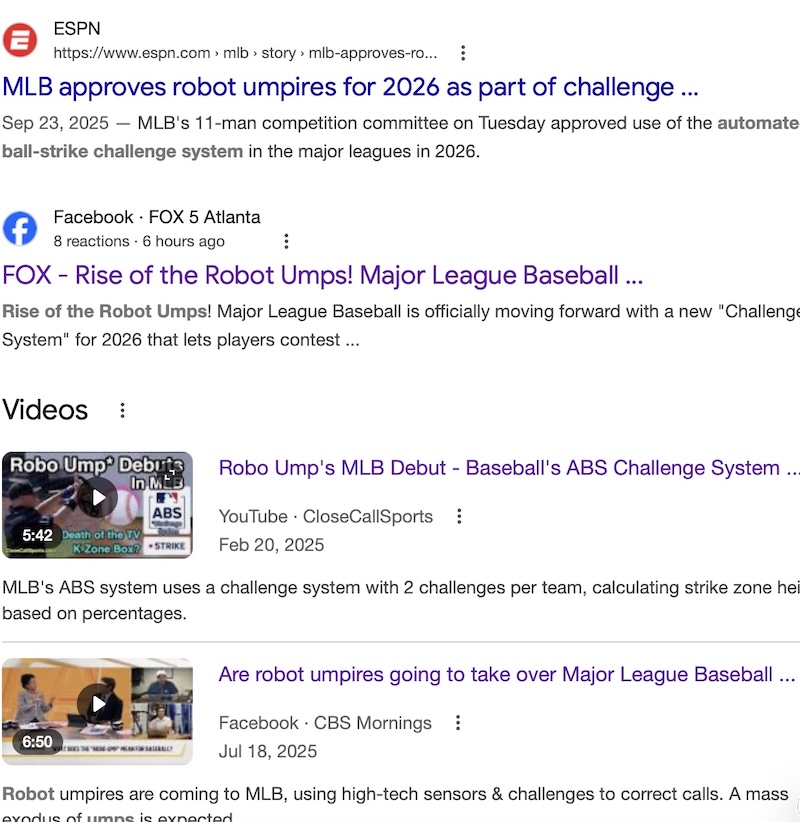


 Back in the 1940s and ’50s, it was home to a minor league team named the
  I asked Scott how the team was named. The Bison part is easy because of the city’s location in an area where the buffalo once roamed. The team added “Flying” as an homage to Dyess Air Force Base, Scott said. Dyess has a big local presence from its location on the west side of Abilene.
 Jim Stafford's BlogOKC