Instant Karma got the driver of the blue Silverado that cut us off on Penn. (not the actual vehicle)
Instant Karma’s gonna get you Going to look you right in the face Better get yourself together, darling Join the human race
How in the world you gonna see Laughing at fools like me? Who on earth d’you think you are? A superstar? Well, right you are
— Instant Karma by John Lennon
This past weekend, my wife and I were headed south on Pennsylvania Ave. toward the Quail Springs Mall area when a blue Chevy Silverado pickup suddenly changed lanes right in front of us, then raced to the light at NW 150th.
“Hey, that guy just cut us off!” my wife said with some righteous indignation.
I was right behind the Mr. Blue Pickup at the light, but what are you going to do to get some justice? Nothing but fume.
The light turned green and Mr. Blue Pickup shot off like the green flag dropped at Daytona. This is on Penn, mind you, in a very busy corridor with cars constantly turning on and off of the street.
The speed limit is 40 mph, and Mr. Blue Pickup was roaring away at least 50. We watched him racing far ahead against no one when, suddenly, the lights of a police car in the northbound lane started flashing.
As a character named Earl from an old favorite TV show of mine often said: “Karma is a bitch.”
The police car did a U-turn and pulled over Mr. Blue Pickup before it reached the next intersection.
“You don’t see that very often,” Paula said. “The guy cut us off, sped down Penn and was nailed by a cop right in front of us.”
I resisted the temptation to pull into the parking lot where the cop was just getting out of his car so I could wave and smile at Mr. Blue Pickup.
Besides, there’s always the chance that Instant Karma would bite me, as well.
But it was a satisfying ending, so I will treat you to John Lennon’s Instant Karma.
All 18 feet and 4,866 pounds of a 1970 Lincoln Continental Mark III are positioned in my neighbor’s garage.
I was enjoying some Sunday afternoon basketball this past weekend when my 4-year-old grandson urgently called me.
“Papa, come see this cool car!”
So, I stepped out the front door to see what got him so excited. This kid loves cars of all types.
Parked outside of my neighbor’s house on a car-hauling rental trailer sat a monstrous relic of the past. Turned out it was a 1970 Lincoln Continental Mark III that had seen its best days long ago.
Solomon and I walked out for a closer inspection. It was sort of a maroon color, or had been. But it seemed to have everything intact, with no (major) dents or busted headlights.
I looked it up on the Google, and a 1970 Lincoln Continental Mark III is 18-feet long and weighs 4,866 pounds of pure steel. That will come into play later in this story.
It might as well have been a yacht on the back of that trailer.
Anyway, as we were oohing and aahing over the behemoth, my next door neighbor, Akili, walked out and joined us. He was the proud owner of this vehicle, which he purchased with the intent of restoring it to its former glory.
Akili brought it to his house to store in his garage where he can pursue his restoration project.
Solomon and I went back to our yard, where I remained as my grandson played with friends from next door. A few minutes later, I watched as Akili slowly backed the trailer into his sloped driveway until the back of the monster was in the garage.
Akili’s son, Corey, had joined him as did a third man, Tim, who is their family friend. They unhooked the Lincoln and gathered at the front as if to push it off the trailer and down the ramp into the garage.
That led me to walk over and offer to help them push it off. Offer accepted. It wouldn’t be so simple
Akili climbed up the trailer, got behind the wheel and took the emergency brake off. Did I mention the car had no actual brakes beside the emergency brake?
The three of us in the front began to push. Nothing happened. Two-plus tons of steel didn’t budge.
As we puzzled over the next move, my neighbor from the other side of my yard came over and asked if we wanted her to ask her husband join us. There was a chorus of ‘yes!’.
We were soon joined by her husband, Greg, who brought a hydraulic jack and some apparent experience in moving huge vehicles.
So, I’ll fast forward. Akili put me behind the wheel with instructions to take the emergency brake off at his signal. Greg jacked up the front of the trailer. Everyone pushed. The car moved only a few inches. I sat.
My view from behind the wheel of the Lincoln
Eventually, Greg jacked the trailer high enough that it tilted back and the car rolled into the garage, but not completely off the trailer’s ramps. More puzzling over the next move.
Wheels were blocked, the car was jacked up and pushed by all of us this time. It finally came free of the trailer and then was positioned in the garage with about 6 inches of clearance to close the garage door.
Whew!
All of this took well over an hour. When the car was finally in its proper place, everyone cheered. Someone even said, “this was kind of fun.”
Well, I wouldn’t describe it exactly like that, but was great to see neighbors working together and helping another out of a spot.
I’m going to be impatiently waiting to see the finished product emerge in all of its 1970s glory from that garage one day.
Before there was a 3 Old Geezers podcast there was the 3 Old Geezers text exchange, a sort of daily debate over the Thunder and the world at large.
The group included my friends Steve Buck and Ed Godfrey, who disagreed strongly with my stance against tanking — which translates to losing on purpose to get a better draft position — by the Oklahoma City Thunder, or any NBA team, for that matter.
We went back and forth for a couple of years with Steve often reacting with ‘we need to take this debate to a podcast.’ It was a nice thought, but none of us had any podcast experience or equipment.
Then Steve came up with a couple of microphones and technology to connect to a recording device like a computer.
We had no more excuses.
So, last fall we launched the 3 Old Geezers podcast — LISTEN HERE — which has had only moderate success. But it allows us to vent our old man rage in get-off-my-lawn type rants.
Ed’s righteous indignation over perceived ills like bad officiating in college softball or the challenges of new technology have been well worth the effort. His humorous Old Man rants are exactly why I’m participating.
Steve hosts with a steady hand, suggesting appropriate and timely topics, while I’m mostly reacting to what’s been said or forgetting the Mayor’s name or even the web address of this blog. It happens.
Anyway, last week, Steve suggested we include some of our text exchanges in this blog to provide insight into where our material comes from.
Great idea. I’ve gone back through our Geezer text string and come up with some material that has led to blog discussion. Here’s a taste:
JANUARY 9 Jim Stafford: This is from a Geezer’s wife last night after she came home from the game: “I’m so impressed with our coach because of how many players he uses in a game. Instead of using just the starting five with two or three of the same substitutes like our old coaches, he uses a lot of players throughout the game, and you never know which one might come in.”
Ed Godfrey: He will be relying on that bench this month with a heavy slate of games.
Steve Buck: Paula knows. Jim on the other hand yearns for the Scottie Brooks days of predetermined rotations
Jim Stafford: I love Foreman Scottie! He was my favorite coach until Mark Daigneault came along.
Ed Godfrey: WHAT? Daigneault is your favorite coach now? Next thing you know you will be telling us Chet Holmgren is better than Mike Muscala.
Steve Buck: #truth
Jim Stafford: I like Daigneault’s courtside demeanor. Man, you can’t get him flustered. I’m still mulling over Chet vs. Muscala.
Back to reality. Here’s the latest on Muscala that I sent my Geezer partners:
As I said online, it’s a Christmas miracle!
More text debate:
JANUARY 29 Ed Godfrey: They changed the comics today. No Shoe! No B.C.! No Wizard of Id! Who wants Pearls Before Swine? Non Sequitor? Jump Start?
Jim Stafford: Welcome to the 21st Century
Ed Godfrey: Who reads newspapers? People from the 20th Century!
Screenshot
So, are you getting the drift? The Geezer text stream never ends. Here’s one more for good measure:
FEBRUARY 20
Ed Godfrey: Just asked Alexa to play Eddie’s playlist again. She played an Eighties playlist. I give up.
Steve Buck: What exactly is on Eddie’s playlist?
Ed Godfrey: Chris Stapleton, Tyler Childers, Turnpike
Troubadours, Johnny Cash, Coltor Wall, Zach Bryan.
Steve Buck: Yeah…no overlap with 80’s lol
Screenshot
So, there you have it. Our failures to communicate in unending text rants found their place in a podcast.
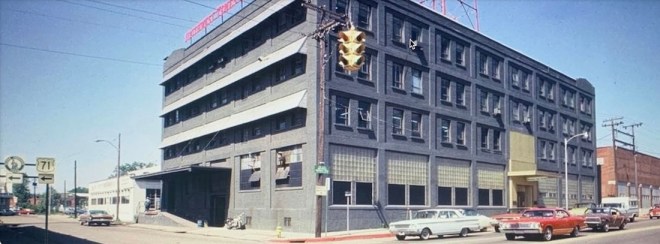
The Southwest Times Record building in what appears to be the early 1960s. (Photo courtesy of Southwest Times Record former employees Facebook group)
Here’s a bit of nostalgia for you. When I walked into the Southwest Times Record newsroom for the first time as an employee in 1978, I encountered a bustling community of talented writers, editors and photographers all scrambling to publish local news seven days a week.
The Fort Smith newspaper was a great place to learn the craft as my first job out of college. There are many folks among my former colleagues there whom I will never forget. I worked at the SWTR for five years in a variety of positions before moving to Oklahoma City and working for The Oklahoman for almost a quarter of a century.
My parents were among the 40,000 or so SWTR subscribers who fetched the newspaper off their driveway every morning. Established as the Fort Smith Times in 1884, the SWTR had a strong following not only in Fort Smith, but across a multi-county region of Western Arkansas and Eastern Oklahoma.
So, it’s been disheartening to watch the SWTR decline as a community force over the past few years as the number of subscribers declined and employees were laid off. It’s a situation not unlike that in many other cities across the nation.
Now owned by industry giant Gannett, I’m not sure there remains a single Fort Smith-based editor or reporter chasing down local news stories.
In fact, my 90-year old mother, who subscribed to the SWTR in our hometown of Fort Smith for more than five decades, finally gave it up a couple years ago because the paper had so little local news. Sometimes she still reads the obituaries published online.
As for me, I’ve stayed connected to the SWTR by subscribing to the paper’s free emailed daily newsletter that allows a peek at its headlines and free access to the obituaries.
It all makes you wonder when the hammer will fall and Gannett will halt publication of a physical paper for any remaining subscribers, leaving only online access.
Well, we’re close.
I received a notice recently that the SWTR was transitioning to a “mail only” newspaper with no more home delivery. Here’s what the email said, in part.
“Beginning tomorrow, look for your copy of the Southwest Times Record and our other regional publications to arrive with your daily mail. As announced in the Jan. 10 edition and in letters mailed to subscribers, the U.S. Postal Service will be delivering the Southwest Times Record to optimize resources amidst increasing digital readership demand.”
Now subscribers can read ‘news’ that is already at least 24-hours old when it arrives in the mail. What’s that old saying about nothing as stale as yesterday’s newspaper?
So, why am I writing this?
Well, it’s not a diatribe against the current ownership, because I see what’s happened to my old employer as a product of emerging technologies and a big change in how the public consumes news. Online access to news — much of it free — has removed the incentive to subscribe to a daily newspaper that lands on your driveway every morning.
I’m mourning the SWTR for its former employees and the folks who subscribed to the paper for decades. It’s like watching a close relative slowly fade away from an incurable cancer.
Here in OKC, I’m still a subscriber to The Oklahoman’s physical newspaper, which is delivered to my driveway every day but Saturday. Yet, when I look up and down my street as I pick up the newspaper each morning, I see no other papers on my neighbors’ driveways. None.
However, I’m confident the path determined for the Southwest Times Record won’t be a template for The Oklahoman. It remains an enterprising news organization, despite repeated rounds of staff reductions.
That notice I received of the SWTR’s “all mail” newspaper delivery prompted me to ask a couple of former colleagues and longtime SWTR employees who still live in the Fort Smith area their thoughts on what has become of their former newsroom.
Patti Cox was a longtime news editor at the SWTR with whom I worked on the news desk. She shared her perspective with me as both a former employee and a current subscriber.
“It is very sad turn of events for Fort Smith,” she said. “We still are taking the day-late-in-the-mailbox paper but not sure for how long or why. End of so many meaningful things like insightful, timely local news and commentary. Long gone are noisy newsrooms filled with reporters, editors, interns with common purpose and multiple deadlines.”
Carrol Copeland, longtime SWTR photographer and creator of a Facebook group called Southwest Times Record former employees that has 162 members, also shared his thoughts with me.
“Back in the day, we covered local news, and there was very little worldwide or nationwide news in it,” Carrol said. “Probably 80 to 90 percent of it was local news. At one point we had the Poteau office and the Van Buren office, and somewhere around 150 employees.”
That was then. This is now.
“There’s not even a physical location anymore,” Carrol said, who recalled tornadoes, spectacular crimes and criminal trials that he covered over the years. “I think it comes down to a lack of income. If you can’t sell advertising you can’t have people to work for you.
“Now that people are going to the Internet or Youtube for their news, no one is advertising anymore. The technology overtook them.”
How will the daily newspaper voice be filled for former SWTR subscribers who loved its local news angle? Digital news services that focus on local news offer some hope.
Here in Oklahoma City, we have Oklahoma Watch and Nondoc, among others, which are sort of complementary to The Oklahoman, for now.
In Fort Smith, there’s an online site called Talk Business & Politics that focuses on Fort Smith and Northwest Arkansas. It was started by a former SWTR editor. I read it first thing each morning five days a week.
Actually, as I think about it, I’m not sure folks aged 30 and younger will miss holding an actual newspaper because it’s likely they never read one on a daily basis anyway.
But for those who grew up with ink-stained hands, it’s a difficult transition.
“I just know I loved newspapers and the dedicated (mostly young) quirky stressed out folks who worked for them,” Patti Cox told me. “Grateful for the lifetime lessons learned there.
“Good memories, my friend.”
We’ll carry those memories with us long after the final edition is published. It’s coming.
Evard Humphrey and his No. 12 super-modified sprint car
Editor’s Note: Don Mecoy is a friend and former colleague at The Oklahoman who retired as the newspaper’s managing editor at the end of 2022. A recent conversation about sports heroes from our youth when Don was a guest on the 3 Old Geezers podcast sparked his memory about a local race car driver fromthe late 1960s. Don wrote this guest blog post about that driver and those memories.
By Don Mecoy
I had my share of sports heroes when I was a kid. Roger Staubach, Lou Brock, Johnny Bench and Joe Washington were among my faves. But my personal hero — and it truly was personal — was a guy you probably never heard of: Evard “Kerfoot” Humphrey.
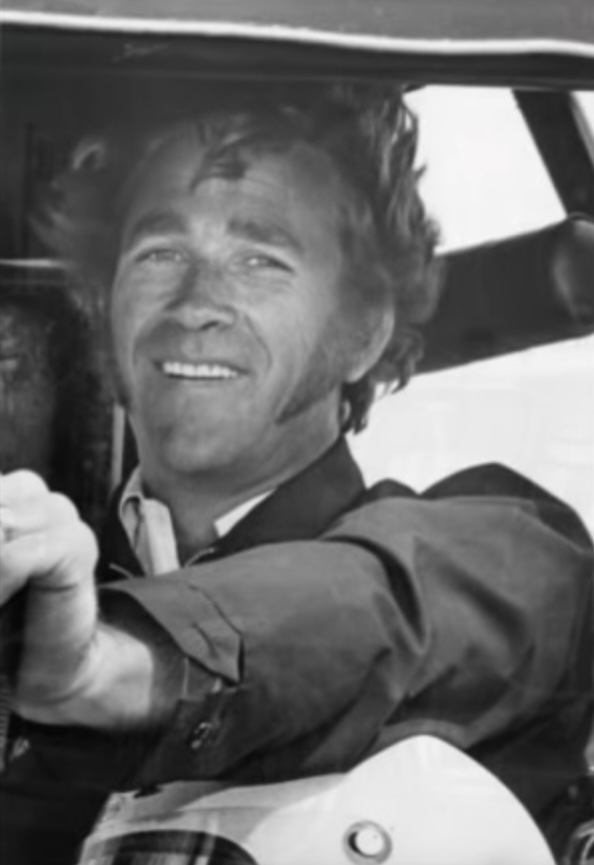
Evard in the Black Magic No. 12 super-modified dirt-track racer.
Evard was the driver of the No. 12 super-modified sprint car that ran every Friday night at State Fair Speedway during my youth in Oklahoma City. My Daddy — a preacher, shade-tree mechanic and race fan — liked Evard, so I did too. Evard won a couple of season championships at State Fair Speedway in the years just before my family moved to OKC in 1967. And he was highly competitive in the first several years we sat in the fourth-corner stands at the beloved dirt track.
Some grainy video of Evard’s “Black Magic” No. 12 is available on YouTube:
I watched Evard win a lot of races, and as I became more knowledgeable about racing, I could see that he was a smooth and cagey driver and a gentleman on the track. He cut other drivers a lot of slack. He didn’t tear up his equipment, or anyone else’s. Unlike most of my other sports heroes, Evard wasn’t a highly paid athlete — he ran a salvage yard.
I was grown and raising a family of my own when I saw Evard’s obituary in The Oklahoman in November of 2007. At the time, I was a writer on the business desk at the newspaper, and we had recently added blogs to our newspaper website. I decided to write a post about Evard. It was brief, but heartfelt.
‘Forty years after the first race I witnessed, I remain a fan of the sport. But there will never be a driver that I pull harder for than I did Evard Humphrey. According to his obituary, Evard was 72 and “loved by all” — even some folks who never met him.’
The day that short item appeared in the paper, my phone started ringing. I heard from Evard’s son-in-law, Terry Doss, who drove the “Black Magic” super-modified car after Evard hung up his racing suit. He thanked me on behalf of the family, and said Evard deserved all the love — not just as a successful driver but as an all-around great guy.
Shane Carson, one of the most successful dirt track racers and promoters to get his start in OKC, called to thank me and to tell me that his cars typically carried the number 12 because of his love for Evard. Others called to echo my feelings of Evard, and share memories of OKC’s wonderful dirt-track venue.
Pat and Evard Humphrey
The blog post also drew the attention of Evard’s charming wife, Pat, and she came to the newspaper office to meet me. I told her how I was thrilled sometimes to see Evard walking through the stands, wearing his racing suit, to sit with his family between races or when his car had failed. She told me I should have talked to him; he loved to mix it up with his fans. But for 9-year-old me, he was on a pedestal too high to approach.
She was delighted to flip through our file of her late husband’s photos in our library. A librarian told me all our photos were being digitized and then would be thrown out. Since Evard’s file had already been captured, we gave Patty those old black-and-white memories. That may have been one of my most rewarding moments in journalism.
In researching this article, I learned that Pat passed away last year. She seemed like a joyful person. I hope she enjoyed those photos.
Looks like Evard won the trophy dash. He might even have pulled off the rare “sweep,” winning his heat race, trophy dash and the A feature.
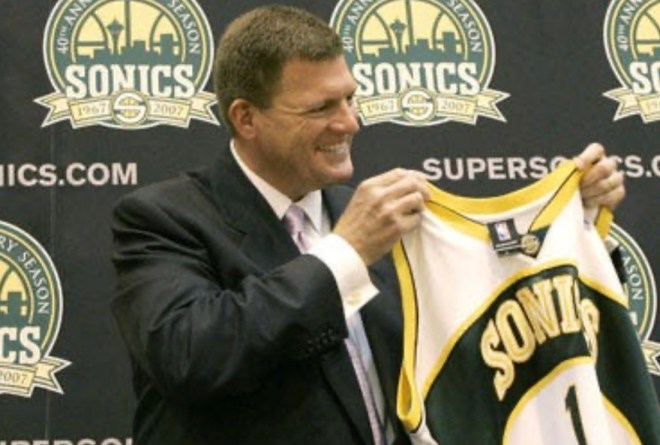
New Seattle Supersonics owner Clay Bennett showcases a Sonics jersey after purchasing the NBA franchise in 2006.
EDITOR’S NOTE: When it was announced in July 2006 that a group of investors from Oklahoma City had purchased the Seattle Supersonics NBA franchise, everyone in OKC knew what that meant. The team would relocate to Oklahoma City sooner or later. Probably sooner. That happened in 2008. Sorry Seattle. I was working in The Oklahoman newsroom at the time as a Business News reporter, and hit upon the idea of buying some potential Internet domain names that the future OKC Sonics (we thought) might want. Then I could sell the rights to that domain name to the team owners for a nice profit. Buy low, sell high. It didn’t work out, but I did get a nice story out of my brief tenure as an Internet domain name squatter. It was published as a column in The Oklahoman back in 2006. And that was the sole purpose of buying a domain name. This is that story.
By Jim Stafford
Like a tsunami traveling across hundreds of miles of ocean, it didn’t take long for ripples from last week’s $350 million acquisition of the Seattle SuperSonics to wash into Oklahoma.
A group of Oklahoma businessmen now own the Sonics, and less than a day after the deal was announced another group of enterprising Oklahomans spotted opportunity in a possible relocation of the team to the Sooner State.
We huddled in The Oklahoman newsroom.
A colleague I’ll call “Don” suggested that we research available Internet domain names using such words “Oklahoma, OKC, Sonics and Super-Sonics.” We could pool our resources and buy up the most promising real estate.
“I’m in,” I told him. The new team owners will need some prime Internet real estate if they relocate to Oklahoma, and we wanted to own it when they got here.
So began a race not unlike the Oklahoma Land Run of 1889, although the mode of transportation this time was a high-speed Internet connection. Using the domain broker GoDaddy.com, we did a search of virtually every combination of Oklahoma, OKC, Oklahoma City, Sonics and Super-Sonics.
Apparently, some Sooners had already anticipated the deal and staked out some virtual land before we got into the race. Names like oklahomasonics.com, okcsonics.com and sonicsokc.com were all gone. Even okiesonics.com was no longer available.
We settled on okc-sonics.com as the best of the unclaimed property. We formed a 50-50 partnership and sealed the deal through GoDaddy. Total investment: $9.40.
When word spread that a pair of Internet real estate moguls inhabited the newsroom, several of our colleagues began clamoring to join the investment group. They wanted in for $1 each, but Don and I decided the value already had risen beyond the original purchase price.
We decided to expand our investment empire the next day and claim another domain name. This time we went for sonics-okc.com. Another $9.40.
An editor who heard of our venture happened to wander by the business news desk. What were our intentions in owning these domain names, he inquired.
We’re not going to hold anybody up, we assured him. If the new owners of the Sonics want one of these domain names for the team’s Web site, we’ll demand nothing more than season tickets for each of us. And our spouses. On the floor. Plus parking.
The editor decided to play devil’s advocate. “Let me ask you this,” he said. “On whose computer and whose time did you make this deal?”
Gulp. The devil IS in the details.
Uh, we only took this move to assure the new Oklahoma owners that prime domain names will be available to them if they need it. Just kidding about the season tickets. HA! HA! We won’t really need to be on the floor anyway. And we can pay for our own parking.
Meanwhile, Don began looking for a possible exit strategy. He located the domain name auction site afternic.com where homesolutions.com recently brought a bid of $9,210. Therapy411.com reeled in a $2,000 bid.
Suddenly, new opportunities seem possible. We will wash our hands of this Sonics deal just as soon as our auction is over.
The auction won’t end until our reserve price is reached. We will set it just high enough to cover a pair of season tickets. Parking included.
It was my first time to attend the BIO show and to travel as part of the group that identified itself as OKBio. The annual BIO show brings thousands of people — scientists, entrepreneurs, investors, economic development professionals and reporters — together for a week of networking and showcasing emerging life science technologies.
There was a joke that we had to travel 1,600 miles to get to know our neighbors.
Only it was not a joke, but, in fact, reality.
That 2004 BIO show was my first of what became more than a dozen trips with the OKBio group to pitch Oklahoma and our growing life sciences community in major cities like San Francisco, Chicago, San Diego, Washington, D.C., and more.
So, I met a lot of people on that first BIO trip who became important sources to me as a newspaper reporter for future articles about local startups or emerging research.
In fact, I specifically recall meeting Craig Shimasaki, MBA, Ph.D., on the floor of San Francisco’s Moscone Center. Dr. Shimasaki was stationed along with his wife in front of a display that showcased the OKC-based startup he was guiding at the time.
If you’re not familiar with Dr. Shimasaki, he’s a California native who emigrated from his home state to Oklahoma to help develop a technology that diagnosed the flu virus. Along the way, he also earned his MBA from Northwestern University, his Ph.D. in Molecular Biology and Biotechnology from the University of Tulsa, and never left the state.
Since that first introduction, I’ve become friends with Dr. Shimasaki and interviewed him probably a dozen times or more for newspaper articles on Oklahoma-based startups he founded or guided, groundbreaking research in which he was involved and books on entrepreneurship he wrote.
I’ve watched him participate in a panel discussion on ‘gut health’ at one BIO show and engage with potential investors in a Startup Stadium presentation at another. I’ve sat in on Love’s Entrepreneur’s Cup pitches by college teams for which he served as advisor. He’s led me on a tour of a world class laboratory that he oversees.
It was from Dr. Shimasaki as he discussed one of his books on biotech entrepreneurship years ago that I first encountered the term “you don’t know what you don’t know.”
And, you know, I don’t know.
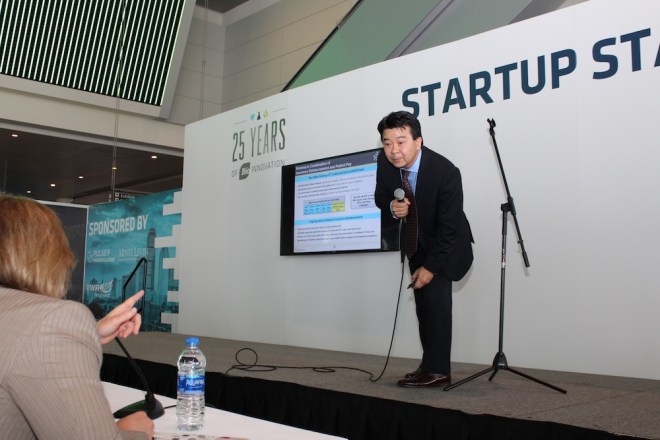
Dr. Craig Shimasaki making a presentation at a past BIO show.
I’ve written all of this because of how life sometimes leads you back to where you began.
Recently, I reconnected with Dr. Shimasaki through Moleculera Labs, the Oklahoma City-based company for which he co-founded and serves as CEO. Molecular Labs describes itself as “a precision medicine company focused on identifying the underlying immune-mediated root of neurologic, psychiatric, and behavioral disorders.”
The company has gained a lot of attention both local and nationally for its technology that can identify the underlying cause of apparent psychiatric and behavioral disorders that afflict both children and adults. Moleculera Labs has tested more than 15,000 patients since it began offering its test panel on a commercial basis about a decade ago.
So, when Dr. Shimasaki asked me to provide some assistance in crafting press releases for breaking news the company sought to share, I was all in.
Over the past two weeks, Molecular Labs announced the addition of a long-time life science industry veteran to its Board of Directors, and also revealed that it has been awarded a $500,000 grant from the Oklahoma Center for the Advancement of Science and Technology (OCAST) that will help it develop AI technology that will be integrated into its test panels.
There is even more breaking news from Moleculera Labs this month. The company announced this past week a strategic collaboration with Quest Diagnostics by which its offers patients of its neuropsychiatric autoantibody test services the option to provide blood specimens to any of Quest’s lab centers across the U.S.
It’s all big news not only for Moleculera Labs, but for the state’s entire life sciences community and all of Oklahoma.
For me, it’s the latest development in a relationship that began two decades ago on the floor of the BIO show 1,600 miles from OKC.
We’ve been good ‘neighbors’ ever since.
BONUS COMMENT FROM DR. SHIMASAKI:
“The BIO International Conferences allowed us to connect, and it’s been a wonderful relationship working with Jim Stafford over the many years as he has been actively covering the biotech and life science scene in Oklahoma,” Dr. Shimasaki said. “Jim has an innovative way to tell audiences about the interesting stories in a way that inspires and informs,”
Thanks for the kind words, Dr. Shimasaki, but it’s innovators like you who have shown me the impact that your research can have — and is having — on human health worldwide.
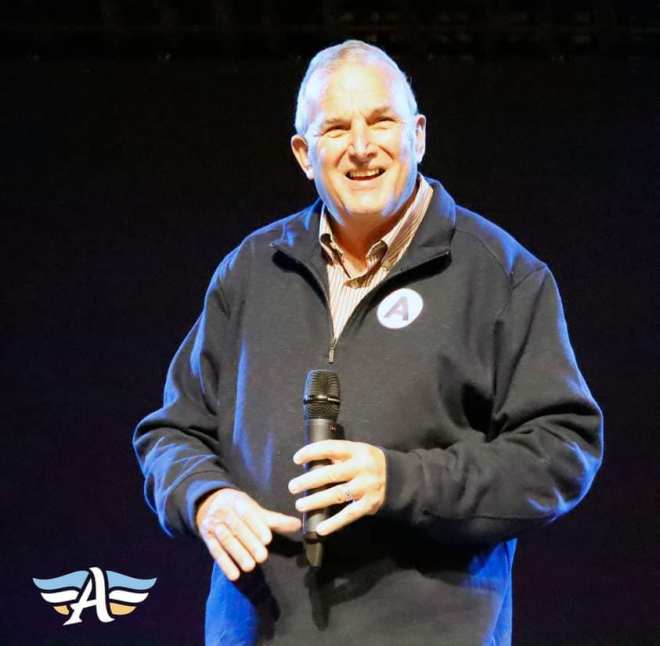
Scott Kirk, president of the Abilene Flying Bison, introduces the new development league team on Dec. 14.
It’s funny how your memory can distort the facts over the years. When I first met Scott Kirk on the campus of Abilene Christian University in the fall of 1976, I was impressed because he had actually worked for a minor league baseball team in his hometown of Harlingen, Texas.
At least, that’s what I remembered from a distance of almost 50 years.
Scott recently corrected the historical record for me.
In reality, he actually worked as a sportswriter for the Valley Morning Star, covering the Rio Grande Valley WhiteWings baseball team that was based in Harlingen. He even took a year off from college to focus on the job as WhiteWings beat writer.
But I’m not letting the facts get in the way of my warm memory.
I remember Scott Kirk as a fellow student who was committed to sports journalism and loved the sport of baseball above all sports. He was and is one of my favorite writers both in college at the Optimist student newspaper and through a long career with the Abilene Reporter News after graduation. He closed out his career as a high school journalism teacher in Abilene.
By comparison, I was far behind Scott in my writing and reporting abilities when I landed on campus in 1976. But I loved baseball, and that sort of bonded us as members of the Optimist staff. We watched baseball on TV, talked baseball and drove to Arlington to watch the Texas Rangers play.
Scott and I have stayed in touch through the years, each of us playing a role in the other’s wedding, meeting in Dallas or Houston to watch baseball, and once playing a round of golf in 100+degree weather during a scorching Abilene summer.
Although he’s retired from roles as reporter and teacher, Scott continues to pursue his passion for baseball not only as a fan, but as someone working hard to bring a professional or semi-pro revival to Abilene. The west Texas city has been home to professional and independent baseball teams in both the distant and recent past.
Back in the 1940s and ’50s, it was home to a minor league team named the Abilene Blue Sox. There were two versions of the Abilene Prairie Dogs, one that played on the ACU campus from 1995-’99 and again for a one-year reprise in 2012.. Scott served as official scorer for the 1990s version of the Prairie Dogs.
Fast forward to Dec. 14, 2023. Scott’s vision for another Abilene baseball team became reality with the announcement that the Abilene Flying Bison developmental league team would begin play in May on the home field of McMurry University.
Turns out the person who made the announcement before about 150 people at a downtown Abilene events center was, wait for it, Scott Kirk, who is now President of the Abilene Flying Bison.
Scott’s wife, Nancy, posted a photo on Facebook of her husband making the announcement, so I called him to get the story of how it happened.
It begins with Scott connecting with George Lessmeister, a Kansas City resident who was scouting for a city to locate a team in a proposed developmental league, which would be unaffiliated with Major League Baseball.
“George Lessmeister’s involvement came through National Sports Services, which owns and operates several collegiate teams and also matches prospective owners with franchises,” Scott told me. “NSS and Ventura Sports Group are the co-founders of the Mid America League.”
It was a natural connection because of Scott’s long presence in the city of roughly 125,000 residents, and his past roles with previous teams.
AN ASIDE TO THE STORY: There’s an Oklahoma connection to all of this. Lessmeister previously considered locating the team in Edmond, where it would play on the UCO baseball field. But a deal could never be consummated.
I asked Scott how the team was named. The Bison part is easy because of the city’s location in an area where the buffalo once roamed. The team added “Flying” as an homage to Dyess Air Force Base, Scott said. Dyess has a big local presence from its location on the west side of Abilene.
So, what about the league the Flying Bison will play in and where are the other teams located?
“We’re going to be playing in what is known as the Mid America League,” Scott told me. “It’s a developmental league with no Major League affiliation. The players are going to primarily be collegiate players. We can have guys who might have played pro ball for a couple years, and they can play for us. We just can’t pay them.”
Five cities have been identified for the six-team league, Scott said. In addition to Abilene, there are Sherman, Texarkana and White Oak, all in Texas, with the fifth team located in my home town of Fort Smith, Ark. Scott said the league is close to announcing the sixth location.
Here’s what I found out about the league on the Mid America League website:
“The League will play a 68-game schedule to start in late May and run through early August, concluding with playoffs to determine the League champion. The League will also be contracting with Opendorse to implement a program offering Name, Image and Likeness opportunities for players.”
Wait. NIL for an independent baseball league?
“I know it sounds like pay for play, but those are the rules we live by,” Scott said. “There are literally dozens of collegiate baseball leagues across the country. I would say there are probably 200 collegiate teams. One league, the Northwoods League, has almost 40 teams.”
I looked up the Northwoods League, which plays in the upper Midwest, and its website showed 25 teams in two divisions.
OK, Mr. President, what’s the next step for the Flying Bison and the Mid America League?
“Get a season completed,” Scott said. “If you complete your first season, your chances of success are better.”
So, Scott Kirk’s baseball story has come full circle. He DID have an unofficial affiliation with the Rio Grande WhiteWings. And now he’s leading a long-sought baseball revival in Abilene.
“The motivation for bringing a team to Abilene has always been about doing something that contributes to a sense of community in the city,” Scott said. “The overarching goal has been to build a venue that could serve as the home for a sports team in the future, whether it’s the MAL team or another team. If there’s a place for the team to play, it increases the likelihood of baseball or another sport to continue to play in Abilene.”
Maybe my memory from long ago wasn’t so faulty after all. Facts is facts.
EDITOR’S NOTE: For the third consecutive year, I’ve gone through my year in BlogOKC and pulled the posts that were most meaningful to me as a “best of” column. My favorite may be the one written by my daughter after she saved a roommate’s life in Florida. I was proud of her for jumping in when needed and also proud of her for the way she wrote of the experience. There are also links at the end of this ‘best of’ column that take you to other special blog posts worth reading, including three written as guest posts by friends. The subhead on each favorite blog post is also a link, so you can click through to the actual blog and read it in its entirety, if you choose. WordPress tells me BlogOKC had 7,024 visitors to this point in 2023. I thank you for reading my thoughts.
Sarah Stafford poses in her South Florida residence
For the past year and a half, my 24-year-old daughter, Sarah, has worked as a “tech” at drug-and-alcohol rehabilitation centers in South Florida. She is trained in CPR because of the potential for relapse and overdose of recovering addicts. Sarah is a recovering addict herself, and lives in a nearby home occupied by other recovering addicts with house rules that support their road to recovery. It’s not always easy, though. Temptation sometimes leads addicts to relapse with potential deadly consequences. This is Sarah’s story about a recent incident in her home.
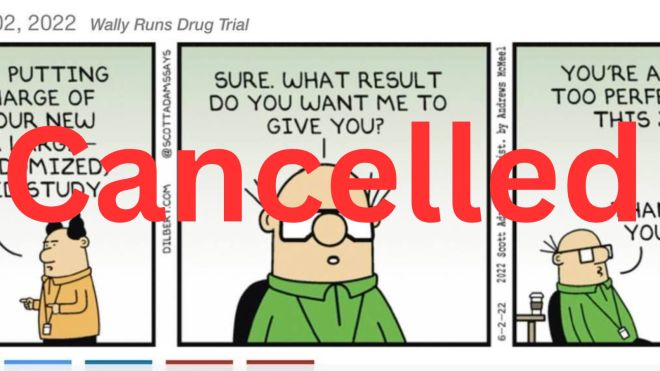
I went back through my social media history this morning and came across a dozen or more Dilbert comic strips I have posted over the years. If you aren’t familiar with Dilbert, it’s an insightful, often hilarious syndicated comic strip that skewers corporate office life. It features Dilbert, an engineer, his co-worker Wally and the pointy-haired boss, among others. So, it hit me hard when a text over the weekend from a former co-worker at The Oklahoman delivered some devastating news. The paper is cancelling Dilbert, and for all the right reasons.
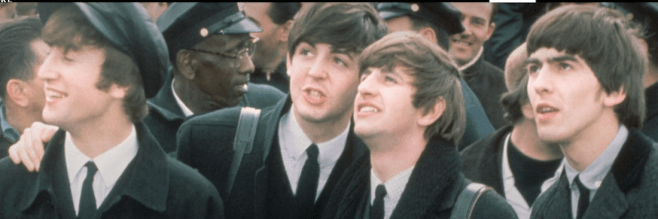
The Beatles from an early photo as they landed in New York City.
I was introduced to the Beatles in 1964 by my uncle. I was 11 and he was 19 and had purchased the album, ‘Meet the Beatles.’ In my extended family in 1964, buying something as worldly as a secular rock-n-roll record by the Beatles was a pretty bold step. My uncle told me he didn’t care for the music, even if the Beatles were a pop culture phenomenon. So, he gave me the album. Beatlemania washed over me like it did millions of other young Americans. I couldn’t get enough. As I was listening to a Beatles playlist on my iPhone today, it occurred to me what great storytellers, they were.
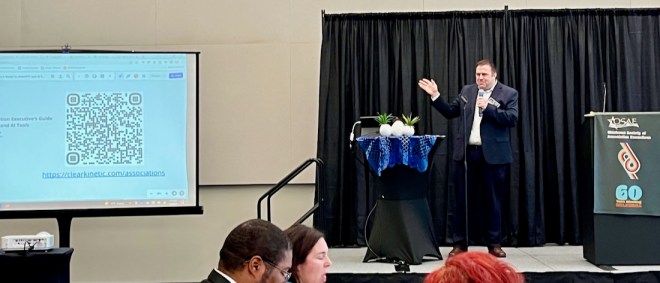
Bucky Dodd, Ph.D., founder & CEO of technology firm ClearKinetic, demonstrates an AI Chatbot at a recent OKC meeting.
“If you came here today for answers, I’m sorry, you will probably leave with more questions.” That’s how Bucky Dodd, Ph.D., a long-time educator and CEO of an educational technology startup called ClearKinetic, launched his presentation on Artificial Intelligence last week to a group of association executives at the OKC Convention Center. Dodd obviously follows author Stephen Covey and his 7 habits of a highly effective person. Begin with the end in mind. But Dodd’s presentation was more of a show-and-tell to his audience from the Oklahoma Society of Association Executives. He prompted a Chatbot to actually generate some amazing content for us.
I just read Jeff Speck’s “Walkable City: How Downtown Can Save America, One Step at a Time,” and I don’t know where to start with my reaction. Jeff Speck, you might remember, is the urban planner and author who advocates making urban areas pedestrian friendly to encourage both economic development and urban living spaces. He consulted with the City of OKC about 15 years ago that resulted in big changes downtown, especially in the elimination of most one-way streets. I worked downtown in the 1980s, and I can assure you there was little to brag about.
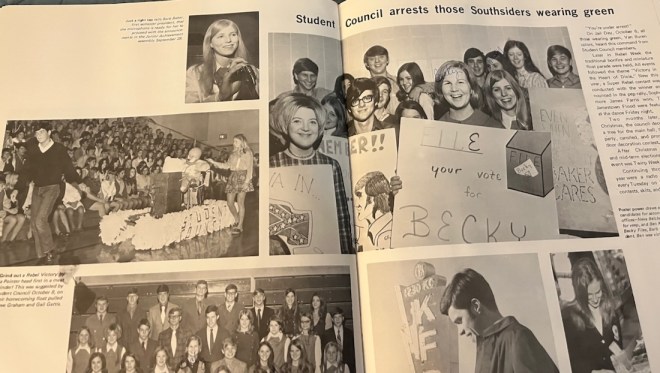
A page of the 1971 Southside High School yearbook, ‘Lifestyles’
I walked into Cattlemen’s Steakhouse a few weeks ago, made my way to a back booth and was greeted by someone I had not seen in 52 years. He was an old high school chum, so it was the ultimate class reunion.
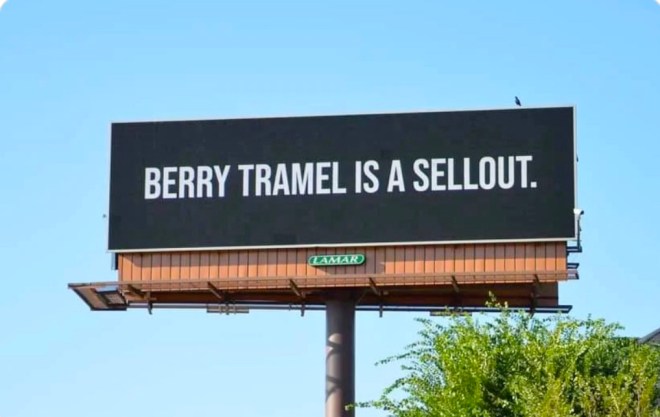
I’ve written all of this because, as most people know by now, both Berry and Jenni are leaving the paper. They’re joining a new online venture called The Sellout, Sellout Crowd, or something like that. It should debut later this month, from what I understand. I got wind of Berry’s impending exit about three weeks ago and immediately sent him an email with the subject line “Say It Ain’t So.” Berry responded and said it was so. He said it’s a good thing, not bad, because readers who follow him and Jenni will be able to read their work in a free online newsletter.
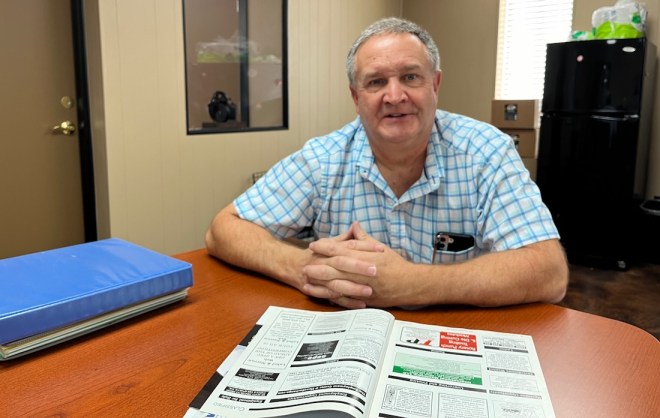
Mike West with magazine opened to classified that advertised Keystone Labels for sale
Was it karma or divine coincidence? I write that because of how I recently met another outstanding couple. Except this time it wasn’t in church; it was at The Joinery restaurant in Bricktown back in October on the occasion of the Sellout Crowd launch party. Sellout Crowd is a new online sports reporting service that launched September 1. As I sat down at a table to consume some complementary food I carried from the buffet line, I found myself across from a couple who were unfamiliar to me. The couple introduced themselves as Mike and Tonia West. And did they have a story of divine coincidence.
The 3 Old Geezers are (from left) Steve Buck, Ed Godfrey, Jim Stafford
For me, the podcast confirmed that I’m more agile behind a keyboard than with a microphone in my face, while both Steve and Ed have shown the ability to be clever and entertaining on the run. If you haven’t listened yet, I invite you to listen to our latest episode, and then perhaps invest some time in the previous podcasts. We’re all Thunder fans, but take different approaches to our fandom and perceive the team slightly differently. In fact, one Geezer has a tendency to sleep right through some of the games.
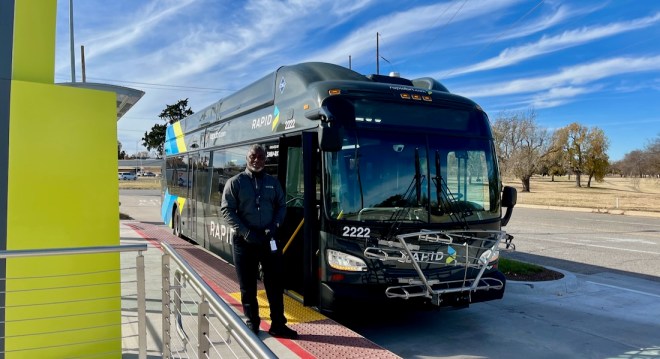
Our driver poses outside the BRT bus at the Lake Hefner park-and-ride stop along the Northwest Expressway.
The Northwest line is one of at least three BRT routes planned by the city, with two others in the works for the south side and the Northeast corridor. MAPS 4 dollars are paying for the new BRT routes, according to this story from The Oklahoman. Anyway, the bus was clean and new with about 5 people already aboard in the back seating area. I took a seat in the middle, and we headed toward downtown OKC. So, the BRT route gets a big thumbs up from me, even though it doesn’t lend itself to my daily transportation needs.
The Dot Race as presented on the Texas Rangers scoreboard in the 1980s.
If you frequented the late All Sports Stadium to watch the Oklahoma City 89ers Triple A baseball team play during the 1980s, you probably were a fan of an animated scoreboard feature known as the Dot Race. A form of the Dot Race lives on in the 2020s as between-inning entertainment for the Texas Rangers and other Major League parks around the country. And as time has passed, few people recall that the Dot Race had its beginning as humble, white dots on the 89ers scoreboard in Oklahoma City.
The Dot Race as presented on the Texas Rangers scoreboard in the 1980s.
If you frequented the late All Sports Stadium to watch the Oklahoma City 89ers Triple A baseball team play during the 1980s, you probably were a fan of an animated scoreboard feature known as the Dot Race.
I know I was.
I can remember many nights at the ballpark when the Dot Race prompted thousands of fans to cheer on their favorite computerized, pixelated “Dot” like they were at Churchill Downs. Sometimes, there seemed to be more excitement surrounding the faux scoreboard race than the actual game.
If you can recall through the hazy years of the past, the three Dots — labeled Dots 1, 2 & 3 — raced down an animated speedway toward the finish line. Sometimes a dot veered into the wall or had a breakdown just when it appeared it would win the race.
A form of the Dot Race lives on in the 2020s as between-inning entertainment for the Texas Rangers and other Major League parks around the country. And as time has passed, few people recall that the Dot Race had its beginning as humble, white dots on the 89ers scoreboard in Oklahoma City.
Turns out, the Dot Race was the brainstorm of a then part-time 89ers employee and University of Oklahoma student named Larry Newman.
By coincidence, when I arrived in The Oklahoman newsroom as a sports copy editor in 1983, Larry also worked part-time at night on the paper’s sports desk, taking scores and writing up short summaries of high school basketball and football games.
I got to know him as a bright, competent young man who also had an interest in computers and software coding. One night he brought the first Macintosh computer I had ever seen in the wild into the newsroom.
So, it wasn’t long before I learned that Larry was the creator of the Dot Race, although I didn’t know the full story until a recent Saturday morning when we caught up with one another at MentaliTEA and Coffee in Bethany. It was the first time we had seen one another in roughly 40 years.
I wanted to know the story of the Dot Race, and Larry was happy to share it.
Larry Newman, creator of the Dot Race, in 2023 .
Larry Newman began working as a ticket taker for the 89ers while in high school back in the late 1970s. He eventually was asked by owners Bing Hampton and Patty Cox to take over duties of operating the scoreboard pitch count from the press box.
“I did balls and strikes for probably two or three years,” Larry said. “In that role, you are watching every single pitch of every single game throughout a baseball season. So, a lot of innings.”
The next development leading to the Dot Race involved a new scoreboard installed at All Sports Stadium in a sweetheart deal between the 89ers, the City of Oklahoma City and the Miller Brewing Co.
“The people from Miller said we will give you a brand new scoreboard and attached message center in exchange for leaving the Miller Brewing Company logo advertisement on top of the new scoreboard for some number of seasons,” he said. “That’s what the Dot Race ran on; that message center.”
That brand new scoreboard offered a three-line message center, which provided the opportunity to not only display text, but to develop simple graphics that would be displayed. It came with a couple pre-made animations that had clapping hands and home run celebrations.
So, Larry learned to do frame-by-frame animations that were written in code to magnetic tape storage — no fancy floppy discs for this scoreboard. Larry began working on his Dot Race idea because the 89ers had no between-inning entertainment during one half inning of each game.
Larry dove into the coding challenge. He said it took about 35-40 hours to create the first race course and the dots — “pixel by pixel,” but after the first one was completed, programming each individual race to run on his course took about 30 minutes a night, he said.
So, the Dot Race was born.
“When I showed the idea to 89er owners Bing Hampton and Patty Cox, they approved the idea and actually promoted it at each 89er home game,” Larry said. “The public address announcer said, ‘hey, we’ve got a new feature, the Dot Race. Pick your winning Dot.’ We did it every night and people started getting into it.”
Larry programmed a new Dot Race for every game, and fans liked it so much that some asked him to tell them in advance what the winning Dot was going to be that night. He said he never disclosed the winner prior to any race.
“I had a race once where a Dot ran into the wall and an ambulance came out and picked it up,” he said. “That one took a lot of time to build.”
During this time the 89ers switched Major League affiliation from the Philadelphia Phillies to the Rangers, which was critical to the eventual spread of the Dot Race across baseball.
One night, visiting Texas Rangers officials that included then-General Manager Tom Grieve came to OKC to watch their minor league players. The Rangers reps spoke to Larry in the press box that night.
“They came up to me and said, ‘hey we want to see this Dot Race thing; we’ve heard about it from a couple of the players,’ ” Larry recalled.
The Rangers officials watched it and saw the fans reacting to it.
“They asked, ‘how did you do that?’ I said ‘it’s a very involved process.’ “
A short time later, he got a call from the Rangers scoreboard operator. The Texas version of the Dot Race was soon born and became hugely popular.
The 89ers — but not its inventor — got credit in early DFW area newspaper articles about the Dot Race phenomenon.
A story in the August 24, 1986, edition of the Fort Worth Star-Telegram quotes Rangers PA announcer Chuck Morgan as crediting the idea to the 89ers, but said it came to the Rangers via a newspaper reporter.
But in newspaper articles about the Rangers Dot Race just a decade later, Morgan made no mention of its Oklahoma City roots.
And on the current Website called “Ballpark Brothers,” the Dot Race is 100 percent attributed to Morgan.
“The Dot Race at Arlington Stadium was first originated by Arlington Stadium announcer Chuck Morgan, who somehow got the tech guys to have 3 colored dots circle around an oval on the scoreboard, much to the fans’ glee. It was this dot race that spawned all other video races and the human races in ballparks across North America.”
I guess you can chalk that up to the loss of institutional memory over time.
So, I asked Larry if he was bitter at not receiving any recognition for creating the Dot Race phenomenon that continues to circle scoreboards in different forms around the nation.
“It didn’t upset me, but I do remember walking into the Rangers stadium not too long after they came to Oklahoma City,” Larry said. “They were handing out a small card with a dot color on it to everyone entering the stadium. Some of the cards had a red dot, some had a blue dot and some had a green dot, and it was sponsored by Wendy’s or Arby’s or someone. If the dot you were handed won the race that night, you could go to the restaurant and get a free small burger or something.
“I’m like, ‘these people are finding a way to make money off my Dot Race.’ ”
But decades have passed, and Larry Newman is now a retired technical writer whose last employers were tech giants Google and Oracle. He looks back over the years and finds the silver lining in the story.
“I’m happy that people have enjoyed it for so many years,” he said. “Absolutely.”
In the grand scheme of Dot Race life, that’s a winner.
EDITOR’S NOTE: More info on the roots of the legendary Dot Race:
Larry Newman told me the Dot Race got a big boost with the 89ers audience when 89ers Director of Communications Monty Clegg began doing play-by-play announcing of the racing dots. I contacted Monty, who now lives in the Dallas-Fort Worth metroplex, to get his side of the story and here’s what he told me:
“Larry was really creative and worked some magic with a limited slate of a three-line message center with the 89ers,” Monty said. “Bing Hampton suggested that we have a Dot Race track announcer. Since I worked in the press box, I think I was volunteered. I still remember that as the dots rounded for home, I would always say ‘And they’re spinning out of the final turn!’
The Dot Race tale is a great story, and I thank Larry Newman and Monty Clegg for letting me share it.







 Back in the 1940s and ’50s, it was home to a minor league team named the
  I asked Scott how the team was named. The Bison part is easy because of the city’s location in an area where the buffalo once roamed. The team added “Flying” as an homage to Dyess Air Force Base, Scott said. Dyess has a big local presence from its location on the west side of Abilene.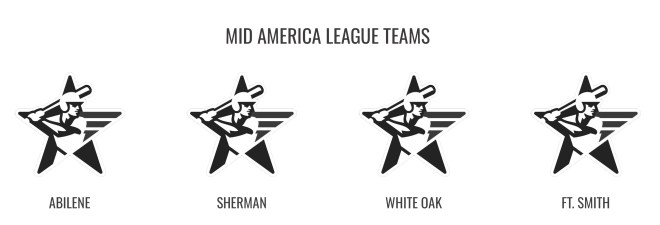





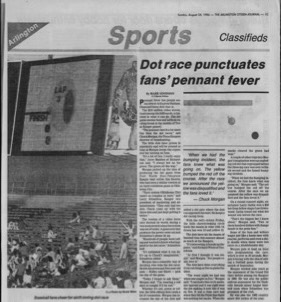 A story in the August 24, 1986, edition of the Fort Worth Star-Telegram quotes Rangers PA announcer Chuck Morgan as crediting the idea to the 89ers, but said it came to the Rangers via a newspaper reporter.
 Jim Stafford's BlogOKC