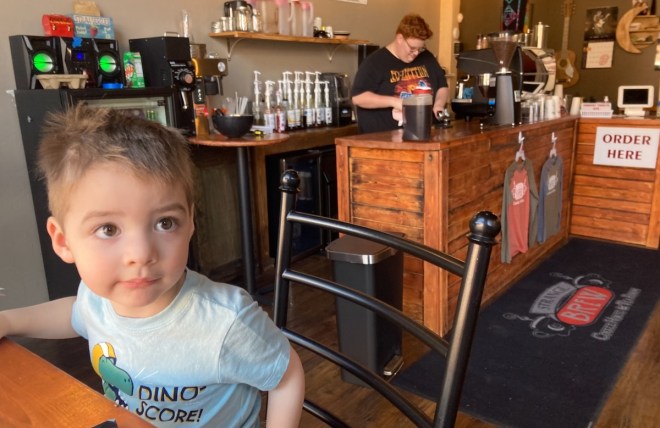
Solomon sits at the bar at Kingfisher’s Strange Brew coffee shop as our barista, Trent, makes our drink in the background.
Our 2-year-old grandson suffered from a case of cabin fever this afternoon, which meant that toys were strewn across the living room and nothing pleased the frustrated boy.
We decided a road trip was in order.
As I gathered Solomon into my arms and carried him to the car, my wife asked me where we were going. I told her I didn’t know, but would let her know when we got there.
So, we pulled out of the driveway about 2 p.m. with no destination in mind, but thinking about discovering a cool coffee shop in a nearby small town.
I headed northwest out of Edmond and decided that Kingfisher might make a good destination. It’s only about 40 minutes from our house, and I love the Main Street look of its downtown.
I figured the town with a population of about 5,000 was bound to have a local coffee shop or two.
Sure enough, we passed a billboard advertising a coffee shop named Strange Brew Coffee House and Tea Room as we entered Kingfisher’s city limits. And that’s where we landed at 2:50 p.m., 10 minutes before its 3 p.m. closing.
The shop was empty except for “Trent,” our barista, as we stepped in. I apologized for barging in so near closing, but he welcomed us in. I ordered an iced mocha and looked around the place as Trent made the beverage.
Strange Brew — also the name of an Eric Clapton recording — has sort of a classic rock theme with posters and faux records on the tables. Trent wore a Led Zeppelin T-shirt that matched the decor of the small shop.
I placed Solomon on a chair at the bar and explored for a few minutes. Trent said the busiest times were early mornings on certain days and the 11 o’clock hour during the work week.
The iced drink arrived within a few minutes, and it was perfect for an 80-degree March afternoon. Trent also rewarded Solomon with some complementary whipped cream for the road.
We loaded back in our car and headed east out of Kingfisher precisely at the Strange Brew’s 3 p.m. closing time.
For a Saturday afternoon drive that began without a destination, Kingfisher and the Strange Brew made it an excellent road trip. And Solomon was a happy boy as we pulled back into our driveway.
Now I’m plotting future drives on the road to nowhere.
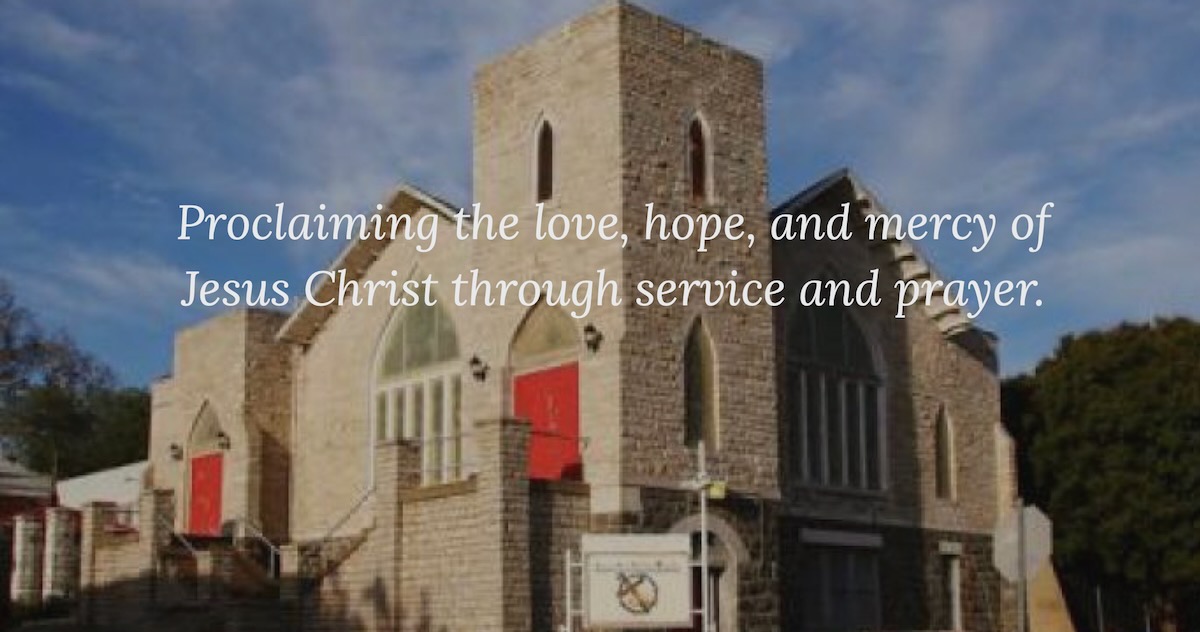
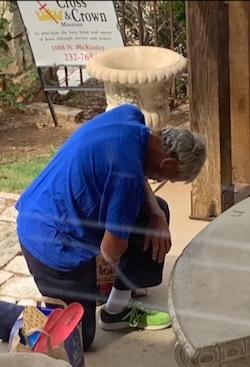
The 9th and McKinley location of the Cross & Crown Mission
Paul and Suzanne Whitmire are “urban missionaries” who serve a vast underserved population in the heart of Oklahoma City at 9th and McKinley. Cross & Crown Mission was launched in 2001 by the Whitmires and others from their home church group. They immediately began rehabbing a dilapidated old church property, and for the last 20-plus years have remade the surrounding neighborhood and the lives of many of those they serve. Paul and Suzanne emerged from the church I attend when it was known as Quail Springs Church of Christ. Our congregation, now known as The Springs Church of Christ, still supports our urban missionaries two decades later. Paul recently took the time to answer a few questions about his ministry for this BlogOKC feature.
Question: Where were you raised and what did you do in previous life before Cross & Crown?
Answer: My father was a minister. While living at home, we lived in seven different towns, mostly Texas. I graduated high school in Houston, college from Abilene Christian University. I served as a youth minister in Fort Worth from 1979-1984, youth minister in Edmond from 1984-1992, operated an antique business from 1992-2001. Began Cross & Crown in March 2001.
Q: Tell me the story of how you came to launch this ministry in this part of the city?
A: We considered moving to Honduras. God moved us to 9th and McKinley. Most people said ‘don’t go to that area.’ God said ‘go to that area.’ (For more on the founding of Cross & Crown Mission, read this story by Bobby Ross published in The Oklahoman in 2001 ).
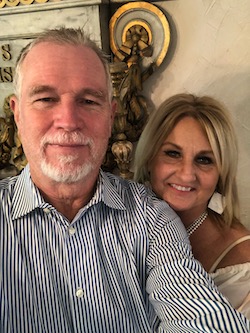
Paul and Suzanne Whitmire
Q: Who has worked with you and your wife, Suzanne, over the years to advance the ministry?
A: The work was originally shared by our house church with the ultimate plan to be primarily operated with people from the community. God keeps sending people. Some receive and leave, some receive and come back for more, some receive and come back to be a part of giving to others.
Q: What obstacles have you faced in this journey to provide ministry through the Cross & Crown Mission?
A: Big obstacles early. Most were because we said ‘but how?’ Finances, trust of the community, paying the bills, getting enough food. Someone asked early on if I knew how much it would cost to make the old building usable? I told him I know someone that has more money than we could ever need. He wanted to know the guy’s name. I gave him my Bible.
Q: What population are you serving, (and how have you gained their trust over the years?
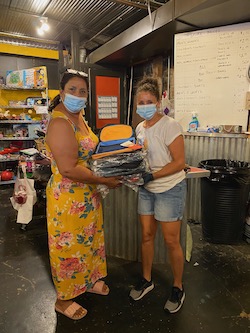
A: We serve whoever shows up. About 65 percent are hispanic. The group with the most to fear. We try to meet their request; we ask to pray; we act humbly. It has worked. Many gave fake names early, then shared their real names later.
Q: How do you balance providing for physical needs and well being of those you serve and being a spiritual influence or leader for them?
A: We have discovered that graciously meeting physical needs eventually leads to them asking the question of ‘why?’ You get the rest.
Q: How would you describe the impact Cross & Crown has had on the neighborhood surrounding your location?
A: Early into the work, housing became an ongoing need. We followed Isaiah 61:1-4 and decided we would ‘restore the places long devastated and renew the ruined cities.’ It has significantly changed the landscape.
A: Sunday morning worship; Monday-Wednesday: food pantry, clothing, furniture. Wednesday: legal aid; Thursday-Saturday: projects in the neighborhood. Primary focus: being in the neighborhood constantly to meet people’s needs, being Jesus to others.
Q: How often do you offer worship services?
A: Worship service: Sunday morning 10:30-12, English and Spanish.
Q: From where have you drawn your volunteers over the years?
A: Our volunteers come from around the city or live in the neighborhood or are in our housing programs. Our paid staff are all self-supported missionaries , such as myself.
Q: How do you measure the success of your ministry?
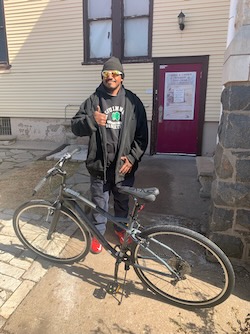
A: I wish I knew how to measure success, but I trust God with that. I knew if they were hungry and we fed them; needed clothes and we provided them; they were thirsty and we gave them drink; homeless and we housed them; alone and we invited them in; were drunk for 40 years and we helped them to be sober for one day; never thought God loved them and we showed them love, led them to Jesus, became family when they had none; then it’s a good day to me.
Q: How has the ministry expanded, and its mission changed or evolved over the years?
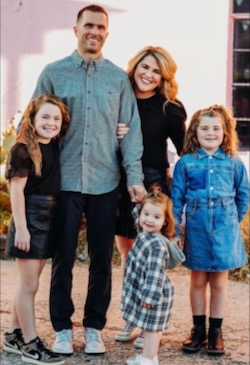
Luke Whitmire & family
A: The ministry began with food from ours and your pantries, then relationship with the Regional Food Bank, relationship with Walmart, Dollar General, pastry shops. Taking people home with us — to 11 properties to house people; two attorneys to address legal needs to 150 partnering attorneys available. From after school with children in basement to new Youth Center, to Classical Arts school for neighborhood children. And on and on. In the midst of the pandemic we began a south side mission in Capitol Hill. It’s known as the Christian Service Center, with Luke Whitmire as director and minister.
Q: How do you describe yourself to people you meet along the way?
A: When people ask what I do, (I say) ‘I’m the director of an inner-city non-profit.’ Then it’s up to them to be curious. An hour later they have a pretty good idea of what I do, and maybe wished they had been satisfied with my first answer. It’s normal that I will be in tears, and maybe them, as well. God is pretty amazing.
Q: How can local people contribute or participate as volunteers?
A: Donate or volunteer. Donate almost anything if it works. Clothes, food, appliances, furniture, cars. Call Paul at (405) 232-7696. Volunteer — let’s get past COVID.

Q: What else would you want readers of this blog to know about you or the Cross & Crown mission?
A: This work is the Lord’s. He wants it to be the work of all of us. We need financial donors, we need prayer warriors, we need material donations.
Q: What do you want to say to the people of The Springs church, where you were when you began the ministry?
A: The people of The Springs were there with us when we began in 2001. They have supported and prayed for us continually. They have never burdened us with expectations or demands. They have faithfully been family to us and blessed us richly. We are not alone because of you.
Facebook has become somewhat of a boogeyman for millions of people worldwide, and the criticism is well earned. The social network collects data on subscribers. It tracks users across the web. And it’s a boiling concoction of crazy conspiracy theories and crazy uncles.
But sometimes Facebook surprises me in a good way.
Today, it showed past January 27 posts from my timeline, and one popped up that I had given no thought to until I saw it.
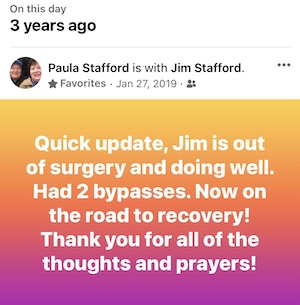
On this day in January 2019 I underwent double heart bypass surgery at Oklahoma Heart Hospital. It’s an anniversary of a life-saving medical procedure that is definitely worth noting personally.
So, I decided I should share it with you. The FB memory was actually posted by my wife when it was clear that I had survived the surgery and had a good prognosis.
I spent the next four nights in the hospital before making a very anxiety-filled trip home where the real recovery began.
Three years later I’m close to being my old self and moving on with my life pretty much as before. Maybe just a little slower.
Thank you, Dr. Randolph, the gifted surgeon who literally held my life in his hands for about six hours.
And thanks to Facebook, which made sure I remembered the milestone day in my life.
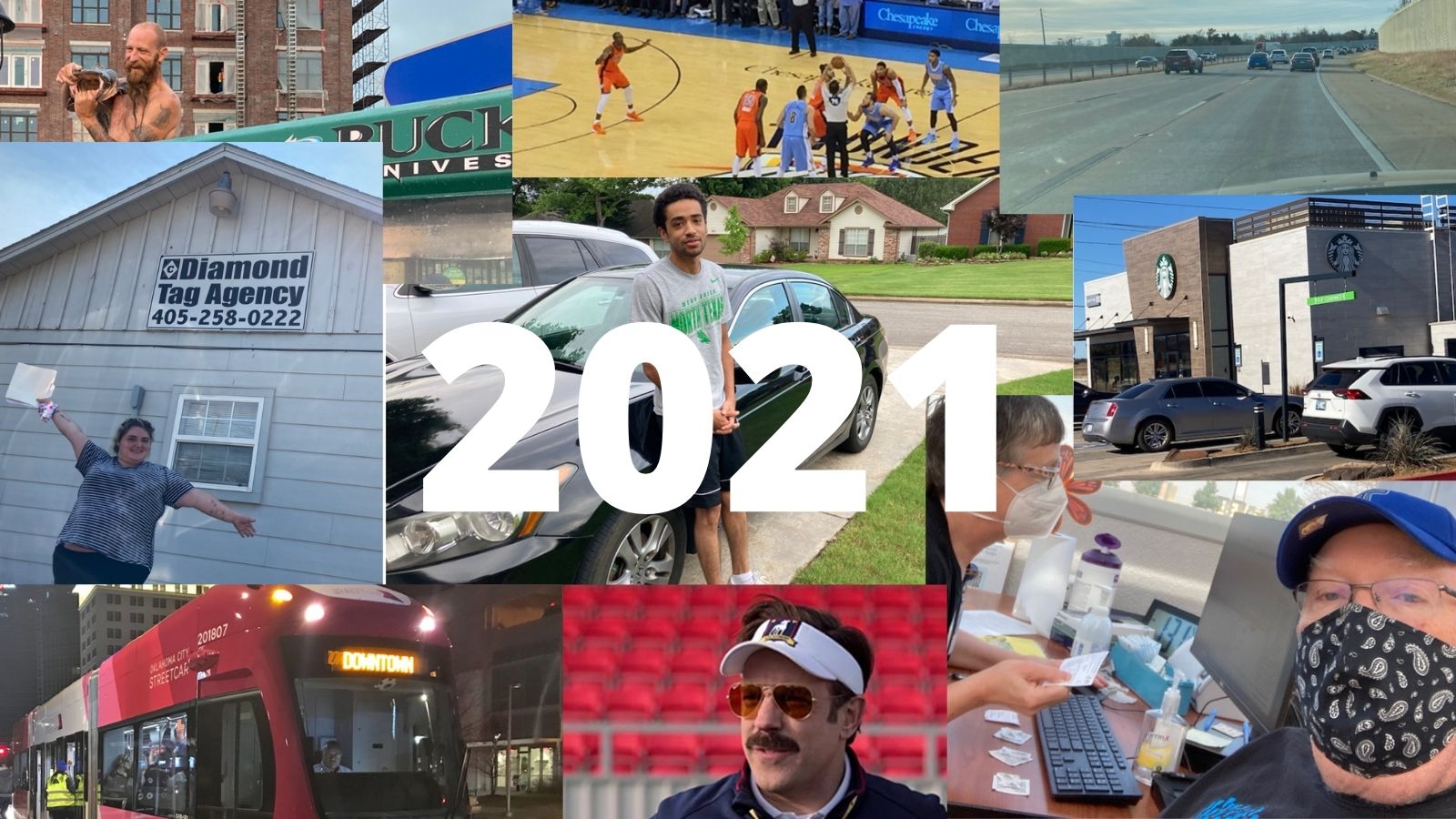
As we put 2021 to rest and welcome in the promise of 2022, I decided to look through a year’s worth of BlogOKC and see what was important to me over the past 52 weeks.
For the record, this is the 45th post on this blog for 2021. And I decided to rank the top 10 posts that meant the most to me over the past year. BlogOKC touched on a lot of random topics, from noodling to road rage to the COVID vaccine and more.
I hope you’ve found them interesting. So, the blog countdown begins right here:
When my friend Ed learned that the Tulsa Drillers were going to change their name to the “Noodlers” for a weekend to honor the sport of hand fishing, he not only wanted to go see them play, he ordered a Noodlers cap that very day. Ed, his son, Cade, and I made an August road trip to watch the Noodlers, who won on a walk-off home run. But not before we waited out a two-hour rain delay.
“I won’t give a play-by-play of the game except to say that neither team scored for the first seven innings. So it went into “extra innings” where a player was placed on second base to start each extra inning at bat. ‘Free baseball!’ Ed yelled, his theme whenever a game goes into extra innings. We won’t debate the merits of the free base runner in extras.”
I was fed up with the anti-vax crowd by mid-July, and I’m still fed up with those who refuse the COVID vaccine. It’s all a political statement by the Trump crowd, because we’ve faced vaccine mandates as Americans for decades before this one arrived. I stand behind what I wrote in July.
“As one who is proudly vaccinated, I reluctantly keep my mask at hand. I fear more disruptions loom in our future. All because of the unwilling who are making a political statement by shunning the vaccine. So, what’s the point of all of my rambling? What we’re seeing in the unvaccinated is a collective display of the Ugly American. The me-first. The selfish who would never consider doing something for the greater good.”
Yep, I embarrassed myself in the Starbucks drive-thru line.
“The young man rolled down his window, and I started screaming: ‘What are you doing?! Couldn’t you see I was sitting there with my blinker on waiting to pull into the line?’ The guy responded: ‘how was I supposed to know?’ I screamed again that he should have seen the blinker, and then he said ‘I’m leaving.’ He quickly backed out and left the lot. I went back to my car. My wife said I was lucky he didn’t jump out and punch me. Suddenly, my righteous indignation gave way to an incredible sense of shame. What had I done? I was the old man screaming ‘get off my lawn!’”
My daughter and I had a grand misadventure on the Mother Road as we sought a tag agency where we could get her a REAL ID.
“ ‘We don’t do driver’s licenses here, never have,” he said (with a straight face). “But you can just walk in at the Chandler agency, which is about 15 miles east on Route 66.’ I was laughing again as we walked out the door. My daughter was fuming, because I had us on a wild goose chase. We headed east again on the Mother Road.”
My friend Ed really is an idea guy. And he hit on a good one with his concept for a vintage coffee shop.
“ ‘I think we ought to open up our own coffee shop,” he finally said. ‘We’ll call it Vintage Coffee. No espresso machine. No fancy pastries. Donuts only.’ I laughed at the thought of a straight coffee-only coffee shop run by a couple of old school geezers. ‘We’re going to offer only Folgers, Maxwell House and Sanka, which was my father’s favorite coffee,” Ed continued. ‘It’s like a step back in time.’ “
No. 5 from Jan. 3 A Salute to 1971, the coolest year, from a cool kid wannabe
I read an article on New Year’s Day about what an awesome year 1971 was, which happened to be the year I graduated high school. I was hit by a wave of nostalgia.
“So, why did this article hit me so hard? I think it’s because I had never really given any thought to how many years had passed since Graduation Day in 1971. And how I’ve lived sort of my own version of Forrest Gump’s life in the intervening 50 years, still trying to be one of the cool kids and never quite making it.”
No 4 from June 23 For crying out loud: Ted Lasso packs emotional punch
I stumbled on to Apple TV’s Ted Lasso in early June and was hooked right away. I loved his corny, well intentioned motivational tactics that almost worked.
“But Ted Lasso delivers what I see as an awesome message about having a positive impact on people around you — even those who may not be ready to receive it. I’m not crying. You’re crying.”
I love the Oklahoma City Streetcar. The problem is, you can’t really plan a trip and go from Point A to Point B on it.
“New routes would be a major financial hurdle at this point. But the Streetcar needs desperately to connect the OKC Innovation District, the OU Health Sciences Center campus and the Capitol — and NE 23rd Street — to downtown. Someone please make that happen. Then we would no longer have a Streetcar to nowhere.”
My son, who is African-American, was pulled over in July for no apparent reason other than he was a Black male driving East on I-40. I was outraged, as a father should be.
“From my perspective, this was a clear case of racial profiling. Young African-American male driver. Texas tags. Driving alone on I-40 headed east. ‘That’s just the way it is,’ Ryan told me. ‘Every time I’ve been pulled over the cop asks ‘do you have drugs? Do you have guns?” As a 60-something white man, I’ve never been asked by a police officer if I had drugs. Or guns.”
I was pulled over on the Lake Hefner Parkway — by my wife. And had to write about it.
“Then it hit me why Solomon was shouting GiGi! My wife Paula, his grandmother, had cut us off on the Lake Road and was pulling us over. So, I pulled in behind her. She hopped out of her car and began running to our car. I imagined the worst. Had someone in our family died and this is how she was going to break the news to me, here on the shoulder of the Lake Hefner Parkway? I rolled down my window and she said, ‘I think I left my phone in your car.’ What?
BONUS From Oct. 20 Fan’s message to the Thunder: Let’s Play to Win
My righteous indignation over the Thunder’s tanking strategy comes out in a lot of places: on Twitter, in texts to my friends Steve and Ed, and on this blog.
As the NBA season began, I called for the Thunder to play to win. Now.
“Here’s to the new season and hoping the Thunder will be over-achievers. Let’s not chase the luck of the lottery once again.”
When I was a kid, we had a big set of Encyclopedia Americana in our house that was my go-to Google-of-the-day for every bit of fact finding and trivia that drew my interest.
Once, when I was a teenager, my dad and I had a disagreement over some fact about a foreign country or its people, I can’t remember which.
However, my dad was spouting an opinion as fact that I was certain was wrong. So, I grabbed an encyclopedia, looked it up and read the part to him that proved that he was wrong.
“Now you’re taking it too far,” he said, clearly irritated.
Translation: don’t let your facts get in the way of my entrenched beliefs.
Anyway, I’m writing this because we’re seeing people in our society make up their minds and cling to ‘alternative facts’ when clearly there is no evidence to back them up. Or there’s evidence that shows that it is wrong and they still cling to their beliefs.
The dispute over vaccines, for instance. People would rather take their Uncle Jimmy Joe’s word that the COIVID-19 vaccines are making thousands of people sick or, worse yet, killing them, than accept statistics kept by health care professionals and scientists that show vaccines are incredibly safe and effective.
I’m pretty sure it’s really an issue motivated first and foremost by political beliefs. Red state. Blue state.
But we all stake out our territory on different issues and refuse to budge even when we’re smacked in the face by reality. I’m sure I’m guilty, as well.
And that leads me to an issue that really disturbed me this week. One of my neighbors whom I like and enjoy hanging out with in his driveway, stated as fact that a high-ranking OKC city official gets a cut from every concession sold at Scissortail Park because he made a donation to its construction.
I ask him to offer some proof. “They reported it on Channel 9,” he said.
If it had been reported on TV or in the newspaper, and there was evidence to support the allegation, the story would be huge and talked about by everyone in the city. The official would likely lose his job.
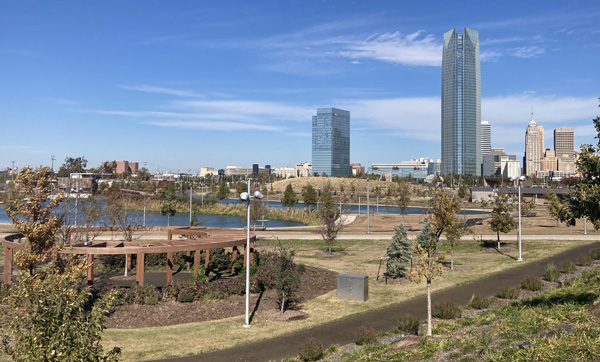
Scissortail Park in early November
Instead, it’s told as fact by a retired OKC resident who is skeptical about the whole MAPS program and Scissortail Park, as well. He doesn’t need actual proof, because he heard the story told as fact from others who share his point of view.
I even ran the allegation past a respected reporter for The Oklahoman that I trust and who told me that “none of it is true.” I’m taking his word for it, because, if true, it would have been a giant Page 1 headline.
The disturbing aspect is that my neighbor repeats the story to anyone who will listen, and in my far north OKC neighborhood there are a lot of takers.
I think some of it has to do with the fact that our neighborhood is so far out of the city’s core that people like my neighbor don’t see the benefit that MAPS and Scissortail Park have brought to our city.
As I walked back home after the encounter the other day, I couldn’t help but think of my dad and his long ago wrongly held opinion-as-fact. Even the Encyclopedia Americana couldn’t budge him off his belief.
Sad to say, that’s how it is with a lot of American society today.
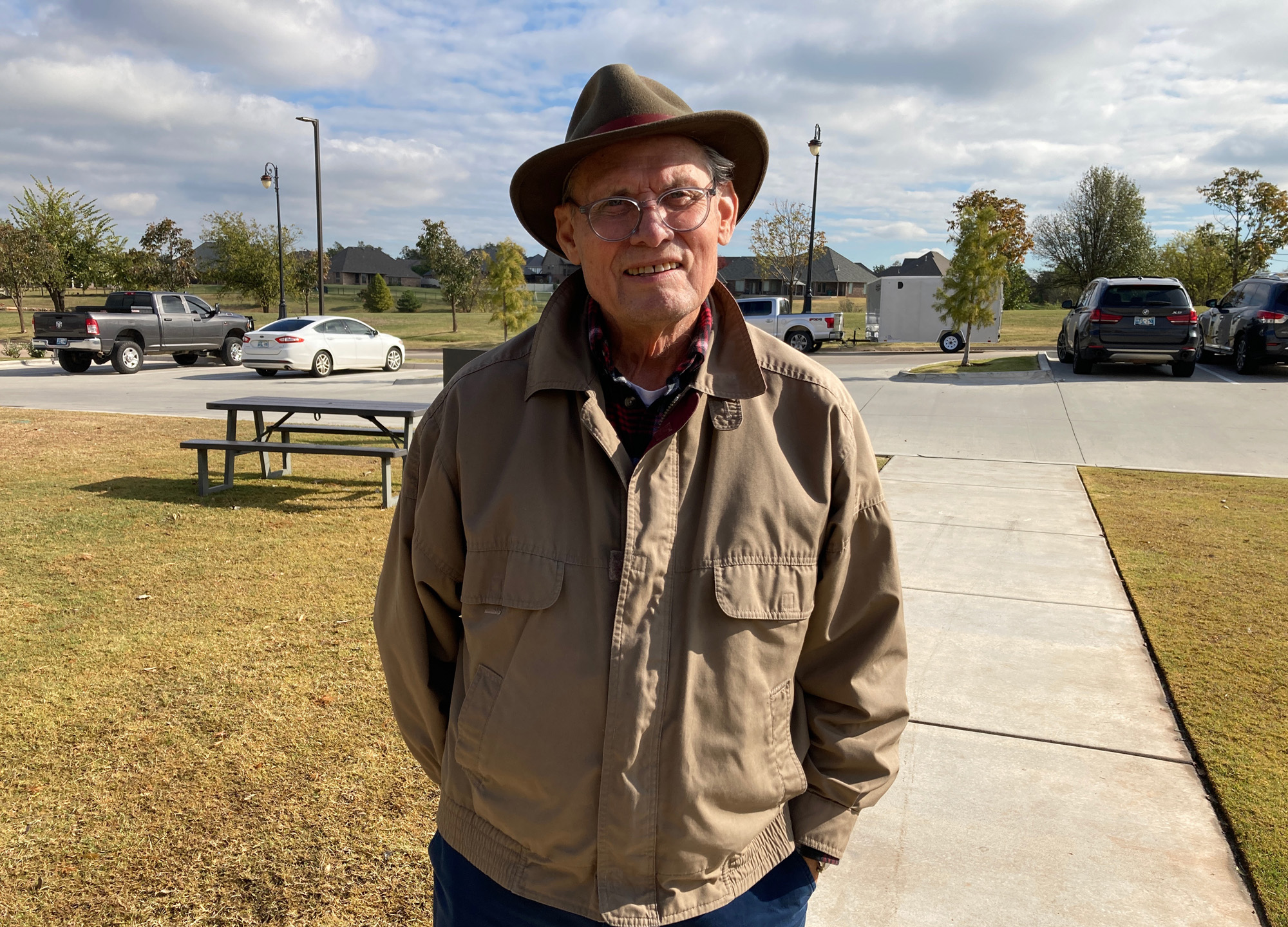
Dr. Robert Floyd, scientist and author of A Thinker and Seeker
Editor’s Note: During my years as a Business news reporter for The Oklahoman, I had the opportunity to interview Oklahoma Medical Research Foundation scientist Robert Floyd, Ph.D., several times. He has since retired and written an autobiography, which I’ve read and written this review.
In the beginning, Robert Floyd, Ph.D., was a farm boy whose family grew tobacco on their Kentucky homestead.
But they couldn’t keep him down on the farm.
Dr. Floyd eventually became a world-renowned bioscientist, and for the last 34 years of his career pursued discoveries of groundbreaking compounds at the Oklahoma Medical Research Foundation.
In his autobiography released earlier this year, Dr. Floyd describes the journey that took him from the family farm on Calvary Ridge in central Kentucky to college, then to graduate school and on to post-doc positions. In 1974, he came to Oklahoma City and the OMRF.
I met Dr. Floyd late in his career when I was a life science reporter for The Oklahoman in the early 2000s. I’m pretty sure we first met at a BIO International Conference in San Francisco.
I had the opportunity to interview Dr. Floyd several times over the years and learned about the groundbreaking compounds he discovered in his OMRF laboratory that today are being used to treat deadly brain cancers and hearing loss.
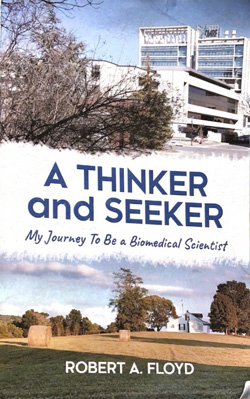
But I knew nothing about his rural roots and how he came to Oklahoma until he provided me a copy of his autobiography, A Thinker and Seeker: My Journey to Be a Biomedical Scientist, (BrownWalker Press, 364 pages).
In his book, Dr. Floyd separates his journey into three sections, beginning with life on the farm, then his pursuit of higher education and life as a post-doc, concluding with his years as an OMRF scientist.
Dr. Floyd goes deep into Floyd family history and his own experiences growing up on a working Kentucky farm. I even learned from his book how the tobacco leaves are harvested by hand, then cured in a drying barn before being shipped to an auction house.
After a high school education that didn’t serve him especially well, particularly in math skills, Dr. Floyd enrolled at the University of Kentucky. His goal was to become a high school agriculture teacher like his uncle Frank Williams.
But he discovered plant pathology as a UK senior and decided to go to graduate school at Kentucky to pursue a master’s degree in agronomy. From there, he moved to Purdue University, where he earned a Ph.D. in biochemistry.
The next phase of the book follows Dr. Floyd through various post-doc assignments, including one at Washington University in St. Louis, where he worked with Barry Commoner, who was a well known and often times controversial environmentalist.
Dr. Floyd also shares a lot about his personal life, how he met and married his wife, Marlene, the houses they bought and sold along the way, and a couple of harrowing cross-country automobile trips they took as they moved from one assignment to another.
The final section of the book is a year-by-year look at Dr. Floyd’s career at OMRF. We learn how he was hired, the focus of his research and how he became a respected and sought after scientist who traveled and spoke to conferences all over the world.
His laboratory was continually funded through the OMRF years by National Institutes of Health research grants. Eventually, he became an NIH grant reviewer himself who considered grant applications from other scientists throughout the U.S.
Since Dr. Floyd is someone I’ve known professionally for almost 20 years, I read this book with interest. I found the chapter on his family’s history and his life on the farm especially fascinating.
Dr. Floyd’s book, A Thinker and Seeker is available in bookstores, at Amazon.com or through the author himself at rafloyd0753@gmail.com.
Fans of the Tulsa Noodlers were treated to a live noodling demonstration before last weekend’s game
The boys and I hit the road just after noon last Friday, Tulsa bound. We were on a mission.
About a month ago, the Tulsa Drillers announced that they would play this past weekend’s games as the “Tulsa Noodlers” in honor of Oklahoma’s reputation as a haven for catching catfish by hand. Under water. In dark and dingy water.
Some people call it “hillbilly handfishing,” and I can’t argue with that.
Anyway, my friend Ed Godfrey is the outdoors editor of The Oklahoman. The idea of a team putting on completely new uniforms and playing under an assumed name appealed to him.
Ed ordered a Tulsa Noodler’s cap the day that they went on sale. We decided that we would make the trip to Tulsa and take Ed’s 16-year-old son, Cade, with us to watch the city’s minor league, AA-level team.
So, off we went, but not before a stop at the Butcher Stand in Wellston to fuel up with some barbeque. It was awesome, although I’m not as all-in as Ed, who said it may be the best in Oklahoma.
Here’s how the rest of the weekend unfolded:
We arrived at our hotel just after 3 pm, checked in and immediately headed to the pool, as per Cade’s request. While Ed and Cade swam for most of an hour, I sat on the sidelines and started getting text alerts about nearby lightning strikes
I hadn’t noticed any clouds as we pulled into town, but this IS Oklahoma after all.
By 5 pm, a torrential rainstorm hit the downtown area. Our hotel was maybe half a block from the ballpark, so you know the turf was soaked.
The rain relented somewhat about 6, so we roamed a bit to explore a nearby bookstore. We decided to head to the ballpark just before 7.
The Noodlers were set to face off with Wichita at 7:05.
We knew game was on when tarp crew began removing it.
Naturally, the tarp was still on the field when we arrived. But the good news was that a mobile catfish tank had been pulled up right inside the rightfield gate.
So, we watched a noodling exhibition with a veteran noodler who brought a large catfish to the surface for photo opps.
I took plenty of pictures of the unusual ballpark sight.
The tarp was removed from the infield about 8 pm, so we knew there would be baseball. Bad news, the game wouldn’t start until 9:05.
But, we hung tough, hitting the team souvenir store for Noodlers merchandise, feasting on catfish po-boys — notice a theme? — and doing some people watching.
I owe a special thanks to my friend Mark Lauinger in Tulsa for providing the tickets in a prime location.
The Noodlers announced the game would start at 9:05, but it would be played as a 7-inning game to keep it from running into the early morning hours. Fireworks were scheduled at the conclusion.
I won’t give a play-by-play of the game except to say that neither team scored for the first seven innings. So it went into “extra innings” where a player was placed on second base to start each extra inning at bat.
Tulsa Noodlers Ryan Noda greeted with Gatorade shower after hitting game winner.
“Free baseball!” Ed yelled, his theme whenever a game goes into extra innings. We won’t debate the merits of the free base runner in extras.
The Noodlers’ Ryan Noda won it in the bottom of the eighth when he crushed a 3-run home run over the center field fence with two outs. The home team celebrated with a Gatorade shower for its hero of the moment.
Our reward was the late-night fireworks show, although it was 11:50 pm before they actually lit the fuse. I’m sure the booming fireworks woke every sleeping person in downtown hotels and apartments.
On Saturday morning, we made a couple of stops on the way out of town. We stopped at the Woody Guthrie museum so Ed could pick up a T-shirt. He ended up with a “This Machine Kills Fascists” sticker instead.
Then we stopped at Tulsa’s Gathering Place and were impressed by the awesome park. I told Ed it reminded me of a zoo without the animals. He pointed out that there seemed to be a playground around every curve of the walking trail.
We topped off a spectacular Road Trip 2021 with a final stop at the Wellston Butcher Stand on the way back to OKC. As you can tell, we walked a gastronomic tightrope on this trip without a bib or the cardiac unit standing by.
Let’s do it again next year.
Maybe the Drillers could change their names to the Harvesters for a weekend and we all hit the park in John Deere green.
OKC Streetcar at the Business District stop in downtown Oklahoma City
A few weeks ago, I made the argument in a blog post that the OKC Streetcar had no real purpose, even though I’m a huge fan.
The point was that the Streetcar has no destination, so you can’t really plan a trip, say to the Capitol from downtown. You can read the post here.
After this past weekend of big downtown events, I think I need to revisit the subject.
I made the argument in the original post that maybe the Streetcar could find a purpose by providing transportation into downtown for big events like Thunder games.
Rather than enduring traffic jams and competing for expensive parking near the Chesapeake Arena, fans could find parking near the north end of the Streetcar and ride down to the arena.
Bingo.
Aboard the OKC Streetcar, Arts Fest bound
This past weekend confirmed to me that the Streetcar can indeed bring value to our population. With the OKC PrideFest and Arts Festival ongoing simultaneously, thousands of people were drawn to downtown.
My family and I drove downtown Friday evening to visit the Arts Fest and found a convenient (and empty!) lot near N. 11th Street. It was near the North Hudson Streetcar stop.
So, we caught the Streetcar there and rode it down to the Business District stop. We exited and walked a block over to the Arts Fest.
Turns out, there were scores of others who had the same idea. We boarded a Streetcar that had a least 20 people on it along with four others at our stop.
We saw multiple groups of people parking and walking to the northern-most Streetcar stops to ride into the downtown.
My friend Steve reports that his family visited the Arts Fest on Saturday and took the Streetcar down from the North Hudson stop, as well.
When Steve and his family left the Arts Fest to make the return trip, the car on which they rode was packed with more than 50 people, he said.
Of course, the Streetcar was free last week. so take that into account.
And, as Steve points out, occasional festivals and NBA games don’t create ongoing value for the Streetcar.
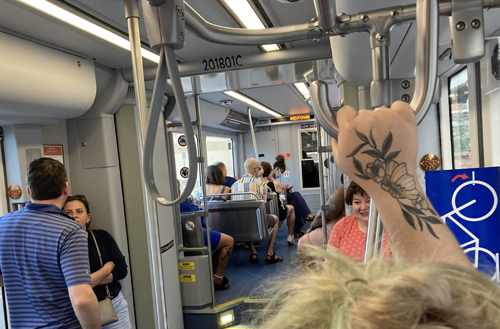
Paula and grandson Solomon Stafford at OKC Streetcar Library stop
That’s not exactly an endorsement of a Streetcar that serves the greater good.
“It truly is a downtown novelty until ridership is majority residential commuter,” Steve said.
If that is true, then we need a bigger downtown population that is willing to give up their cars to commute, along with an extension of the Streetcar line.
I’m still arguing for a connection to the nearby University of Oklahoma Health Sciences Center and the Capitol.
But I took heart in the numbers of people this past weekend who found value in the Streetcar as a means of transportation to big downtown events.
The OKC Streetcar proved to me that it has an actual purpose beyond real estate development and tourism.
On my way to the dentist one day a few years ago, the song “American Woman” came on the radio. It was followed by Paul McCartney’s “Uncle Albert/Admiral Halsey,” and then “A Horse With No Name,” by America.
A wave of nostalgia hit me so hard I almost had to pull over.
I was no longer in my car in the 2010s. I was a teenager in 1971 sitting in a 1965 Pontiac Catalina (look it up) in Fort Smith, Ark.
This was almost a song-for-song playlist of the music I was listening to in the early ’70s just as I was completing high school. If there were such things as playlists back in 1971.
We had a new FM radio station in Fort Smith with the call letters KISR, which played Top 40 hits and was immensely popular among high school students. Its play list rotation was really small, so you heard the popular songs again and again.
I wouldn’t have had FM radio in my Pontiac — a hand-me-down from my dad — but that’s the memory that washed over me when I heard the music from a distant time.
Isn’t it amazing that hearing the opening riff to a single song — Neil Young’s “Ohio,” for instance — can instantly transport you back in time to exactly where you were at when you first heard the music?
Sitting in a car. Dragging Main Street. At the lake. Hanging out at someone’s house.
It puts you right there again. It’s almost like Deja Vu (all over again!).
Turns out, that there are studies on the subject of how music can take you back and rekindle vivid memories from decades ago. And how music creates waves of nostalgia that make you emotional for a time long gone.
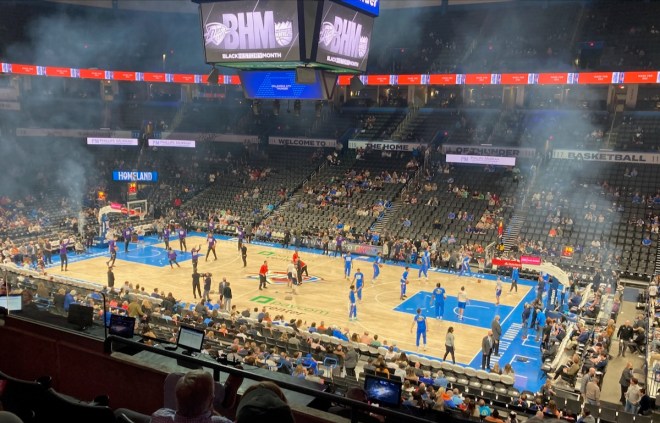
It even occurs with more recent music and memories. Whenever I hear Phillip Phillips’ “Home,” I’m right back in Chesapeake Energy Arena waiting for KD, Russ, Serge and the rest of the Thunder to hit the court.
“Home’ was the pregame warmup music for an entire season back in the good ol’ days of the Thunder. How I miss it.
Howard Schnellenberger on the OU sidelines in 1995. (Oklahoman photo)
I’m sure by now you’ve seen the news that former University of Oklahoma football coach Howard Schnellenberger passed away this morning.
Schnellenberger coached OU for one unspectacular season in 1995, and was fired right after the 5-5-1 season ended.
By OU standards, it was a disaster.
Schnellenberger came to OU with decades of football success on his resume and the confidence of a Gen. Douglas MacArthur. It just didn’t translate to success with the Sooners.
Although I was just an outsider looking in that year, all I could see was a pompous old man who thought his mere presence would inspire success.
Then fate brought me together with Howard for one night in 1995.
I was working as a Business News reporter at the time for the Daily Oklahoman. One of my beats was writing about Oklahoma agriculture.
You might remember that the Oklahoma Farm Bureau made Schnellenberger their spokesman in an ad campaign in 1995. The ads appeared on Oklahoma TV stations and mainly featured Howard squinting into the distance as words described the value that the Farm Bureau brings its members.
Many folks thought Howard was an odd choice for the Farm Bureau. In fact, here’s something that Oklahoman columnist Berry Tramel wrote back in ’95:
“Sudden thought: Why did the Oklahoma Farm Bureau select Howard Schnellenberger as its marketing spokesman? Aren’t most of those folks OSU graduates?”
But Schnellenberger’s most recent job before OU was that of football coach at the University of Louisville, and the executive director of the Oklahoma Farm Bureau at the time was a Kentucky native. So, there was a thin connection.
Howard Schnellenberger (Oklahoman photo)
Then one day, out of the blue, my wife and I received an invitation from the Farm Bureau to attend a “media night” at Applewoods Restaurant. OU coach Howard Schnellenberger was the special guest speaker.
Paula and I loved Applewoods and its famous apple fritters, so of course we agreed to go.
Turns out, a local television reporter and I were the only “media” members at the dinner. And only about a dozen people total were at the Farm Bureau event.
Here’s all I remember about that night. Howard stood over our tables and droned on in a low monotone for about 30 minutes. I remember nothing about what he said.
My wife had an interesting experience, too. Howard’s wife, Beverlee, was with him and sort of latched on to Paula as her new best friend for the night. She never stopped talking.
I couldn’t wait for that painful evening now 26 years distant to be over.
And it wasn’t long before Schnellenberger’s tenure as OU coach was over, as well.