Could robotics lead Apple to make iPhones in the USA?

A robotic arm working on the floor of a Shawnee manufacturer in roughly 2017.

One day in the summer of 2017, I toured the GF Central Plastics plant in Shawnee on an assignment with the Oklahoma Center for the Advancement of Science and Technology (OCAST).

The visit was an eye-opener for me.

Central Plastics makes plastic and metal fittings, as well as specialty parts primarily for the natural gas industry. At that time it operated out of a 500,000 square foot facility and employed roughly 500 people.

What caught my attention was the incredible use of robotics in the company’s manufacturing process. There were about 30 of these large yellow robotic arms that picked up a piece of metal or plastic and placed it exactly where it needed to go in the machine that would mold it into whatever it was intended to be.

Here’s what I wrote at the time:

“The robotic arms employed in the process never stop, repeating their assignment 24 hours a day, seven days a week. Their human co-workers are busy ensuring the machines have needed parts to work with, as well as inspecting and packaging finished pieces.
‘The primary goal of the robotics and automation is not to eliminate people, but allow us to continue to grow and continue to improve the quality of our products,’ Bryan Lucas, GF Central Plastics vice president for Operations, told me.

You can read the story here on the OCAST website. 

Mark Smith, GF Central Plastics Managing Director and President, put it another way:

“One of the abilities the robot has, is I’ve got 24/7 operation from them.” he told me. “They don’t take vacations, and they don’t need to sleep like I do.”

While I’m not certain that Lucas or Smith are still in their positions with the company, I’m pretty sure that at this very moment there are scores of robotic arms picking up parts and slamming them into the production machine exactly where they need to be placed. And then removing them when they are finished and stacking them in the right bin.

So, what does that have to do with anything today, eight years later?

I’ve been thinking about how robotics and artificial intelligence might be used in the production of ubiquitous smartphones — iPhones and Android phones. Phones are full of tiny parts that have to be fit into a small space in exactly the same way millions of times over and over.

Are robotics used to produce the phones? According to what I was told by my know-it-all friend, ChatGPT, much of phone assembly in 2025 is done by robotics.

Here’s what my AI pal told me:

“Yes — robotics manufacturing is already widely applied to devices as small and precise as smartphones. In fact, smartphone production is one of the most advanced examples of robotics and automation in action.”

Unless Chatbot was hallucinating, there’s a ton of robotics that go into each phone. It cited Foxconn, maker of the iPhone, as a major user of robotics in the manufacturing process.

“In some facilities, entire production lines are almost fully automated,” it said.

So, that makes me wonder if the thousands and thousands of low-paid workers are still needed to produce smart phones. Are those folks still needed to assemble the cases with tiny screws, perhaps? Can’t that process be automated?

This is all leading me to the purpose of this blog post. If there is almost 100 percent automation in the assembly of iPhones, why can’t Apple Inc. at least build a pilot project in the U.S. to see how production would go here.

I understand there is required testing of each unit and then the packaging and shipping, so there are humans involved in the process.

If the robotic arms were assembling millions of phones in the U.S., would the scale of that production keep the costs somewhere close to what it is in China or India? And they would save on shipping costs, too, so price of phones might stay close to what they are today.

We all know that Trump is pressuring Apple and other high-tech manufacturers to bring their manufacturing into the U.S. If nothing else, a pilot plant located in the states would appease the President, who could slap (more) tariffs on China- or India-made phones at any moment.

I just read an awesome book, “Apple in China,” about how the company is trapped by the large scale of manufacturing investment it has made in China. It has recently moved some of that production to India and elsewhere.

I’m not a visionary, but I’m thinking that we could someday soon unbox our new iPhone and see the words “Designed in California, Assembled in the USA.”

Are you listening, Tim Cook?

I’m great at spending someone else’s money.  But it could happen.

BONUS CONTENT: Watch some robotic arms in action in the video below.

DOUBLE BONUS CONTENT: Here is some info that ChatGPT provided me about robotic arms in smartphone manufacturing.

Robotics manufacturing is already widely applied to devices as small and precise as smartphones. In fact, smartphone production is one of the most advanced examples of robotics and automation in action.

Here’s how robotics is applied in smartphone manufacturing:

Microscale Precision Assembly: Specialized robotic arms with extremely fine motion control place tiny components such as microchips, sensors, and capacitors onto circuit boards. These parts are far too small for human hands to place consistently.
Surface-Mount Technology (SMT): Automated machines solder thousands of micro-components onto printed circuit boards at high speed and with extreme precision.
Optics & Camera Module Assembly: Robotic systems align and insert delicate camera lenses and sensors with tolerances measured in microns.
Battery & Screen Placement: Large but fragile components like batteries and OLED screens are installed by robotic arms that apply uniform pressure without damaging them.
Quality Control & Testing: Robotics and machine vision systems test buttons, touchscreens, speakers, and other parts to ensure durability and functionality.
– Micro-assembly with Collaborative Robots (Cobots): Some processes still require human oversight (like cable placement or adhesive application), but cobots assist workers by handling the repetitive and delicate positioning work.

So while people often imagine robots assembling cars or appliances, the highest level of robotic precision is actually in electronics manufacturing — smartphones, tablets, and semiconductors.

Companies Using Robotics in Smartphone Assembly

Foxconn (Hon Hai Precision Industry)

  • World’s largest electronics manufacturer (makes iPhones for Apple).
  • Uses thousands of robots, called Foxbots, for tasks like soldering, polishing, dispensing adhesives, and precision assembly.
  • In some facilities, entire production lines are almost fully automated.

Pegatron

  • Another major iPhone assembler.
  • Uses robotic arms for component placement and automated optical inspection (AOI) to check for microscopic defects.

Samsung Electronics

  • Runs highly automated factories in South Korea and Vietnam.
  • Uses robotics for screen production (OLED and AMOLED panels) because they require sub-millimeter precision.

Xiaomi, Oppo, and Huawei suppliers

  • Many Chinese factories use robotic arms for final assembly and packaging.
  • Robotic vision systems test touchscreens and fingerprint sensors before shipping.

🤖

Types of Robotics Technology Used

  • SMT (Surface Mount Technology) Pick-and-Place Robots
  • Place up to 100,000 components per hour on a circuit board.
  • Robotic Dispensing Systems — Apply adhesives in perfect micro-lines to secure parts like glass panels.
  • Automated Optical Inspection (AOI) — Uses robotic vision and AI to detect microscopic defects.
  • Laser Robots — Used for cutting phone frames, engraving, and even removing defective solder joints.
  • 📱 Why Robotics Is Essential for Smartphones
    Smartphones have billions of transistors and hundreds of components packed into a device only millimeters thick.
  • Human assembly alone can’t achieve the precision or consistency needed.
  • Robotics improves yield, speed, and quality control while reducing labor costs.

👉 So yes, robotics not only can be applied to smartphones — it’s already at the core of how every major smartphone is made today.

Technology evolves, but Paul McCartney — and his music — live on

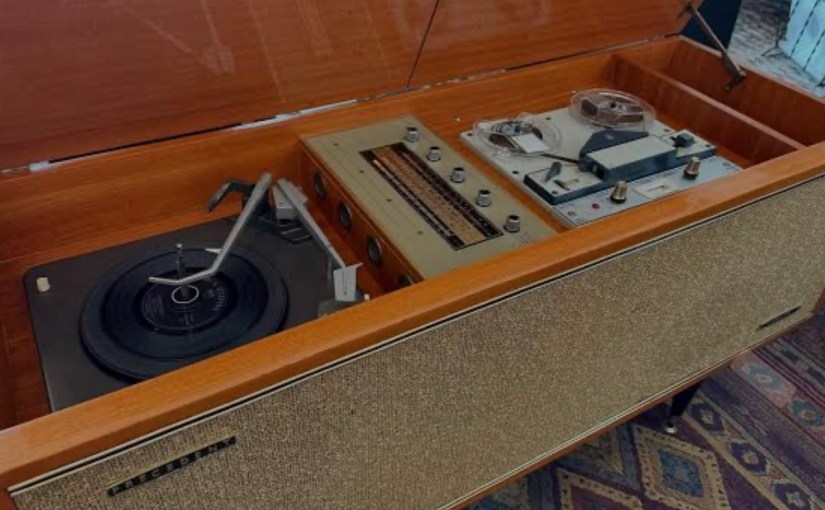
A turntable console with reel-to-reel tape much like my parents had in the 1960s.

When the Paul-is-Dead rumors began floating around in the late 1960s, I was devastated. There was evidence everywhere that Paul McCartney had died in a car crash and The Beatles went on with a look-alike substitute.

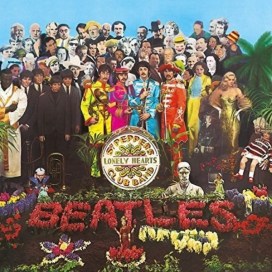
I was 16 in 1969 and read — and clipped — every article I could find that shared evidence of Paul’s demise. For instance, there was the hand over Paul’s head on the Sgt. Pepper’s Lonely Hearts Club album that symbolized death. And the whole cover resembled a funeral gathering.
There was more. Paul was dressed as a walrus on the Magical Mystery Tour poster, said to symbolize death, and a line from the song Glass Onion says “here’s another clue for you all, the walrus was Paul.”

But the clue that sealed it for me was the rumor that if you played Revolution 9 backward you could hear the words “turn me on dead man” and the sounds of a car crash.

My family owned a giant stereo console that had both a turntable and a reel-to-reel tape player. So, I played Revolution 9 from the White Album on the turntable and recorded it on the reel-to-reel.

When I turned the tape backward and played it I heard those terrifying words. “Turn me on dead man.”  And the sounds of what could be a car crash.

That clinched it for me, at least for the next couple of years until it became evident to me that Paul McCartney was indeed, Paul McCartney.

I’ve written all of this not to show how gullible I was as a teenager; rather to talk about technology and what we had then and what we have today.

In the late 1960s, our family had the latest and greatest in the giant console with the turntable and the reel-to-reel.

That’s how we rolled in 1969.

Vinyl records, both 33 rpm long play albums and 45 rpm discs that played a single song each on front and back, were as common then as, well, iPhones today.

Everyone I knew had a record player or two in their homes. My sister and I had a little portable record player that we would take out into the carport and play our favorite singles on.

When I was a sophomore in high school, I took all the money I had saved up and bought a portable stereo turntable at Kmart that served me well for years.
But advances in technology made turntables obsolete in the early 1970s as 8-track tape players became everyone’s obsession. I installed a cheap Kraco 8-track in my car, which seemed to ruin as many tapes as it successfully played.

Then came cassette tape players that were much smaller — and dependable — than 8 tracks.  But analog taped recordings didn’t have much of a future, because they gave way to CDs — compact discs — in the 1980s.

I remember the frustration of my dad in the ’80s when he had to buy a CD player because it had become the technology on which most music was recorded and played.

“They keep changing the formats just so we will have to spend money to buy something new,” he told me.

But time advanced as did technology.

MP3 players began to emerge in the late 1990s replacing CDs and making music much more portable. And in 2001, Apple Inc. debuted the groundbreaking iPod, which CEO Steve Jobs famously said allowed you to carry “1,000 songs in your pocket.”

So, here we are in 2025.

Today we have massive music services like the iTunes Store and Spotify that allow us to hear virtually any song ever recorded at any time.

And technology advances continue to make yesterday’s formats obsolete.  The old console turntable and reel-to-reel tape player my parents owned was probably sent to a landfill decades ago.

But some things remain. The memories of chasing down Paul-is-Dead clues on that big old console.  Hearing my dad — who passed on in 2012 — complain about changing technology.

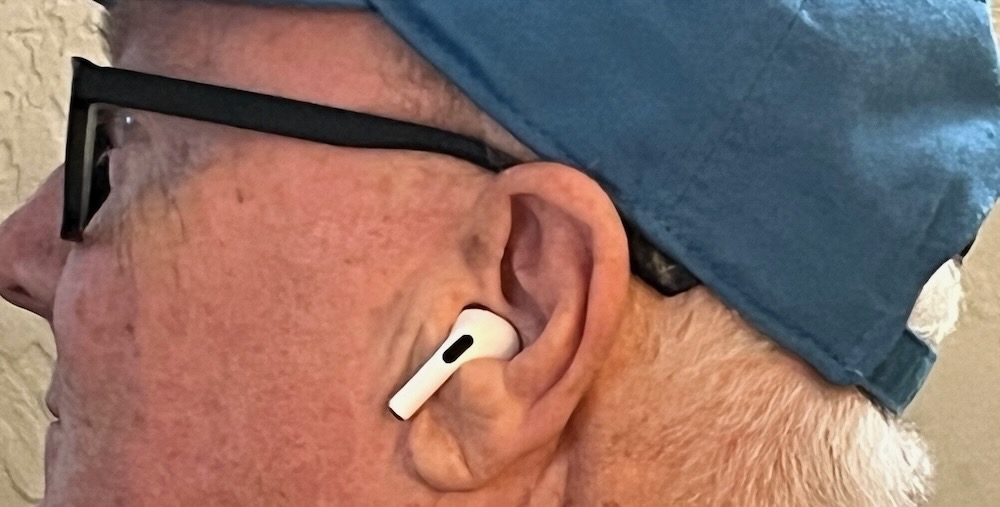
And Paul McCartney — the real Paul McCartney — endures. As of July 7, 2025, he’s as alive as he was in 1969.  I continue to listen to his music, but now in a digital format that reaches my ears through a pair of AirPods Pro 2.

That’s how we roll in 2025.

BONUS CONTENT
So, what’s next in how music is recorded and enjoyed? I’ve read a lot about how future music will be made by artificial intelligence, but what I’ve heard of it so far lacks the creativity of human song writers and performers. I’ll take humans any day.

I asked ChatGPT what it sees for the future of music, and this is how it answered:

1. AI and Generative Music

  • AI tools can now compose, produce, and even perform.
  • Personalized or adaptive soundtracks for games, workouts, moods.

2. Immersive & Spatial Audio

  • Formats like Dolby Atmos Music and 360 Reality Audio offer 3D sound experiences.
  • Becoming popular in streaming and VR/AR contexts.

3. Blockchain & NFTs

  • Exploring decentralized ownership, royalty tracking, and digital collectibles.

4. Holographic & Virtual Performances

  • Digital twins of artists (dead or alive) performing live.
  • Integration into virtual worlds and the metaverse.

5. Brain-Computer Interfaces (BCI)

  • Experimental: Listening to or composing music via brainwaves.
  • Potential for direct neural engagement with music.

Apple draws the line on altered reality in photos

Screenshot
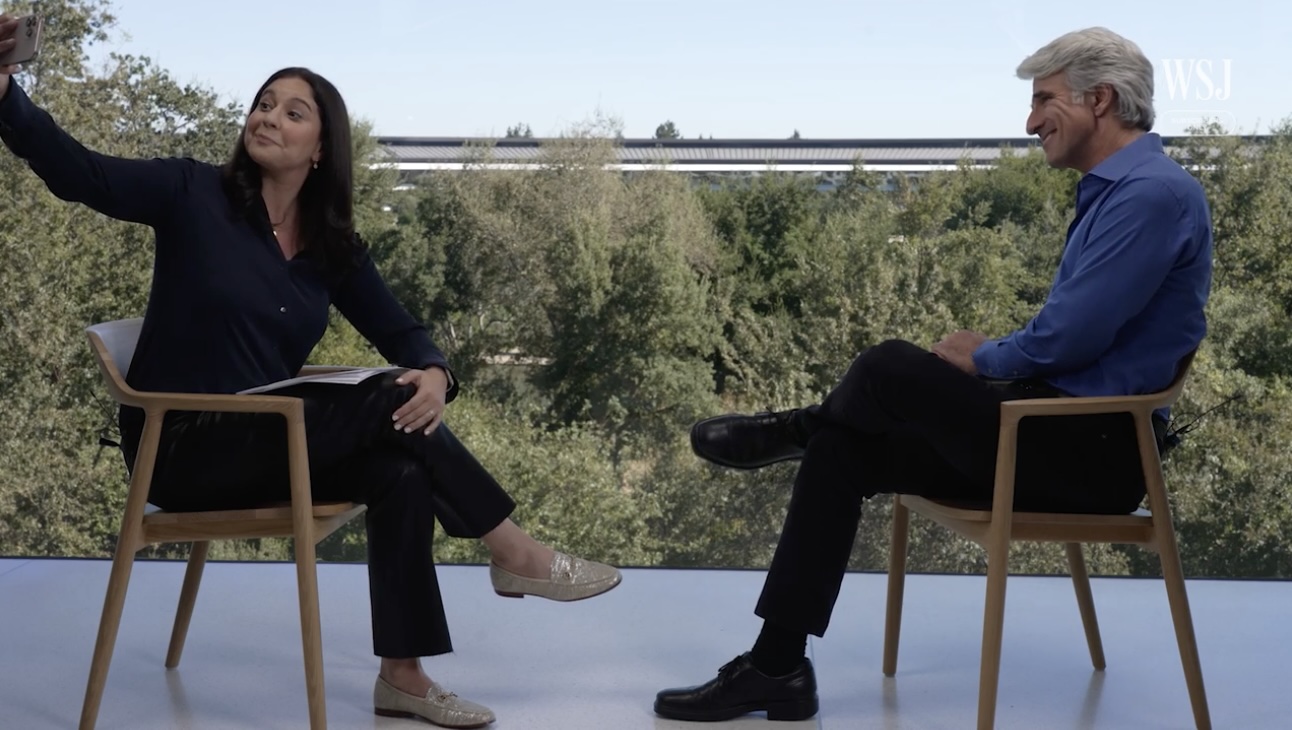
The Wall Street Journal’s Joanna Stern takes a selfie with Apple software chief Craig Federighi

If you’ve ever been fooled by a photo that had something added — or eliminated — you should watch this fascinating video interview by Wall Street Journal tech reporter Joanna Stern with Apple Inc.’s software chief Craig Federighi. The interview focused on Apple Intelligence, which is Apple’s version of artificial intelligence.

Near the end of the 25-minute interview, Stern raises her iPhone and takes a selfie of herself and Federighi as they are seated across from each other at the company’s Apple Park headquarters in Cupertino, Calif.

Then it got really interesting.

Stern showed the photo to Federighi and, using Apple’s most recent photo editing software, quickly edited out a water bottle and a microphone that the photo had captured.

She edited the photo with the intention of showing how easy it is to remove unwanted objects from photos, then asked Federighi about Apple’s approach to allowing users to alter reality in their photos.  Or even adding in objects or people who weren’t there.

Federighi’s thoughtful answer about Apple’s decisions on limiting AI use in its photo software intrigued me.

“There were a lot of debates internally, ‘do we want to make it easy to remove that water bottle or microphone’ because that water bottle was there when you took that photo,” he said. “The demand from people to clean up what seem like extraneous details in a photo that don’t fundamentally change the meaning of what happened has been very, very high. So we were willing to take that small step.”

However, the company ensured that if a photo was altered, it was reflected in the metadata for that photo. And Federighi said Apple drew a line on further editing to alter the reality of their photos.

“We are concerned that the great history of photography and how people view photographic content as something that you can rely on, that is indicative of reality …” Federighi said. “And our products, our phones are used a lot, and it’s important to us that we help convey accurate information, not fantasy … we make sure that if you do remove a little detail in a photo, we update the metadata on the photo so you can go back and check that this is an altered photo.”

It’s clear that Apple has given this subject a lot of thought and is working to distance itself and its software from ‘deepfakes’ that seem to be showing up everywhere. Just check your Facebook feed.

Here’s a link to an article in Info Security Magazine that lists the top 10 deepfakes from 2022.

That debate over editing photos took me back to my days as a reporter and editor at The Oklahoman in the 1980s and 1990s. It was a time certainly before digital photos and software that let you easily alter the reality of a picture.

However, I recall there was quite a debate at the paper over whether drinks in the hands of people at a party should be edited out, by cropping or by being retouched by an artist.

So, editing photos has been an issue for decades.

And that led me to contact Doug Hoke, The Oklahoman’s current photo manager who worked at the paper all through the pre-digital age of the ’80s and ’90s.

Screenshot
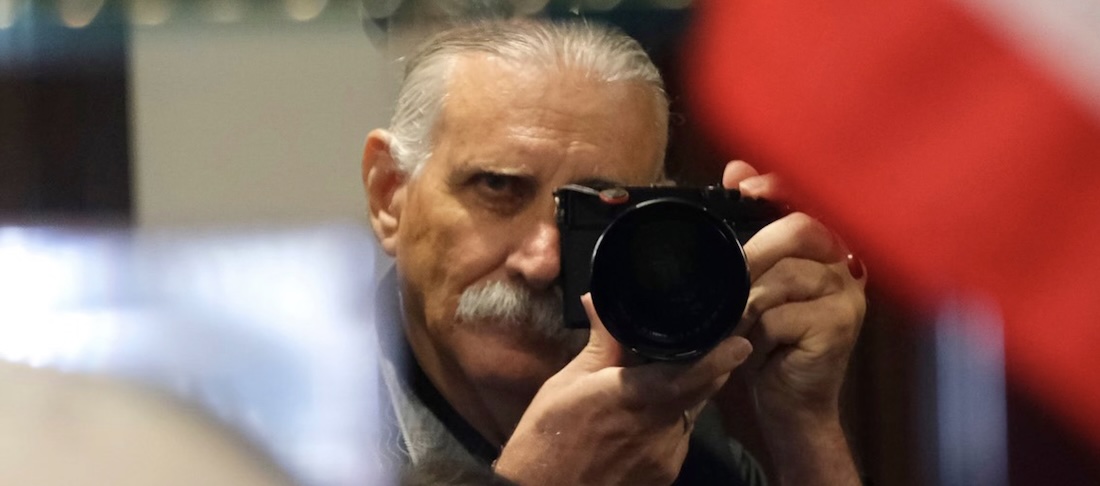
Doug Hoke from his profile image on Facebook.

Doug is one of my favorite photographers, with a long history of shooting great photos. His work was regularly featured in Sports illustrated in the pre-digital days.

I asked Doug if my memory was correct and altered photos were an issue back in the day. Here’s what he said in response to the question:

“Way back when if Gaylord (the publisher) didn’t want something in the paper, it wasn’t there,” he said. “The airbrushing of photos was originally done to help with the reproduction, as coarse screens and letter press technique left much to be desired. That evolved into the removal of items, like cocktail drinks, (or) the adding of details like clothing, lengthening hems,  adding material to swimsuits, closing up v-necks, etc.

“When the digital age hit, the ease that photos could be altered called for new guidelines for photography. What is the common practice now is no pixels should be added or removed, except by cropping, and cleaning up dust spots on the chip. Toning and adjusting contrast should only be to help reproduce the image as accurately as possible.”

Doug said he supports Apple’s limits to digital editing that distorts the reality of photos.

“When Apple first announced that they would only allow small details to be removed, I applauded them,” he said. “Craig is correct that photography is based in reality, and I firmly believe that the photos should remain as untouched as possible. You may think that water bottle is in the way, but future generations will look at these details with amazement. Think of old photos you look at, you study every detail in the photo to get a better sense of history. If we remove all those details now, no one will ever see them.”

There’s a distinction between photograph and a photo illustration, Doug said. Or there once was.

“The line between photograph and illustration has been blurred and will never be the same,” he said. “Publications try to hold onto the strict guidelines of what is a photo and what is an illustration but the public probably doesn’t really care. I don’t think the general public has a strong grasp of reality anymore. Games, TikTok, IG, X, whatever they look at. If they think an image is cool they like it without giving any thought to whether it is accurate or not.

“We have had to reject several ‘photos’ that were obviously enhanced by AI, mostly portraits. Accepting photos from unknown sources will be a huge lift in the near future as AI will just continue to get better. Really glad Apple took a stand and said just because we can doesn’t mean we should.”

Did you catch what Doug said? The public is suffering from both ignorance and apathy on whether a photo has been altered.

But we should be concerned. Thank you, Apple, for taking a stand.

Apple’s Airpods Pro 2: Hearing is believing

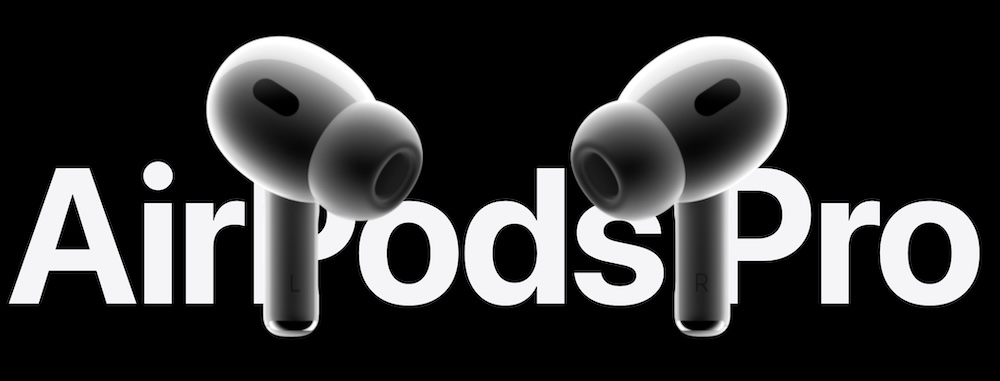
Screenshot of Airpods Pro 2.0 from the Apple website
Screenshot taken from Apple website

EDITOR’S NOTE:  I’m updating this post to add an editor’s note and information on how the Airpods Pro 2 fit in my ears.  My friend Sarah Horton asked if they hurt. I was honest and said ‘yes,’ but thought they weren’t hurting as bad as time rolled on. However, after a few more days of wearing them at least 6 hours a day, I have to admit that they squeeze against the cartilage of my ear to the point that I can’t wait to take them off.  My left ear is most sore, and I’m afraid they are going to create an open wound at some point.  Stay tuned.

Let me say right at the start of this that I have had a decade-long (or longer) battle with hearing loss. It’s not something that I noticed at first, but my wife and people I worked with sure did.

Along the way, I’ve been fitted with an expensive pair of hearing aids that brought their own problems. I’ll explain, but first some background.

In 2015, at age 61 and following a round of what had to be the worst case of flu I’ve ever had, I found that I couldn’t stay on my feet. Literally.

For a period of a couple months, I suffered from an unexplained loss of balance that affected my ability to drive, to walk a straight line and even stand without holding on to something.

My wife took to me see a variety of specialists, including a neurologist and a hearing specialist. I had weekly physical therapy sessions for about six weeks.

The hearing specialist conducted a hearing test that detected mild hearing loss in each ear. My wife said I had struggled with conversations for quite some time, but I assumed that was merely selective hearing loss, if you know what I mean.

The bottom line is that I came away with a pair of hearing aids at a cost that would have covered a pretty nice used car.

They helped, I admit.

But battery life wasn’t great, and the tips on the end that goes deep into your ear kept coming off in my ear. I had to go to a walk-in clinic to have a physician remove rubber tips in both ears, including one that had apparently been in the ear canal for months and took quite an effort to dig out.

Plus, I felt like the old man I didn’t want to be when I wore them.

Still, I wore them faithfully for a couple years before putting them in a drawer.

Fast forward to the end of 2024.

Apple Inc., maker of many wonderful tech devices that I have used for decades, announced that its updated Airpods Pro 2.0 had been approved by the FDA as ‘clinical grade’ hearing aids

Jim Airpods2 The author wearing his new Airpods Pro 2 hearing aids

Those Airpods became my Christmas present to me. I’ve been wearing them for just over a week, and I’ve been impressed. When paired with an iPhone, you can conduct a real time hearing test on the phone, and it calibrates Airpods Pro 2 settings to accommodate your hearing loss.

The Airpods definitely provide a real hearing boost to conversations, to watching television shows and more.

Not only that, the Airpods Pro 2.0 offers several settings that amplify all sounds, provide a conversation boost, cancel out unwanted noises.  And it even has an ‘adaptive’ setting that filters out noises until I speak, which facilitates conversation.

I’m not wearing them all day, every day, so I haven’t had any battery issues yet. But when I do, all I have to do is charge them in their case rather than running out to buy new batteries all the time.

I’m still playing around with different settings to see what works best for me. But, so far, I have to give the Airpods Pro 2.0 a two-thumbs up, five-star review.

Oh, there’s a big self-image boost, too, for a now 71-year old me who doesn’t want to look (or act) his age.

And the cost in 2024 dollars was less than 10 percent of what the earlier hearing aids cost in 2015 dollars.

If I was a maker of traditional hearing aids, I would be scrambling to figure out how to lower the cost of my devices, add high fidelity sound and adaptive hearing features.

Otherwise, those hearing aid producers might become the next Research In Motion, the company that manufactured the once popular Blackberry phone.

And we all know what happened to the Blackberry when Apple introduced the iPhone in 2007.

It could happen again

BONUS UPDATE (Jan. 11):  I have alleviated the pain of wearing the Airpods Pro 2 by “turning” them in my ears so they don’t press up against the cartilage to hard.  It makes the stems stick out a bit, but doesn’t impact how they boost hearing.  I’ve worn them this way for the past two days with little-to-no pain.

Screenshot

Looking back at my BlogOKC favs of 2024

EDITOR’S NOTE: In what has become an annual column of its own, I look back over BlogOKC in 2024 and list my 10 favorite posts. Not most popular, but those that meant the most to me. I went back and forth, adding some then eliminating them, because each of them meant something to me. I hope you enjoy browsing the list and clicking on the headlines to read the full post. My list of personal favorites also includes a wonderful guest post by my friend, Don Mecoy. Enjoy!

Major League Baseball Commissioner Rob Manfred said the ‘Golden At-Bat’ is being discussed

Major League Baseball’s terrible, horrible, no good, very bad idea

Dec. 11

When I was a young would-be sports writer just out of college working for the Southwest Times Record newspaper in Fort Smith, Ark., my editor sent me out to cover the state small school baseball tournament.

I had not seen much high school baseball through the years, so I was caught by surprise by one particular rule the small schools played by.

It was called the “Courtesy Runner.”

The Bricktown Ballpark scoreboard shows the team’s new name at reveal event.

What’s in a name? Apparently, a lot in OKC Baseball Club rebrand to ‘Comets’ … Or not much

Oct. 28

The Oklahoma City Baseball Club revealed its new name, “Comets,” in a ceremony Saturday evening at the Chickasaw Bricktown Ballpark witnessed by at least a couple thousand enthusiastic fans.

I was among those who showed up for the Big Reveal, so I can attest to the collective cheer that went up when the “Comets” name and logo appeared on the scoreboard screen.

I was not expecting “Comets,” although I’m not sure what I expected. Maybe “Flycatchers,” which my friend Ed Godfrey had predicted as the future team name. Or the “Waving Wheats” or something that related to Oklahoma.

acu group
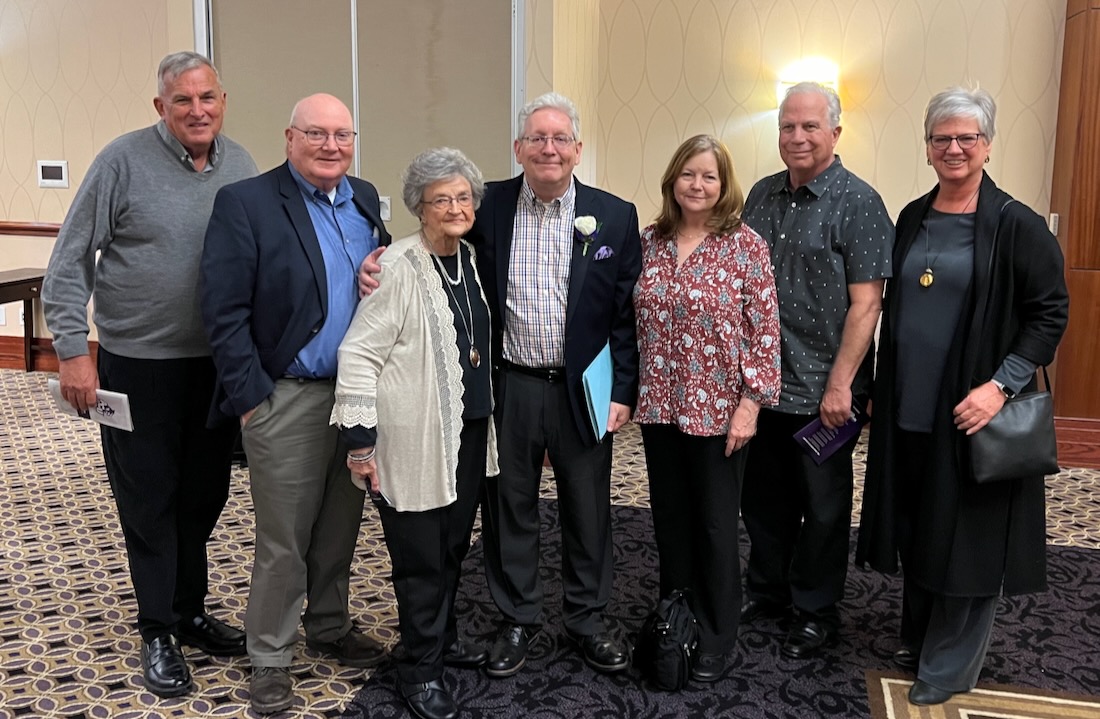
From left, Scott Kirk, Jim Stafford, Peggy Marler, Ron Hadfield, Corliss Hudson Englert, Brad Englert, Cheryl Mann Bacon

ACU Hall of Fame recognition for my friend Ron Hadfield … and a grand reunion

Oct. 22

Ron Hadfield is a long-time friend who was my student editor on the Abilene Christian University newspaper, The Optimist, in 1977. Ron recently was recognized with a Lifetime Achievement Award at the ACU Athletic Hall of Fame ceremony that I was privileged to attend.

I showed up on ACU’s doorstep in 1976 as a transfer student with a dream to some day become a newspaper sportswriter, but with virtually no writing experience.

Ron likes to tell the story that on the first assignment he sent me out on, I turned in some terrible copy and proudly showed him the quotes I made up.

I deny the accuracy of his memory.

Brady and John
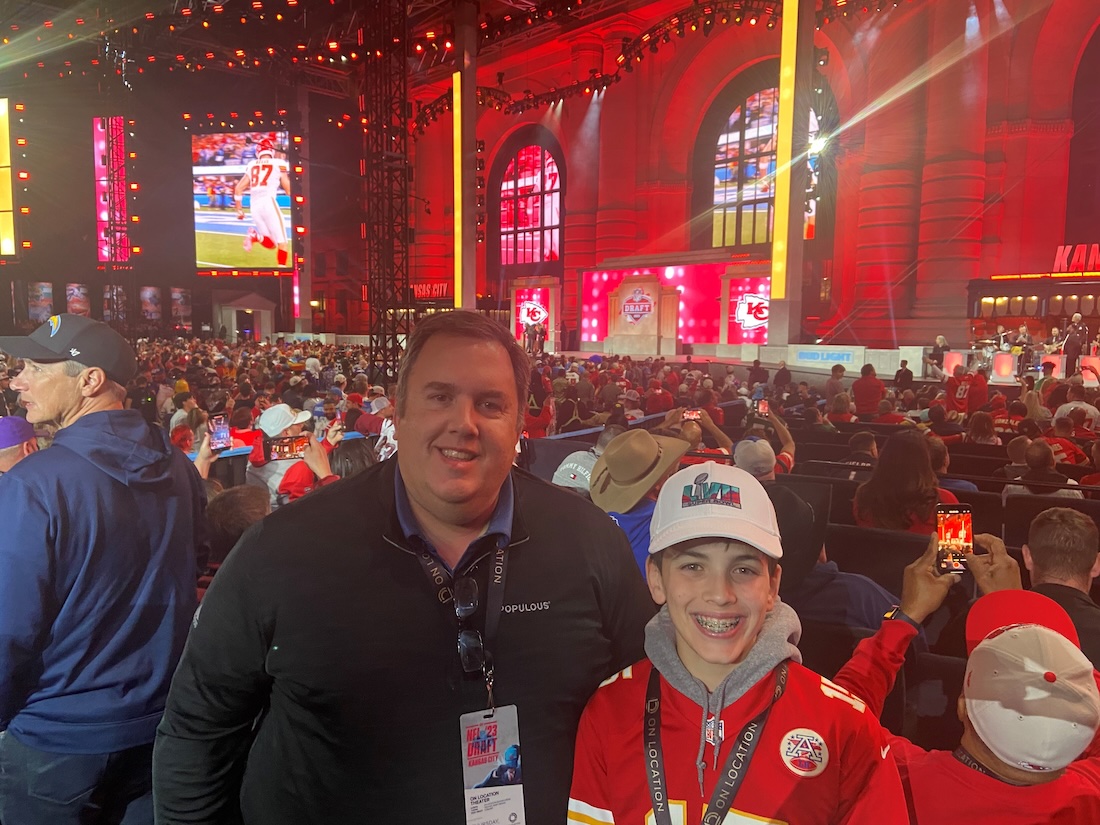
Brady Spencer with his son, John, outside Kansas City’s Union Station during the 2023 NFL draft.

The Populous impact on OKC sports venues & my friend, Brady Spencer

Sept. 17

A recent update in The Oklahoman newspaper on the new OG&E Coliseum under construction at the State Fairgrounds identified it as a venue designed by a firm named “Populous.”

In an even more recent story, I learned that Populous has been hired to design the new $71 million soccer stadium just south of OKC’s Bricktown.

I think I’m noticing a trend.

So, what exactly is Populous?

Solomon walking
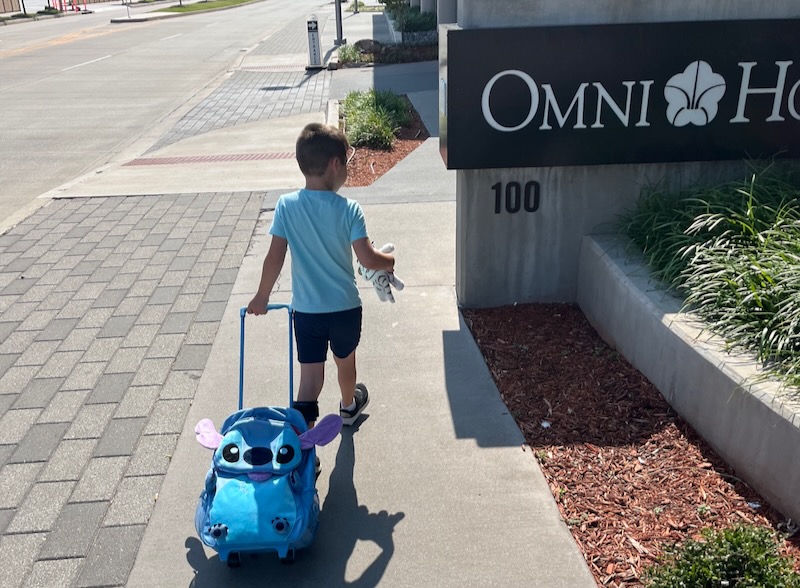
Solomon rolls his new backpack up to OKC’s Omni Hotel on Friday morning.

Solomon’s ‘road trip’ to OKC’s Omni Hotel

July 12

This is what happens when his GiGi is out of town on business and Papa is left in charge of entertainment on a Friday for our grandson, Solomon.

So, when it was just us two early Friday, Solomon said he wanted to go on a road trip. He suggested “the beach” and then Branson.

I said we couldn’t do either of those today, but maybe we could drive up to Guthrie and find a place to eat.

Solomon sort of accepted that, but later told me he wanted to go to that “nice Thunder hotel downtown.” All of us had stayed the night at OKC’s Omni Hotel last year when my wife, Paula, was booked there for a convention meeting.

Screenshot
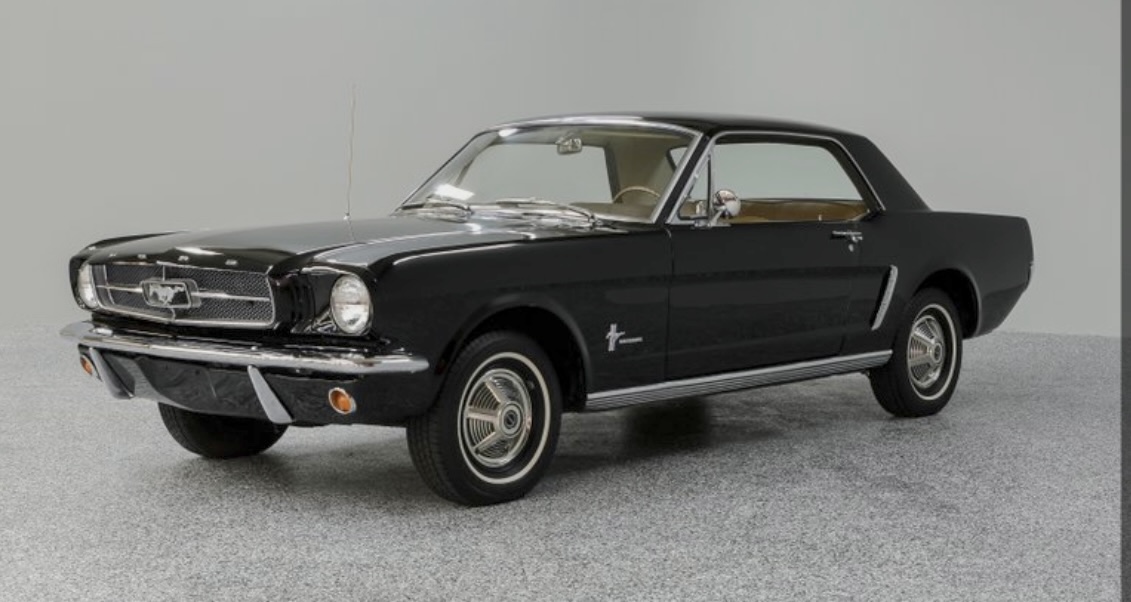
A black ’65 Mustang that looks exactly as I remember the one driven by my Aunt Dee.

The ’65 Mustang was my Aunt Dee’s ride or die

June 28

This is a story of the Ford Mustang. Or, rather, two Ford Mustangs. One of them did not have a happy ending, and I was in it.

If you are hazy on your Ford Mustang history, I’ll catch you up to date a bit. The Mustang was conceived by team at Ford led by Lee Iacocca, who later gained fame as the man who saved Chrysler.

The first Mustang was introduced to the public in April 1964, as the “1964-1/2” Mustang. It was an instant hit. The public fell in love with it because it had a unique, sporty body style compared to what U.S. autos had been, which were cars shaped like boxes and quite unattractive.

My dad was among the millions of Americans who were taken by the Mustang and eventually bought one when he was stationed on the island of Okinawa while in the military. I’ll come back to that.

Screenshot
Another shot of the ‘two Steves’ in the 1970s

Apple in 2024: Nobody likes a bully

March 23

I read a magazine article when I was in college in the 1970s about a scrappy startup called Apple Computer, founded by two guys named Steve who built their first computers in the garage at the home of one of the Steves.

I couldn’t get enough of their story; the David-vs.-Goliath way that Apple blazed the personal computer trail that forced the industry behemoth at the time, IBM, to play catchup. Steve Jobs and Steve Wozniak were my entrepreneurial heroes.

So, I admit that I am a long-time Apple fanboy and remain one today.

But my fandom has run smack into some ugly reality. Apple is no longer the scrappy industry underdog. In fact, it is one of the world’s largest companies by market value. Yet, it has begun to flex its financial muscles like a bully that nobody likes.


Screenshot

In my hometown, the long decline of a Fort Smith institution

Feb. 22

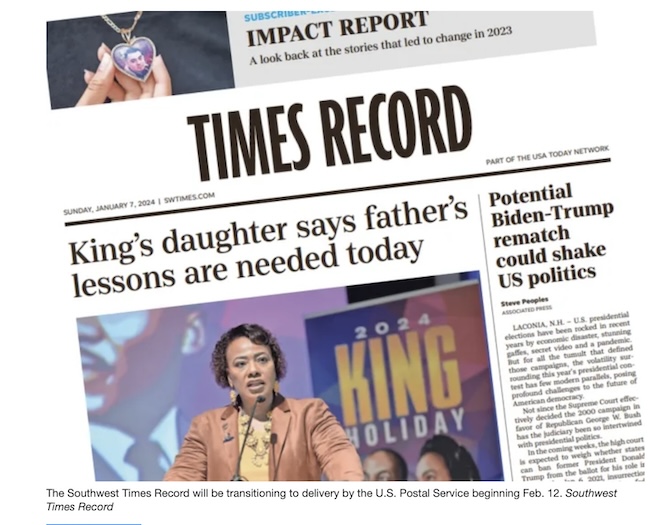
Here’s a bit of nostalgia for you. When I walked into the Southwest Times Record newsroom for the first time as an employee in 1978, I encountered a bustling community of talented writers, editors and photographers all scrambling to publish local news seven days a week.

The Fort Smith newspaper was a great place to learn the craft as my first job out of college. There are many folks among my former colleagues there whom I will never forget. I worked at the SWTR for five years in a variety of positions before moving to Oklahoma City and working for The Oklahoman for almost a quarter of a century.

So, it’s been disheartening to watch the SWTR decline as a community force over the past few years as the number of subscribers declined and employees were laid off. It’s a situation not unlike that in many other cities across the nation.

Evard and car
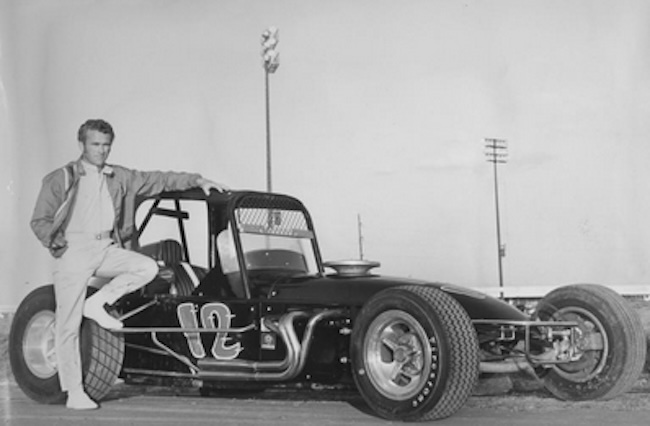
Evard Humphrey and his No. 12 super-modified sprint car

Why Evard Humphrey remains a sprint car hero to this child of the ’60s

Feb. 16

Editor’s Note: Don Mecoy is a friend and former colleague at The Oklahoman who retired as the newspaper’s managing editor at the end of 2022. A recent conversation about sports heroes from our youth when Don was a guest on the 3 Old Geezers podcast sparked his memory about a local race car driver fromthe late 1960s. Don wrote this guest blog post about that driver and those memories.

By Don Mecoy

I had my share of sports heroes when I was a kid. Roger Staubach, Lou Brock, Johnny Bench and Joe Washington were among my faves. But my personal hero — and it truly was personal — was a guy you probably never heard of: Evard “Kerfoot” Humphrey.

Evard was the driver of the No. 12 super-modified sprint car that ran every Friday night at State Fair Speedway during my youth in Oklahoma City.

tarps1
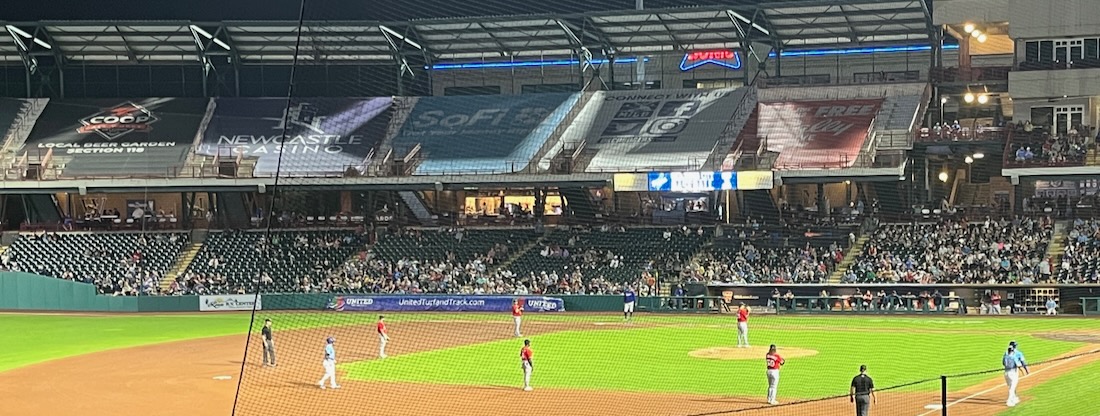
Advertising banners cover the entire upper deck seating area down the first base line of the Bricktown Ballpark.


Fading glory: Bricktown Ballpark needs upper deck rehab

Feb. 2

I was enjoying a summer evening at the Chickasaw Bricktown Ballpark with a friend last year, savoring the crowd, the game and the park’s immaculate green pasture.

Then my eyes landed on the upper deck along the first baseline that extends out into right field. There were no seats or bleachers visible. Only advertising banners draped across each section.

Don’t get me wrong. Oklahoma City has a beautiful ballpark that has retained its attractiveness since it opened in April 1998. However, the tarps do nothing but detract from the ballpark’s charm.

Apple in 2024: Nobody likes a bully

Screenshot
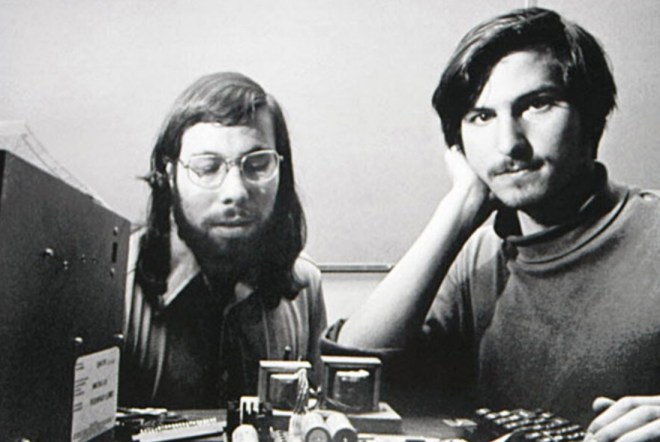
Steve Wozniak (left) and Steve Jobs together in the late 1970s.

I read a magazine article when I was in college in the 1970s about a scrappy startup called Apple Computer, founded by two guys named Steve who built their first computers in the garage at the home of one of the Steves.

I couldn’t get enough of their story; the David-vs.-Goliath way that Apple blazed the personal computer trail that forced the industry behemoth at the time, IBM, to play catchup. Steve Jobs and Steve Wozniak were my entrepreneurial heroes.

Less than a decade later I was the proud owner of an Apple IIe, and would later own multiple Macintosh computers, including the Macbook Air upon which this blog post is being written in 2024.

So, I admit that I am a long-time Apple fanboy and remain one today.

But my fandom has run smack into some ugly reality. Apple is no longer the scrappy industry underdog. In fact, it is one of the world’s largest companies by market value. Yet, it has begun to flex its financial muscles like a bully that nobody likes.

You probably have seen stories this past week about the anti-trust lawsuit filed against Apple by the U.S. Department of Justice and 17 states. The lawsuit alleges that Apple blocks developers and other companies from offering better pricing options to iPhone users and locks companies — and its users — almost exclusively to its App store.

Apple faced similar scrutiny in Europe and is currently working to comply with orders from European Union regulators to open the iPhone to what is known as “side loading.” That means developers can offer their software to consumers in an App store separate from the Apple App store.

But the antitrust suits are not what is challenging my long-standing Apple fanboy-hood. I actually prefer that any software I download to the iPhone pass through the Apple App store for security and quality reasons. Apple has done a pretty good job of vetting apps to prevent fraud or malware from slipping through.

What’s disappointed me about my favorite company — according to industry reporting — is how in recent years it has ruthlessly steamrolled innovative startups.

I’ve read reports about Apple’s tactic of appealing to the U.S. Patent Office to nullify patents owned by smaller competitors, and then developing and patenting its own software that is almost identical to that of the little guys.

A story in this week’s Wall Street Journal with the headline “When Apple Comes Calling, ‘It’s the Kiss of Death’”  lays it out pretty well. Most of it revolves around the Apple Watch.

Screenshot
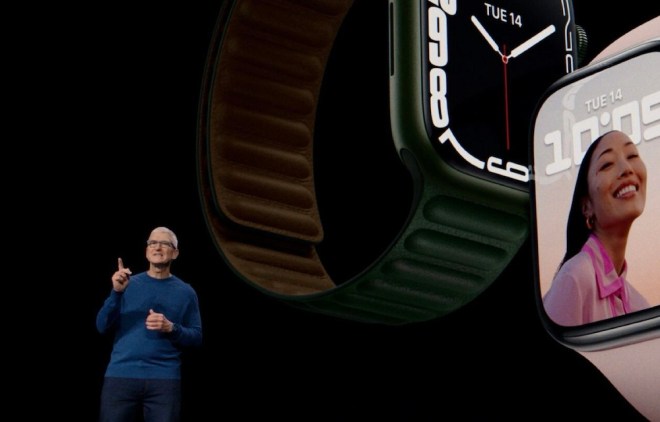
Apple CEO Tim Cook during a product announcement. (Wall Street Journal)

The article provides examples of Apple inviting founders to its HQ to discuss their innovations, then hiring multiple employees away from the competitors and creating software that does exactly what the original company created.

That action leads to claims of patent infringement by the smaller companies, and often ends with Apple taking it through the Patent Office appeals process. Here’s an example from the Wall Street Journal:

“Since 2012, Apple has attempted to invalidate more patent claims before the Patent Trial and Appeal Board than any other petitioner, according to intellectual-property research firm Patexia.

“Apple said it pays licensing fees to many companies of different sizes. The spokeswoman said it has licensed more than 25,000 patents from smaller companies over the past three years.”

OKLAHOMA ANGLE

Screenshot
Dr. David Albert

There’s an Oklahoma connection to this story. One of the companies from which Apple allegedly appropriated technology for the Apple Watch was AliveCor Inc.,  founded by Dr. David Albert, well known cardiologist, inventor and native Oklahoman.

I’ve known Dr. Albert for at least a decade through my past work with i2E, Inc.

AliveCor developed a technology in 2017 that would conduct electrocardiograms for Apple Watch users. Apple invited Dr. Albert to its HQ, where he demonstrated the technology for executives, according to the Wall Street Journal story.

In 2018, Apple released the Apple Watch 4, which offered an electrocardiogram capability. AliveCor filed a patent infringement suit against Apple in 2021.

It has not gone well for AliveCor, as you might expect. Here’s more from the Wall Street Journal:

“In December, the commission ruled in favor of AliveCor, barring imports into the U.S. of all Apple Watches with the heart-sensing capabilities.

Separately, Apple took the dispute to the Patent Trial and Appeal Board system … That board invalidated the AliveCor patents under dispute, thereby nullifying the import ban. AliveCor has appealed that ruling.”

I heard about the AliveCor lawsuit a couple years ago and reached out to Dr. Albert for comment for a blog post I intended to write back then.

Dr. Albert responded: “Jim, I cannot discuss our ongoing litigation — sorry.”

I elected not to write anything at that time, but the recent Wall Street Journal article opened the door this week.

I’m a fan of AliveCor and the other startups that have developed innovative technology only to be crushed by the tech giant. I’m disappointed that Apple has apparently evolved into an industry bully that sees no problem in squashing the little guys.

It’s like no one at Apple’s Cupertino, Calif., HQ remembers that it was once the scrappy startup founded by two Steves who built computers in their parents’ garage.

Screenshot
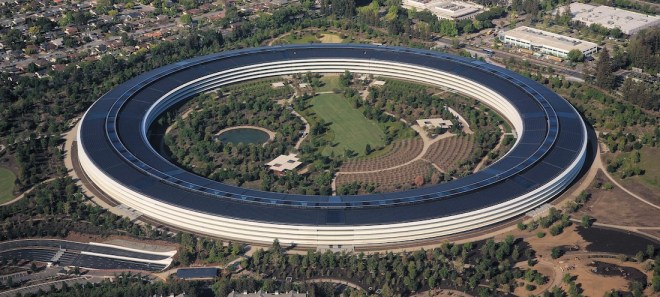
Apple’s headquarters in Cupertino, Calif.

Apple’s founders built a lot of goodwill among consumers and fanboys like me. I’m hoping their successors don’t let it slip away.

BONUS CONTENT! My friend Larry Newman is a long-time user of Apple technology, and was employed by Seagate Technology and other tech companies for most of his career. Now retired, he weighs in with his thoughts on the situation with Apple and Big Tech:

“I made an incredible living thanks in no small part to Apple products. I don’t know the details of the current government antitrust charges against them. But I’m guessing most of us would be quite disappointed in the lack of ethics displayed by the overwhelming majority of big tech companies. Regardless, I would rather big USA-based tech companies win than foreign ones. Our government would better serve citizens by using their influence to encourage repatriation of tech manufacturing jobs back to US soil.

“When I started working at Seagate in 1992, their manufacturing plants in the United States were employing thousands of people. But once one competitor began moving manufacturing overseas, all others had to follow to remain competitive and survive. Simple import restrictions/duties would have eliminated the migration of the jobs.

“Another thing to consider is platform security. Although no technology platform is 100% secure, Apple systems are clearly less vulnerable than more open systems.”

Screenshot
Another shot of the ‘two Steves’ in the 1970s

Steve Jobs in his own words

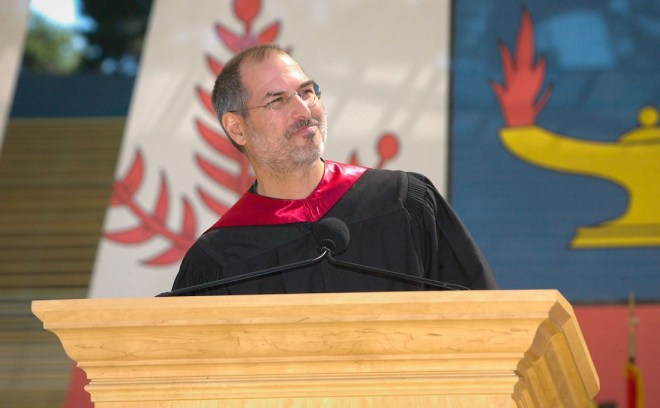
Steve Jobs during 2005 Stanford Commencement speech.

If you follow this blog or know me personally, you’re probably aware that I’m a fan of Apple Inc. and its co-founder, the late Steve Jobs.

Jobs’ story is well known. Co-founding Apple in 1976 with Steve Wozniak; building the Apple I in the garage of his childhood home; creating the Macintosh computer in 1984; getting fired from his own company in 1985; returning to Apple a decade later to become CEO and leading development of groundbreaking products.

The company has since soared to incredible financial stature.

Along the way, Jobs was diagnosed with cancer and eventually died from it in October 2011.

Books have been written about Jobs after his death and movies made about his life. I’ve read two books that I would highly recommend, especially Steve Jobs by Walter Isaacson. The other is Becoming Steve Jobs by Brent Schlender and Rick Tetzeli.

The Isaacson book sort of reinforces the image I had of Jobs as a creative person who drove himself and others really hard, mostly without tact or apparent empathy. As much as I admire the innovations he brought to the market, I don’t think I could have worked for Steve Jobs.

But I’m still a fan, because of his enormous impact on our world (iPhone, anyone?). And the fact that the arc of his life reads like a Greek tragedy.

So, when I discovered Make Something Wonderful: Steve Jobs in His Own Words, published by the Steve Jobs Archive, I had to read it, too.

Available for free on Apple Books or on the Web at the Steve Jobs Archive, the 319-page book contains speeches, presentations and emails by Jobs.

It’s sort of the ultimate inside look at how he thought and worked, especially the emails he sent to himself with information and thoughts he didn’t want to let get away.

There are lots of good quotes in the book, including the entire transcript of his 2005 Stanford University Commencement speech. You can also watch it on YouTube.

So, I’ve selected a few quotes that I found memorable and will share in this post.

For instance, way back in 1983, Steve already saw the future in which computers were going to tie millions of people around the world together though networking capabilities.  The Internet was about 6 months old, and few people actually knew it existed. 

Talking to the International Design Conference in Aspen in June of that year, Jobs said:

“… I think that that’s exactly what’s going to happen as we start to tie these things [computers] together: they’re going to facilitate communication and facilitate bringing people together in the special interests that they have.
And we’re about five years away from really solving the problems of hooking these computers together in the office. And we’re about ten to fifteen years away from solving the problems of hooking them together in the home.”

In a 1984 speech to Apple employees the day before the Macintosh debuts in the famous “1984” ad run during the Super Bowl:

“IBM wants it all, and is aiming its guns on its last obstacle to industry control: Apple. Will Big Blue dominate the entire computer industry? [Audience: No!] The entire information age? [Audience: No!] Was George Orwell right about 1984?”

In a 1984 interview with reporter Michael Moritz:

“I want to build products that are inherently smaller than any of the products on the market today. And when you make things smaller, you have the ability to make them more precisely. Obviously, a perfect example of that is a watch. It’s beautiful, but the precision has to be the scale of the object itself, and so you make it very precise.”

From a 1996 speech to Palo Alto, Calif., high school students:

“Be a creative person. Creativity equals connecting previously unrelated experiences and insights that others don’t see. You have to have them to connect them. Creative people feel guilty that they are simply relaying what they “see.” How do you get a more diverse set of experiences? Not by traveling the same path as everyone else …”

In an email exchange in 1997 with a software engineer after returning to Apple as Interim-then-full-time CEO:

“… there is something good here worth saving. I don’t quite know how to express it, but it has to do with the fact that Apple is the ONLY alternative to Windows and that Apple can still inject some new thinking into the equation.”

Finally, an excerpt from his Stanford Commencement speech in 2005, a year after he had been diagnosed with pancreatic cancer.

“Your time is limited, so don’t waste it living someone else’s life. Don’t be trapped by dogma—which is living with the results of other people’s thinking. Don’t let the noise of others’ opinions drown out your own inner voice. And most impor­tant, have the courage to follow your heart and intuition. They somehow already know what you truly want to become. Everything else is secondary.”

Before his death, Fortune magazine called him the Beethoven of the business world.  That’s a pretty good description.

I highly recommend Make Something Wonderful if you are a fanboy like me or merely curious about Steve Jobs.

Why iPhone is Swiss Army Knife of Communications

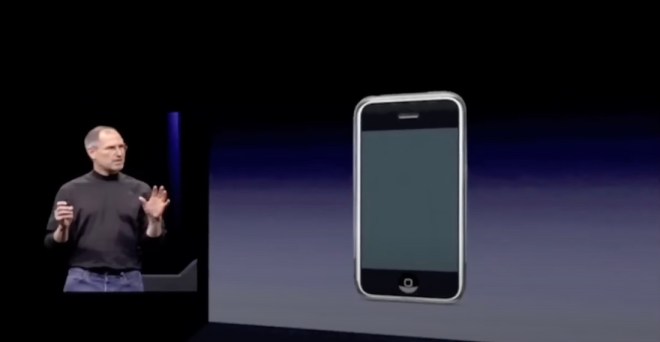
Steve Jobs introduces the iPhone in 2007

Earlier this week, my wife asked me to run down to the nearby Dollar General store to pick up a loaf of bread. I jumped into the car and headed that way.

As I neared the store, which is roughly a half mile from our house, I realized I did not have my wallet. Darn!

Then I realized I had my iPhone, and Dollar General accepts Apple Pay.

No wallet. No problem.

I ran into the store, grabbed a couple loaves of bread and headed to the checkout where I payed with the magic of no-touch Apple Pay and my iPhone.

I’ve become a huge Apple Pay fan. I will choose Target over, say, Walmart, because not only does Target offer a nicer shopping environment it also accepts Apple Pay.

Anyway, this got me to thinking about all the handy tools the iPhone (and others Smart Phones, I assume) offer that remind me of the versatility of a Swiss Army Knife.

I can’t tell you how many times I’ve found myself carrying something to the trash bin on the side of our house late at night in pitch black without light to aid navigation. But now, I touch the flashlight on the iPhone and I’m guided to and from the bin without tripping over anything.

There are so many other examples. Counting steps when I’m walking. Sending emergency funds on the spot to a child in need in a faraway place. Downloading and reading free books from the library. Sending a Subway gift card to a child in need in a faraway place. Ordering an Uber and watching the progress of the arriving car on a map. Receiving and reading lab results ordered by my doctor. Pointing the phone to the sky and seeing information about the type of aircraft and destination of a flight overhead. Pointing the screen at yourself and taking a selfie.

Oh, and making a phone call. I could go on and on.

When Steve Jobs introduced the iPod from a San Francisco stage in 2007, he said “today, Apple is going to reinvent the phone.”

It did.

Watch Jobs’ introduction of the device.

With the emergence of iPhone and the many apps dreamed up by developers, the concept of the Smart Phone has washed over so many areas of our lives. It changed telecommunications and it changed how we live. I think for the better.

That’s why the iPhone IS the Swiss Army Knife of communication.

Still an Apple fanboy after all these years

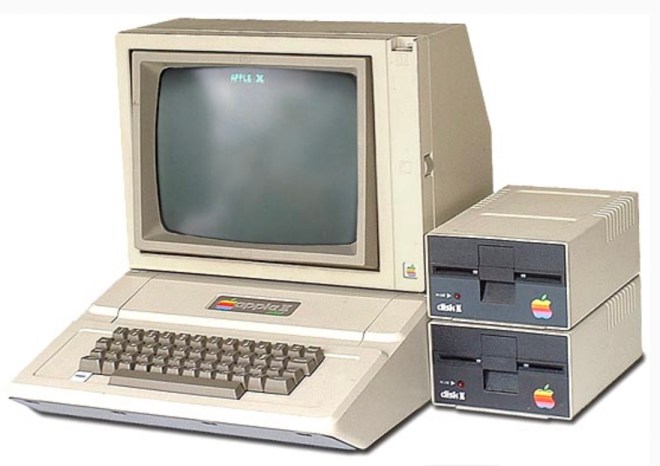
The Apple IIe with two 5-1/4 inch floppy disks, just like my first setup

I read a magazine article in the late 1970s about a couple of young Californians who built a new stand-alone computer in the garage of a Cupertino, Calif. home.

They started a company called Apple Computer to sell their innovation.

I had never used a computer at that point in life. As a journalism student at Abilene Christian University, we did all of our writing either on our own antiquated typewriters or on IBM Selectric typewriter in the newsroom of ACU’s student newspaper.

Anyway, the more I read about Apple and its Apple II computer, the more fascinated I became with both the company and the concept. Like most people, when I thought of computers, IBM and its massive room-sized mainframes came to mind.

After graduating from ACU, I went to work at the Southwest Times Record in Fort Smith, Ark. We worked on typewriters when I arrived in late August 1978, but by the Spring of 1979 the paper had installed its first computer terminals for reporters and editors to use.

They were so-called “dumb” terminals that were tied to a mainframe computer. They crashed a lot, usually right at deadline.

Meanwhile, I was still keeping up with Apple and its computer, but thought it was way beyond what I could afford.

Besides, who ever thought of having a computer in your house?

Fast forward about seven years. I was working at The Oklahoman when J.T. Goold, one of my co-workers, said he had a used Apple IIe for sale. It had been his father’s,

So, I ponied up about $500 and bought the Apple IIe, which came with a green monitor and two 5-1/4 inch floppy disks.

That Apple IIe sealed my love of all things Apple. I learned to use word-processing software on that computer, as well as a spreadsheet, a simple database and a page-design program.

In a few months, I added a 1,200-baud modem, which opened up a whole new online world of what were then known as bulletin boards. Then came AppleLink.

I tried my hand at learning some BASIC programming skills, but never got much further than making a little routine that filled the screen with a single sentence.

I’ve written all of this because I’m deep into Steven Levy’s book, “Hackers: Heroes of the Computer Revolution.” The Apple II and its creator, Steve Wozniak, play a huge role.

In Hackers, Levy detailed the founding and growth in the early 1970s of the Homebrew Computer Club in the San Francisco Bay Area. The club attracted scores of computer hackers who shared a vision of a future where everyone had a stand-alone computer of their own.

Levy wrote: “These were people intensely interested in getting computers into their homes to study, to play with, to create with … and the fact that they would have to build the computers was no deterrent.”

Steve Wozniak attended the very first Homebrew Club meeting, but it was a few years before he actually built his first computer. His friend Steve Jobs convinced him to create a company as partners and sell his computer invention.

So they began building computers in the garage of the home of Jobs’ parents. The Apple II became a runaway bestseller, bringing computers to millions of people.

I became an Apple fanboy after reading that early magazine article in the 1970s. The used Apple IIe that J.T. Goold sold me in the mid-1980s ensured it would last.

And here we are today.  I’m writing this on an Apple MacBook Air while the my Apple iPhone keeps buzzing with text alerts and notifications.  I’m reading Levy’s excellent “Hackers” on an Apple iPad Mini.

It’s been a long-term relationship, to say the least.  Still an Apple fanboy after all these years.

I’m a Mac (fanboy): Apple ads across the years

Imamac
John Hodgman (left) as PC and Justin Long as Mac (Apple photo)

It’s no secret that I’ve been an Apple fanboy ever since I first read about the company and how it was founded in the 1970s in a Cupertino, Calif., garage by two guys named Steve.

In fact, my first computer was the Apple II, which brought personal computers to millions of people back in the day.

I’ve also been a fan of its advertising campaigns across the decades. Along with its groundbreaking technology, Apple has always taken a different and memorable approach to advertising its products.

But it gained notoriety in 1984 with the debut of the Macintosh.

Apple’s 1984 Super Bowl ad, which skewered IBM while introducing the Mac, is hailed as perhaps the most groundbreaking ad ever. It only aired one time. In case you missed it or it’s been a while, you can play it below.

Then, co-founder Steve Jobs left the company when he was fired by John Scully, the CEO he hired. Apple wandered in the wilderness for a decade before Jobs returned, first as interim CEO and then with the full title.

One of Jobs first and most memorable acts upon his return was to launch Apple’s Think Different campaign. I loved it, and apparently millions of other people did, as well. The company’s sales began to soar. Watch the ultimate Think Different ad here, that celebrates The Crazy Ones.

Another well received Apple ad campaign was known as the Switcher ads, featuring regular people who had switched from PCs to Macs.

My favorite Apple ad campaign of all time was the I’m a Mac campaign that ran from 2006 to 2009. I’m a Mac was actually a series of short vignettes starring Justin Long as the Mac and John Hodgman as the PC.

Long was one cool dude, while Hodgman was hopelessly uncool, out of date and out of touch with popular culture.

But mostly, the ads were funny, which hooked me immediately.

Although it’s been 12 years since the ads were aired, you can easily find them on YouTube. Here’s my favorite I’m a Mac ad of them all, featuring Patrick Warburton, who also played “Puddy” on Seinfeld.

Enjoy the comedy.

BREAKING NEWS: Just saw this from the Wall Street Journal about Apple Inc.

Apple Inc. became the first U.S. company to reach $3 trillion in market value, the latest milestone in a pandemic-era surge that carried shares of the iPhone maker and other large technology companies to unprecedented highs.

Apple shares crossed the milestone when they topped $182.856 Monday. The share price has more than tripled since the pandemic lows of March 2020, adding around $2 trillion in market capitalization.