Technology evolves, but Paul McCartney — and his music — live on

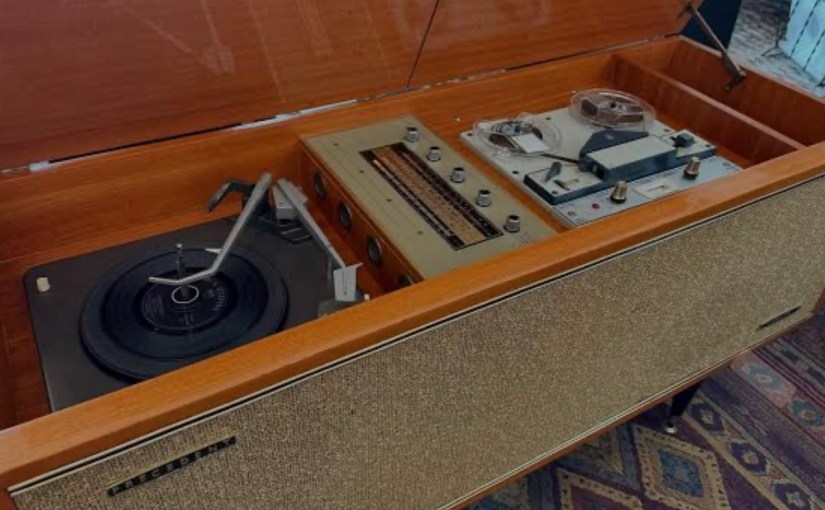
A turntable console with reel-to-reel tape much like my parents had in the 1960s.

When the Paul-is-Dead rumors began floating around in the late 1960s, I was devastated. There was evidence everywhere that Paul McCartney had died in a car crash and The Beatles went on with a look-alike substitute.

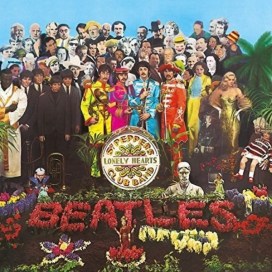
I was 16 in 1969 and read — and clipped — every article I could find that shared evidence of Paul’s demise. For instance, there was the hand over Paul’s head on the Sgt. Pepper’s Lonely Hearts Club album that symbolized death. And the whole cover resembled a funeral gathering.

There was more. Paul was dressed as a walrus on the Magical Mystery Tour poster, said to symbolize death, and a line from the song Glass Onion says “here’s another clue for you all, the walrus was Paul.”

But the clue that sealed it for me was the rumor that if you played Revolution 9 backward you could hear the words “turn me on dead man” and the sounds of a car crash.

My family owned a giant stereo console that had both a turntable and a reel-to-reel tape player. So, I played Revolution 9 from the White Album on the turntable and recorded it on the reel-to-reel.

When I turned the tape backward and played it I heard those terrifying words. “Turn me on dead man.”  And the sounds of what could be a car crash.

That clinched it for me, at least for the next couple of years until it became evident to me that Paul McCartney was indeed, Paul McCartney.

I’ve written all of this not to show how gullible I was as a teenager; rather to talk about technology and what we had then and what we have today.

In the late 1960s, our family had the latest and greatest in the giant console with the turntable and the reel-to-reel.

That’s how we rolled in 1969.

Vinyl records, both 33 rpm long play albums and 45 rpm discs that played a single song each on front and back, were as common then as, well, iPhones today.

Everyone I knew had a record player or two in their homes. My sister and I had a little portable record player that we would take out into the carport and play our favorite singles on.

When I was a sophomore in high school, I took all the money I had saved up and bought a portable stereo turntable at Kmart that served me well for years.



But advances in technology made turntables obsolete in the early 1970s as 8-track tape players became everyone’s obsession. I installed a cheap Kraco 8-track in my car, which seemed to ruin as many tapes as it successfully played.

Then came cassette tape players that were much smaller — and dependable — than 8 tracks.  But analog taped recordings didn’t have much of a future, because they gave way to CDs — compact discs — in the 1980s.

I remember the frustration of my dad in the ’80s when he had to buy a CD player because it had become the technology on which most music was recorded and played.

“They keep changing the formats just so we will have to spend money to buy something new,” he told me.

But time advanced as did technology.

MP3 players began to emerge in the late 1990s replacing CDs and making music much more portable. And in 2001, Apple Inc. debuted the groundbreaking iPod, which CEO Steve Jobs famously said allowed you to carry “1,000 songs in your pocket.”

So, here we are in 2025.

Today we have massive music services like the iTunes Store and Spotify that allow us to hear virtually any song ever recorded at any time.

And technology advances continue to make yesterday’s formats obsolete.  The old console turntable and reel-to-reel tape player my parents owned was probably sent to a landfill decades ago.

But some things remain. The memories of chasing down Paul-is-Dead clues on that big old console.  Hearing my dad — who passed on in 2012 — complain about changing technology.

And Paul McCartney — the real Paul McCartney — endures. As of July 7, 2025, he’s as alive as he was in 1969.  I continue to listen to his music, but now in a digital format that reaches my ears through a pair of AirPods Pro 2.

That’s how we roll in 2025.

BONUS CONTENT
So, what’s next in how music is recorded and enjoyed? I’ve read a lot about how future music will be made by artificial intelligence, but what I’ve heard of it so far lacks the creativity of human song writers and performers. I’ll take humans any day.

I asked ChatGPT what it sees for the future of music, and this is how it answered:

1. AI and Generative Music

  • AI tools can now compose, produce, and even perform.
  • Personalized or adaptive soundtracks for games, workouts, moods.

2. Immersive & Spatial Audio

  • Formats like Dolby Atmos Music and 360 Reality Audio offer 3D sound experiences.
  • Becoming popular in streaming and VR/AR contexts.

3. Blockchain & NFTs

  • Exploring decentralized ownership, royalty tracking, and digital collectibles.

4. Holographic & Virtual Performances

  • Digital twins of artists (dead or alive) performing live.
  • Integration into virtual worlds and the metaverse.

5. Brain-Computer Interfaces (BCI)

  • Experimental: Listening to or composing music via brainwaves.
  • Potential for direct neural engagement with music.

Be careful out there; it’s a deep fake future

Screenshot taken from deep fake video of Ja Morant post-game interview

My wife sent me a video interview she saw last week with Memphis Grizzlies star Ja Morant that was pretty shocking.

In what appeared to be a post-game interview with the media after the Grizzlies’ loss to OKC, Morant made some outrageous comments. He said that Thunder star Shai Gilgeous-Alexander was not MVP-worthy, that the Grizzlies had no chance in the series and that NBA Commissioner Adam Silver had taken away his motivation.

It was such an eye-opening interview that I forwarded it to my friends Ed, Steve and Casey.

Trouble is that it was a totally fake video created with Artificial Intelligence. Ed tipped me off because he immediately started searching for articles about what Ja had said and found none. Zero.

But I fell for it, and I hang my naive head in shame.

I invite you to click on the video below and tell me that you could spot it as a fake, aside from Ja’s outrageous comments.  Ja’s voice and the post-game setting are both realistic.

I find the fact that this fake video was so well done to be disturbing for what it portends about the future. It is part of a growing phenomena commonly known as deep fakes.

The Ja video was pretty harmless, but what if someone created a fake video of a presidential candidate saying incredibly racist things that he or she would never utter?

We can see where this is headed. I’ve read that such videos already exist.

Want an example? The video in this link isn’t exactly a political deep fake, but it that made the rounds shortly after the death of Pope Francis, created around his meeting with Vice President J.D. Vance the day before he died. The creators took an historic meeting and turned it into an attempt at humor that is pretty disrespectful.

Screenshot from Threads of deep fake video of Pope Francis taking a swing at VP JD Vance

I decided to seek an expert’s opinion and reached out to John Hassell, Ph.D., an Associate Professor of Software Development and Integration at the University of Oklahoma Polytechnic Institute in Tulsa. If you are not familiar, the Polytechnic Institute is OU’s newest campus that offers a host of technology degree tracts, including Artificial Intelligence.

Dr. Hassell has incorporated AI into software development for the past couple years, and shared his thoughts on the subject with me in a 2024 blog post. 

When I asked him about the Ja Morant deep fake, he immediately put me in touch with Colin Torbett, an OUPI student who possesses a master’s degree in data science but is now pursuing another undergraduate degree in cyber security.

“Colin is actually doing research on that very topic now,” Dr. Hassell said.

So, Colin connected with me and shared some thoughts on the emerging flood of AI generated deep fakes.

“These fake videos (but also images and audio recordings) are called ‘deep fakes’ because they use an AI technique called ‘deep learning’ in order to create a fabricated, digital artifact,'” Colin told me. “They are indeed pervasive and I see new ones appear everyday on social media, though I typically find one’s which are humorous, benign, and easy-to-spot as fake. On the other hand, some are more nefarious and easily pass as real at first glance.”

A cyber security major at OU’s Polytechnic Institute campus in Tulsa, Colin Torbett is researching the deep fake phenomenon

Colin described a deep fake he recently saw that claimed to be an interview with a young woman on her dating preferences. Apparently, it was a well done video, but the person holding the microphone for the interview had six fingers. Dead giveaway.

“It does illustrate how pernicious deep fakes can be — and how easily duped anyone can be,” he said. “This can only become a concern for politics especially with all the chaos in the last decade. Obviously, fake video or audio of speeches would be detrimental — if not fatal — for a political career, but would sow discord among voters and the general public.”

My question: how can these deep fakes be more easily detected and even stopped before they are in widespread distribution?

“While there is no immediate antidote to the problem, I am confident that cybersecurity researchers and computer scientists will create digital watermarks and signatures which validate any digital piece of information (video, audio, document, email, etc.) as authentic,” Colin said. “The digital infrastructure and software for these solutions is still in it’s infancy, being developed by startups and university researchers. It might take 5-10 years for this technology to be refined and widely adopted.”

Wait. Five to 10 years for a real solution? The bad guys are going to have quite a head start.

“In the mean time, my only advice (unsolicited, I admit) is to take everything online with a few grains of salt — especially if it confirms something one already believes,” Colin said. “It’s easy to dismiss something if runs contrary to a belief about the world, but being skeptical about information that affirms a deeply held worldview is an effective antidote to confirmation bias, and the deep political entrenchment we see reinforced by social media today.”

Colin has worked for technology-based firms for about a decade, beginning with an internship at OKC’s Spiers New Technologies in 2015. He gained his interest in deepfakes and AI while in graduate school, earning his MS in 2017.

“Since then, deep fakes have exploded and are becoming a serious concern,” he said. “My interest revolves around helping to create a novel solution for a pervasive problem that affects everyone. What I really want to do is what every good engineer wants: to use my skills and science to solve complex problems for the world.”

I hope that one day Colin Torbett leads his own high tech company that creates antidotes to deep fakes and will keep videos like the Ja Morant interview out of my timeline.

Then I won’t get fooled again. Maybe.

BONUS CONTENT: My friend Don Mecoy shared a video with me that provides a deep dive into deep fakes and how they are evolving and their threats to society.  Watch the video below:

DOUBLE BONUS CONTENT UPDATE:

Concerned that AI is coming after your job? Read what my friend Dr. John Hassell at University of Oklahoma Polytechnic Institute has to say on the subject. Spoiler alert: It’s not likely!
https://www.news9.com/story/68c731020ebc3adec64fbb37/is-ai-coming-for-your-job-ou-professor-weighs-in-on-widespread-fear

Siri has a hot take

Her screen
Screen shot of the ‘Her’ trailer

We were traveling back to OKC from Hammon, OK, on Saturday when I asked my virtual assistant, whom I will call “Siri,” for the score of the Cincinnati-Arkansas football game.

“Arkansas leads Cincinnati 14-0 at halftime,” Siri responded.

Then I asked her for the score of the OU game. The Sooners were playing UTEP, and I wasn’t expecting much of a match.

“Oklahoma is dominating UTEP 28-10 at halftime,” Siri responded.

My wife picked up on how Siri gave us the score.

“I wouldn’t say that OU is ‘dominating,” Paula said.

“Yeah, but that’s how Siri sees it,” I replied.

Then it hit me. Siri had a take on the game! My virtual assistant supplied by Apple not only gave me the score, but an opinion on how things were going.

Even if Siri was stretching things a bit.

SiriAnyway, this made me think about artificial intelligence. Siri, Alexa, Google’s assistant all have some personality built in, I assume. I only have experience with Siri and Alexa, and they both can have a quirky personality.  Alexa seems more upbeat.

If you want a fictional vision of the future of artificial intelligence and virtual assistants, watch the movie “Her.”

If you’ve not seen Her, it’s a 2018 film about a lonely, incredibly downbeat man named Theodore (Joaquin Phoenix) in the not-too-distant future who buys a new AI-powered computer operating system. He calls it “Samantha.”

Played by Scarlett Johansson, Samantha engages Theodore in a round-the -clock conversation, learning about his life and environment while anticipating his every need.

Ultimately, Theodore falls in love with Samantha, whose intelligence seems to be expanding exponentially.

At the end of the movie, Samantha tells Theodore that he’s just one of scores of men she’s “dating.”  Then she drops the news on him that she’s taking off with some of her other AI counterparts to bigger and better things (which I assume to be a world takeover).

It doesn’t exactly bode well for mankind.

Her raises a lot of questions about the future of AI, and I’m not sure the answers are what we like. At least Samantha had a personality and a take on the issues in Theodore’s life, even if she was over the top.

Maybe that’s where Siri is headed. Let’s just hope she doesn’t conspire with Alexa and Google to try to take over the world in an AI coup.