Oklahoma Innovation Model seeded invention of ‘Socket-less Socket’ for prosthetics

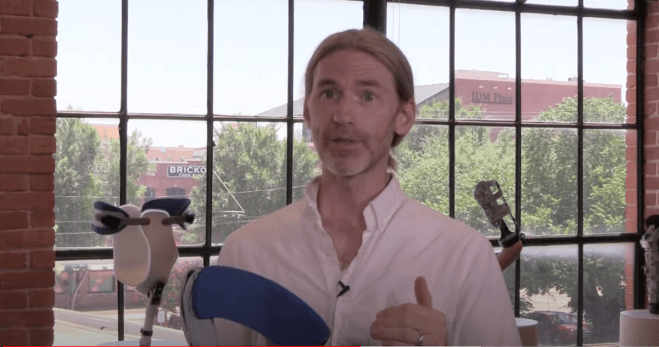
Jay Martin discusses his prosthetic invention during OCAST interview in 2018

In a recent appearance on the Innovate That podcast hosted by Lt. Gov. Matt Pinnell,  Oklahoma City inventor and entrepreneur Jay Martin told how his work with NASA inspired his company’s prosthetic innovation known as the Socket-less Socket.

Listen to the entire podcast sponsored by the Oklahoma Center for the Advancement of Science and Technology (OCAST) and hear Jay describe his work on NASA exoskeleton designs and how it carried over to his own company, Martin Bionics.

A recap of Jay’s comments that I wrote appeared in the March 17 edition of the Journal Record. (subscription required)

However, space limitations for that article prevented inclusions of several comments Jay made about the impact OCAST and the Oklahoma Innovation Model have had on his prosthetic design work over the years.

I thought they shed some light on how critical state support of innovators like Jay can be, so I’m posting his comments in this blog.
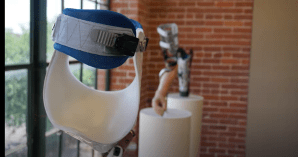
Prosthetics displayed at Martin Bionics

All of these comments are from Jay Martin made during the Innovate That podcast:

Martin on the value of OCAST

If you look back at the history of Martin Bionics, there are several significant pieces in that timeline, in that story line that have OCAST’s name on it. At the very beginning I was practicing clinical prosthetics and had some ideas for some new prosthetic designs and ended up discovering OCAST. I went to every workshop OCAST had. I learned how to write grants, taught myself how to write patents, along with OCAST’s help in some of those workshops, and ended up winning my first OCAST grant, I think, while I was either still in residency or just out of residency. That was really the launching pad for me.

That really shaped the entire trajectory of my career. I ended up winning a number of OCAST grants over the years for technologies we were developing, but the impact to the amputee community has been significant from OCAST funding. And, obviously, Martin Bionics’ growth and trajectory and all of our staff, we can all thank OCAST for so many of those significant pieces of our journey. It’s a great resource we have here in Oklahoma. It’s incredible. I’ve encouraged so many other entrepreneurs to check it out because it has really been lifeblood for us to really accomplish some things that otherwise we would not have been able to.

Martin on the Oklahoma Innovation Model

When I was first starting, I was green. I knew nothing about entrepreneurship, grants, patents or any of that, so I was hungry to find information.

(Editor’s note: The Oklahoma Innovation Model includes OCAST, i2E Inc., the Oklahoma Manufacturing Alliance, the New Product Development Center at Oklahoma State University and the Oklahoma Catalyst Programs at the University of Oklahoma.)

All of those are incredible resources. Anyone who is young on their journey on entrepreneurship or advancing or creating, they are incredible resources and I’ve always found there are staff members in each of those organizations who are standing by ready to help, ready to answer questions and ready to go to lunch with you and download information. They are there to help us be successful. Absolutely incredible resources.

We have a real gift here in Oklahoma that some other states don’t have.

Why locate Martin Bionics here in Oklahoma?

I was born in Oklahoma, grew up in Norman, worked in Oklahoma City in my adult life. Oklahoma is a great place, and from the standpoint of entrepreneurship, the resources we have, you have OCAST and all those other great organizations there, but in addition to that we have relatively low cost of living, we have really nice people, we have a really progressive city that is amazing. It’s not too big, just the right size. We have rush minutes, not hours. It’s just a great place to raise a family, to live, to work and to play.

There’s enough industry in Oklahoma that there’s really a talented pool of applicants for hiring. So we’ve been able to grow our business compared to the coasts for a fraction of the price.

Watch a video interview OCAST conducted with Jay Martin from 2018:
Ten-minute tour of OKC’s Grand Palace

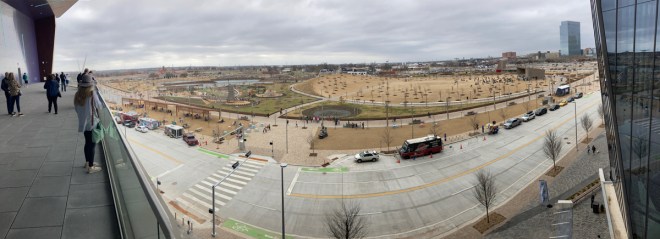
The new OKC convention center looks out over Scissortail Park.

The first thing I noticed about the new Oklahoma City Convention Center as my wife and I walked toward the entrance Saturday was its proximity to everything.

To our left, directly across the street from the Convention Center was the massive Scissortail Park. Next door is OKC’s new Omni Hotel. The OKC Streetcar stop was just north of the hotel.

And to our surprise, we spotted Mayor David Holt sitting on a bench by himself outside the Convention Center. Naturally, we introduced ourselves and posed for a quick photo with him (of course) before walking on.

Now that’s proximity!

Saturday was Open House for the new OKC Convention Center, so I signed us up. Turned out to be an awesome experience, although not just because of the tour.
We decided we had enough time to grab some lunch before scheduled tour time.

As we waited in line to be seated at the Omni’s OKC Tap House restaurant, we spotted some long-time friends I’ll call “Brent and Valeri.”  We joined them in the outside seating area.

It had been years since we had sat down and visited with this couple, so we had a lot of catching up to do. Time passed, and before we realized it, we were 30 minutes past our scheduled tour time.

So, we paid our tab and walk over to the Convention Center. We faced a time crunch because Paula was scheduled to receive her first dose of the Pfizer COVID vaccine in 45 minutes, with a hard deadline.

That left us about 10 minutes to tour the massive Convention Center.

Remember, this $288 million facility was entirely paid for with MAPS 1 cent sales tax. It features 200,000 square feet of exhibit space and a 30,000 square foot ballroom, among many amenities.

And it has that new car smell.

So, we rushed to the entrance and were greeted by ushers who pointed us to the escalators. We went up to the third floor.

There we found a long balcony that overlooked the park and featured an awesome view of downtown.

We snapped photos. We turned around and walked into a massive banquet room set up with tables like the dinner was tonight. We took photos. We looked down over the entrance three floors below. We took photos. We poked our heads into a smaller conference room maybe 50 seats arranged around tables. We took photos.

Then we hurried out.

It’s a grand palace, but our mini-tour didn’t do it justice. The vaccine was calling.

We’ll be back.

March 11 and the end to life as we knew it

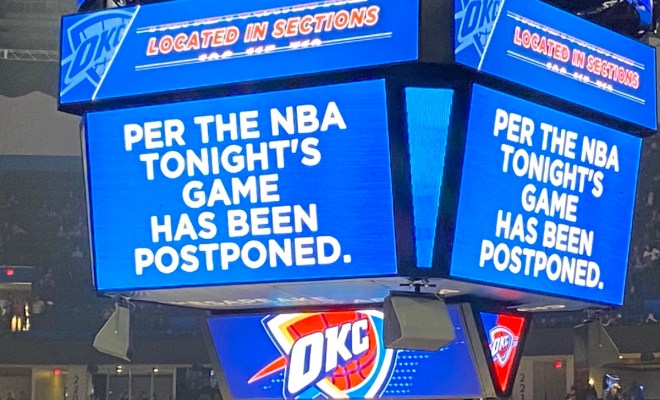
The scoreboard told the story on March 11, 202

We all remember March 11, 2020, as the day that life ended as we knew it.

It was the day that the Jazz-Thunder game at Chesapeake Energy Arena was postponed because a Utah player tested positive for COVID-19.

A single NBA game postponed in Oklahoma City was the first falling domino in a cascade of millions of others around the world.

OKC was the center of the COVID universe that night.

The Oklahoman wrote a terrific oral history of that night in OKC that you don’t want to miss.

My family will always have vivid memories of March 11. I was home, parked in front of the television waiting for the game to commence.

Meanwhile, my wife met her mother, like we often do – or did – at Chesapeake Arena and waited for tipoff from their seats in Section 206.

I’m not sure who suspected something was up first. As the television broadcast went on, I recall the Thunder announcers talking about a delay, but not knowing what was causing it.

In the arena, my wife and her mother noticed the delay too.  They were expecting tipoff at any second.

But it never happened.

“The moment that stands out to me,” Paula told me, “was the two Thunder employees running out and huddling at midcourt with the game officials. We didn’t know what it was about, but we knew that something was up.”

At home in my recliner, I speculated to Paula in a text that the game might be delayed because a player had tested positive for COVID. I was repeating a rumor I saw on Twitter.

She texted back what she saw from her seat, which was that players were being herded off the court. The Thunder tried to distract the crowd for a few minutes with what would have been the halftime entertainment.

But fans in the stands were left to speculate among themselves what was happening. Some grew restless, she said.

Finally, the Thunder announced that the game had been postponed on orders from the NBA. Fans were asked to leave in an orderly fashion.

Paula and her mom slowly left the arena, but not before she took an awesome photo of the scoreboard that announced the postponement. No one panicked, although there were a few boos after the announcement.

It wasn’t until she got home that it was confirmed what we all suspected. Rudy Gobert had tested positive for COVID-19.

We both wondered if she and all the other fans in attendance were in danger. Was Gobert even there (he wasn’t)? What did it mean to the rest of the NBA season?

I remember that the TV coverage continued for some time after the game was cancelled. But I recall very little of what was said, because the implications of what had just happened were all I could think about.

Turns out that the NBA did shut down after March 11, followed by college basketball, Major League Baseball and most of life as we knew it.

Paula’s photo has served as my Twitter and Facebook background for exactly one year. I’m retiring it today, replacing it with a happier photo shot at an OKC Dodgers baseball game two years ago.

It’s time to move on with our lives.

A COVID tale: Is there power in the blood?

The IMMY COVID test site at UCO back in November 2020

Let me tell you a COVID story that began four days after Christmas 2020. My wife woke up feeling extra tired and a little “off.” A day later she had a slight fever and lost all sense of taste and smell.

So, right before New Year’s, we decided to go have COVID tests for both of us at the OU Health Sciences Center. Paula’s test came back positive for COVID. Mine was negative.

Within a day or so, the only symptoms remaining for Paula were loss of taste and smell. I had no symptoms and felt great, even though we are together roughly 24 hours a day during the pandemic.

At the end of the next week, we went back for another COVID test. Paula was positive again. I was negative again.

So, we waited another week and went back for tests. This time both Paula and I were negative.

All of which leads me to the question of how did I remain COVID negative when I live with a COVID positive person? We eat together and sleep together.

My 87-year old mother had her own theory. She suggested that my blood type – O-negative – afforded me immunity to the COVID virus.

I laughed. She had nothing more than conjecture to base that on.

However, I Googled the topic and came up with a report from a 2020 study that showed people with O-negative blood DID show a certain immunity to COVID. Not immune, but less likely to get sick from it.

More confirmation was received this morning when my friend Debbie Cox sent me the link to an article that reported an even newer study.  It showed O-Negative people and those with type B blood were less likely to get sick from COVID than their Type A counterparts. 

Here’s a clip from the article:

“Published on March 3, 2021 in the scientific journal Blood Advances, the study indicates that the virus that causes COVID-19, SARS-CoV2, appears to have a blood type preference. In particular, COVID-19 seems to gravitate towards blood group A in respiratory cells. The study also shows that there’s no preference towards respiratory or red blood cells in type B and O blood groups. It’s worth pointing out that the study does not show that people with blood types B and O are immune to the virus, but it does suggest that blood type A individuals are more likely to get infected.”

Another study published last year by Blood Advances also showed people with blood type O were the least likely to get infected by COVID-19. 

Those studies are not exactly saying that my O-negative blood provides COVID immunity, but I’ll take what evidence is presented.

Plus, I received both shots of the Pfizer vaccine back in January.

So, you might say that I’m feeling bulletproof today.

Mom always knows.

Why I read the obituaries

Obituary page from March 3 edition of The Oklahoman

I have an admission to make. I take a lot of pleasure each morning in reading the daily obituaries in the newspaper.

Don’t get me wrong; I’m not taking pleasure in someone else’s death.

But obituaries routinely tell the most interesting life stories of the recently departed. You learn about where they grew up and were educated, their life’s work and their achievements along the way. Sometimes you learn about the places they traveled, their hobbies or even their favorite foods.

Of course, the obituaries list all of their survivors and close family members who preceded them in death.

I ran across an article in the Independent Herald in Huntsville, Tenn., that emphasizes the importance of obituaries to readers and the community:

“Aside from the front page, the single most-read page of the newspaper is the obituaries page. Readers care about obituaries because the people featured on the page were their friends and neighbors, former classmates, fellow church members, or people who played integral roles in the community.

Obituaries are vitally important because, quite simply, every obituary tells the story of someone’s life — who their parents were, who their children are . . . but, just as importantly, where they’ve been and what they’ve done. An obituary may be the only time that person’s name ever appears in the paper, and it is through that obituary that a lasting record of a person’s life is written.”

The downside to reading daily obituaries is discovering the obituary of a friend or past coworker who died unexpectedly. That’s happened to me several times in the past few years, but I’m grateful I had the obituaries to alert me.

Maybe it’s my (advanced) age that draws me to the obituaries, but I appreciate the stories of the lives of those about whom I am reading more now than in past years.

Lately, with the pandemic swirling around us, the number of obituaries published each day seems to be growing. But daily reading of all those obituaries is far from a morbid curiosity.

It’s a celebration of lives well lived.

Unwelcome Ch-ch-changes

The Thunder tipoff in an early November 2015 game at Chesapeake Arena.

The 2020-21 Oklahoma City roster proves a point that I’ve heard many times over the years.

We’re only cheering for laundry.

Like many Oklahomans, I’ve been a Thunder fan since the team relocated here in 2008. I’ve been to many games over the years.

Along the way, I adopted many Thunder players as my own. Russell Westbrook. Nick Collison. Serge Ibaka. Steven Adams. Andre Roberson. Jerami Grant. Enes Kanter. James Harden. Even Kevin Durant. Especially KD.

The list goes on.

For several years, we had a core of players that we knew and could count on leading the Thunder lineup every season. We got to the NBA Finals with that lineup one year and should have made it to another if Patrick Beverly had not assaulted Westbrook.

But that’s another story. My point is that I became comfortable with our players and our team, although the roster was slowly turning over as we lost Harden, Ibaka, Kanter, et al over time.

Then KD left abruptly. But Russell stayed, and while we added and subtracted new players, our core stayed relatively stable.

Then 2019-2020 happened and the Thunder as I’ve known them disappeared. Westbrook long gone. Grant gone. Adams gone. Dennis Schroder gone. Chris Paul came and went from OKC a second time.

By the time the 2020-21 season started, we had four — four! — players from our previous roster, none of them long-time beloved stars.

So, I’m still watching the Thunder nightly, but with much less passion. I know Sam Presti’s plan is to lose now to chase potential later. But I don’t have to like it.

A friend I’ll call “Steve” accused me of being a fan of mediocrity.

“Winning by losing,” he said. “What a great concept.”

But we weren’t mediocre. The Thunder that I knew were great and went where small market teams almost never go, to the NBA Finals. And with players we knew and loved.

Now, we’ve turned the roster over and acquired dozens of first round draft choices, because the grass is always greener in the future.

I’m not sure if mass roster changes will ever end as Presti chases the elusive future player who will bring us championship glory.

It’s a bittersweet relationship, but now I know. We’re only cheering for laundry.

Not all old white men are Republicans

Stonegate Cumberland Presbyterian Church serves as a voting precinct in far north OKC.

At precisely 7:20 this morning I handed my driver’s license over to the woman behind the table at the Cumberland Presbyterian Church along N. Western Ave.

This was my voting precinct and I was there to vote in the State Senate primary.

The poll worker opened her book and began searching for my name. She couldn’t find a match.

Finally, she asked my party registration.

“Democrat.”

“Oh,” she said, and then switched books and promptly found my name.

“I guess I have a face that says ‘Republican,’ ” I said as she handed the license back to me and had me sign my name.

After voting for my candidate — I’ll call her “Molly” — I grabbed the “I voted” sticker and walked out to my car.

But the encounter got me thinking about how we all stereotype the people we meet along the way.

And how wrong a judgment call made merely on appearance can be.

Culture shock and a hip-hop happening of a Tweet

The former Homeland Store at NW 122nd and May Ave. has been vacant for many years

On a whim one day this week, I stepped out of my car and shot a photo of the long-vacant Homeland store at NW 122nd and May Ave.

I was waiting for my daughter to come out of a haircare store in the strip center when the abandoned grocery store caught my attention.

I shopped there many times in the late 1980s, along with what appeared to be most of my fellow NW OKC citizens. It was a busy, busy place.

It’s sort of bewildering to see the anchor store of this whole intersection sit empty year after year. Is there no one with an idea or the resources to bring it back to life?

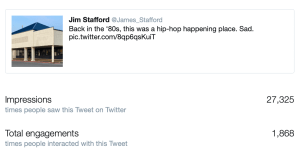
Anyway, I quickly tweeted out the photo with a short message, describing it as a “hip-hop happening place” in the ’80s, because that’s how I thought of it.

Little did I know that the words “hip-hop” would trigger an avalanche of interest in the post. Within 24 hours, the post had 15,000 views.
Two days later, views top 20,000 and almost 1,500 Twitter users had actually clicked on the photo for a closer look.

At first, I thought, ‘wow, there’s a lot of interest in this old, abandoned grocery store.’

Then it hit me. There are a lot of hip-hop fans out there who follow everything related — music, lifestyle, people. I’m sure many of them have set their accounts to send an alert anytime the words ‘hip-hop’ are mentioned in a tweet.

By Saturday morning, the Tweet had more than 27,000 views. And growing.

It’s been my first brush with a viral tweet, all because I wasn’t hip-hop enough to know what I was saying.

Apologies to disappointed hip-hop fans.

The second dose

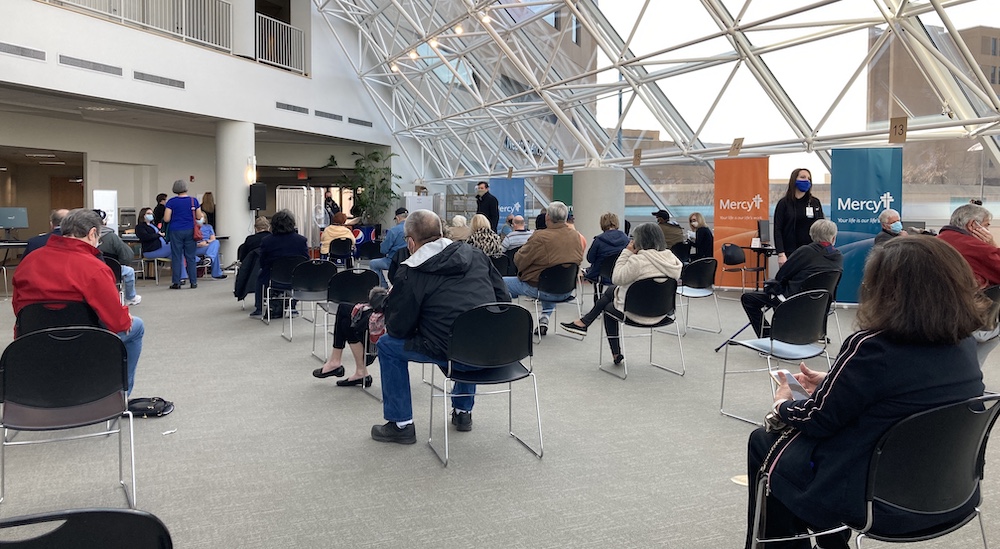
The scene at Mercy Hospital as I waited 15 minutes with others who had received the second dose before leaving the site.

I’ve been hearing horror stories about the impact of the COVID vaccine on recipients.

“Everyone who got the vaccine in Western Oklahoma has had terrible side-effects,” was the word that came to me.

Allegedly, many people were hit with vertigo, among other dreadful-but-vague side effects.

My own mother, who lives in Fort Smith, Ark., also warned me of the side effects. She is 87 years old and refuses to consider receiving the COVID vaccine.

Naturally, all this side effect “news” came to me as I was preparing to receive the second dose of the Pfizer vaccine this past Wednesday, Jan. 27.

Anyway, I showed up at Mercy Hospital at the appointed time on Wednesday and within a few minutes was sharing a table with a nurse who was holding a hypodermic needle.

She told me to expect some limited reaction to the second dose before she plunged the needle with the vaccine into my arm. My body already had antibodies stirred up by the first dose, apparently.

Fast forward to Thursday. I woke up and felt as if I had been run over by a truck. Actually, it felt like the flu. Muscles and joints ached. I had zero energy. Low grade fever.

I postponed a meeting scheduled for the afternoon. I wondered if the warnings of my family naysayers were correct?

I went to bed about 8:30 that night.

However, when I awoke on Friday, all those symptoms were gone. I felt refreshed and ready to tackle my day. By afternoon, muscle aches returned, but nothing that dragged me down.

Now it is Saturday, and I’m feeling even more on top of my game.

Yes, the second dose packs a punch. But don’t panic if you awake on the day after feeling miserable.

I predict it will pass quickly, and you can resume your life confident that your odds of suffering any lasting impacts from the COVID virus are greatly reduced.

I know I am. Thank you, God (and science).

Where were you when you heard the news?

Editor’s note: I’m not sure about you, but I look back on my life and know exactly where I was on certain milestone events.  Some are world events and some are personal. Recently, we’ve had several milestone events that we will look back on and know exactly where we were when we heard the news.

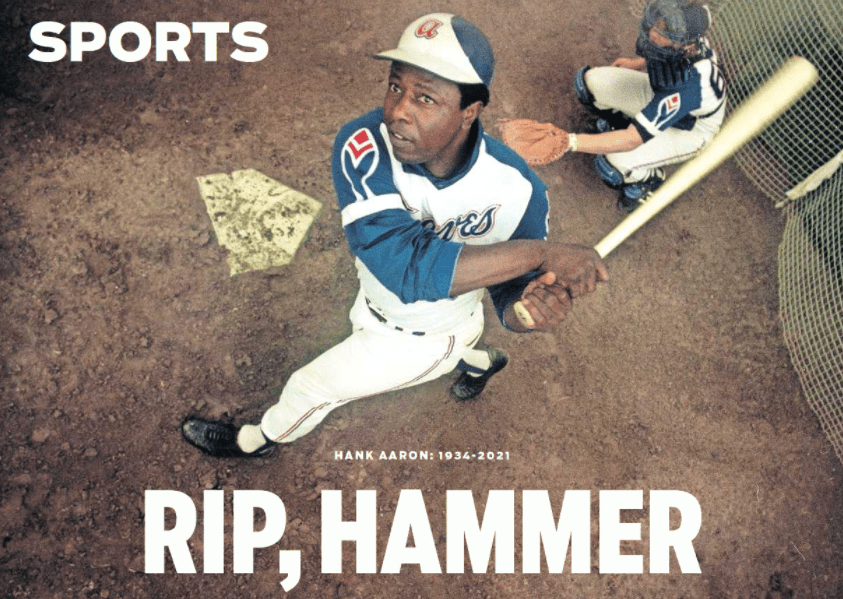
I was sitting in my recliner, holding my 19-month old grandson Friday morning when I saw the news on CNN. Henry Aaron was dead at 86. Another huge piece of my youth gone.

Immediately, I thought back to April 8, 1974. On that evening, I was sitting in the living room of a friend in Mena, Ark., watching Aaron and the Atlanta Braves play the Dodgers. Hammerin’ Hank hit career home run No. 715 that broke Babe Ruth’s record early in the game. It was a milestone that had long been anticipated and marked by a lot of racist ugliness because Aaron was black.  I felt relief that it was finally over.

Aaron’s record HR and his passing were both personal and national milestones that got me to thinking of other big national — and personal — events of my lifetime: where was I when I heard the news?

So, I sat down and compiled a list of what comes to mind.

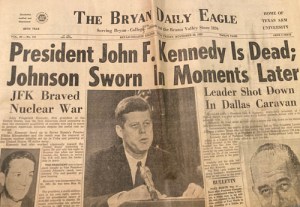
Nov. 22, 1963 — JFK assassination. This was an incredibly traumatic event both for the nation and a 10-year-old me. I was sitting in a 5th grade classroom at Crockett Elementary in Bryan, Texas, when we all heard the news. My teacher, Ms. Skrivanek, cried. I thought of nothing but that event for weeks.
April 4, 1968 — Martin Luther King assassination. I was a ninth grader living on the island of Okinawa with my military family. I don’t remember exactly where I was when I heard the news. I do know it was traumatic for both the nation and for the thousands of Americans living far from home.

June 6, 1968 — Robert Kennedy assassination. I remember this moment because my family and I were about to board an airplane that would take us to Taiwan for a week of vacation. I kind of felt like the world was coming apart because the MLK assassination happened only weeks before.

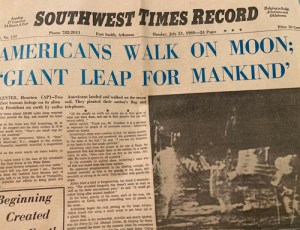
July 20, 1969 — The moon landing. This was huge. We got to stay home from Sunday night church to watch the first man step on the moon. My dad was in Vietnam, and I watched it with my mom and my sister in our living room in Fort Smith, Ark. I’m pretty sure we still had a black and white television.
Dec. 6, 1969 — Richard Nixon visits Fort Smith. This is purely personal, and I’ve written about it before. But I was at the airport to greet Nixon as he passed through town on his way to Fayetteville for the Arkansas-Texas football game. I got to shake his hand.

August 16, 1977 — Elvis has left the building. Time marches on and I was in college in Abilene, Texas, working at a small clothing shop. A neighboring merchant came into the store and told us that Elvis was dead. If you aren’t old enough to remember, Elvis was a pretty big deal.

December 8, 1980 — John Lennon murdered in NYC. This one hit me almost as hard as JFK’s death. I was in the living room of a friend in Roland, OK. We were switching back and forth from Monday Night Football to some other show, but Howard Cosell broke the news and we heard it. Devastating. Until that moment, I was still dreaming of a Beatles reunion. No more.

April 19, 1995 — The OKC Bombing. I was a reporter for The Oklahoman sitting in a meeting of the Oklahoma Wheat Commission on NE 63rd Street when the building was rocked by the compression from the bomb about 5 miles south of us. Someone speculated a gas explosion. Someone else an airplane crash. Then someone came into the room and said a bomb had exploded at the federal building. It seems that everyone in OKC knew someone who lost their life or was directly impacted from the bombing. We are still living with the fallout of it.

September 11, 2001 — The Twin Towers. I was about to take my 5-year old son to his pre-K class at Washington Irving Elementary when the Today Show reported that an airplane had hit one of the towers. I thought it must have been a Cessna or something. Little did we know how devastating and traumatic it would turn out to be.

July 4, 2016 — Kevin Durant signs with Golden State Warriors. If you aren’t a Thunder fan, this is no big deal. But I am and it hit me hard. We were at my mother in-law’s house near Hammon, and I was refreshing my computer over and over on KD’s Players’ Tribune page. Finally, there it was, in black and white. Our favorite player was ditching OKC after 8 years. We were devastated.

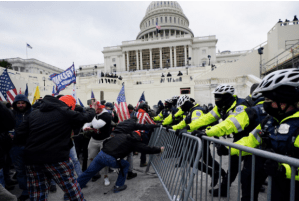
Jan. 6, 2021 — A day that will live in infamy. Like most of America, I was watching the debate over the Electoral College certification when the mob broke into the Capitol. Insurrectionists, white supremacists, traitors, all the same to me. They are egged on by a would-be dictator not grounded in reality. 

Jan. 20, 2021 — Free at last! Started the day at 6:30 am from my living room watching Trump slink out of town. Then watched and celebrated Biden’s inauguration. A day of promise.