A booster shot for the greater good

Booster shot
Waiting to receive COVID-19 ‘booster shot’ this week at Mercy OKC.

When I was a kid, it seemed my mom took me to the doctor every six months or so to get a “booster shot” of some vaccine or another. We never questioned the validity or effectiveness of the vaccines in the early 1960s that I can remember.

Earlier this week, I received the COVID-19 “booster shot” at Mercy Hospital in keeping with recommendations from the Centers for Disease Control that people my age (65-plus) get a third dose when six months have elapsed from their original shots.

I was fully vaccinated with both doses of the Pfizer vaccine back in January.

My friend Steve asked me recently if I hesitated or had any second thoughts before taking the vaccine. I told him “absolutely not,’ and here’s why:

Although I have no scientific training in my background, I’ve had the opportunity over the past 20 years as a newspaper reporter and writer to visit with dozens of scientific researchers and their labs at the University of Oklahoma Health Sciences Center and the Oklahoma Medical Research Foundation.

I’ve learned about the incredible documentation that scientific findings are required to have and how experiments must be repeatable with the same results to be declared valid. Therapeutics designed for humans go through multiple stages of trials for safety and efficacy.

In short, I’ve learned to trust the science.  It is developed in highly controlled processes by people with high intelligence and credibility. These folks have undergone the most rigorous education and training before they tackle their own scientific exploration.
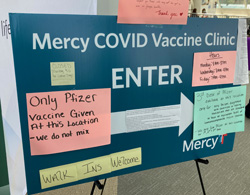
Mercy sign
‘Walk Ins Welcome’

So, I had no second thoughts about walking in to the Mercy vaccination clinic this week and getting the booster. In fact, their sign now reads “walk-ins welcome,” as opposed to January when it was a madhouse of thousands of people turning up to get vaccinated.

I know, I was there.

This time, I was in and out in about 20 minutes, including the 15-minute wait period after I received the dose. I woke up on the day after the booster with a sore arm, but that’s been about the only real impact.

Why did I get the booster so readily? For one, I hope to protect myself from infection of a virus that keeps mutating and making the rounds. But I did it also to be a good citizen who’s helping to put an end to this plague.

I call it doing something for the greater good.

But the decision to get the vaccine or the booster shot isn’t so easy for significant minority of my fellow Oklahomans. They read conspiracy theories about the vaccine or that it was “rushed” or that we don’t know what’s in it.

Can anyone tell me everything that’s in the flu vaccine?

You can read my thoughts on the reasons behind the COVID-19 vaccine resistance in an earlier blog post from a couple of months ago. I stand behind what I wrote.

Times have changed since my mom took me to get my booster shots as a kid in the ’60s. Trust the science.
Baseball cards re-imagined for modern day collectors

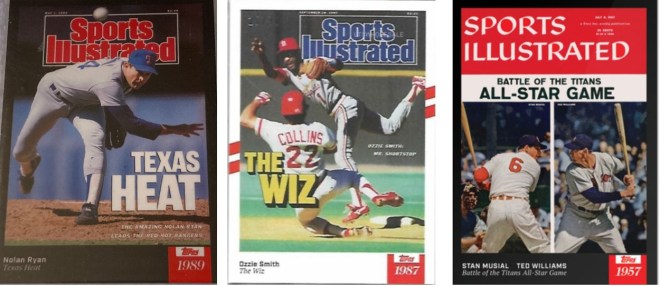
Sports Illustrated covers as Topps baseball cards

I left a shoebox full of baseball cards at my mom’s house when I went off to college in the early-1970s.

It was the last time I ever saw them.

My collection was nothing more than a mix-and-match assortment of Topps baseball cards I began buying with allowance money in the early to mid-1960s, along with cards I cut off the back of Post cereal boxes.

As a kid, I gave no thought to their future value — financial or sentimental.

Instead, I played with them all the time. I built my own all-star teams out of the cards and played a made-up game with them. I pinned them to the spokes of my bike with a clothes pin, giving it that awesome motorcycle sound for about 30 seconds until the cardboard wore out. I traded them with friends.

Anyway, for more than a decade I never gave them another thought.

Then I rediscovered card collecting in the mid-1980s and searched my mom’s house high and low for that shoebox of cards. I came up empty.

My folks had moved two or three times since I left them with her, so I assume she threw them out at some point.

But baseball cards lured me back in a small way in the ’80s. I went to baseball card shows and began buying unopened boxes of Upper Deck cards. I put them in a closet and hoped they would grow in value over the decades.

They haven’t.

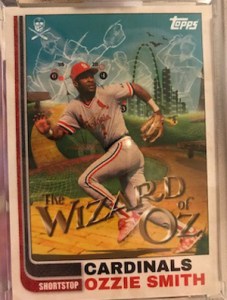
Then a couple months ago, my friend Ed Godfrey rekindled my interest once again in baseball cards. He showed me some recent Topps cards he bought that were replicas of old Sports Illustrated covers. They are impressive.

“I’ve started buying some cards again online,” Ed said. “Stuff I like.”

What he likes are the SI replicas and another Topps series called Project 70 that takes historic Topps cards of the past and adds artistic flair.

Ozzie Smith Project 70 card from Topps

“They describe Project 70s as a re-imagination of cards,” he told me. “They’ll take a ’57 card of Mickey Mantle and have an artist add their own style to it. Some of their cards are looking like pieces of art and not baseball cards.”

So, Ed bought some of the Project 70 cards, as well as Sport Illustrated cover cards of his favorite St. Louis Cardinals players.

“It’s a way to get old guys like me to buy cards again,” he said. “I’ve got a cover with Stan Musial and Ted Williams, and a cover with just Musial. A Mark McGuire 60 home run cover. I got an Ozzie Smith cover, ‘The Wiz,’ that’s cool. I bought several of them.”

He’s displaying some of these cards on his fireplace mantel.

“I need a bigger house with a man cave just so I can display them,” he said with a laugh.

About a month ago, a small package arrived in the mail for me. I opened it to discover it was a Topps Sports Illustrated card of my favorite baseball player, Nolan Ryan.

Ed bought it for me. It’s on my fireplace mantel. And I’ve spent the past few days cruising the Topps website just to see what else is out there.

I’ve also discovered that baseball card collecting has made quite a comeback during the pandemic. So much so, that fights have broken out in some stores as collectors compete with one another to add the latest cards to their collections. Target suspended baseball card sales because of the melees. 

(An aside: Sad news. Topps is going to be displaced in a couple years as official baseball card producer by an outfit called Fanatics, which signed an exclusive deal with Major League Baseball and the Players Association.)

Not sure that I’m going to dive headfirst into card collecting, although I love the SI cover series. I’m content with the stash I have in my closet from the ’80s.

But I’m still mourning the loss of my baseball cards from the ’60s (thanks, Mom).

Then there are the lucky ones like my friend Ed.

“I have all my old cards I bought as a kid,” he said. “My mom kept them. Most of them are from the early ’70s.

“I’ll never sell my cards. My daughters will probably sell them when I die.”

She answered Red Cross call to serve in wake of 9/11

Redcross2
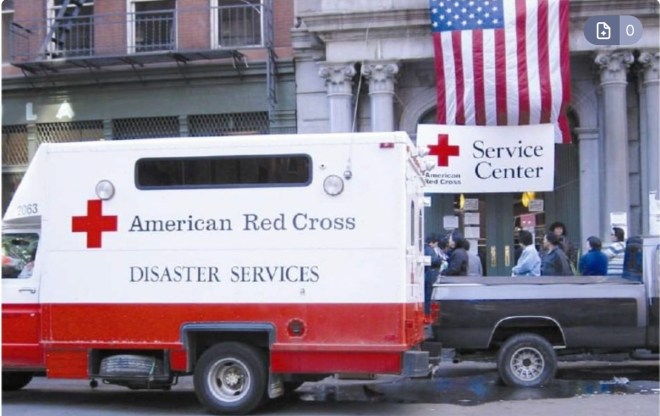
Red Cross van at the Red Cross Service Center in New York City after the attack on September 11, 2001.

The events of September 11, 2001, were seared into the collective minds of all Americans. Everyone who was alive when the twin towers fell can remember exactly where they were when they either heard the news or saw the events unfold in real time on their television.

I heard someone today describe it as “our generation’s Pearl Harbor.”

In the week after 9/11 exactly 20 years ago, I could think of little else. How? Why? Who? There were no flights for days. Travel was at a virtual standstill.

Then my mother called me during the week after 9/11 and told me she was flying to New York City on September 18 as a Red Cross volunteer.

I almost dropped the phone.

Mema1
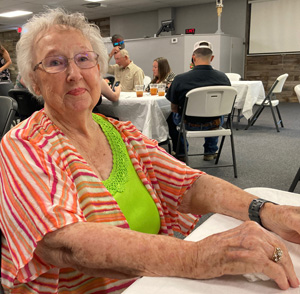
Ella Jean Stafford

Mom — we call her ‘Mema’ — had served as a Red Cross volunteer for years. She and my dad were trained as Red Cross responders. Both retired, they would take a Red Cross van to disaster spots after big weather events, like the Carolinas or the Gulf Coast and be gone from their home in Fort Smith, Ark., sometimes for weeks.

So, the Red Cross called and asked if she would fly to New York and become a trainer for hundreds or thousands of new volunteers who would serve the hurting population of the city.

She said yes, of course. Her family was nervous, but proud that she was willing to go.

This is her story:

“I left Fort Smith on an American commuter flight to Dallas, changed to non-stop jet to LaGuardia. It was not the first flight into NYC. The Red Cross office was already up and running in Brooklyn from Day One. I was asked by our state Red Cross office to volunteer to teach the classes required for every volunteer arriving before they were assigned to their work areas.

“I arrived in NYC to an empty airport, with phones not in service and no one to welcome us. Passengers on my flight were very scarce; the plane probably was about one-third capacity. I arrived exactly one week after the disaster, stayed in an elite hotel on Broadway, left for work by bus at 6:30 am, got back to hotel around 9 pm, had one day off in three weeks. We were treated with respect and courtesy by locals both traveling and eating.

“I never saw Ground Zero — it was blocked off to all traffic from six blocks away. I saw plenty of smoke and ashes from my travels from Manhattan, where I was lodged, to Brooklyn to work. Lots of workers suffered breathing problems from being out in the air full of ashes and dust. My most memorable moment was when a New York native on the subway said ‘if this had not happened, we wouldn’t have given you the time of day. But now with so many volunteers here, we welcome you, everyone.’

“Every time I had a class, I was very emotional because the casualty list kept growing and the distress shown by the New York natives was very strong. I hope I never again witness such destruction in America. It’s my daily prayer — God bless our country!”

This was her perspective looking back after 20 years. She told me that because it happened in the age before everyone carried smart phones with cameras, she did not have a single photograph made during the three weeks she was in New York.

I’m proud of you, Ella Jean Stafford, and thankful for your service in our nation’s time of need. I salute you.

OKC’s TokenEx still on growth spurt as Inc. 5000 list shows

inc list

If you’ve read horror stories about all the sensitive customer information stolen by hackers and online thieves in recent years, then you should know about Oklahoma City’s TokenEx.

No, wait. TokenEx has nothing to do with online data theft except this. It created a patented concept called “tokenization” that protects sensitive information for its customers. There’s no “password” to unlock; just random numbers that have no relation to the information the thieves are seeking.

Anyway, I’ve kept up with co-founder Alex Pezold and TokenEx for almost a decade now through my work at i2E, Inc. It has become a fast-growing company, and, in fact, one of the fast growing in the U.S., according to Inc. Magazine.

In the latest Inc. 5000 list of the nation’s fastest growing private companies, TokenEx came in at No. 2,316 with 184 percent growth. That’s after previous years of substantial growth, which means that adding to the earlier numbers is quite an achievement.

And TokenEx is in the top half of the Inc. list. Congratulations to Alex and everyone at TokenEx.

If you want to know more about this company, here’s a link to a story I wrote earlier this year for the Greater Oklahoma City Chamber’s velocityokc.com website.

I invite you to check it out.