When the Paul-is-Dead rumors began floating around in the late 1960s, I was devastated. There was evidence everywhere that Paul McCartney had died in a car crash and The Beatles went on with a look-alike substitute.
I was 16 in 1969 and read — and clipped — every article I could find that shared evidence of Paul’s demise. 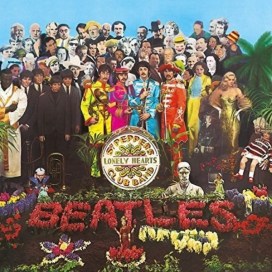 For instance, there was the hand over Paul’s head on the Sgt. Pepper’s Lonely Hearts Club album that symbolized death. And the whole cover resembled a funeral gathering.
There was more. Paul was dressed as a walrus on the Magical Mystery Tour poster, said to symbolize death, and a line from the song Glass Onion says “here’s another clue for you all, the walrus was Paul.”
But the clue that sealed it for me was the rumor that if you played Revolution 9 backward you could hear the words “turn me on dead man” and the sounds of a car crash.
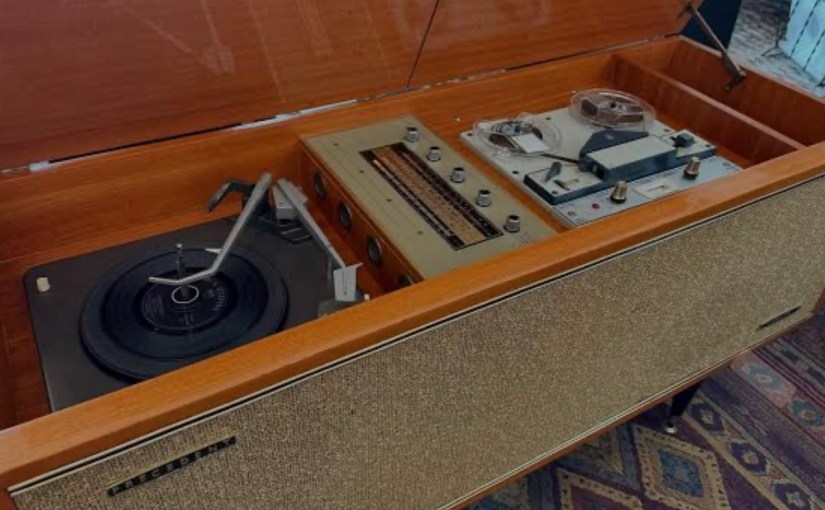
My family owned a giant stereo console that had both a turntable and a reel-to-reel tape player. So, I played Revolution 9 from the White Album on the turntable and recorded it on the reel-to-reel.
When I turned the tape backward and played it I heard those terrifying words. “Turn me on dead man.” And the sounds of what could be a car crash.
That clinched it for me, at least for the next couple of years until it became evident to me that Paul McCartney was indeed, Paul McCartney.
I’ve written all of this not to show how gullible I was as a teenager; rather to talk about technology and what we had then and what we have today.
In the late 1960s, our family had the latest and greatest in the giant console with the turntable and the reel-to-reel.
That’s how we rolled in 1969.
Vinyl records, both 33 rpm long play albums and 45 rpm discs that played a single song each on front and back, were as common then as, well, iPhones today.
Everyone I knew had a record player or two in their homes. My sister and I had a little portable record player that we would take out into the carport and play our favorite singles on.
 When I was a sophomore in high school, I took all the money I had saved up and bought a portable stereo turntable at Kmart that served me well for years.
But advances in technology made turntables obsolete in the early 1970s as 8-track tape players became everyone’s obsession. I installed a cheap Kraco 8-track in my car, which seemed to ruin as many tapes as it successfully played.
Then came cassette tape players that were much smaller — and dependable — than 8 tracks. But analog taped recordings didn’t have much of a future, because they gave way to CDs — compact discs — in the 1980s.
I remember the frustration of my dad in the ’80s when he had to buy a CD player because it had become the technology on which most music was recorded and played.
“They keep changing the formats just so we will have to spend money to buy something new,” he told me.
But time advanced as did technology.
MP3 players began to emerge in the late 1990s replacing CDs and making music much more portable. And in 2001, Apple Inc. debuted the groundbreaking iPod, which CEO Steve Jobs famously said allowed you to carry “1,000 songs in your pocket.”
So, here we are in 2025.
Today we have massive music services like the iTunes Store and Spotify that allow us to hear virtually any song ever recorded at any time.
And technology advances continue to make yesterday’s formats obsolete. The old console turntable and reel-to-reel tape player my parents owned was probably sent to a landfill decades ago.
But some things remain. The memories of chasing down Paul-is-Dead clues on that big old console. Hearing my dad — who passed on in 2012 — complain about changing technology.
And Paul McCartney — the real Paul McCartney — endures. As of July 7, 2025, he’s as alive as he was in 1969. I continue to listen to his music, but now in a digital format that reaches my ears through a pair of AirPods Pro 2.
That’s how we roll in 2025.
BONUS CONTENT
So, what’s next in how music is recorded and enjoyed? I’ve read a lot about how future music will be made by artificial intelligence, but what I’ve heard of it so far lacks the creativity of human song writers and performers. I’ll take humans any day.
I asked ChatGPT what it sees for the future of music, and this is how it answered:
1. AI and Generative Music
- AI tools can now compose, produce, and even perform.
- Personalized or adaptive soundtracks for games, workouts, moods.
2. Immersive & Spatial Audio
- Formats like Dolby Atmos Music and 360 Reality Audio offer 3D sound experiences.
- Becoming popular in streaming and VR/AR contexts.
3. Blockchain & NFTs
- Exploring decentralized ownership, royalty tracking, and digital collectibles.
4. Holographic & Virtual Performances
- Digital twins of artists (dead or alive) performing live.
- Integration into virtual worlds and the metaverse.
5. Brain-Computer Interfaces (BCI)
- Experimental: Listening to or composing music via brainwaves.
- Potential for direct neural engagement with music.
 Jim Stafford's BlogOKC