Homeless — and unwanted — in America

Screenshot
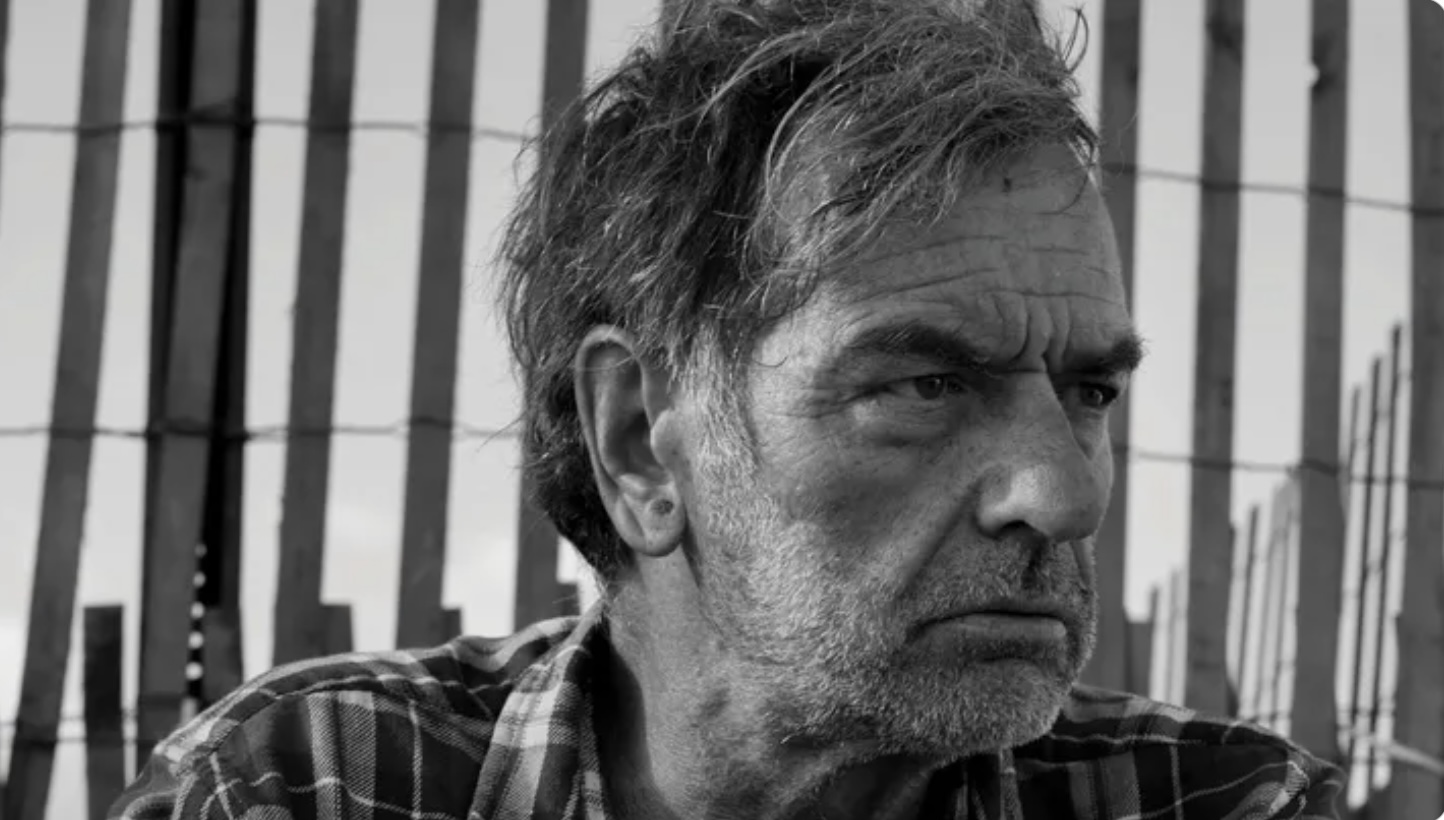
A portrait of Patrick Fealey, who wrote about his plight as a homeless person for Esquire magazine.

I’ve never been much of a social crusader like my friend and former high school classmate “Will,” about whom I wrote in a blog post last year.

Will was passing through town and asked if I would meet him for lunch, which I did. It was a great reunion after more than a half century of not seeing one another or even communicating.

Anyway, Will devoted much of his life to important work of helping lift the oppressed and bringing to justice the folks who actively sought to keep the “others” down.

Will, if you are reading this, I’m so awed and grateful for your efforts over the years.

Folks like Will make me realize that I’m more of an social activist wannabe who never really got up off the couch to help anyone, even those with whom I have great empathy.

That leads me to this disturbing Esquire magazine article my wife sent me last week. Entitled “The Invisible Man,” the article is a long, first-person account of a college educated, successful writer forced into living as a homeless person in his home state of Rhode Island.

Patrick Fealey found himself in this plight because of a mental illness that didn’t become apparent until he was a successful adult. Then his bipolar condition resulted in him being unable to hold a job, and the downward spiral began.

Read Fealey’s excellent account on the Esquire website.

For me, the most disturbing aspect of Fealey’s life is that no one really cared. He lived with his dog in an old car, but where ever he landed, he was constantly questioned by police, shunned by local citizens. The folks who operated shelters or housing programs offered little help, hope or sympathy.

Fealey was told to ‘move on’ a lot, even though one of the communities in which he stayed with the town in which he was raised. He was told by one policeman that if he didn’t move on he would be jailed or fined. People saw him as threatening or merely another drug addict.

(As an aside, some folks read about Fealey plight and started a Go Fund Me page that has received more than $169,000-and-counting to help him get into housing and deal with health issues.)

All of this sounds familiar, especially after reading recent newspaper articles about how the city of Shawnee has implemented ordinances that prevent the unhoused from sleeping or camping in public spaces or most any place outdoors within the city limits.

So, while the Shawnee citizens just want the homeless out of sight and out of mind — like most of us — what they are doing is turning homelessness into a crime.

That’s why I’m proud of the city of OKC for investing $55 million through MAPS4 to take on homelessness with its “housing first’ program that partners with innovative not-for-profits. And MAPs also is funding a new mental health crisis center, a restoration center and a transitional housing program that will make a difference.

It’s a start.

There are also several not-for-profits in our community like the SideXSide OKC program and Curbside Chronicle that are working to lift people up. Those are terrific initiatives that are making a difference.

As for myself, I have done nothing to brag about except for occasionally buying a Curbside Chronicle.

I’m not sure what my point in writing all of this is, but after reading Patrick Fealey’s story I think the point is that we have to do better.

Me. You. All of us. Do better.
Walking tour showcases future impact of OKC’s Convergence project

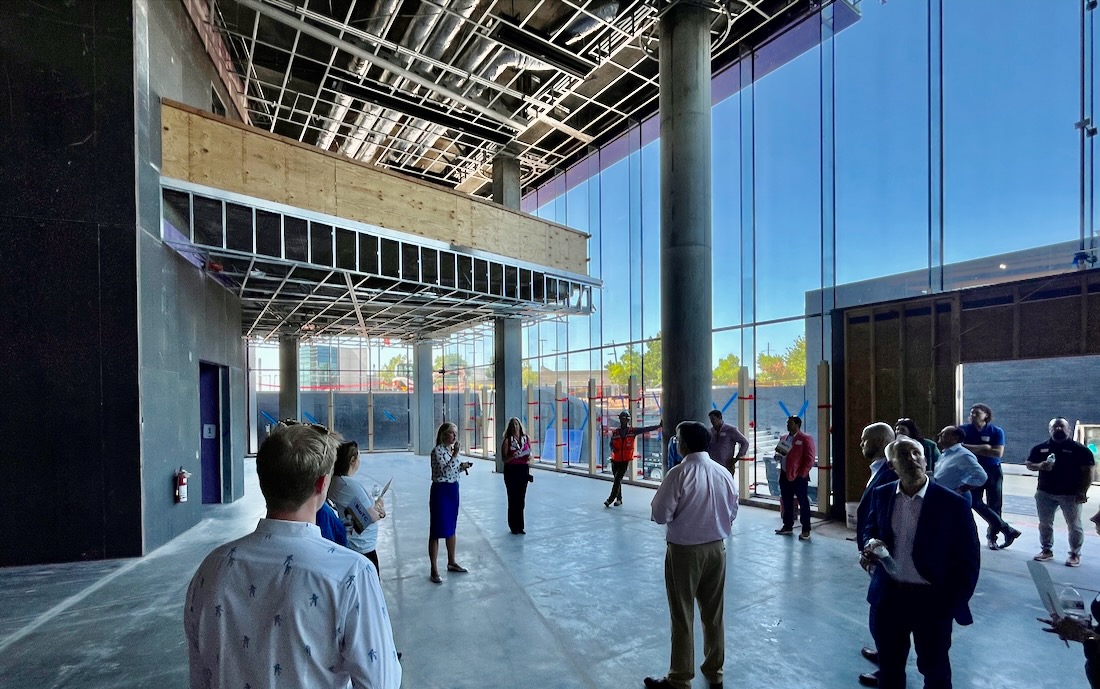
Convergence floor
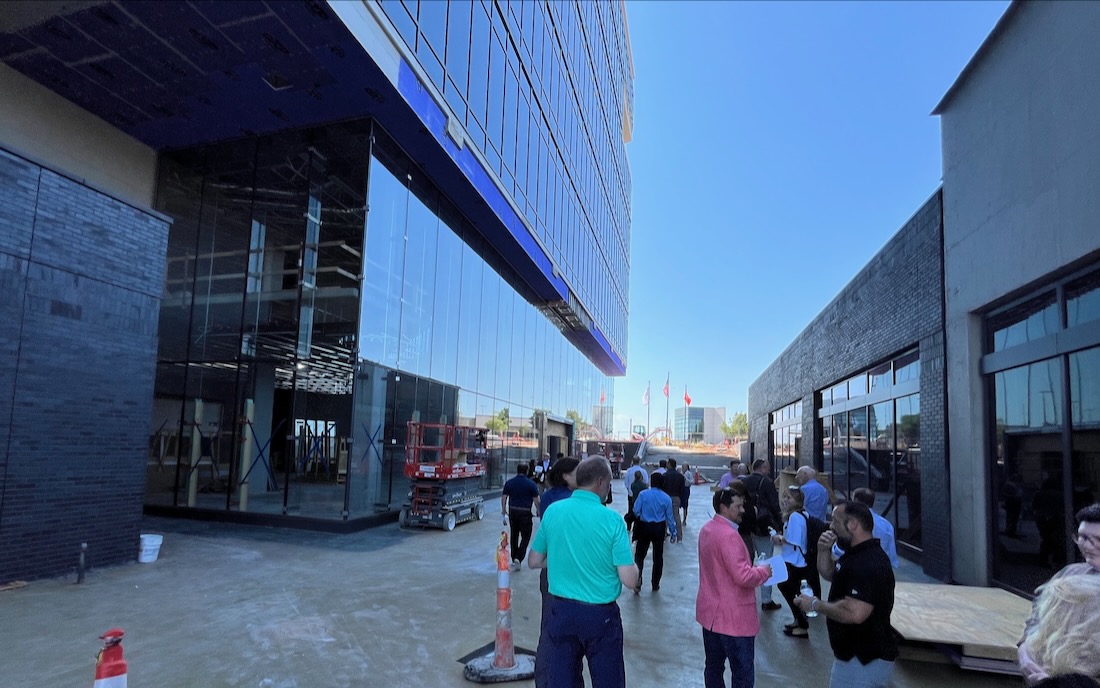
Second floor of the Convergence tower under development in OKC’s Innovation District.

If you’re like me, you’ve been curious about the new Convergence tower rising from the ground the past couple of years along I-235 just east of downtown.

The eight-floor Convergence tower is a $200 million privately funded development in the heart of OKC’s Innovation District. The project includes the adjacent, MAPS funded Innovation Hall with a future hotel also planned for the site.

A pair of prominent OKC real estate investors/developers in Richard Tanenbaum, CEO of Tanenbaum Holdings, and Mark Beffort, CEO of Robinson Park Investments, have led the Convergence project.

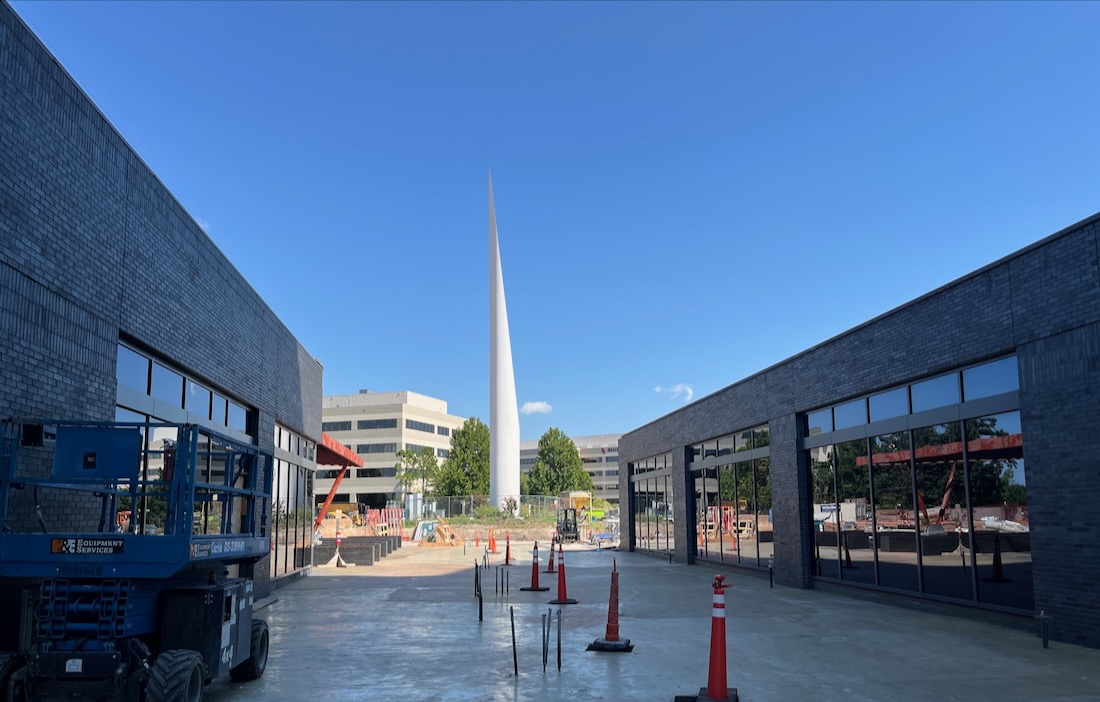
Convergence sits on a pretty small plot of land — 5.5 acres — that surrounds the tiny Stiles Park and its Beacon of Hope, which shines a green light into the night sky like a giant flashlight. The project will have underground parking.

Stiles park
Stiles Park holds its ground as part of the Convergence project

The Convergence website descibes the project as an “ecosystem reshaping Oklahoma City’s economy through innovation, collaboration, diversity and advanced technology.”

The project is certainly reshaping OKC’s Innovation District.

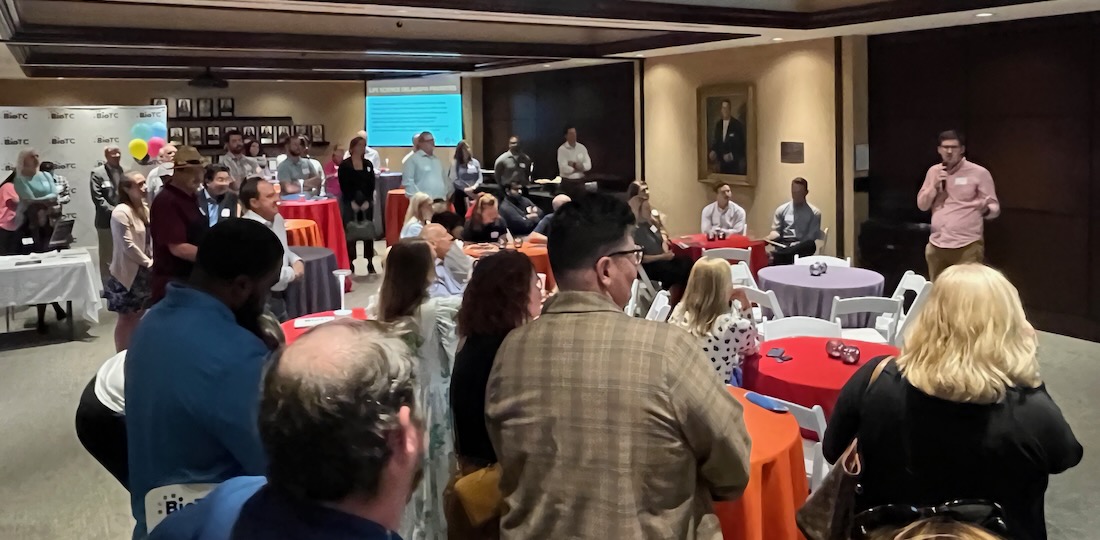
Anyway, I wrangled a ticket to attend the Greater OKC Chamber’s recent networking event and walking tour of the still-under-construction Convergence development.

My professional background includes many years of covering Oklahoma’s emerging biotech industry, first as a reporter for The Oklahoman newspaper and later as a writer and then freelancer for i2E, Inc., the not-for-profit that mentors and invests in many of the state’s entrepreneurial startups.

So, that led me to gather with about 75 folks at the Oklahoma  Our Blood Institute, which sits at the intersection of NE Eighth Street and Lincoln Blvd. It’s maybe a 50-yard walk from OBI to the new development.

Here’s what I learned that afternoon during the networking event and walking tour:

First, the Oklahoma Bioscience Association has been rebranded as Life Science Oklahoma, which made its debut at the annual BIO show in San Diego this past June. My friend, Dr. Craig Shimasaki, co-founder and CEO of OKC’s Moleculera Biosciences,  is co-chair of Life Sciences Oklahoma, along with Andrew Westmuckett, director of technology ventures at the Oklahoma Medical Research Foundation. 

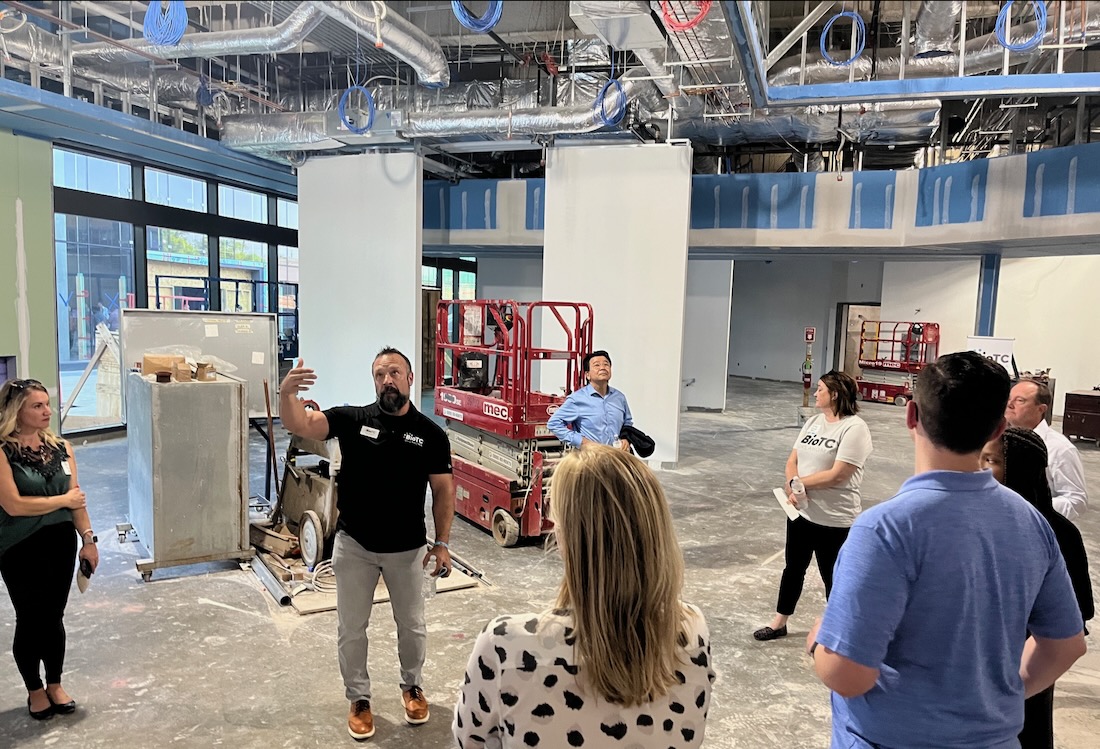
Education will play a major role at the Innovation Hall, which features a Bio Pharmaceutical Workforce Training Center called BioTC.  We received a good explanation of how the space will accommodate aspiring biotech workers from Koey Keylon, BioTC’s, executive director. It will offer one-week, hands-on short courses in biotechnology manufacturing in which students will learn the biotech process and how to use sophisticated technology involved. It also offers an advanced two-week certification curriculum.

BioTC
Koey Keylon, executive director of BioTC, shows off the educational space in the Innovation Hall

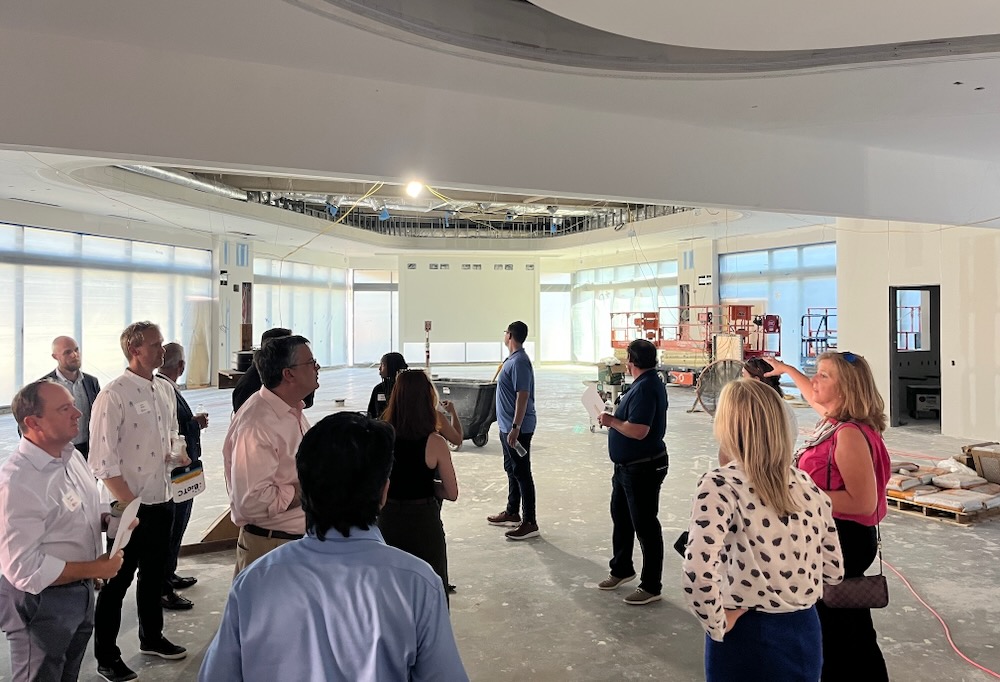
Innovation Hall also includes a large Event Hall, a cafe and lounge open to the public, four conference rooms and two small “phone booth” size work/meeting spaces.

Innovation Hall is part of MAPS 4 Innovation District funding, which contributed $11 million to the development, with another $10 million or so from non-MAPS sources, according to the City of OKC.

After we toured the Innovation Hall, we entered the first floor of the Convergence tower. Much of the first floor will be occupied by Wheeler Bio,  an up-and-coming contract development and manufacturing organization in the life sciences space. Wheeler Bio also will have administrative offices on upper floors of the building.

CrossFirst Bank has been announced as a tenant, while the University of OklahomaTinker Air Force Base  and an unnamed aerospace partner will occupy the eighth floor.

All this was empty space as we toured it, but you could see the possibilities and envision the future.

By the way, I highly recommend you crossing over I-235 onto Eighth Street to drive slowly past the Convergence project for a closer view, then meander through the Innovation District that includes OSU’s Hamm Institute for American Energy adjacent to Convergence on the north side, University Research Park to the south and OU Health Sciences Center to the north and east.

In a year or maybe less, Convergence tower and Innovation Hall should be filled with bioscience research and manufacturing professionals. as well as students aspiring for a biotech career, while offering great meeting and hangout space in the Innovation Hall.

I can’t wait to see it all in action.

Downtown view
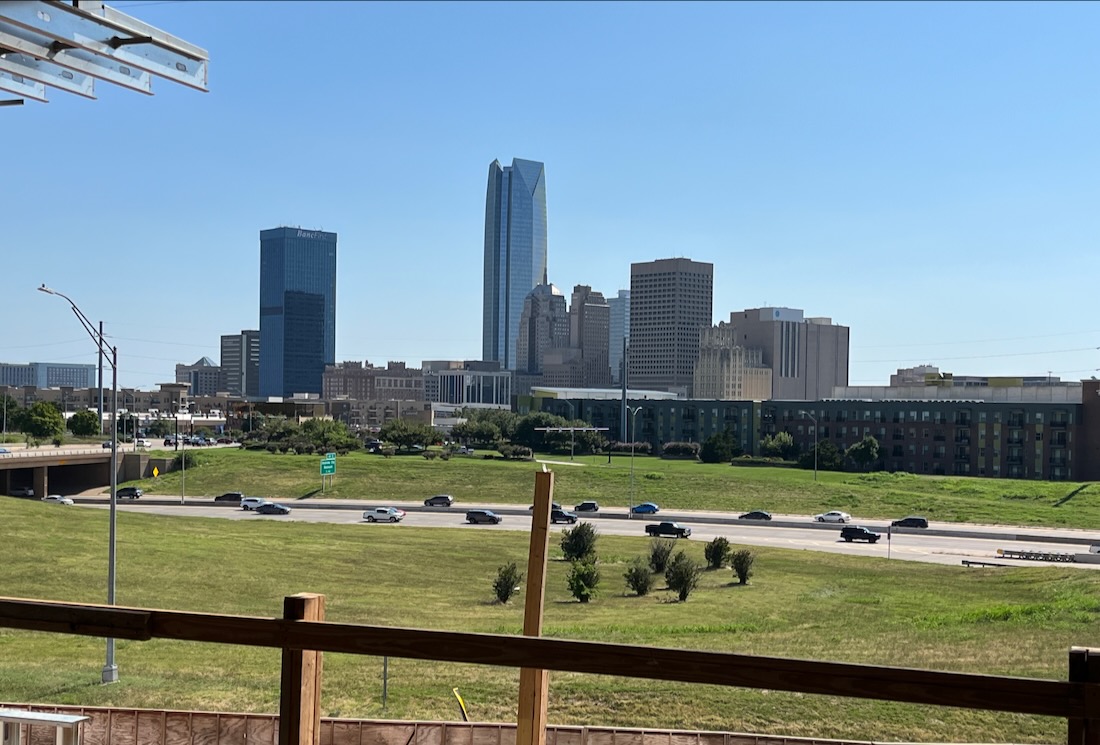
View of downtown OKC from second floor of the Convergence Tower
Innovation Events
Event space in the Innovation Hall
Buildings
Walking between buildings on a tour of the rising Convergence project in OKC.
Jeff Seymour
Jeff Seymour, executive vice president of the Greater OKC Chamber, welcomes guests to the recent networking event and Convergence project walking tour.

The Walkable City on my mind

Walkable1
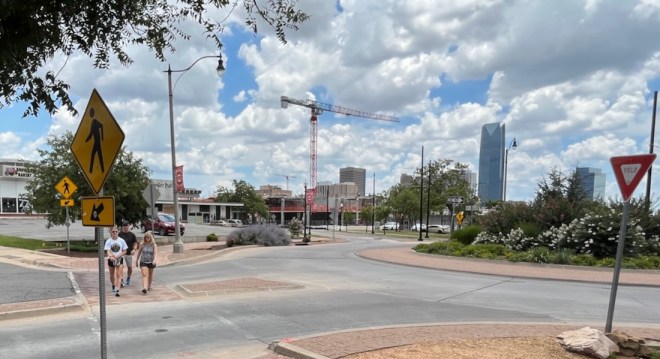
With the help of urban planner Jeff Speck, OKC’s downtown became an inviting, walkable urban center.

I just read Jeff Speck’s “Walkable City: How Downtown Can Save America, One Step at a Time,” and I don’t know where to start with my reaction.

Do I question my choice of a virtually unwalkable neighborhood in which we live?

Do I celebrate the incredible strides Oklahoma City has taken to make our downtown livable AND walkable?

Do I ask about how a city like OKC can apply any of these principles in older, economically challenged neighborhoods that don’t lend themselves to walking?

First of all, it’s an engaging book that provides dozens of examples of cities that provide both good and bad environments for walking and urban life.

Jeff Speck, you might remember, is the urban planner and author who advocates making urban areas pedestrian friendly to encourage both economic development and urban living spaces. He consulted with the City of OKC about 15 years ago that resulted in big changes downtown, especially in the elimination of most one-way streets.

Speck outlines what he considers 10 important steps to remaking a downtown into an urban area that encourages walking (or biking) and puts cars in their place. It’s often a diatribe against city engineers, whose No. 1 mission appears to be accommodating the automobile.

Here’s a Q&A that my friend and former colleague Steve Lackmeyer did with Speck back in 2013 when he came to town for a book signing event for Walkable City. As far as I recall, there are only two mentions of OKC in Walkable City, although I think it may have been written before he dove into the challenge of remaking our downtown.

So, first, let me address my own neighborhood. My family lives in Twin Oaks, which is technically an Oklahoma City neighborhood but far removed (16 miles!) from downtown and as car-centric of a living space as possible. There’s no nearby transit, little retail within walking distance and from my own experience, a real disconnect between the people who live here and downtown OKC.

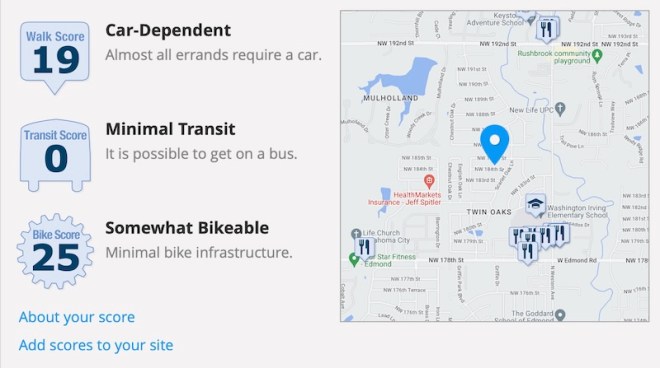
Walk Score1In fact, according to the Walk Score website that considers a number of factors for specific locations, Twin Oaks scores a 19 out of 100, or “car dependent,” according to the website. We also score a 0 for access to transit and a Bike Score of 25 for “somewhat bikeable.”

So, it’s a pretty serious indictment of this part of town as far as our urban environment.

As far as my neighbors, I’m not sure they care about what’s happening downtown, because it seems that few ever travel to downtown. I’ve even heard some question the city’s investment in amenities like our wonderful Scissortail Park.

Although this is where I’ve raised my family, in part because of proximity to excellent schools, I still count myself as a downtown advocate who’s proud of what has been achieved.

That brings me to the second question. Of course, I celebrate what our downtown has become and encourage my reluctant neighbors to join in. The remake of downtown since the passage of the first MAPs package has enhanced OKC’s reputation beyond measure.

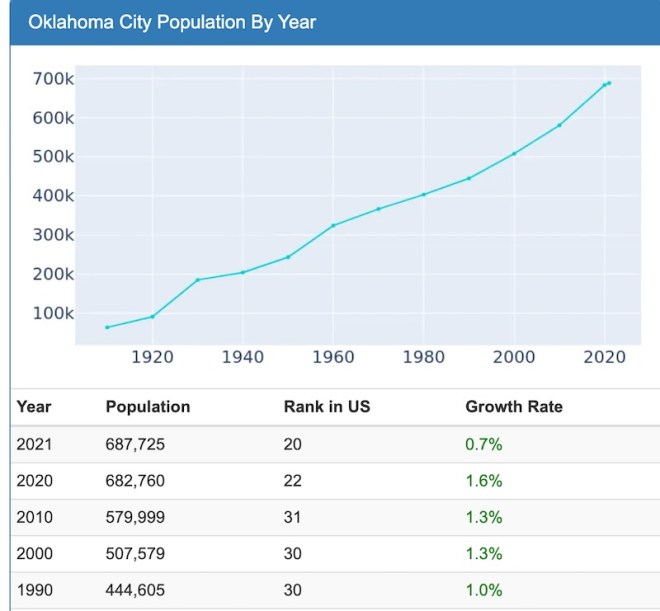
Our population growth numbers reflect it. OKC grew from 444,000 in 1990 to more than 687,000 in 2021, advancing from the nation’s 30th largest city to the 20th overall.

City GrowthI worked downtown in the 1980s, and I can assure you there was little to brag about. We had one downtown hotel, the Sheraton, a failed retail mall and absolutely no one on the sidewalks after 5 pm. Downtown was a ghost town on weekends.

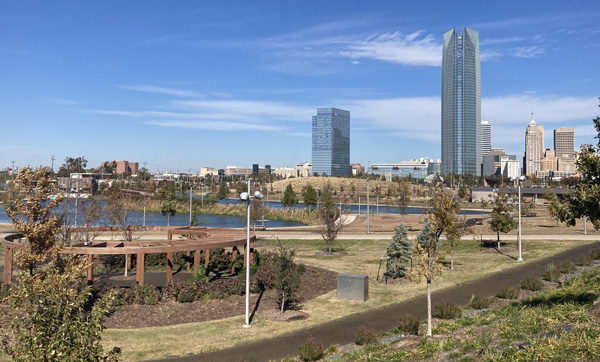
Contrast that with the life you can now find downtown virtually any day of the week, from restaurants, hotels, Bricktown, to the Chesapeake Arena and our magnificent downtown park. It’s a wonderful place to spend time.

My final question seems more difficult to address.

We’re celebrating downtown and the walkability and the life it has, but how do we address our city neighborhoods with lots of economic need? Not just walkability but creating sustainable lives and welcoming neighborhoods that support the people who live there.

I’m talking about many of those on the south side, east side and just west of downtown.

That’s the sort of question that some folks in my church asked about two decades ago. Paul and Suzanne Whitmire led the establishment of the Cross & Crown Mission at 1008 N. Mckinley, an area that teemed with abandoned houses and residents in need of jobs, food and someone who actually cared.

Since they started Cross & Crown with the help of dozens of volunteers, the Whitmires have virtually remade that neighborhood, buying and rehabbing abandoned houses, giving away food and clothing every week and helping people deal with other challenges that poverty brings.

You should check out Cross & Crown and have a conversation with Paul, who is incredibly passionate about the Mission and its, well, mission. Here’s a Q&A I did with Pau Whitmire about a year or so back. 

Paul and Suzanne Whitmire show what can be done.

Anyway, my point is that we’re excited to see the revitalization of downtown and the great vibe it created for our city. Neighborhoods like mine can take care of themselves, but there are still vast areas of OKC that need a spark like that brought by Cross & Crown.

Actually, Speck has an answer for the question of why focus so heavily on downtown.

“The downtown is the only part of the city that belongs to everybody,” he writes. “It doesn’t matter where you may find your home, the downtown is yours, too. Investing in the downtown of a city is the only place-based way to benefit all of its citizens at once.”

Still, I hope that as we celebrate the progress made with a walkable, inviting downtown, we consider ways to help far-flung OKC neighborhoods that need their own walkability initiatives.

They’ve been written off far too long.
Walkable3

Don’t let your facts get in the way of my beliefs

encyclopedia2
A set of Encyclopedia Americana from the 1960s.

When I was a kid, we had a big set of Encyclopedia Americana in our house that was my go-to Google-of-the-day for every bit of fact finding and trivia that drew my interest.

Once, when I was a teenager, my dad and I had a disagreement over some fact about a foreign country or its people, I can’t remember which.

However, my dad was spouting an opinion as fact that I was certain was wrong. So, I grabbed an encyclopedia, looked it up and read the part to him that proved that he was wrong.

“Now you’re taking it too far,” he said, clearly irritated.

Translation: don’t let your facts get in the way of my entrenched beliefs.

Anyway, I’m writing this because we’re seeing people in our society make up their minds and cling to ‘alternative facts’ when clearly there is no evidence to back them up. Or there’s evidence that shows that it is wrong and they still cling to their beliefs.

The dispute over vaccines, for instance. People would rather take their Uncle Jimmy Joe’s word that the COIVID-19 vaccines are making thousands of people sick or, worse yet, killing them, than accept statistics kept by health care professionals and scientists that show vaccines are incredibly safe and effective.

I’m pretty sure it’s really an issue motivated first and foremost by political beliefs. Red state. Blue state.

But we all stake out our territory on different issues and refuse to budge even when we’re smacked in the face by reality. I’m sure I’m guilty, as well.

And that leads me to an issue that really disturbed me this week. One of my neighbors whom I like and enjoy hanging out with in his driveway, stated as fact that a high-ranking OKC city official gets a cut from every concession sold at Scissortail Park because he made a donation to its construction.

I ask him to offer some proof. “They reported it on Channel 9,” he said.

If it had been reported on TV or in the newspaper, and there was evidence to support the allegation, the story would be huge and talked about by everyone in the city. The official would likely lose his job.

scissortail park1
Scissortail Park in early November

Instead, it’s told as fact by a retired OKC resident who is skeptical about the whole MAPS program and Scissortail Park, as well. He doesn’t need actual proof, because he heard the story told as fact from others who share his point of view.

I even ran the allegation past a respected reporter for The Oklahoman that I trust and who told me that “none of it is true.” I’m taking his word for it, because, if true, it would have been a giant Page 1 headline.

The disturbing aspect is that my neighbor repeats the story to anyone who will listen, and in my far north OKC neighborhood there are a lot of takers.

I think some of it has to do with the fact that our neighborhood is so far out of the city’s core that people like my neighbor don’t see the benefit that MAPS and Scissortail Park have brought to our city.

As I walked back home after the encounter the other day, I couldn’t help but think of my dad and his long ago wrongly held opinion-as-fact. Even the Encyclopedia Americana couldn’t budge him off his belief.

Sad to say, that’s how it is with a lot of American society today.

When Oklahoma City invested in itself


I’ve been reading about the ongoing debate over the upcoming vote on a temporary, 1-cent sales tax that the citizens of my home town in Fort Smith, Ark., are considering imposing on themselves.

The tax, which as I understand it would be effective for only nine months, would be used to complete the U.S. Marshals Museum, which is under construction along the Arkansas River in Fort Smith.

To me, a “yes” vote on the tax would be a no-brainer. The community would be investing in itself for a facility that would enhance it as a go-to destination for visitors from around the nation and the world. 

But many don’t see the possibilities, and only see the extra penny tax they would have to pay. You can read about the debate here from the Talk Business and Politics website.

I would offer Oklahoma City’s experience in investing itself as a template for what is possible.

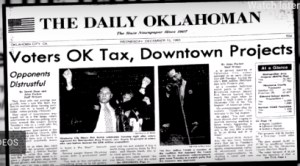
Since we voted “yes” to our MAPS projects in 1993, OKC has been transformed into one of the nation’s premier go-to destinations not only for visitors, but for new businesses and residents. We built a new ballpark, arenas, a canal, a library and transformed a neglected and almost empty river that runs just south of downtown.

Now we have one of the NBA’s premier franchises, a downtown streetcar system and are building a fantastic new “central park” and massive convention center. Our population is blossoming, and many of those are the young, educated “creative class,” who are choosing to stay here rather than take jobs out of state after graduating college.

All because of MAPS, a temporary, 1-cent sales tax.

Sure there were naysayers who could not or would not see the vision. I’m so glad that the majority of voters bought into the concept of MAPS in 1993 and in subsequent votes in the years to follow.  We’re so far removed from the city we were in 1993.

I’m hopeful that the folks in my hometown of Fort Smith can see the vision of what is possible for their community and vote “yes” for the temporary sales tax to fund the Marshals Museum.