ACU Hall of Fame recognition for my friend Ron Hadfield … and a grand reunion

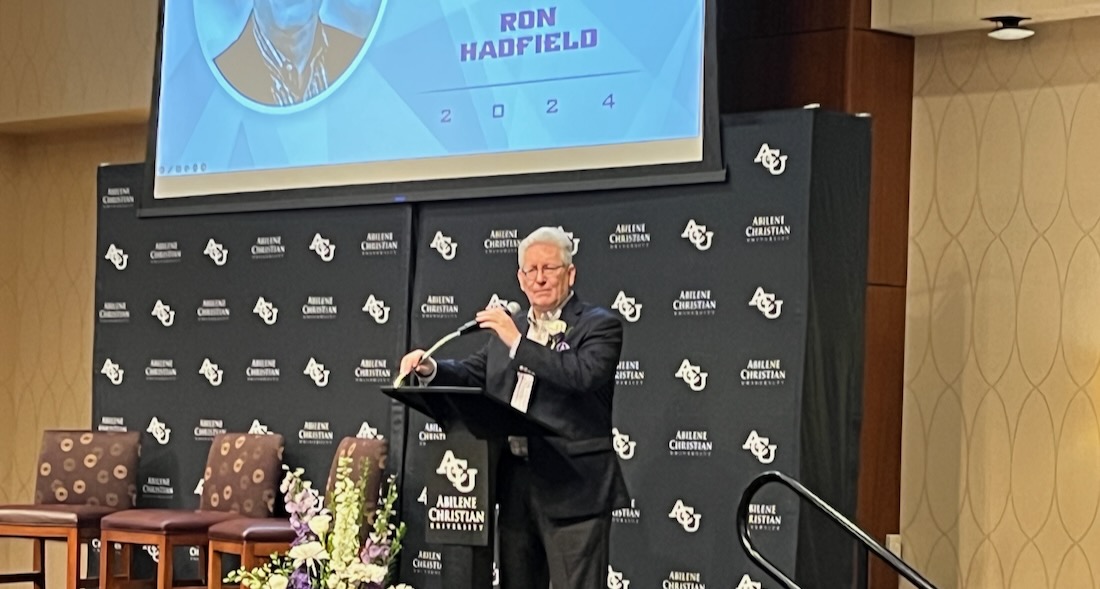
hadfield speaks
Ron Hadfield adjusts the mic as he speaks to the ACU Hall of Fame audience.

Ron Hadfield is a long-time friend who was my student editor on the Abilene Christian University newspaper, The Optimist, in 1977. Ron recently was recognized with a Lifetime Achievement Award at the ACU Athletic Hall of Fame ceremony that I was privileged to attend.

I showed up on ACU’s doorstep in 1976 as a transfer student with a dream to some day become a newspaper sportswriter, but with virtually no writing experience.

To say that I was a raw talent would be overstating my ability and potential. I didn’t have a clue.

Ron likes to tell the story that on the first assignment he sent me out on, I turned in some terrible copy and proudly showed him the quotes I made up.

I deny the accuracy of his memory.

But he was a patient editor who helped me begin to find my way as a writer.

I didn’t know the intricacies of sports — especially basketball — as well as I thought I did, and Ron helped me learn strategies such as the double high stack offense used by ACU men’s basketball coach Willard Tate.

As we shared both the Optimist newsroom and numerous ACU classes, Ron became a good friend. We each had a keen interest in sports, baseball in particular, and we traveled to Arlington, Texas, with our mutual friend, Scott Kirk, to catch Texas Rangers games on several occasions.

Ron and I even traveled to Kingsville, Texas, together to watch the 1977 ACU-Texas A&M-Kingsville game, spending the night on the North Padre Island beach.

Our 1977-’78 Optimist staff of perhaps a dozen people became a team of close friends who spent late nights getting the paper out and often playing touch football well after midnight on the ACU campus. We were popular with campus security.

Optimist3
Me (front row, right) with colleagues from The Optimist in 1978

Optimist staff members were all regulars at the home of Dr. Charlie Marler, who led ACU’s Journalism and Mass Communications department for many years both as professor and chair. I completed a guided study sportswriting course one summer where we met at the Marler home instead of on campus. Dr. Marler passed away in 2022.

Anyway, I graduated in August of 1978, while Ron went on to serve a second year as editor of The Optimist before graduating in 1979. I’ve never let our friendship totally lapse, even if communication was only through occasional emails or texts.

After his graduation, Ron briefly worked in private industry back in his home state of Michigan, then returned to ACU to lead the university’s marketing efforts.

For the next 40-plus years, virtually every written word, advertisement, branding strategy and logo created on behalf of Abilene Christian University was either produced or led by Ron. He was founding editor of the university’s fabulous alumni publication, ACU Today, and led the school’s development of its online presence with the emergence of the Internet.

Ron wrote many cover stories for ACU Today, as well as blog posts and news releases that captured some of the school’s iconic moments over the past four decades.

The only person to be twice named the university’s Staff Member of the Year, Ron was named ACU editor emeritus, senior writer and university historian in 2022.

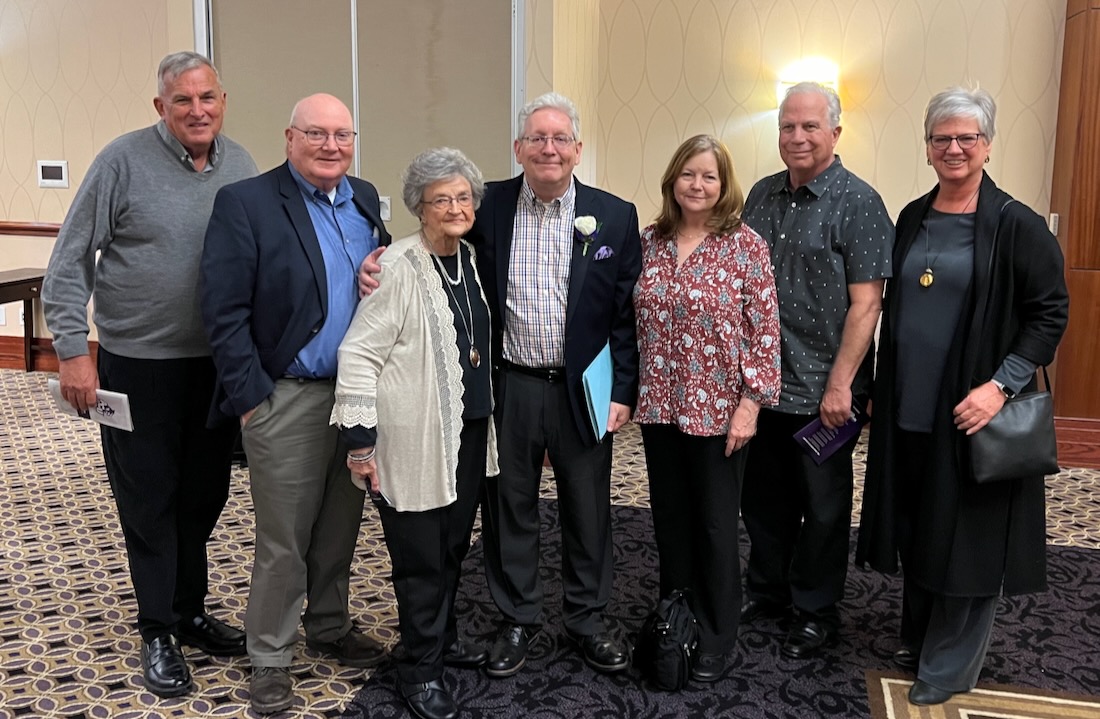
So, when Dr. Cheryl Mann Bacon invited me to sit at her table at the Hall of Fame induction ceremony, I didn’t hesitate to say ‘yes.’ Also at the table were fellow former Optimist staff members Scott Kirk (and his wife, Nancy) and Corliss Hudson Englert (along with her husband, Brad), as well as Peggy Marler, Dr. Marler’s wife of 67 years.

Dr. Bacon also was part of our Optimist group, although she was working on her master’s degree by the time I landed on campus.

acu group
From left, Scott Kirk, Jim Stafford, Peggy Marler, Ron Hadfield, Corliss Hudson Englert, Brad Englert, Cheryl Mann Bacon

It was an awesome evening in a banquet hall setting among about 200 or so ACU alums who watched as Ron was honored with the Lifetime Achievement Award, and five former athletes were inducted into the Athletic Hall of Fame.

Although I’ve never had the opportunity to experience any of ACU’s class reunions, this was the best of reunions for me.

Thanks for the invitation, Cheryl.

Shining a light on mental illness

NAMI Tulsa
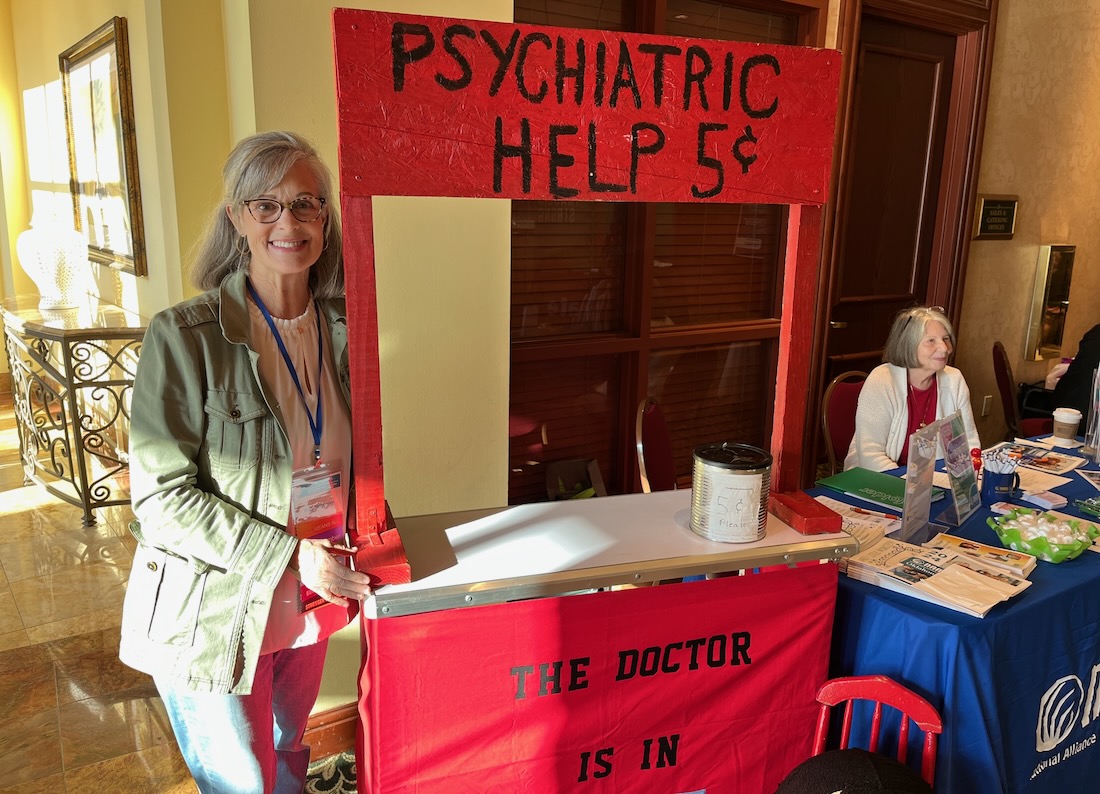
NAMI-Tulsa’s clever ‘psychiatric help’ display caught a lot of attention and photographers at the NAMI Oklahoma conference.

This past weekend, I heard stories about the heartache, disruption and pain caused by the impacts of mental illness on families and their loved ones.

I also heard that there is hope for those suffering.

NAMI Oklahoma held its 2024 Annual Conference in Tulsa on Saturday, and because my wife works for the organization, I tagged along. NAMI is the National Alliance on Mental Illness, an organization that works to end the stigma of mental illness.

NAMI doesn’t provide therapy, but helps connect those in need with critical services, as well as with support from their peers in similar situations.

Our family is among those that have been impacted by mental illness, so I found the conference and its many speakers and topics relevant to our situation.

There were roughly 150 folks in attendance, plus about two dozen vendors who showcased their support at tables outside the meeting rooms.

My intentions were to hear presentations by a couple of folks I know, then take care of our 5 year-old grandson, Solomon, who came with us.

The first presentation I heard was that of Neal Nordlinger in the day’s first breakout session. I’ve had a lot of connections with Neal through the years, first when I worked at i2E, the OKC-based not-for-profit that mentors entrepreneurs and startups. And now I know him as the husband of my friend and former co-worker, Clytie Bunyan.

Neal speaks
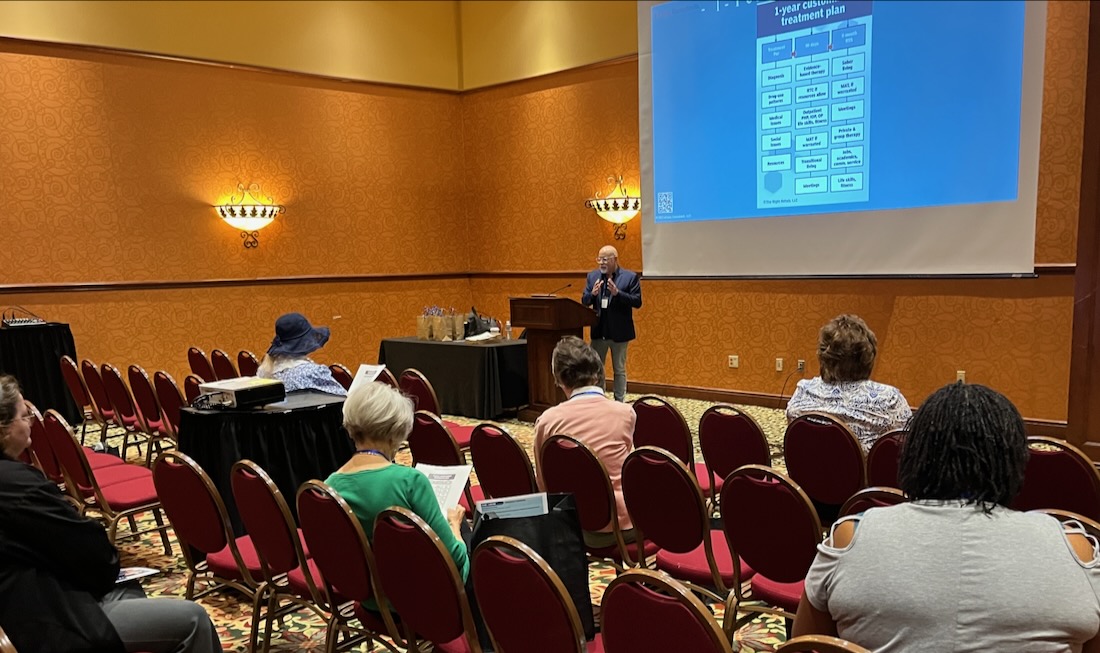
Neal Nordlinger leads session at NAMI Oklahoma conference on finding the right rehab.

Anyway, Neal told his audience about how he was confronted with consequences of addiction at 3 a.m. one morning when he received a call that his son was in crisis. He needed to find a treatment center for his son, but didn’t know where to start.

That call started Neal down a path of discovery, where he learned about recovery and rehab centers that treat not only for drug and alcohol addiction, but also provide treatment for mental health conditions.

In his quest, Neal gained so much knowledge about the nation’s rehab industry that he wrote a book called “The Right Rehab,” and founded a business called InCrisis Consultants to help others.  He shared with us insight into finding a rehab center that has a good reputation, the required certifications and fits our insurance and financial situation.

It’s quite a maze, which I know from past experience of our family.

As an aside, my daughter, Sarah, has worked for rehab centers in Florida for the past couple of years. I’m proud that she’s discovered her mission in life from her own challenges.

After his presentation, I told Neal that everyone at the conference should have heard him speak, and for good reason. Everyone was there because they have a loved one with addiction, mental health challenges or have gone through them personally.

There is a big rehab knowledge gap for most of us that Neal addressed.

Later in the day, I heard my friend Preston Northcraft deliver an impassioned presentation on turning the pain associated with a mental health condition into something positive.

Preston
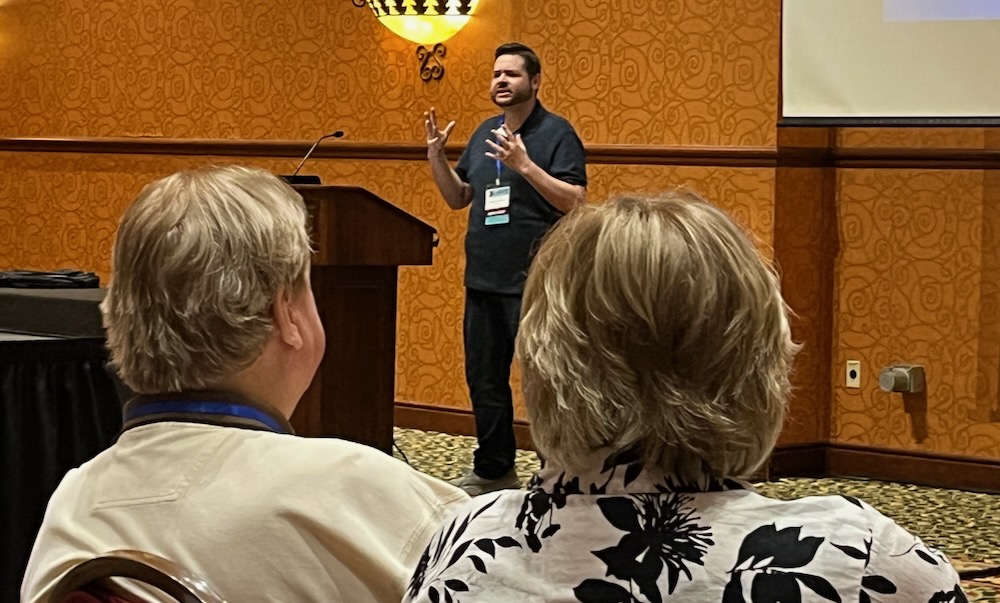
Preston Northcraft offers hope to those suffering from mental illness by his own experience.

That’s exactly what Preston, who suffers from a bipolar condition and gambling addiction, has done. He delivered a message of hope for other young people by assuring them they are not alone in their condition, and offered steps to overcome mental health challenges and live a successful life.

Preston has also written a couple of books about mental illness. HIs presentation showed that he has emerged as an engaging speaker. He turned his pain into a positive.

Finally, for me, the most impactful story I heard at the conference was that of keynote speaker, Dr. Christine Kunzweiler, a veterinarian and wife of Tulsa District Attorney Steve Kunzweiler.

Dr. Kunzweiler shared the story of the journey her family has been on after her daughter, while in the midst of mental health crisis in 2022, stabbed her father, Steve Kunzweiler. The incident resulted in the Kunzweiler’s daughter serving a long period in jail before eventually being found not guilty by reasons of mental impairment.

Kunzweiler
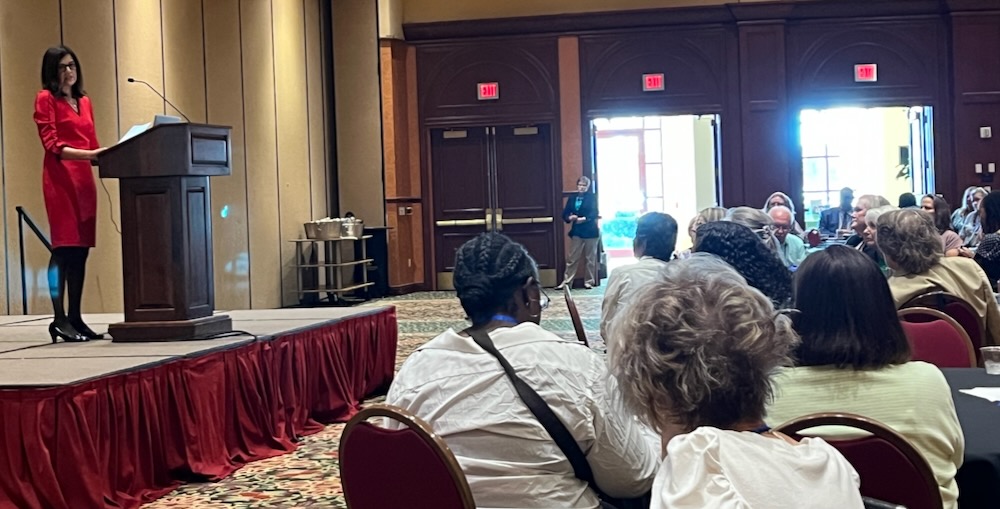
Keynote speaker Dr. Christine Kunzweiler, shares how her family was challenged by the mental health condition of her daughter.

The mental illness her daughter suffered from and the family crisis it created inspired both Dr. Kunzweiler and her husband to become advocates for mental health reforms and services.

While Steve Kunzweiler survived the incident with minor wounds, it is a similar story — but less tragic — to that of Oklahoma Labor Commissioner Mark Costello. Many Oklahomans are familiar with the story of how Costello lost his life when he was stabbed to death by his son, who suffered from a severe mental illness.

Today, Mark Costello’s wife, Cathy Costello, has become a fierce advocate for crisis intervention and speaks frequently on the subject.

I came away from Dr. Kunzweiler’s speech grateful that she’s willing to share her family’s story in a public way when there is still such a stigma surrounding mental illness.

Her experience and story provided something her audience needed to hear — that we are not alone in our challenging situations. Many others face the same challenges.

She gave us hope that we can emerge from dark days with a new purpose and shine a light to help end the stigma of mental illness.

IMG_6418
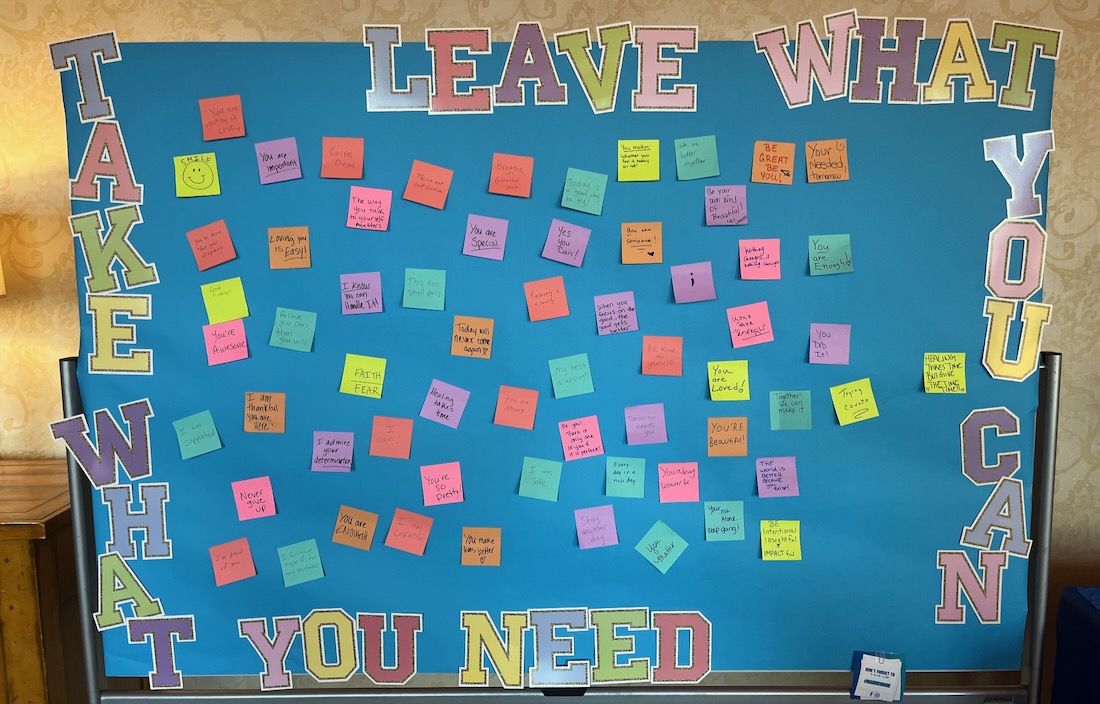
The ‘Inspiration Board’ at the NAMI Oklahoma conference was filled with notes of encouragement

Down the Internet Rabbit Hole to a worthy discovery

Screenshot
Tommy Shaw (front left) performs with the Contemporary Youth Orchestra in Cleveland.

I have a love-hate relationship with this thing we call the Internet. First off, it’s great to have virtually all the knowledge of the world at your fingertips.

However, I’m led down the Internet rabbit hole of memes, videos and questionable information several times a day. It’s the ultimate trivial pursuit.

But, sometimes the rabbit hole I’ve tumbled into delivers something surprisingly worthy.

I’ll share an absolute favorite with you. It’s a Youtube video of the Contemporary Youth Orchestra featuring former Styx lead singer Tommy Shaw.

Founded in 1995 and based in Cleveland, the Contemporary Youth Orchestra is composed of high school-age students who play contemporary music instead of the classics. Here’s how the not-for-profit orchestra is described on its Website:

“Contemporary Youth Orchestra is committed to the study and performance of exclusively contemporary and new orchestral music, with a focus on introducing students to careers in the creative arts industries.”

Anyway, the first Contemporary Youth Orchestra recording I came across features Shaw singing the Styx hit Fooling Yourself (The Angry Young Man). I’m mesmerized by the musical skill level of the young musicians, and by the focus and enthusiasm they put into the performance.

You can watch it below:

Shaw’s rendition of the Styx classic is also superb, helping me as listener grasp the meaning of the song that I previously only heard in passing. It’s well worth your time to watch and listen. Plus, Shaw also sings other Styx songs with the orchestra, including Blue Collar Man.

Turns out, the Contemporary Youth Orchestra has performed with dozens of well known singers and musicians, including the full Styx group, Jefferson Starship, Pat Benatar, Kenny Loggins, Jon Anderson and many others.

I had no idea that such an orchestra existed or that accomplished contemporary artists would play with them. I don’t get out much, obviously.

Screenshot
Christy Fine

So I asked my friend and neighbor, Christy Fine, about the subject. Christy is a long-time orchestra teacher, now retired, in the Edmond School District.

She said it’s fairly common for high school and other orchestras to bring in and feature a well known musician in their performances. The Edmond district has hosted several such performances through the years, she said.

“It is a great way to expose kids to professional musicians,” Christy told me. “They (the featured musicians) send you the music ahead of time, then come and spend a day in rehearsal and then a big performance. We found they are great motivators for the kids.”

I’ve watched the Tommy Shaw/Contemporary Youth Orchestra performances multiple times since I found it a couple years ago. The Youtube version of Fooling Yourself has 6 million views, so it’s fairly popular.

Watch the performance of Blue Collar Man below:

Yes, Youtube can be a rabbit hole for someone browsing the Internet.

But, this time, I’m glad the trail led me to this video and to the Contemporary Youth Orchestra performances.

BONUS: Watch a promo for the Edmond Public Schools Fine Arts program here:

Billy Carter and his 15 minutes of fame

Screenshot
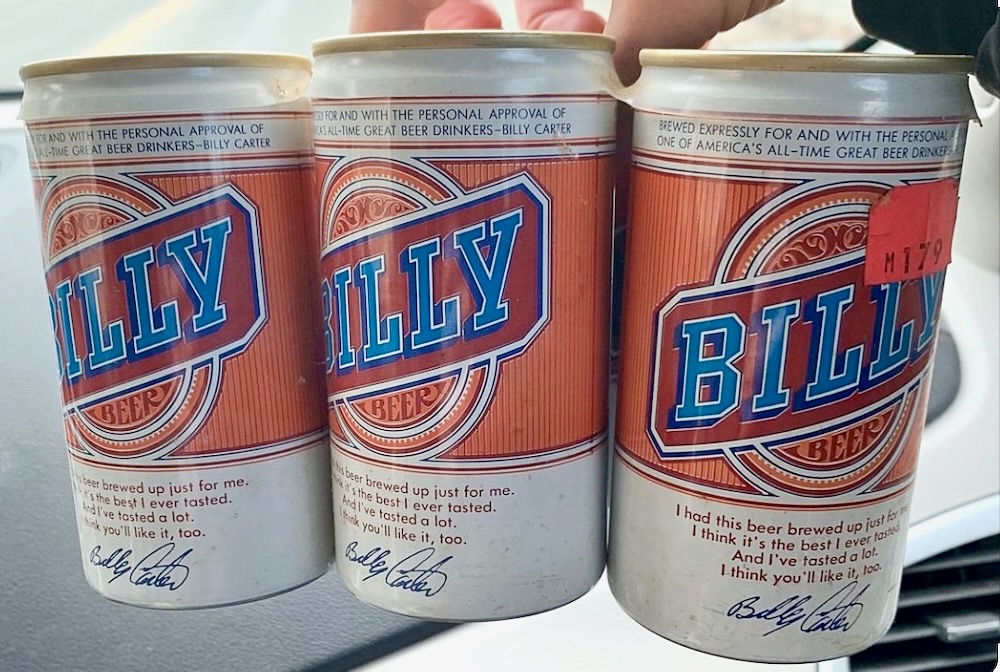
A six-pack of Billy Beer from 1977-’78

For a brief, shining moment back in 1977, the First Brother, Billy Carter, stole the spotlight from his brother, the President of the United States, Jimmy Carter.

While Jimmy Carter was a well educated, military veteran and successful peanut farmer, brother Billy was a good ole boy whose main avocation seemed to be drinking beer.

So, what happened?

A company called Falls City Brewing launched Billy Beer in 1977, and it took the nation by storm.

Billy Beer and brother Billy instantly gained the sort of notoriety that a Taylor Swift-Travis Kelce romance generated in 2023 (and continues today). There were volumes of newspaper articles about the beer and Billy.

Newsweek magazine even devoted a cover story to Billy and his beer. Songs were written about Billy Beer (I’m not kidding, read the story from a publication called Rate Your Music).

Despite all the hoopla surrounding Billy Beer, the brand folded up like a crushed can just one year later in 1978.  Billy Carter died in September 1978 of pancreatic cancer.
Turns out, folks didn’t like the taste of Billy Beer, despite Billy’s quotes printed on the cans themselves about the quality of his brew.

“I had this beer brewed up just for me. I think it’s the best I ever tasted. And I’ve tasted a lot. I think you’ll like it, too.” — Billy Carter

According to an article from the 1977 Milwaukee Journal, Billy admitted that he actually drank Pabst Blue Ribbon.

Here’s a quote from a publication called Collectors Weekly:

“There were MILLIONS of cases sold by 4 different breweries in the late 1970s. One estimate of the number of Billy Beer cans made is 2 BILLION. As a result, it is worth about 25 cents at most and then only if it is in very good shape, and if you can find a collector who actually needs one.”

A check on Billy Beer prices on eBay shows you can by an unopened (empty) six pack for a range from about $10 to $30.  So, Billy’s brew hasn’t appreciated much in value over time.

Sidenote: A North Carolina brewery has begun brewing a Billy Beer that plays off the name and look of the can, but has nothing to do with the brew from the 1970s.

As for me, I never tasted a Billy brew. I’m pretty sure its distribution didn’t reach Arkansas or Texas, although I could be mistaken. A friend of mine who lives in Mena, Ark., had an unopened six pack stashed on a shelf in the late ’70s for what I assume was investment purpose.

But I did come across a couple of guys on Youtube who did a Billy Beer taste test in modern days. Watch for yourself:

So, why am I writing about Billy Beer in 2024?

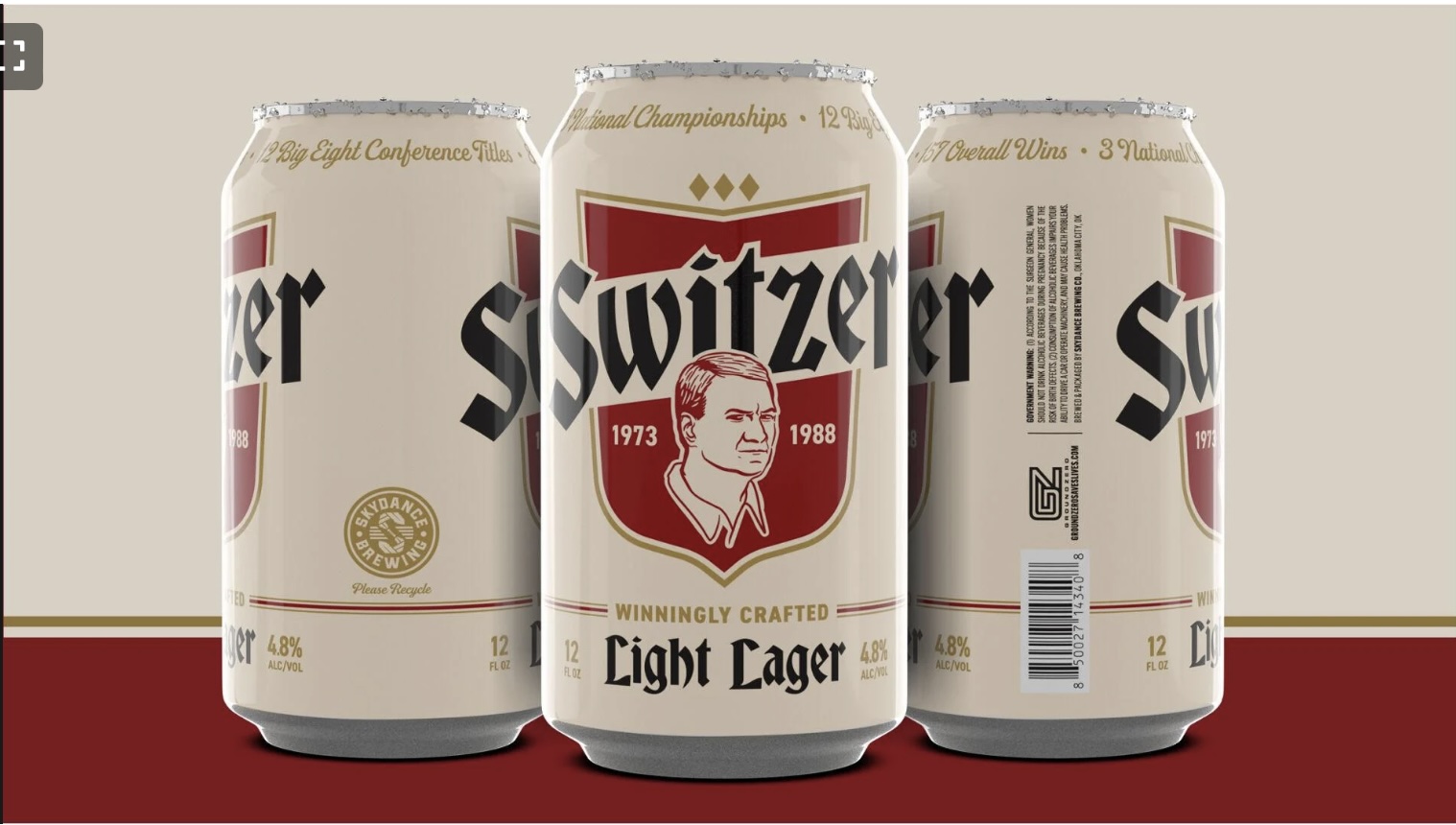
Well, OKC’s Sundance Brewing recently debuted a beer called “Switzer Light Lager.” It’s named after former OU football coach Barry Switzer, himself something of a good ole boy from Arkansas as well as one of the best football coaches in recorded history.

Tailgating may never be the same before OU games if Switzer beer has longevity. It has some promise, because it’s a craft beer brewed locally, and in Oklahoma Barry Switzer is still the king.

One other note. According to an article in the Norman Transcript, profits from Switzer beer will go to support the Ground Zero Training Center for search and rescue dogs.

From the Transcript:

“Ground Zero Emergency Training Center is a Non-Profit Organization in Oklahoma specializing in exceptionally trained urban search and rescue canines, educational opportunities, and a state-of-the-industry facility in which to hone their technical skills. Ground Zero was founded by Oklahomans, Barry & Becky Switzer in 2017 to meet the needs of a critical shortage in search-and-rescue canines.”

It sounds like a worthy cause. Now, we just have to crack open a cold Switzer Light Lager and determine if it’s a worthy brew or just another Billy Beer.

Screenshot

A big “hello” to music lovers

Screenshot
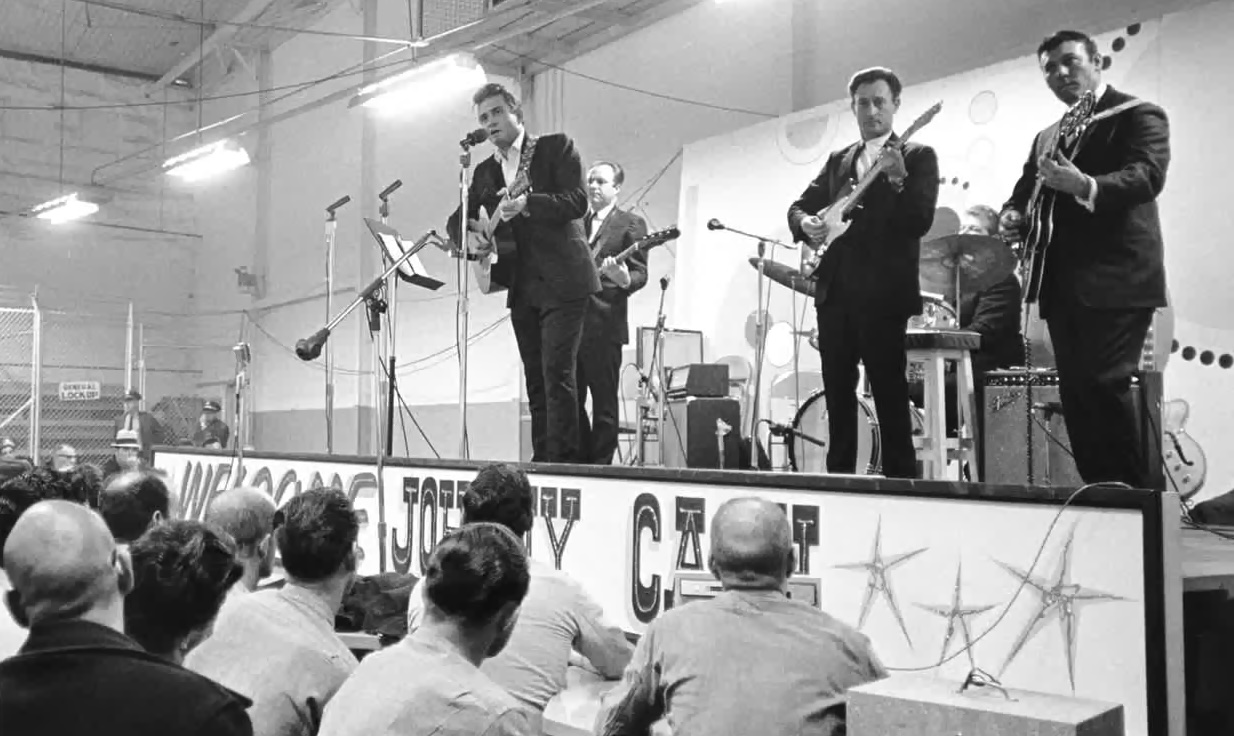
Johnny Cash performs at Folsom Prison in the 1960s.

Every so often I stumble upon a certain question on a social media site that draws hundreds of comments. “What’s the greatest opening line to a song?”

I usually answer “Hello darkness, my old friend.”

“The Sound of Silence” by Simon & Garfunkel is one of the most profound and impactful songs ever recorded, in my opinion. Especially in an era where we are ushering in our future robotic overlords.

However, I’ve recently reconsidered my standing answer. Here’s the alternative opening line that does it for me:

“Hello, I’m Johnny Cash.”

That was the legendary Johnny Cash’s signature opening line to any performance, but I’m thinking of one in particular, “Johnny Cash Live at Folsom Prison.”

The Man in Black’s famous “Hello” line precedes the start of “Folsom Prison Blues,” and has really become the first line of the song, at least for me.

My friend Ed Godfrey said “when I hear that line, I know I’m about to hear some good music.”

My dad bought the “Live at Folsom Prison” album when I was a kid. I listened to it scores of times and never tired of the audience’s huge reaction when Cash introduced himself, or the song itself.

There’s something ironic about Johnny Cash singing a song about Folsom Prison that he wrote in the 1950s to an audience of Folsom Prison inmates in the 1960s.

Give it a listen:

And you can listen to The Sound of Silence here:

The opening lines of those two songs got me to thinking of other songs whose opening lines begin with “hello.”

You might remember Conway Twitty’s “Hello Darlin'” if you are a country fan of a certain age (including me). It was a pretty big hit back in the day.

Give it a listen:

Todd Rundgren had a huge hit with his song, “Hello, it’s me” that starts with the title line.

Give it a listen:

“Hello,” by Adele was a big hit around the world in 2015.

Give it a listen:

I was a Doors fan back in the late ’60s, and really liked their song, “Hello, I Love You.” It also was a No. 1 hit in 1968.

Give it a listen:

I’m sure there are many other songs throughout history whose lyrics begin with the word, “hello,” that I omitted because I didn’t think of them or know about them. If you come up with some, please alert me by adding a comment at the end of this post.

LATE ADDITION FROM ED GODFREY: “Here’s two more hellos for you: Hello, Walls written by Willie Nelson and Neil Diamond’s Hello, again, hello.”

RANDAL FORSHEE also added Hello Walls.

CASEY HARNESS CONTRIBUTION:  Hello Mary Lou by Rick Nelson; Comfortably Numb by Pink Floyd

BONUS CONTENT

Meanwhile, there are some songs that have “Hello” in the title, but whose lyrics don’t start with the word “hello.’ “Hello, Goodbye,” by the Beatles, for instance. And “Hello,” by Lionel Richie, and “Hello” by Beyonce. Also, “Hello Again,” by The Cars.

SidexSide OKC works under the radar to lift people up

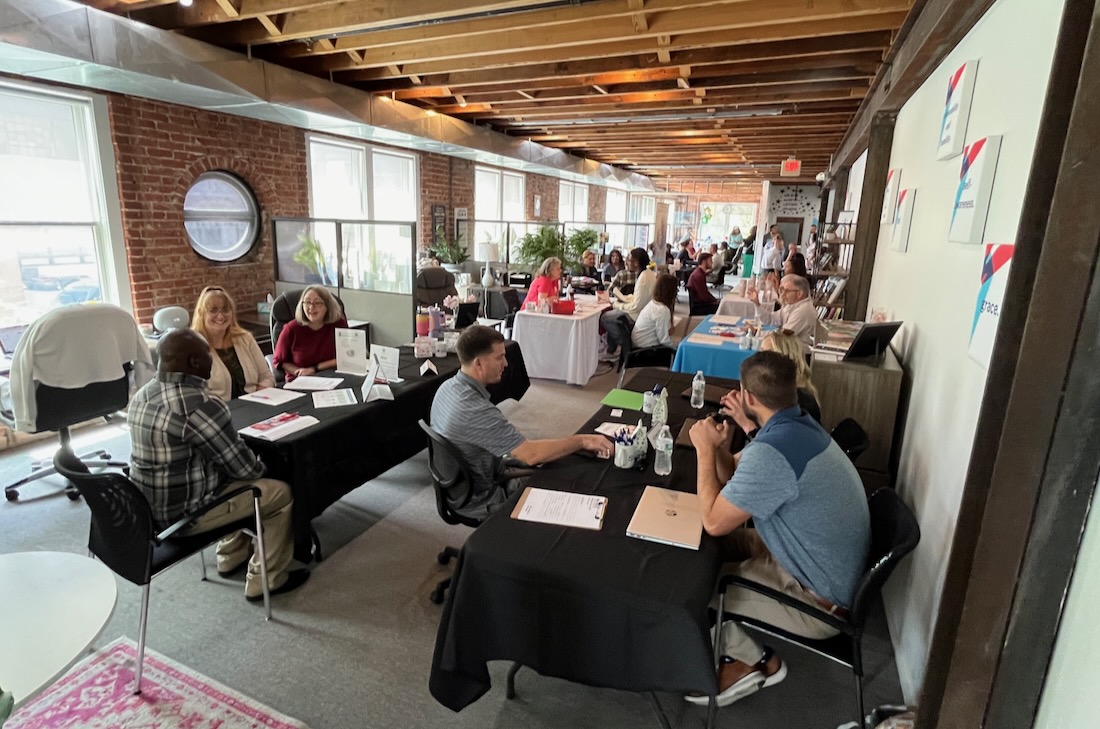
jobfair3
Participants in SidexSide’s latest job skills cohort meet with prospective employees at a recent job fair.

The 1993 movie ‘Dave’ starring Kevin Kline revolves around a community-minded man who runs a Washington, D.C.-based temporary employment agency with a goal of ensuring everyone who needs a job can find one. Dave has a saying: “Everybody works on Tuesday.”

It’s a wonderful movie that tells the story of how Dave so closely resembles the President of the United States that he is recruited to stand in for the President, who then takes advantage of Dave’s presence to hook up with an aide. When the President has a stroke, Dave is stuck in the job.

The story takes off from there, and I encourage you to watch it. It’s a feel good fantasy.

But reviewing Dave is not the purpose of this post. I recently discovered a local not-for-profit skills training and employment agency called SidexSide OKC that made me think of Dave and his “Everybody works on Tuesday” motto. Check out SidexSide’s website.  

In a mission statement on its website, SidexSide says it exists “to build a bridge between underemployed talent and local employers.” The agency provides paid skills training and employment opportunities to people who are referred to it from partner entities like the TEEM, Palomar, Sunbeam Family Services and others.

The “underemployed,” as SidexSide calls them, are placed in cohorts of about 12-15 people and coached up, so to speak, in a nine-week training course that requires them to be present and on-time for each session. Part of the course involves classroom sessions, followed by job shadowing with potential employers who partner with SidexSide.

I stumbled upon SidexSide recently when it held a job fair that included a Long Term Care facility that participates in the Care Careers Oklahoma, a workforce development initiative of Care Providers Oklahoma, where I work part time.

My mission at the job fair was to shoot photos and post them on social media for Care Providers.

SideSide doorSidexSide has offices on the second floor of a downtown building, which also houses a bicycle sales shop. You could walk around the building a dozen times and not spot the glass entrance door that displays the SidexSide logo.

I know, because it took me several tries to find it.

Anyway, when I walked in I discovered a large room filled with people sitting at tables and chatting with one another. Then a bell rang and one person got up from each table and sat down at a different table.

Turns out, this was a sort of ‘speed dating,’ get-to-know-you job fair.

I met several SidexSide employees, including Matt Tecmire, Director of Employment Services, Ricardo Lara, Career Navigator and Community Liaison, and Liz Honeyman, Programs Support Specialist. Those folks gave me a quick overview of how the agency operates before introducing me to Chad Jordan, SidexSide’s founder and Chief Executive Officer.

SidexSide Chad
Chad Jordan, SidexSide’s founder and Chief Executive Officer

Chad told me that SidexSide began about a year and a half ago with a federal grant, and that it now has support from several local entities. It lists multiple referral partners, education partners and employment partners on its website.

As we were chatting, I began to see the image of the fictional Dave in my mind, and his drive to make sure everyone has a job.

SidexSide works to ensure that folks who might be struggling because of life’s circumstances are provided paid skills training and long-term job opportunities.

Obviously, some great brainstorming went into this endeavor. And, from what I can see, SidexSide’s awesome work is being done below the radar of most everyone in our community.

My colleague Tanecia Davis, who is Director of Workforce Development for Care Providers Oklahoma and manages the Care Careers program, had a similar reaction after the SidexSide experience

“Today, I had the pleasure of visiting SidexSide OKC for their career fair, and I was thoroughly impressed by the exceptional work they are doing to support underemployed individuals,” she said in a Facebook post.  “Their primary objective is to help these individuals with the necessary resources and skills to secure sustainable employment.’

It’s encouraging to know there are people like those of the SidexSide team who are out there working for the greater good every day in Oklahoma City.

Say it with me. ‘Everybody works on Tuesday.’

BONUS CONTENT: Watch this video with SidexSide board member Teresa Rose, Executive Director, Communities Foundation of Oklahoma, as she talks about the mission and impact on our community of SidexSide.

An ode to the word flavor of the month

Screenshot
A ‘derecho,’ disguised as a big thunderstorm, is about to roll in. (National Weather Service photo)

Warning: Old Man rant ahead.

I’m not really a Get-Off-My-Lawn! guy, but sometimes things really bring out the Geezer in me. And chief of among them are hip new words or phrases that come into vogue out of nowhere.

Derecho, for instance. I’ve already debated this on the 3 Old Geezers podcast with my fellow cohost, whom I will call “Geezer Steve.” Steve argues that derecho has been in play for years and I just haven’t noticed.

I object to that, because it’s only in the last, maybe a year, that I ever saw or heard the word. And I consume a lot of media.

If you are like me and confused as to what a derecho is, think of it as a big thunderstorm. That’s what we called them back in my day.

“Wow, look at that line of clouds, I’m pretty sure a big thunderstorm is about to hit.”

But, nooo. Now it’s a derecho, defined as a widespread, long-lived wind storm that is associated with a band of rapidly moving showers or thunderstorms.

Although Geezer Steve has been sending me links to stories that make reference to derechos, I contend that it’s the word flavor of the month.

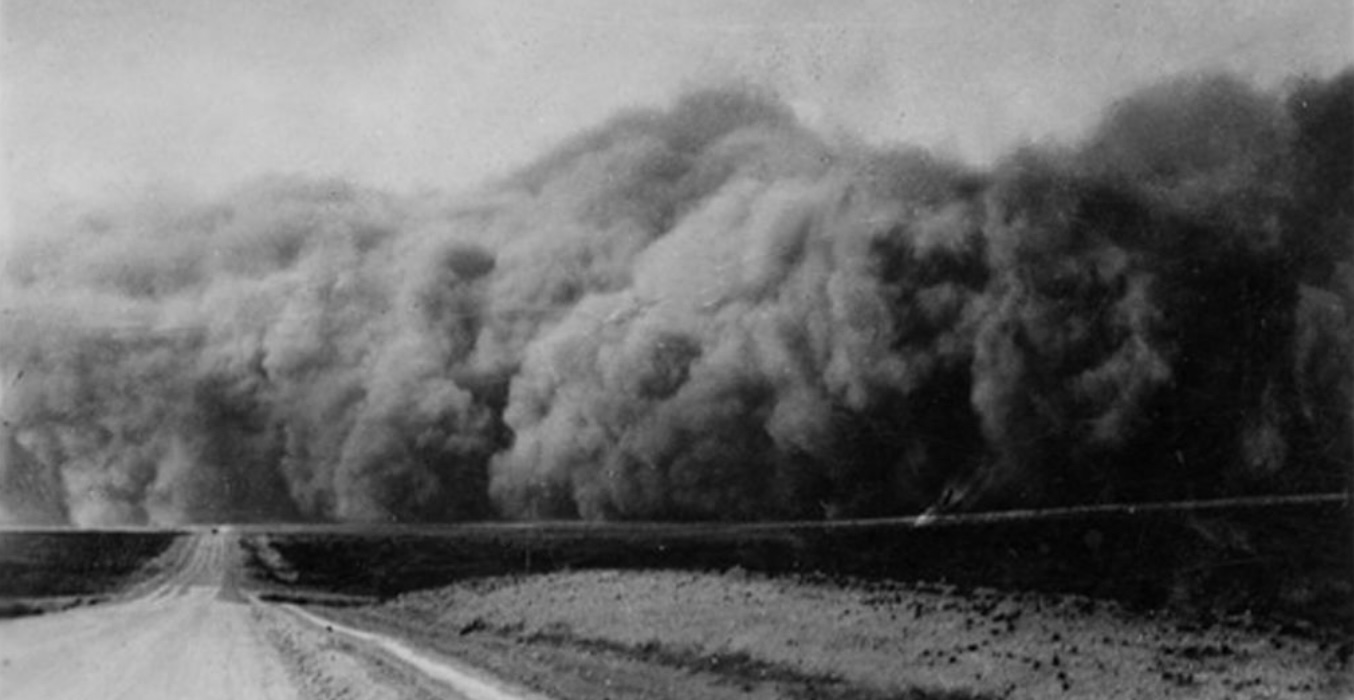
There are many others, of course. Let’s start with “haboob.” It’s a big sandstorm, and back in the day they were known as “sandstorms.”

Screenshot
A sandstorm rolls into Guymon back on ‘Black Sunday,’ April 14, 1935

I wonder how many Western Oklahoma farmers during the Depression ran into their house shouting “there’s a haboob” about the hit? None.

See what I mean? Thunderstorms evolve into derechos and sandstorms become haboobs.

Want more? Bomb cyclone. Polar Vortex. Atmospheric river. Flash drought. I could go on all day.

It’s not all related to weather, of course. In the NFL, we have “edge rushers,” when in the old days we had defensive ends. In baseball, it’s all about launch angles today.

In popular culture, we’ve got FOMO and ghosting and Finstas and Karens and Stans and on and on.

When you’ve reached the Old Man stage like I have, there’s so much to get riled up about. And one of them is KEEPING THOSE PESKY KIDS OFF MY LAWN.

So, I’m headed outside to police my neighborhood and keep an eye out for a dreaded derecho.

Walking tour showcases future impact of OKC’s Convergence project

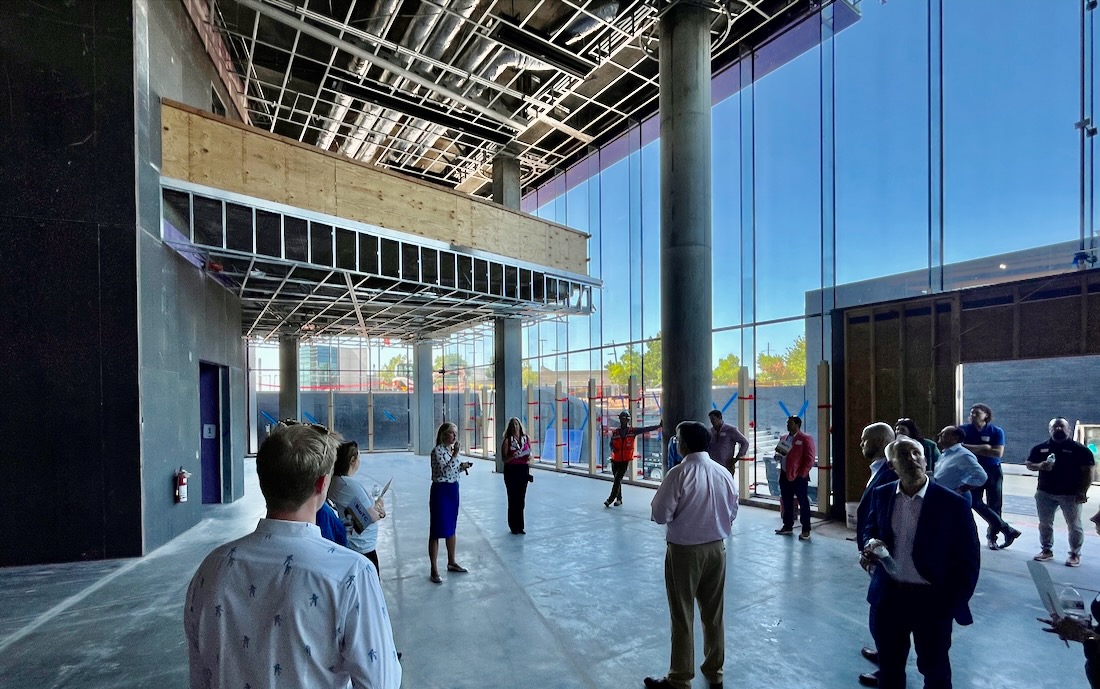
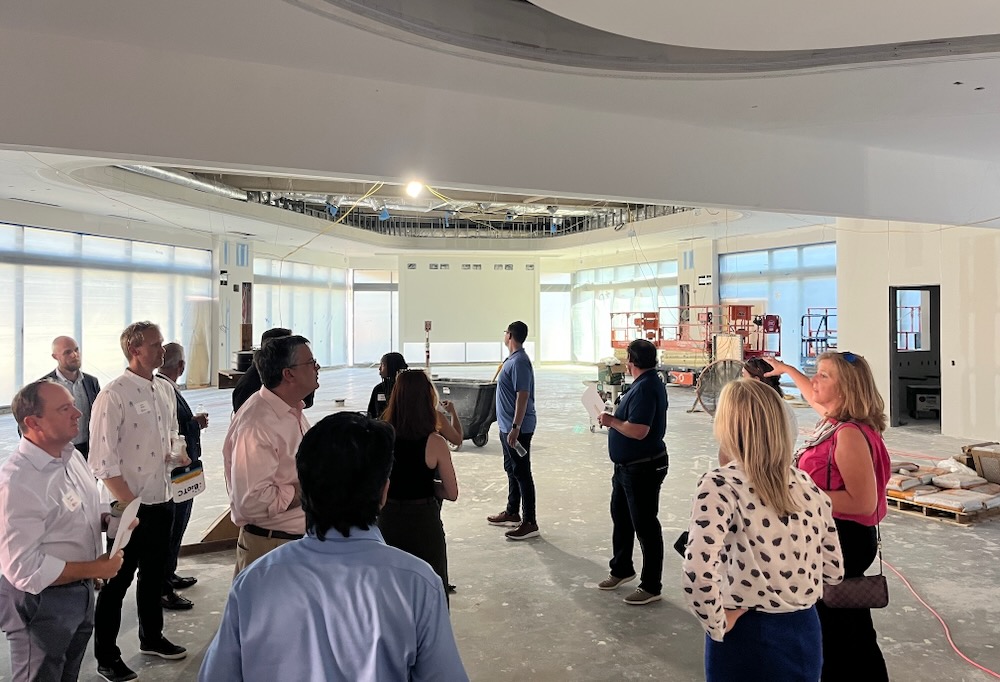
Convergence floor
Second floor of the Convergence tower under development in OKC’s Innovation District.

If you’re like me, you’ve been curious about the new Convergence tower rising from the ground the past couple of years along I-235 just east of downtown.

The eight-floor Convergence tower is a $200 million privately funded development in the heart of OKC’s Innovation District. The project includes the adjacent, MAPS funded Innovation Hall with a future hotel also planned for the site.

A pair of prominent OKC real estate investors/developers in Richard Tanenbaum, CEO of Tanenbaum Holdings, and Mark Beffort, CEO of Robinson Park Investments, have led the Convergence project.

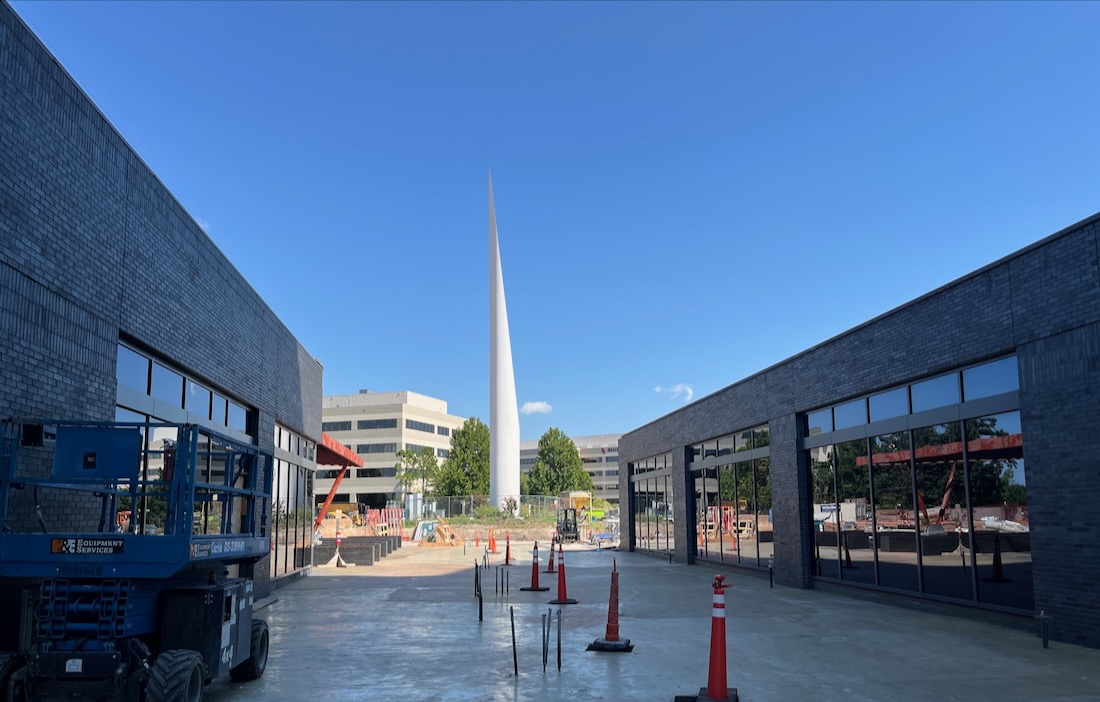
Convergence sits on a pretty small plot of land — 5.5 acres — that surrounds the tiny Stiles Park and its Beacon of Hope, which shines a green light into the night sky like a giant flashlight. The project will have underground parking.

Stiles park
Stiles Park holds its ground as part of the Convergence project

The Convergence website descibes the project as an “ecosystem reshaping Oklahoma City’s economy through innovation, collaboration, diversity and advanced technology.”

The project is certainly reshaping OKC’s Innovation District.

Anyway, I wrangled a ticket to attend the Greater OKC Chamber’s recent networking event and walking tour of the still-under-construction Convergence development.

My professional background includes many years of covering Oklahoma’s emerging biotech industry, first as a reporter for The Oklahoman newspaper and later as a writer and then freelancer for i2E, Inc., the not-for-profit that mentors and invests in many of the state’s entrepreneurial startups.

So, that led me to gather with about 75 folks at the Oklahoma  Our Blood Institute, which sits at the intersection of NE Eighth Street and Lincoln Blvd. It’s maybe a 50-yard walk from OBI to the new development.

Here’s what I learned that afternoon during the networking event and walking tour:

First, the Oklahoma Bioscience Association has been rebranded as Life Science Oklahoma, which made its debut at the annual BIO show in San Diego this past June. My friend, Dr. Craig Shimasaki, co-founder and CEO of OKC’s Moleculera Biosciences,  is co-chair of Life Sciences Oklahoma, along with Andrew Westmuckett, director of technology ventures at the Oklahoma Medical Research Foundation. 

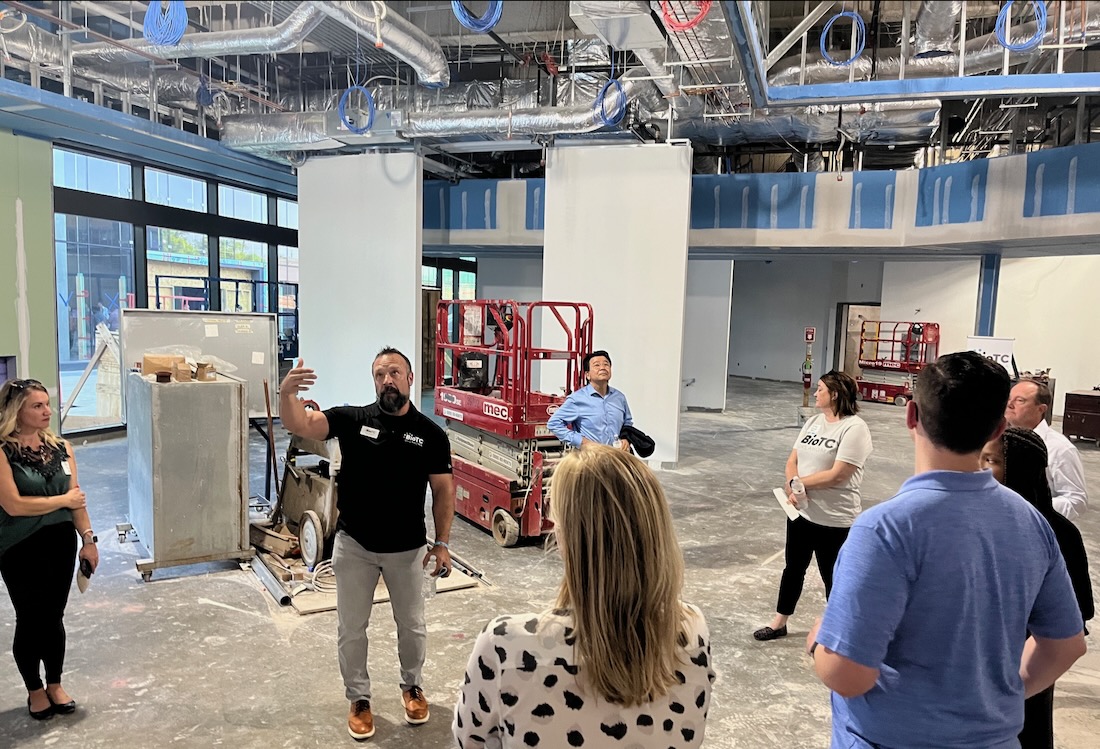
Education will play a major role at the Innovation Hall, which features a Bio Pharmaceutical Workforce Training Center called BioTC.  We received a good explanation of how the space will accommodate aspiring biotech workers from Koey Keylon, BioTC’s, executive director. It will offer one-week, hands-on short courses in biotechnology manufacturing in which students will learn the biotech process and how to use sophisticated technology involved. It also offers an advanced two-week certification curriculum.

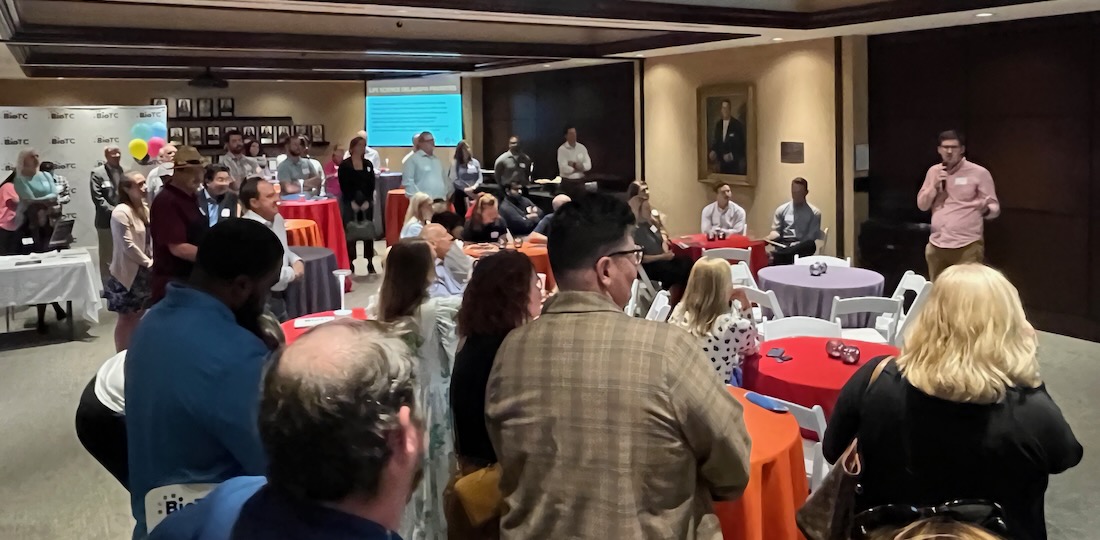
BioTC
Koey Keylon, executive director of BioTC, shows off the educational space in the Innovation Hall

Innovation Hall also includes a large Event Hall, a cafe and lounge open to the public, four conference rooms and two small “phone booth” size work/meeting spaces.

Innovation Hall is part of MAPS 4 Innovation District funding, which contributed $11 million to the development, with another $10 million or so from non-MAPS sources, according to the City of OKC.

After we toured the Innovation Hall, we entered the first floor of the Convergence tower. Much of the first floor will be occupied by Wheeler Bio,  an up-and-coming contract development and manufacturing organization in the life sciences space. Wheeler Bio also will have administrative offices on upper floors of the building.

CrossFirst Bank has been announced as a tenant, while the University of OklahomaTinker Air Force Base  and an unnamed aerospace partner will occupy the eighth floor.

All this was empty space as we toured it, but you could see the possibilities and envision the future.

By the way, I highly recommend you crossing over I-235 onto Eighth Street to drive slowly past the Convergence project for a closer view, then meander through the Innovation District that includes OSU’s Hamm Institute for American Energy adjacent to Convergence on the north side, University Research Park to the south and OU Health Sciences Center to the north and east.

In a year or maybe less, Convergence tower and Innovation Hall should be filled with bioscience research and manufacturing professionals. as well as students aspiring for a biotech career, while offering great meeting and hangout space in the Innovation Hall.

I can’t wait to see it all in action.

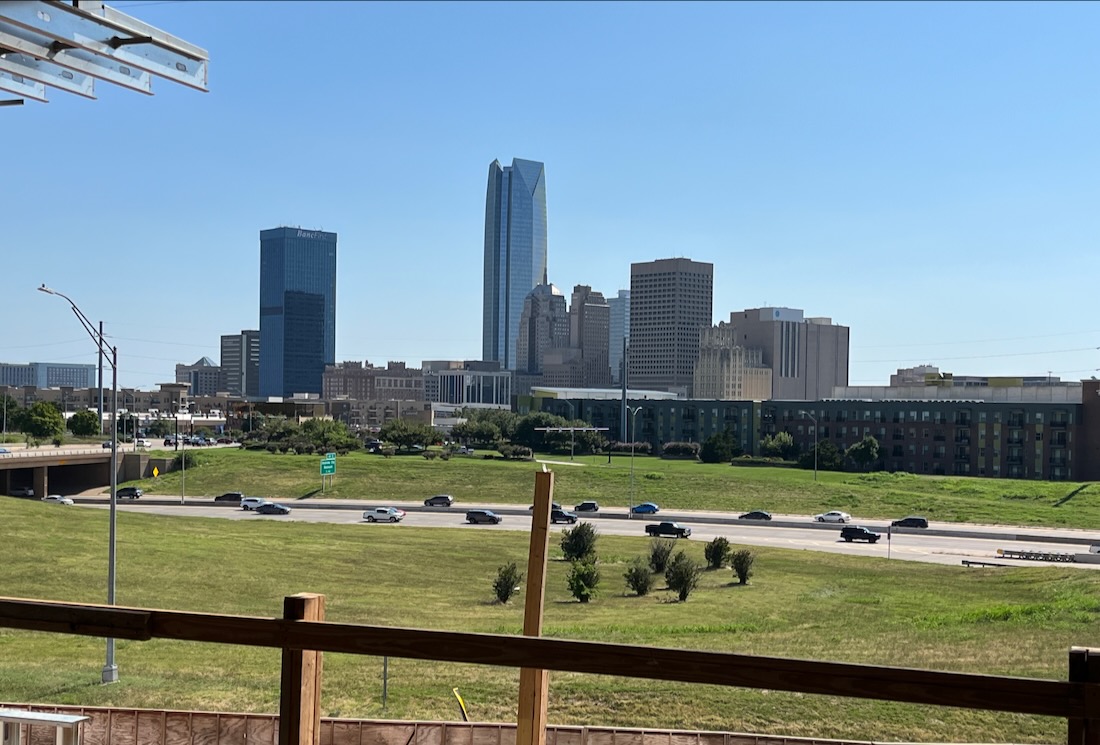
Downtown view
View of downtown OKC from second floor of the Convergence Tower
Innovation Events
Event space in the Innovation Hall
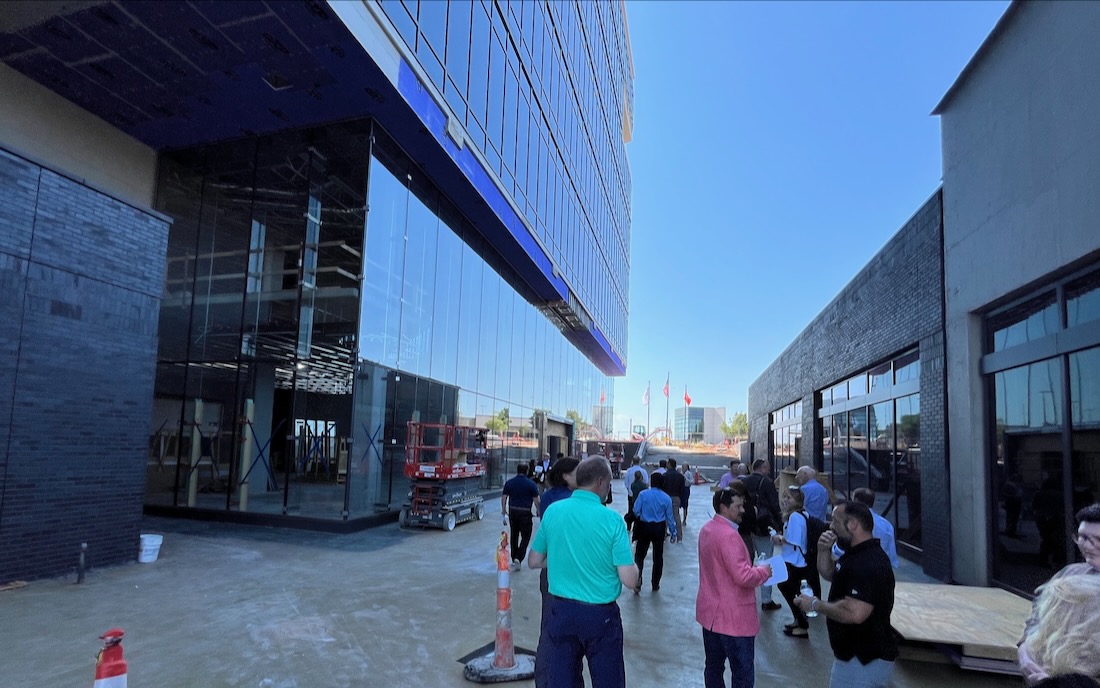
Buildings
Walking between buildings on a tour of the rising Convergence project in OKC.
Jeff Seymour
Jeff Seymour, executive vice president of the Greater OKC Chamber, welcomes guests to the recent networking event and Convergence project walking tour.

Solomon’s ‘road trip’ to OKC’s Omni Hotel

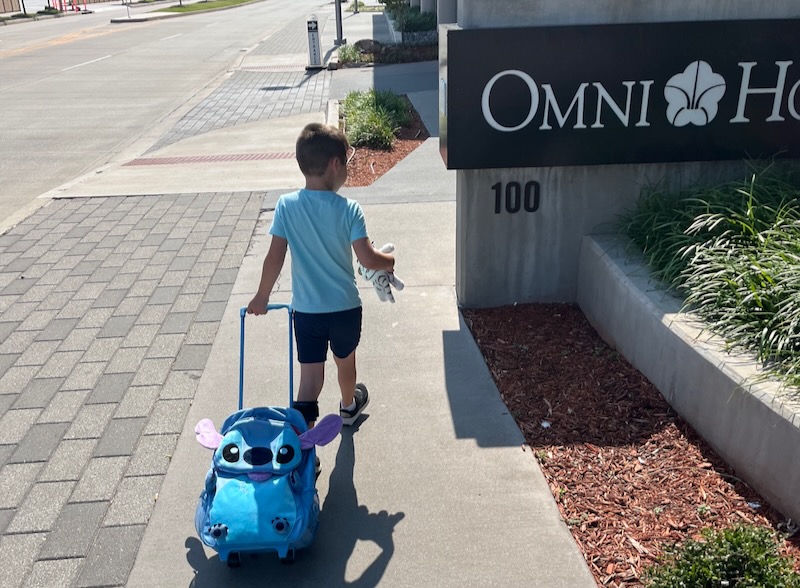
Solomon walking
Solomon rolls his new backpack up to OKC’s Omni Hotel on Friday morning.


This is what happens when his GiGi is out of town on business and Papa is left in charge of entertainment on a Friday for our grandson, Solomon.

I’ll preface this with the fact that 5-year-old Solomon received a nice, “Lilo and Stitch” rolling backpack this week when some visiting relatives presented it to him.

So, when it was just us two early Friday, Solomon said he wanted to go on a road trip. He suggested “the beach” and then Branson.

I said we couldn’t do either of those today, but maybe we could drive up to Guthrie and find a place to eat.

Solomon sort of accepted that, but later told me he wanted to go to that “nice Thunder hotel downtown.” All of us had stayed the night at OKC’s Omni Hotel last year when my wife, Paula, was booked there for a convention meeting.

A visit to the Omni seemed the perfect time-killer. So, I said ‘sure.’

Next thing I knew is that Solomon was loading his backpack up with shirts, shorts and underwear for our trip. Three complete outfits.

He insisted I take my overnight case, too.

So, we loaded up the car and headed downtown about 9:30 am and found a parking space along the street just north of Scissortail Park.

I got Solomon’s backpack out of the trunk, and he immediately began marching toward the hotel. I trailed along behind.

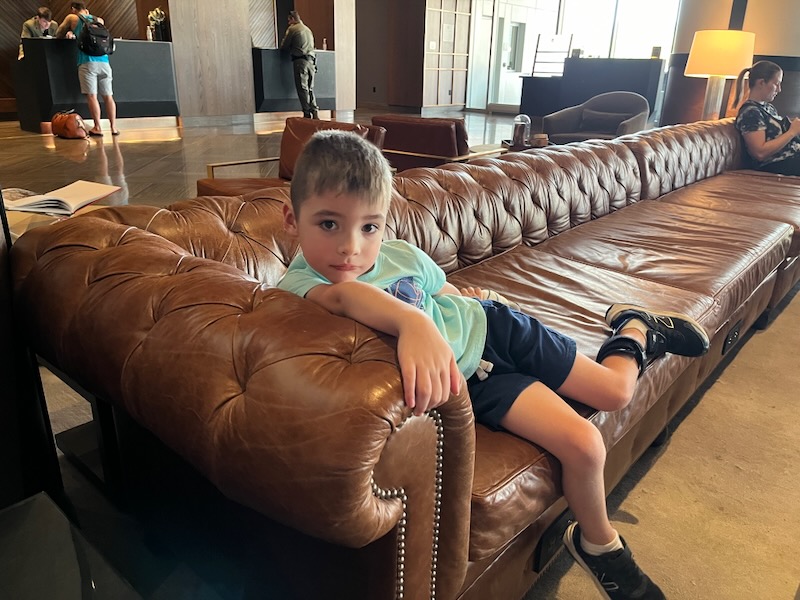
Anyway, we entered the lobby of the hotel and found a nice couch to lounge on and soaked up the cool air for a while. Solomon was great for a few minutes, then got a little restless.

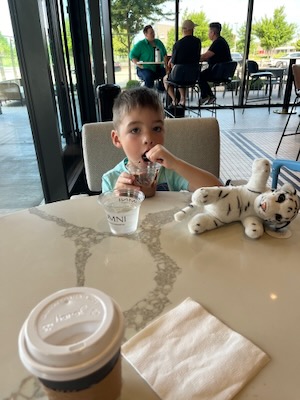
ice creamI suggested we walk around and explore the hotel. We took the escalator the second floor and discovered the massive meeting spaces the hotel offers (I was surprised at the amount of meeting space because the hotel sits adjacent to OKC’s new convention center).
Then we headed back downstairs and found the hotel coffee shop, Park Grounds. I got a coffee and Solomon enjoyed a cup of ice cream.

We sat there for several enjoyable minutes. I met a young woman from St. Louis who was here in town for a national sorority meeting next door at the convention center.

My serenity was broken when Solomon finished his ice cream and walked over to my chair.

“Papa, I’m ready to go up to our room now.”

I had to break it to him that we had no room at the Omni. We were merely loiterers who were taking advantage of the hotel’s cool air and nice ambiance

So, we closed out our visit with another few minutes of lounging and people watching in the lobby.

Finally, I told Solomon we had to go. He grabbed his backpack and rolled it back onto the sidewalk outside.

We had killed most of the morning at the Omni. And that’s a winner!

lounging
Solomon lounging in the lobby of OKC’s downtown Omni Hotel.

The ’65 Mustang was my Aunt Dee’s ride or die

Screenshot
A black ’65 Mustang that looks exactly as I remember the one driven by my Aunt Dee.

This is a story of the Ford Mustang. Or, rather, two Ford Mustangs. One of them did not have a happy ending, and I was in it.

If you are hazy on your Ford Mustang history, I’ll catch you up to date a bit. The Mustang was conceived by a team at Ford led by Lee Iacocca, who later gained fame as the man who saved Chrysler.

The first Mustang was introduced to the public in April 1964, as the “1964-1/2” Mustang. It was an instant hit. The public fell in love with it because it had a unique, sporty body style compared to what U.S. autos had been, which were cars shaped like boxes and quite unattractive.

Purchasing a brand new Mustang off the showroom floor in 1964-65 would set you back $2,400, according to cars.com. Today, those antique vehicles bring from $16,000 for the coupe to $33,000 for the fastback model.

My dad was among the millions of Americans who were taken by the Mustang and eventually bought one when he was stationed on the island of Okinawa while in the military. I’ll come back to that.

Anyway, the Mustang was beloved by my dad and so many others because it had a long nose, short rear end and distinctive grill and tail lights. Eventually, it came in a 2-door coupe, convertible and the incredibly popular fast-back.

I’m writing about the Mustang because my 5 year-old grandson, Solomon, and I discovered a show on the Roku channel called “Counting Cars,” which follows a shop in Las Vegas that rehabs older vehicles and turns them into showpieces.

We streamed an episode this morning in which the shop refurbished a ’65 Mustang and turned it into a perfect candy apple-red rendition of how it must have looked on the showroom floor in 1965. Solomon could not get enough, running through the house to get his grandmother to come in and see the beautiful car.

So, two Mustang stories.

When I was a senior in high school, I lived with my aunt and uncle in Fort Smith, Ark. My aunt Dee drove a black ’65 Mustang and was so in love with the car that she told everyone she would never drive another.  Its compact size made it easy for her to maneuver on the road.

Fast forward to roughly 1980, when I was a young sports reporter at the Southwest Times Record, which had its offices and newsroom in downtown Fort Smith.

One day, as I stepped out of the building onto the sidewalk, my uncle, L.R. Mendenhall, drove up and parked Aunt Dee’s Mustang right outside the SWTR’s door along Rogers Ave.

At virtually the same moment, Leroy Fry, who was the newspaper’s managing editor, walked out of the building and spotted the Mustang. I introduced my Uncle “Blue Eyes” (as he was known to our family) to Leroy. The editor told him that he had to have that Mustang and how much would my uncle sell it to him for.

“It’s not for sale,” Blue Eyes told him. “It’s my wife’s car and she says it’s the only one she will ever drive.”

End of story.

That black Mustang was my Aunt Dee’s ride or die, and I’m pretty sure when she died in roughly 2000 that the car was still in her family’s possession.

My second Mustang story involved the 1967 Mustang my dad bought while on Okinawa. He was in the Army, so our whole family lived on the island. This was in 1968 when I was 15 years old.

Dad loved his Mustang, which was painted in a sort of burnt-orange color, and drove it every day to work. He was a hot GI in a hot vehicle.

Screenshot
A ’67 Mustang similar to that owned by my dad, although his was more of a burnt orange in color.

I wanted to drive it, too, and begged him to let me get behind the wheel. So one weekend he asked the son of a family friend who was about 19 years old to drive me and the Mustang to an abandoned Japanese airstrip where I could drive it and stay out of harm’s way.

I remember driving back and forth on the airstrip multiple times and getting a feel for the car. Then we decided to head back to the military base where our families lived. I moved over to the passenger side, and the older kid (can’t think of his name now) took the wheel.

We drove off the airstrip and back onto the rural two-lane road that was adjacent to a field of sugar cane. My young driving instructor said, “let’s see what this car can do,” and gunned it.

I’m not sure how fast the car was traveling, but we roared down that rural road until my driver suddenly realized there was a 90-degree turn at the end and started screaming that we weren’t going to make it.

We didn’t.

The car flew off the end of the road at the hairpin curve, hit hard in the sugar cane field and landed on its side. Neither one of us had buckled our seatbelt (hey, this was the ’60s), but we were mostly uninjured. My friend cut his hand on the steering wheel when the padding came off.

We climbed out of the driver’s side, which was facing the sky and then tried to figure out how to contact our parents in this era before the cellphone was a gleam in anyone’s eye.

There was a military installation about a half mile away, so we walked to it, told the guards at the security gate what happened, and they let us call our parents. Of course, we told them exactly how it happened.

The car looked OK to me, but had to be towed to a shop somewhere on the island. Turns out the frame was bent and the insurance company declared it a total loss.

My dad was heartbroken, of course. But the fact that we were unhurt took some of the steam out.

He never owned another Mustang.