Best of BlogOKC in 2025

Editor’s note: As the curtain closes on 2025, I’ve gone through everything written on BlogOKC for the past year for my annual ‘best of’ column in which I select what I consider to be the best 10 of the year. In looking at the posts, I see a trend in what appeals to me for subject matter: nostalgia. Maybe I look back too often for topics that interest me, but that’s a lot of what I write about. Enjoy the top 10:

Frank Day’s labor of love honors the dying art of quilting
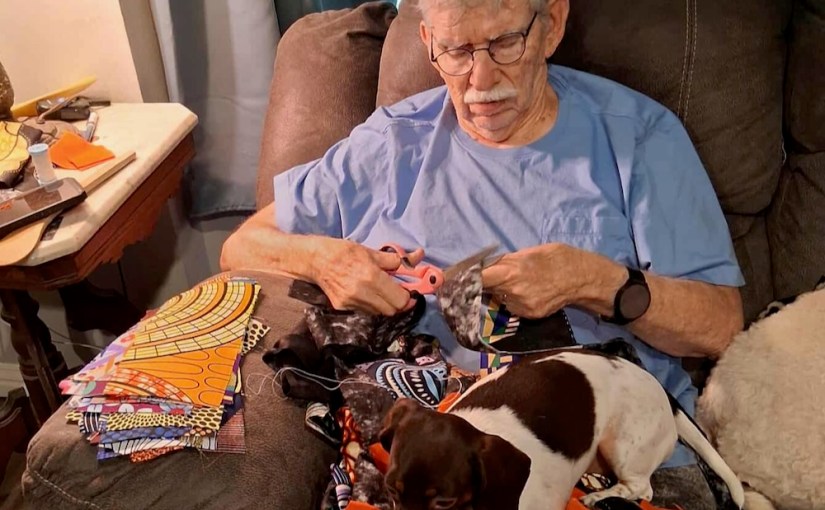
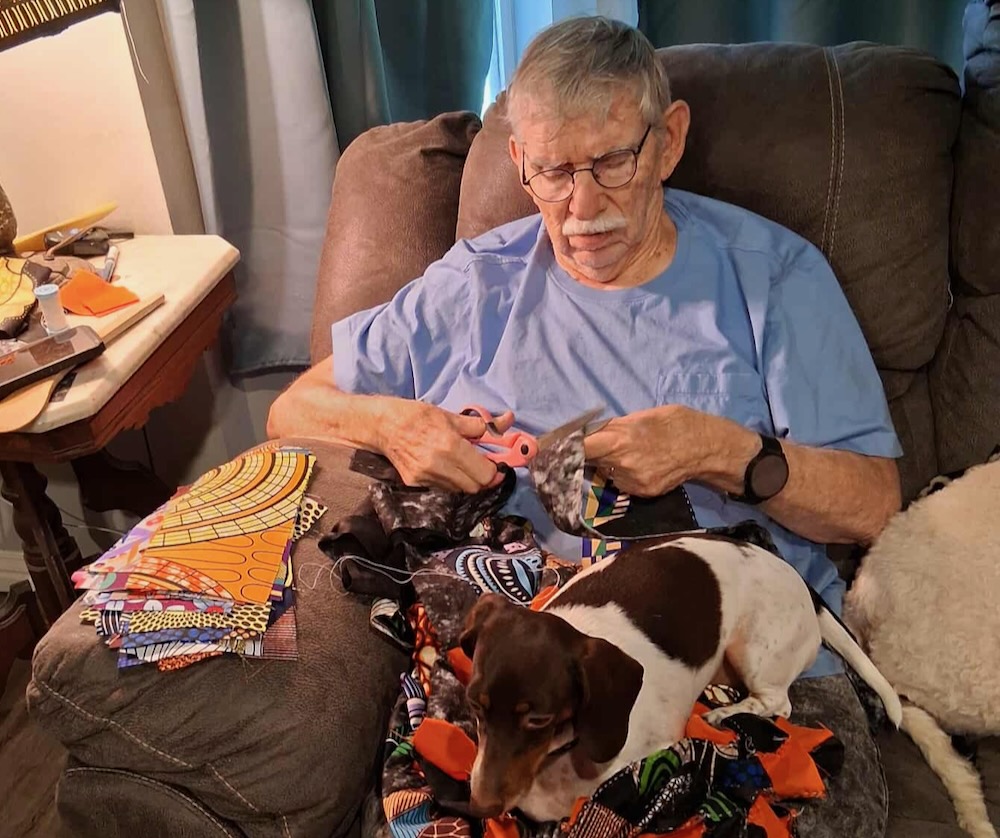
Frank Day works on a hand-stitched quilt, accompanied by one of his favorite pets.

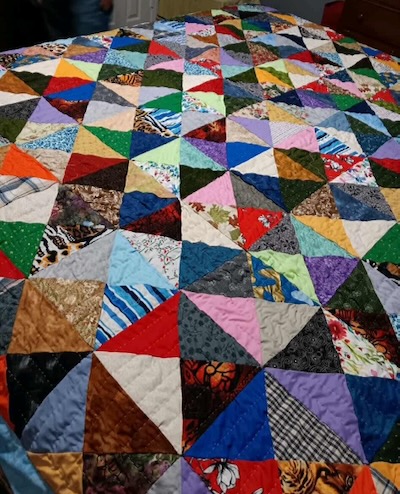
A personal favorite right at the top. I discovered that my long-time friend Frank Day from Roland, OK, has become a prolific quilter. Today Frank is 75 years old and retired after more than two decades as fleet sales manager for Fort Smith’s Randall Ford. I think he can best be described in 2025 as a one-man quilting bee. That’s right. Frank Day began hand-stitching beautiful quilts over two decades ago, and continues his quilting avocation today.  Read it here.

Best of the best: Top 10 episodes of the Andy Griffith Show
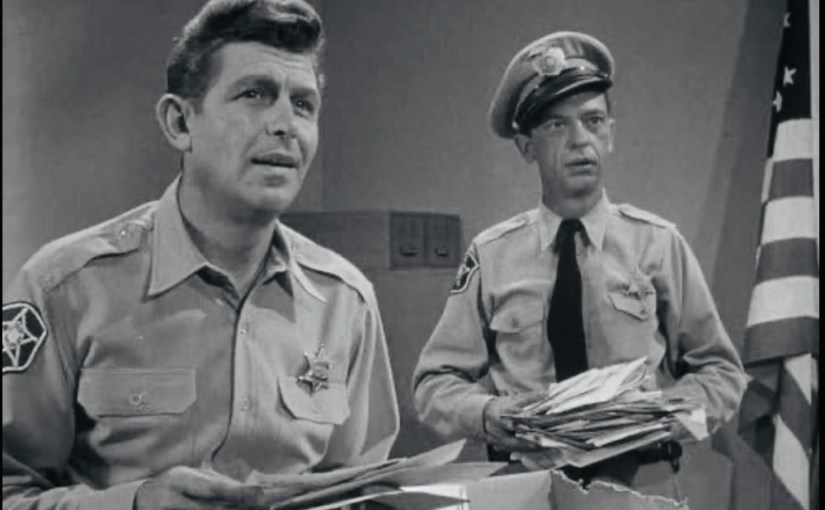
Andy Griffith and Don Knotts from an episode of The Andy Griffith Show

This post is on its way to becoming one of BlogOKC’s most read posts of all time. Here’s the first few sentences: “If I look at my friend Ed and say ‘how do you do Mrs. Wiley?’ he will know exactly what I am saying. In fact, he might reply with something like ‘I would recognize that accent anywhere. It’s definitely Back Bay Boston.’ Ed and I are true geezers, which means each of us has crossed over the retirement bridge and can indulge in pasttimes as we choose. And one of those is watching the Andy Griffith Show. Read it here.

Breaking News: Grape Nehi lives in 2025!

I discovered this bottle of grape Nehi during a recent visit to an OKC Cracker Barrel store.

So that brings me to August 2025. I discovered Cracker Barrel sells grape Nehi among the many nostalgic candy and soda brands it offers. When we arrived at the store along I-35 in far north OKC, it was filled with customers, and we had about a 35-minute wait for a table. As I sauntered through the store during our wait, I stumbled upon a soda display that had a grape Nehi right in the middle. Grape Nehi lives! Read it here.

Best of Barney: Quoting the greatest sitcom character in television history
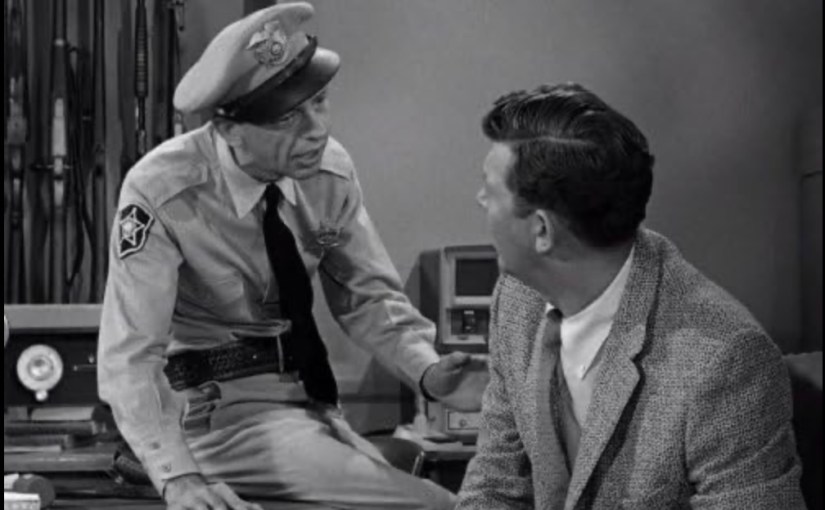
Barney consoles Andy with a heart-to-heart talk

My friend Ed Godfrey shared what he considers to be the best 10 Barney Fife lines from the old Andy Griffith show. Here’s how he started the post. “The best sitcom character in the history of television is Barney Fife, played by the great Don Knotts. I’m sorry, if you don’t agree, you’re wrong.”  Read it here.

Theodora’s Elegante Wigs thrives amid generational ch-ch-changes
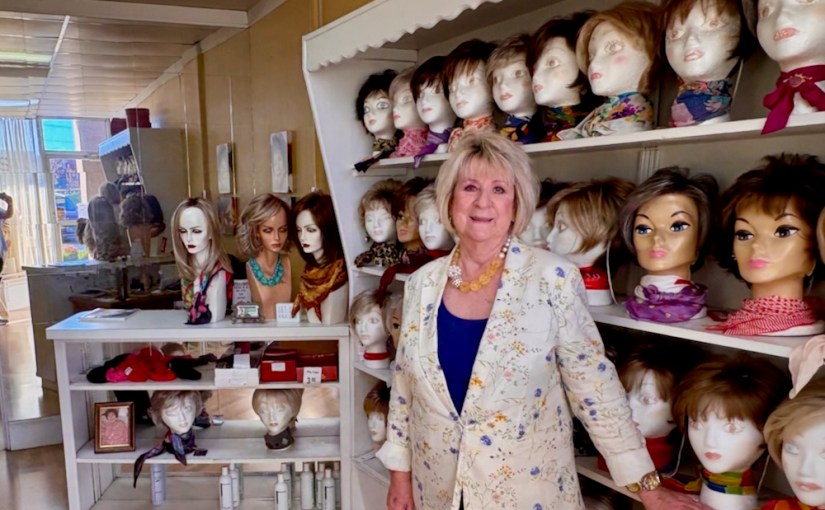
Linda (Faubus) Lewis is surrounded by wig-covered mannequin heads at her Theodora’s Elegante Wigs shop.

Another personal favorite because it reaches way back to my high school days. “When I saw the ‘Theodora’s Wigs” sign as I was driving past in Fort Smith, Ark., this week, it took me back more than 55 years into an earlier life. So, I veered off Towson Ave., into the Phoenix retail center lot and parked outside the wig shop. Read it here

Meet the International Man of Mystery from Stigler, OK

Hershel Prentice at recent OKC Thunder game

If you ask Stigler, OK, native Hershel Prentice where in the world he’s been lately, he’ll gladly tell you. Dubai? Check. Oman? Check? Poland? Check. Austria? Check. Germany? Check, Newfoundland? Check? Labrador? Check. Check. Check. Whew! And that’s just this year. Read it here.

Gov. Stitt, let’s value lives over dollars
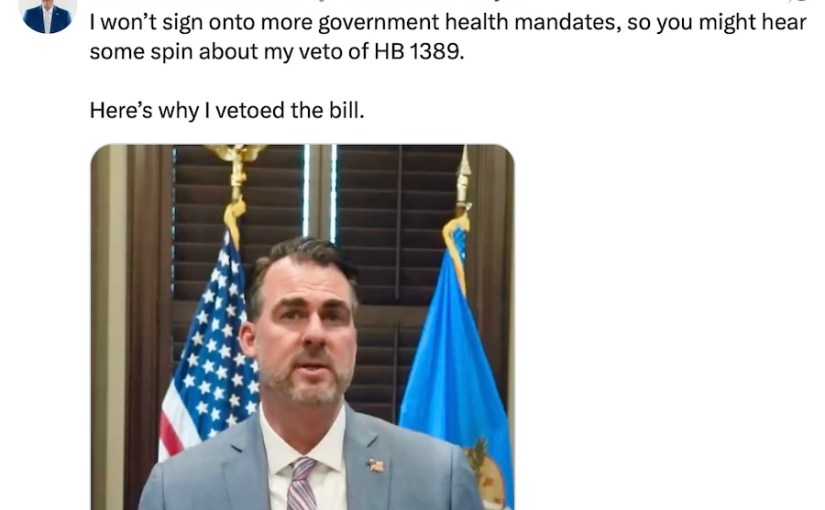

I don’t often take a political position in this blog, but when Gov. Stitt vetoed legislation that expands access for women to imaging technology that can detect breast cancer, I had to speak up. I called my legislators urging them to help overturn Gov. Stitt’s veto of legislation that expands access for women to imaging technology that can detect breast cancer. My wife, Paula, a breast cancer survivor, called our legislators, as well. Then I published this post. Read it here.

Customer service, without the ‘service’
The tail of an American Airlines jet

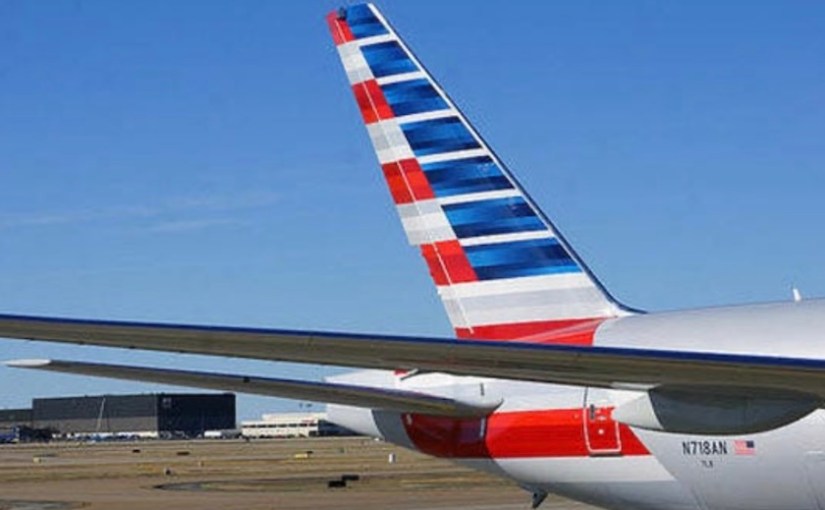
More BlogOKC advocacy from a January post: Call me an entitled American, if you like, but there seems to be a wide gulf these days between the words “customer” and “service” in our society. I’m talking about when you call the “customer service” line of a major corporation and have to work through 15 AI bots that can’t help with any of your issues before a human finally comes on the line. Today, I’m ranting about a recent experience with the customer service department at American Airlines. (American fixed the problem after this post was published) Read it here.

Dunning-Kruger Effect: I knew it all until I realized I didn’t
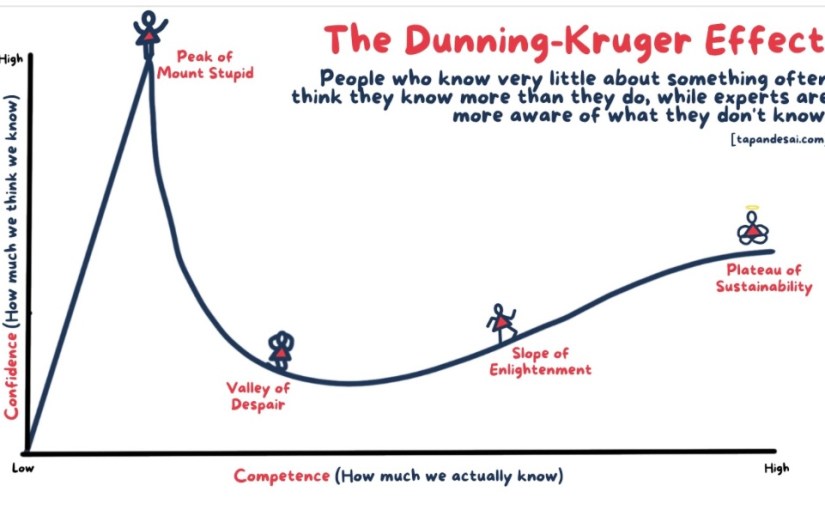
When I graduated high school in 1971 — in the bottom half of my class academically — I plunged into my future thinking I pretty much knew everything I needed to know and could handle anything coming my way. However, I didn’t know what I didn’t know.  Read it here.

London Homesick Blues puts me back in that place
Some college nostalgia: Back to 2025. I’m not sure how or why, but I began listening to “London Homesick Blues” on replay over the course of the past couple of months. A wave of nostalgia washes over me when I hear it, and it really does take me back to that place — the ACU campus and the people with whom I shared classes and The Optimist newsroom. Read it here.

BONUS CONTENT

Why I’m living the Hallmark lifestyle
Read it here.

Drivers beware: Speed traps live on
Read it here.

Apple draws the line on altered reality in photos
Read it here.

Aging Well: 3 Old Geezers Podcast returns
Read it here.
Drivers beware, speed traps live on


What comes to mind when you see the words ‘speed trap?’ Barney Fife, perhaps?

Yeah, you know what they are. A cop car parked behind a sign or tree just off the highway, typically at the edge of a small town in an area where speed limit suddenly drops from say, 65 mph to 45.

Gotcha!

Way back in the olden days when I was in college driving from Abilene, Texas, back home to Fort Smith, Ark., I learned to be extra cautious when I drove through Stringtown, OK.

Stringtown was notorious for handing out speeding tickets to drivers passing through town on U.S. 69 and unaware that speed limit changed abruptly. It already had a reputation as a speed trap, and my dad warned me about it before I made my first trip.

By 2014, most everyone who didn’t hail from Stringtown had had enough. It was revealed that 76 percent of the town’s revenue — $483,000 in 2013 — was generated by traffic tickets, far more than the 50 percent cap set by the state legislature.

So, the Oklahoma Department of Public Safety announced that Stringtown police officers no longer could enforce traffic laws on state and federal highways.

Turns out that Stringtown was a repeat offender. It also drew state sanctions in the 1980s, three decades before the latest action. Read about it in this 2014 article from The Oklahoman.

But speed traps live on today in other communities across the state.

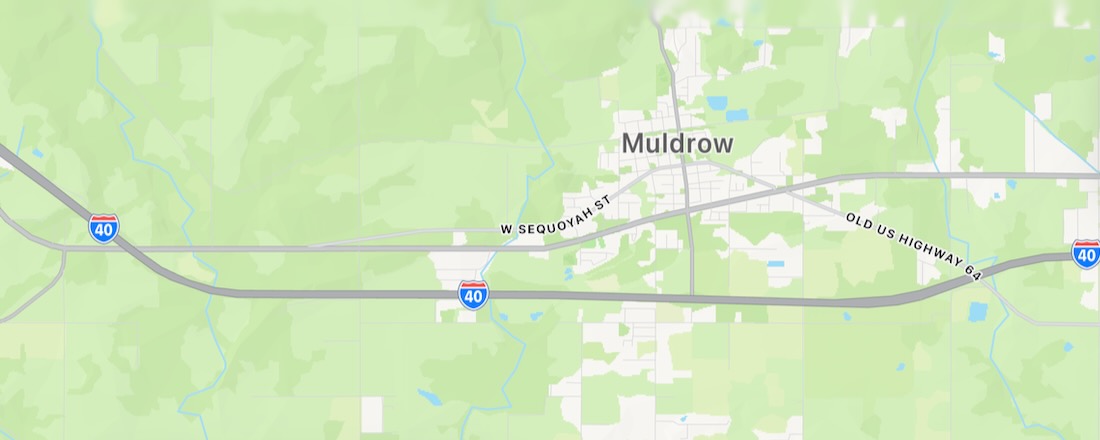
I drove through one in Muldrow, OK, just this past weekend. I saw a Muldrow police SUV hidden behind some barrels in the median of I-40 shortly before 7 am on Sunday.

Yes, Muldrow city officers were patrolling the Interstate! Maybe a quarter mile of I-40 goes through Muldrow city limits, which apparently gives their officers the right to patrol that stretch and hand out traffic tickets to protect their citizens.

I wasn’t even aware that stretch of I-40 was within the city limits of the city of Muldrow because it looks like a fairly rural area. Fortunately, I did not get pulled over — this time.

But the fact that he was out there monitoring traffic before sunup along the short stretch of Interstate that passed through the city limits really irked me.

So, I called the Muldrow Police Department on Monday to ask if they patrol the Interstate and why.

“Yes, because it is part of our city limits,” I was told.

OK, my next question was “does the city have an agreement with the state that allows it to patrol the Interstate in place of Highway Patrol?”

“I have no idea,” she said. “You will have to ask someone else that question.”

I’ve read that the state has to authorize communities to patrol state and federal highways that pass through their city limits, although I wasn’t sure that’s accurate. So I looked it up.

Here’s what I found in an online search of Oklahoma law:

“The Commissioner may designate any portion of the National System of Interstate and Defense Highways, and those portions of the federal-aid primary highways and the state highway system which are located within the boundaries of and on the outskirts of a municipality for special traffic-related enforcement by the Oklahoma Highway Patrol Division and issue a written notice to any other law enforcement agency affected thereby. Upon receipt of such notice, the affected law enforcement agency shall not regulate traffic nor enforce traffic-related statutes or ordinances upon such designated portion of the National System of Interstate and Defense Highways or such designated portions of the federal-aid primary highways and the state highway system without prior coordination and written approval of the Commissioner.”

I’ll translate:  The state highway commissioner can forbid municipalities from enforcing traffic laws on state and federal highways.

Muldrow’s next door neighbors in Roland also patrol their stretch of I-40, according to my friend and lifelong Roland resident Frank Day. In fact, I found this story about Roland’s well deserved speed trap reputation from a 1999 edition of The Oklahoman.

Reddit users provided many more known speed traps. “Asher, Big Cabin, Savanah, Calera… really any small town with a highway through it,” offered a user who goes by FakeMikeMorgan.

Anyway, small town speed traps always remind me of Deputy Barney Fife and his “Checkpoint Chickie” speed trap in Mayberry on The Andy Griffith Show back in the day. Watch a clip below.

I’m asking readers to submit their least favorite speed traps from around Oklahoma — and beyond. I’ll add them to this post and we can compile a list to help our fellow travelers in the future.

Consider it a service, like flashing your lights at ongoing vehicles after you pass a cop-in-waiting.

You’re welcome.

Here a speed trap contribution from Inona Harness via her son, Casey. Waukomis, OK, which is due south of Enid.  Thank you, Inona!

Frank Day’s labor of love honors the ‘dying art’ of quilting

Frank Day works on a hand-stitched quilt, accompanied by one of his favorite pets.

Let me tell you about my friend Frank Day of Roland, OK, whom I have known since approximately 1971 when we both worked for Hunt’s Department Store in Fort Smith, Ark.

Frank was a recent graduate of Northeastern State University in Tahlequah and I was a senior at Southside High School.

Over the years, we drank gallons of coffee together, ran trot lines at 2 am in the Arkansas River and stalked raccoons in the middle of the night in the Paw Paw Bottoms, among other adventures.

But life took me to Oklahoma City in 1983 for a job with The Daily Oklahoman newspaper, so we haven’t seen a lot of each other in the intervening years.

Today Frank is 75 years old and retired after more than two decades as fleet sales manager for Fort Smith’s Randall Ford. I think he can best be described in 2025 as a one-man quilting bee.

What?

That’s right. Frank Day began hand-stitching beautiful quilts over two decades ago, and continues his quilting avocation today.
Frank, I thought I knew you.

There goes my image of the typical quilter as someone’s grandmother.

Turns out that quilting is something Frank learned as a child from his mother, Dortha Day and turned it into an ongoing hobby many decades later.

“When I grew up, Mother was quilting all the time,” Frank told me. “She belonged to a quilting club, a bunch of women who got together at someone’s house and could finish a quilt in one day. I grew up watching her, and she showed me how to do it.”

Frank’s wife of more than 50 years, Vicki, added her perspective.

“Frank’s mother Dortha always had a quilt rack on the ceiling,” Vicki said. “I remember Granny, everyone called her Granny, quilting on the old quilting frames and singing hymns. When the grandchildren came along they would all play under the quilt frame.”

However, Frank had never made a quilt until his first grandchild was born more than 20 years ago. He produced his first quilt for grandson, Trevor, and has continued quilting through the years.

“I said I’m going to get some material and make a quilt,” Frank said of that first attempt. “Vicki said ‘you don’t know how.’ I said, ‘you watch me.’ I got the material and sat down and started sewing. And I got it done.”

That first quilt led into one for each grandchild, then special quilts for relatives and friends. Sometimes he makes them for folks who’ve had a stretch of bad health or difficult life situation, like a former coworker at Randall Ford to whom he presented a quilt.

“She started crying, but it was because she was happy to get it,” Frank said.

A quilt is not made in a day. Or a week. It might require more than a month of work for a solo quilter like Frank Day.

“From start to finish, if it’s a king-sized quilt, you have about 250 hours in it,” he said. “That’s cutting the material out — I hand sew everything, nothing is made on a machine. I hand stitch it, get the backing for it, get the lining for it and put the blocks on top.”

Did you catch that … 250 hours for a single quilt. That’s 6-1/4 40-hour working weeks of quietly sitting alone stitching blocks of material together into what can be a beautiful pattern.

My own grandmother was a quilter, and I recall she had a large wooden frame that she let down from the ceiling that helped her make her quilts.

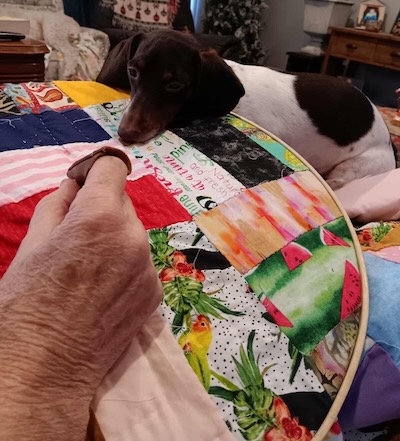
Frank uses a ‘hoop’ that he holds in his lap as he quilts. Usually, one of his favorite dogs is sitting nearby or even on his lap as he quietly works.
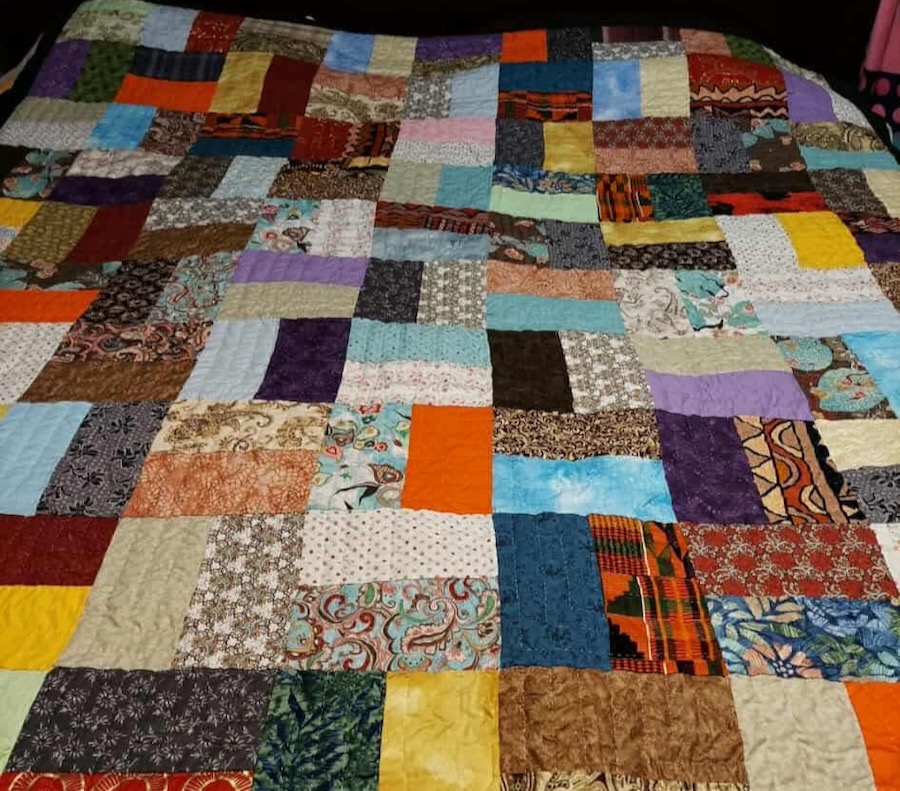
Although he hasn’t made quilts to sell, Frank told me that comparable hand-made quilts can be priced at $1,800-$2,500 because of all the time required to produce one.

“It’s very time consuming, and most people don’t have the patience for it,” he said.

I learned that Frank was a quilter after Vicki posted some pictures of beautiful quilts on Facebook and I complimented her on her quilting talent. She corrected me and said it was all Frank.

“When Frank made his first quilt before Trevor, our first grandchild, was born, we had been married for 30 years and he never made one before,” Vicki said. “I asked him why he never made one before and his answer was “I never had a reason to make one.”

“Frank’s quilting has bloomed over the years. He made one for our son, Paul, as a wedding gift and then for our daughter Jenny. He made one out of cancer warrior scarves that Ford gave to dealerships for Breast Cancer Awareness.”

Each quilt is made with a purpose.

“Frank had a good friend, Dudley Sparkman, who was the best man and friend you could ask for,” Vicki said. “Sadly, he had a massive heart attack on his 50th birthday and passed around two weeks later. Tina Sparkman, Dudley’s wife, asked Frank if he would make a lap quilt out of some of his shirts. That was probably one of the hardest quilts he ever made because on the friendship they shared.”

Quilters like Frank Day who make the time to sit and hand-stitch a beautiful design are a rarity in 2025. Today, most quilts are machine stitched.

Frank calls hand-made quilting a “dying art” that he’s keeping alive in his corner of the world. Currently, he’s working on a quilt for Vicki as he recovers from a recent knee-replacement surgery.

“It’s helped me keep my sanity when I’ve had to sit for long stretches as I recovered from knee surgery that put me down,” he said. “I’ve finished one and got close to half of another one put together.”

It’s one stitch after another after another for a quilter like Frank Day. That translates into hundreds of hours to produce just one quilt.
It’s a marathon, not a sprint.

Frank has run that marathon for more than two decades.

And that’s why I describe him as the ultimate one-man quilting bee.

BONUS CONTENT:

I asked ChatGPT to explain the concept of a “Quilting Bee” to me. Here’s what it told me:

A quilting bee is a social gathering where a group of people—traditionally women—come together to work on quilting projects, usually a large quilt, while also enjoying conversation and community.

Key Features:

– Collaboration: Multiple people contribute to making one quilt. Often, the quilt top is pieced together ahead of time, and the bee focuses on quilting (stitching the layers together).
– Social aspect: It’s as much about socializing and bonding as it is about the sewing. These gatherings were historically important social events, especially in rural communities.
– Tradition: Quilting bees have roots in 18th and 19th century America, when they served as a practical and communal way to create bedding before mass production.
– Modern bees: Today, quilting bees still exist, though they might be less formal or might happen in quilting guilds, workshops, or even online.
Think of a quilting bee as a mix of a sewing circle, a social event, and a creative collaboration.