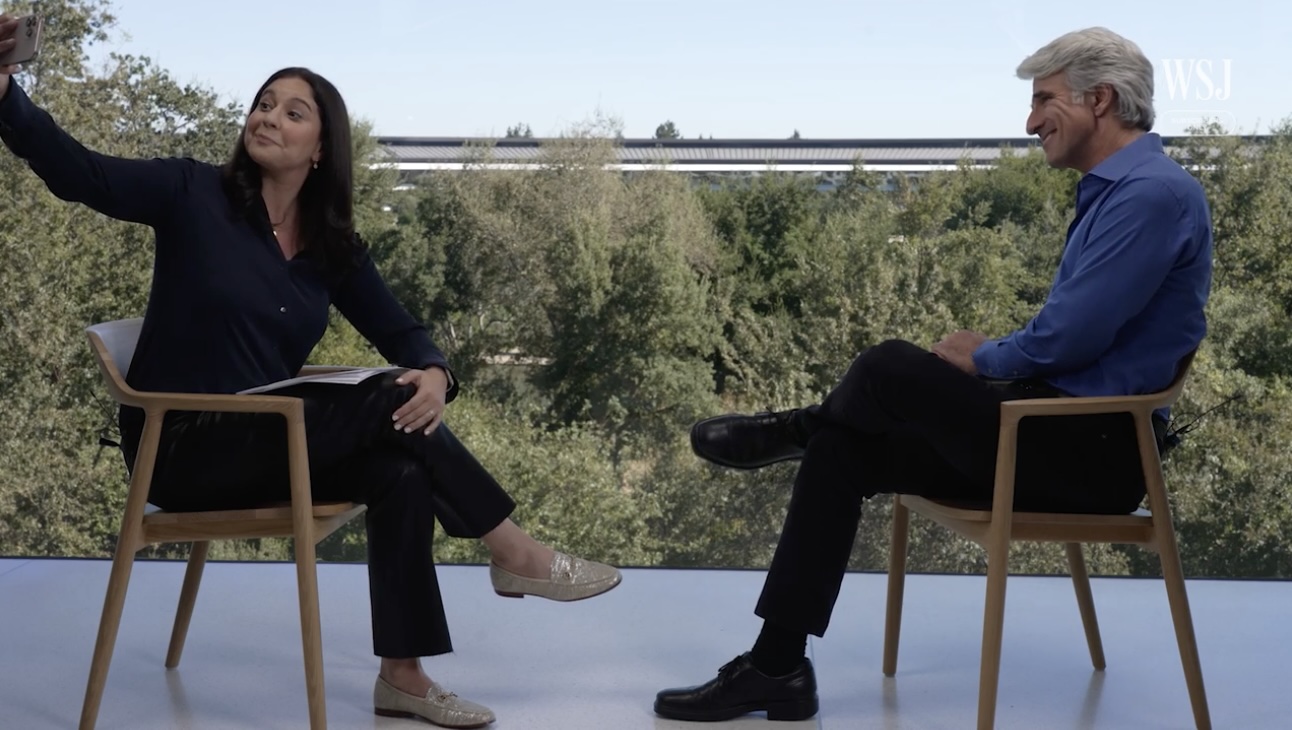
If you’ve ever been fooled by a photo that had something added — or eliminated — you should watch this fascinating video interview by Wall Street Journal tech reporter Joanna Stern with Apple Inc.’s software chief Craig Federighi. The interview focused on Apple Intelligence, which is Apple’s version of artificial intelligence.
Near the end of the 25-minute interview, Stern raises her iPhone and takes a selfie of herself and Federighi as they are seated across from each other at the company’s Apple Park headquarters in Cupertino, Calif.
Then it got really interesting.
Stern showed the photo to Federighi and, using Apple’s most recent photo editing software, quickly edited out a water bottle and a microphone that the photo had captured.
She edited the photo with the intention of showing how easy it is to remove unwanted objects from photos, then asked Federighi about Apple’s approach to allowing users to alter reality in their photos. Or even adding in objects or people who weren’t there.
Federighi’s thoughtful answer about Apple’s decisions on limiting AI use in its photo software intrigued me.
“There were a lot of debates internally, ‘do we want to make it easy to remove that water bottle or microphone’ because that water bottle was there when you took that photo,” he said. “The demand from people to clean up what seem like extraneous details in a photo that don’t fundamentally change the meaning of what happened has been very, very high. So we were willing to take that small step.”
However, the company ensured that if a photo was altered, it was reflected in the metadata for that photo. And Federighi said Apple drew a line on further editing to alter the reality of their photos.
“We are concerned that the great history of photography and how people view photographic content as something that you can rely on, that is indicative of reality …” Federighi said. “And our products, our phones are used a lot, and it’s important to us that we help convey accurate information, not fantasy … we make sure that if you do remove a little detail in a photo, we update the metadata on the photo so you can go back and check that this is an altered photo.”
It’s clear that Apple has given this subject a lot of thought and is working to distance itself and its software from ‘deepfakes’ that seem to be showing up everywhere. Just check your Facebook feed.
Here’s a link to an article in Info Security Magazine that lists the top 10 deepfakes from 2022.
That debate over editing photos took me back to my days as a reporter and editor at The Oklahoman in the 1980s and 1990s. It was a time certainly before digital photos and software that let you easily alter the reality of a picture.
However, I recall there was quite a debate at the paper over whether drinks in the hands of people at a party should be edited out, by cropping or by being retouched by an artist.
So, editing photos has been an issue for decades.
And that led me to contact Doug Hoke, The Oklahoman’s current photo manager who worked at the paper all through the pre-digital age of the ’80s and ’90s.
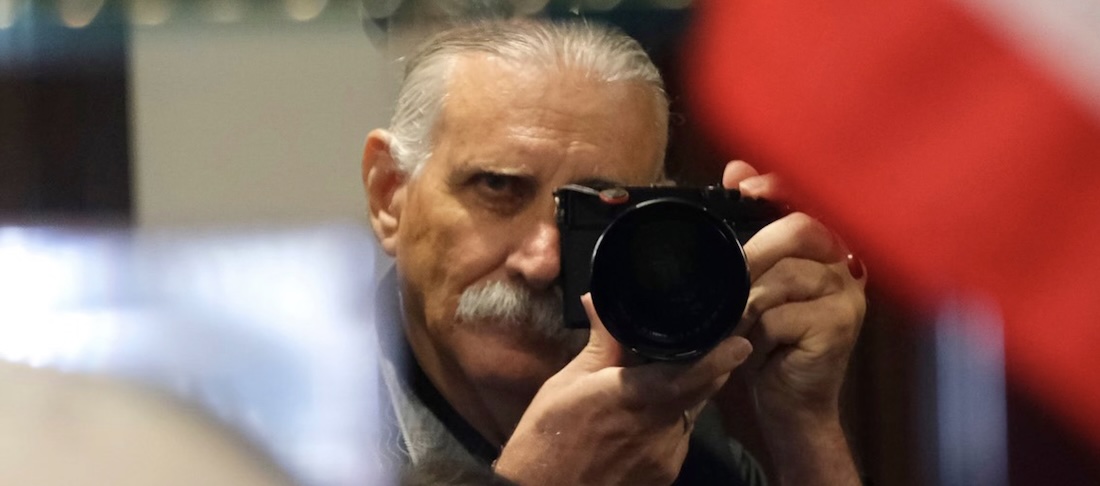
Doug is one of my favorite photographers, with a long history of shooting great photos. His work was regularly featured in Sports illustrated in the pre-digital days.
I asked Doug if my memory was correct and altered photos were an issue back in the day. Here’s what he said in response to the question:
“Way back when if Gaylord (the publisher) didn’t want something in the paper, it wasn’t there,” he said. “The airbrushing of photos was originally done to help with the reproduction, as coarse screens and letter press technique left much to be desired. That evolved into the removal of items, like cocktail drinks, (or) the adding of details like clothing, lengthening hems, adding material to swimsuits, closing up v-necks, etc.
“When the digital age hit, the ease that photos could be altered called for new guidelines for photography. What is the common practice now is no pixels should be added or removed, except by cropping, and cleaning up dust spots on the chip. Toning and adjusting contrast should only be to help reproduce the image as accurately as possible.”
Doug said he supports Apple’s limits to digital editing that distorts the reality of photos.
“When Apple first announced that they would only allow small details to be removed, I applauded them,” he said. “Craig is correct that photography is based in reality, and I firmly believe that the photos should remain as untouched as possible. You may think that water bottle is in the way, but future generations will look at these details with amazement. Think of old photos you look at, you study every detail in the photo to get a better sense of history. If we remove all those details now, no one will ever see them.”
There’s a distinction between photograph and a photo illustration, Doug said. Or there once was.
“The line between photograph and illustration has been blurred and will never be the same,” he said. “Publications try to hold onto the strict guidelines of what is a photo and what is an illustration but the public probably doesn’t really care. I don’t think the general public has a strong grasp of reality anymore. Games, TikTok, IG, X, whatever they look at. If they think an image is cool they like it without giving any thought to whether it is accurate or not.
“We have had to reject several ‘photos’ that were obviously enhanced by AI, mostly portraits. Accepting photos from unknown sources will be a huge lift in the near future as AI will just continue to get better. Really glad Apple took a stand and said just because we can doesn’t mean we should.”
Did you catch what Doug said? The public is suffering from both ignorance and apathy on whether a photo has been altered.
But we should be concerned. Thank you, Apple, for taking a stand.
 Jim Stafford's BlogOKC