‘London Homesick Blues’ puts me back in that place

‘Gotta put myself back in that place again’

Those are the first words in Jerry Jeff Walker’s live version of “London Homesick Blues,” which I consider as the soundtrack to my years on the campus of Abilene Christian University in the late 1970s.

Written by fellow Outlaw Country artist Gary P. Nunn, the song was recorded in Luckenbach, Texas, in 1974 as part of Jerry Jeff’s landmark “Viva Terlinqua!” album.

“London Homesick Blues” is one of the best examples of what became known as the Outlaw Country genre that emerged in Austin, Texas, in the 1970s. But it’s also a song about loneliness and longing for home when you are far removed from the place you love.

“Well, when you’re down on your luck and you ain’t got a buck
In London you’re a goner
Even London Bridge has fallen down
And moved to Arizona
Now I know why
And I’ll substantiate the rumor that the English sense of humor
Is drier than than the Texas sand
You can put up your dukes or you can bet your boots
That I’m leavin’ just as fast as I can”

So, why am I writing about a 52-year old outlaw country song in 2025?

Well, I was an aspiring journalist as an ACU student, and my campus life revolved around the student newspaper, The Optimist.  Several of my classmates who were also enrolled in ACU’s Journalism and Mass Communication department became lifelong friends.

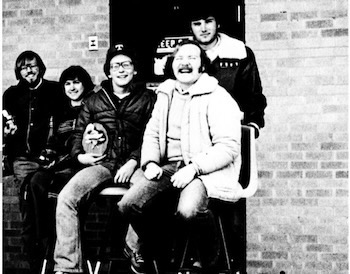
Along the way on my ACU journey, the Optimist staff embraced “London Homesick Blues” as something of an anthem. A couple of guys played the guitar and we organized a faux band that played the song with gusto.

My role was only to stand with the band and sing the song’s famous chorus really loud and off key. Of course, that’s the only way I know to sing.

I fondly recall a party hosted by our beloved journalism professor, Dr. Charlie Marler, where we played and sang that song in his living room.

“I wanna go home with the armadillo
Good country music from Amarillo and Abilene
The friendliest people and the prettiest women you ever seen”

If you are a fan of the PBS show Austin City Limits, you know that chorus because it opened the show for 27 years.

Back to 2025. I’m not sure how or why, but I began listening to “London Homesick Blues” on replay over the course of the past couple of months.
A wave of nostalgia washes over me when I hear it, and it really does take me back to that place — the ACU campus and the people with whom I shared classes and The Optimist newsroom.

“Well, it’s cold over here, and I swear
I wish they’d turn the heat on
And where in the world is that English girl
I promised I would meet on the third floor?
And of the whole damn lot, the only friend I got
Is a smoke and a cheap guitar
My mind keeps roamin’, my heart keeps longin’
To be home in a Texas bar”

The song plays pretty much nonstop my head these days, and I really sense the longing and loneliness of the tune. It’s a pretty heavy message for an Outlaw Country song, and it’s come to mean so much to me.

So, I asked several former classmates their thoughts on “London Homesick Blues” nearly 50 years removed from our days together at ACU. Since it was a small campus and student body, we had many classes together.

Here are their responses:

Scott Kirk was Sports Editor of The Optimist and remains a close friend from our college days together:

“It is one of my all time favorites. Nancy and I are going to London for our anniversary this year ,and I’ve been singing this song when I walk the dogs. It does take me back to the Optimist, as does any Jerry Jeff Walker song.”

Karen Latham (now Everson) is one of the smartest people I’ve ever known and a great writer as The Optimist’s film critic and features editor.

“It makes me think of playing records in The Optimist office, y’all singing at Dr. Marler’s house, and when I would hear it while living in Arizona and then New York City, I would think of my Texas (which is not today’s Texas) and shed a tear.”

Michigan native Ron Hadfield was editor of The Optimist for two years and then built a 40-plus year career leading ACU’s marketing efforts. 

“Little did I know at the time, but in the late 1970s I was in the process of becoming a Naturalized Texan (I claim dual citizenship as a Michigander) in those years when the world was discovering Luckenbach and that genre of Texas country music, thanks to Willie Nelson and others whose music I came to enjoy.

Jerry Jeff Walker and Gary P. Nunn and Michael Martin Murphy were among the pioneers of that sound, perhaps even before Nelson, as I recall. I was fortunate to interview Murphy in between concerts at ACU one night in 1978, and remain a big fan of his.

Their music has always been imminently singable. And although I won’t be confused with a vocalist of note, and don’t drink or hang out in honky tonks, it represents the soulful sounds of this part of the world that have quietly become part of my DNA.

‘They will always be a part of me whenever I think of Texas memories,’ as Jerry Jeff sang in ‘Leavin’ Texas,’ a deeply introspective ballad I have come to love dearly and queued up on the 8-track tape as I drove east out of Texarkana for what I thought was the last time decades ago. It still makes my eyes water after all these years.

So I live these days in San Antonio, not far from the amazing Hill Country, and still get deep satisfaction out of listening to ‘London Homesick Blues’ and Jerry Jeff’s iconic ‘Viva Terlingua!’ album and any other number of songs that remind me of time spent with dear and friendly Native and Naturalized Texans from Amarillo and Abilene and elsewhere.

As James Earl Jones described so eloquently in a famous scene in the baseball movie, Field of Dreams, ‘those memories are so thick, I have to brush them from my face.’ The background music of my Texas life makes a world of difference.”

Thank you to Scott, Karen and Ron for sharing your perspectives on “London Homesick Blues” and the Outlaw Country flavor of Texas music.

When I hear that song, it really does put me back in that place again.

“Well, I decided that I’d get my cowboy hat
And go down to Marble Arch Station
‘Cause when a Texan fancies he’ll take his chances
Chances will be taken, that’s for sure
And them limey eyes, they were eyein’ the prize
That some people call manly footwear
And they said ‘You’re from down South and when you open your mouth
You always seem to put your foot there

I wanna go home with the armadillo
Good country music from Amarillo and Abilene
The friendliest people and the prettiest women you ever seen’

Looking back at my BlogOKC favs of 2024

EDITOR’S NOTE: In what has become an annual column of its own, I look back over BlogOKC in 2024 and list my 10 favorite posts. Not most popular, but those that meant the most to me. I went back and forth, adding some then eliminating them, because each of them meant something to me. I hope you enjoy browsing the list and clicking on the headlines to read the full post. My list of personal favorites also includes a wonderful guest post by my friend, Don Mecoy. Enjoy!

Major League Baseball Commissioner Rob Manfred said the ‘Golden At-Bat’ is being discussed

Major League Baseball’s terrible, horrible, no good, very bad idea

Dec. 11

When I was a young would-be sports writer just out of college working for the Southwest Times Record newspaper in Fort Smith, Ark., my editor sent me out to cover the state small school baseball tournament.

I had not seen much high school baseball through the years, so I was caught by surprise by one particular rule the small schools played by.

It was called the “Courtesy Runner.”

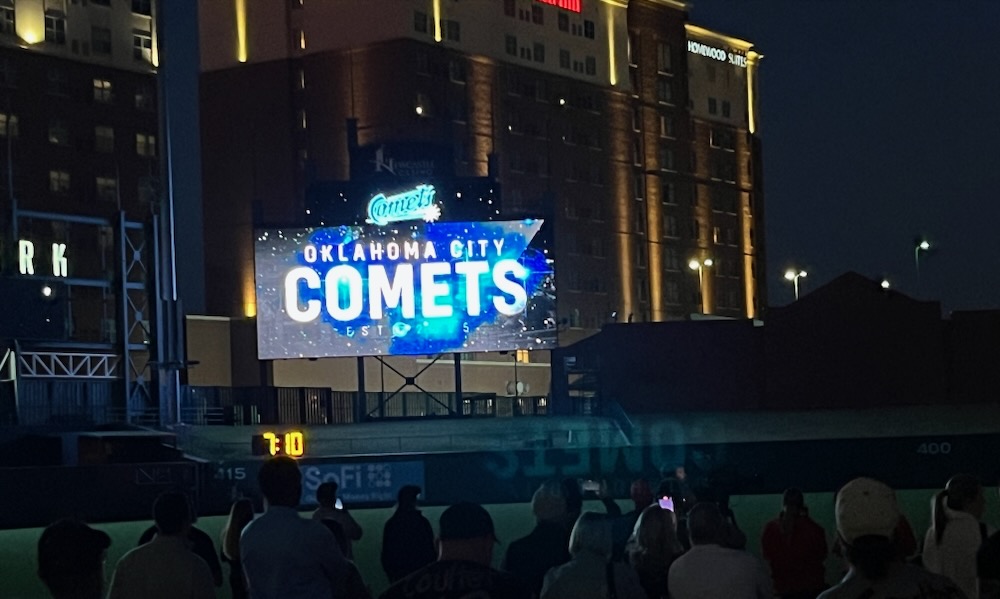
The Bricktown Ballpark scoreboard shows the team’s new name at reveal event.

What’s in a name? Apparently, a lot in OKC Baseball Club rebrand to ‘Comets’ … Or not much

Oct. 28

The Oklahoma City Baseball Club revealed its new name, “Comets,” in a ceremony Saturday evening at the Chickasaw Bricktown Ballpark witnessed by at least a couple thousand enthusiastic fans.

I was among those who showed up for the Big Reveal, so I can attest to the collective cheer that went up when the “Comets” name and logo appeared on the scoreboard screen.

I was not expecting “Comets,” although I’m not sure what I expected. Maybe “Flycatchers,” which my friend Ed Godfrey had predicted as the future team name. Or the “Waving Wheats” or something that related to Oklahoma.

acu group
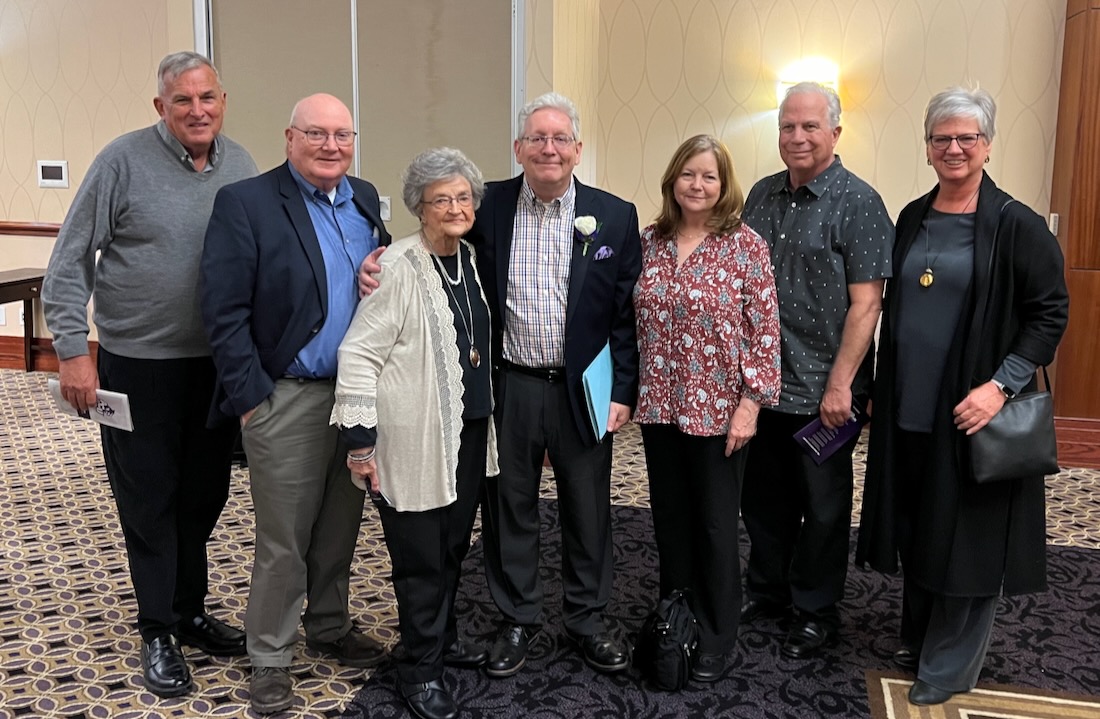
From left, Scott Kirk, Jim Stafford, Peggy Marler, Ron Hadfield, Corliss Hudson Englert, Brad Englert, Cheryl Mann Bacon

ACU Hall of Fame recognition for my friend Ron Hadfield … and a grand reunion

Oct. 22

Ron Hadfield is a long-time friend who was my student editor on the Abilene Christian University newspaper, The Optimist, in 1977. Ron recently was recognized with a Lifetime Achievement Award at the ACU Athletic Hall of Fame ceremony that I was privileged to attend.

I showed up on ACU’s doorstep in 1976 as a transfer student with a dream to some day become a newspaper sportswriter, but with virtually no writing experience.

Ron likes to tell the story that on the first assignment he sent me out on, I turned in some terrible copy and proudly showed him the quotes I made up.

I deny the accuracy of his memory.

Brady and John
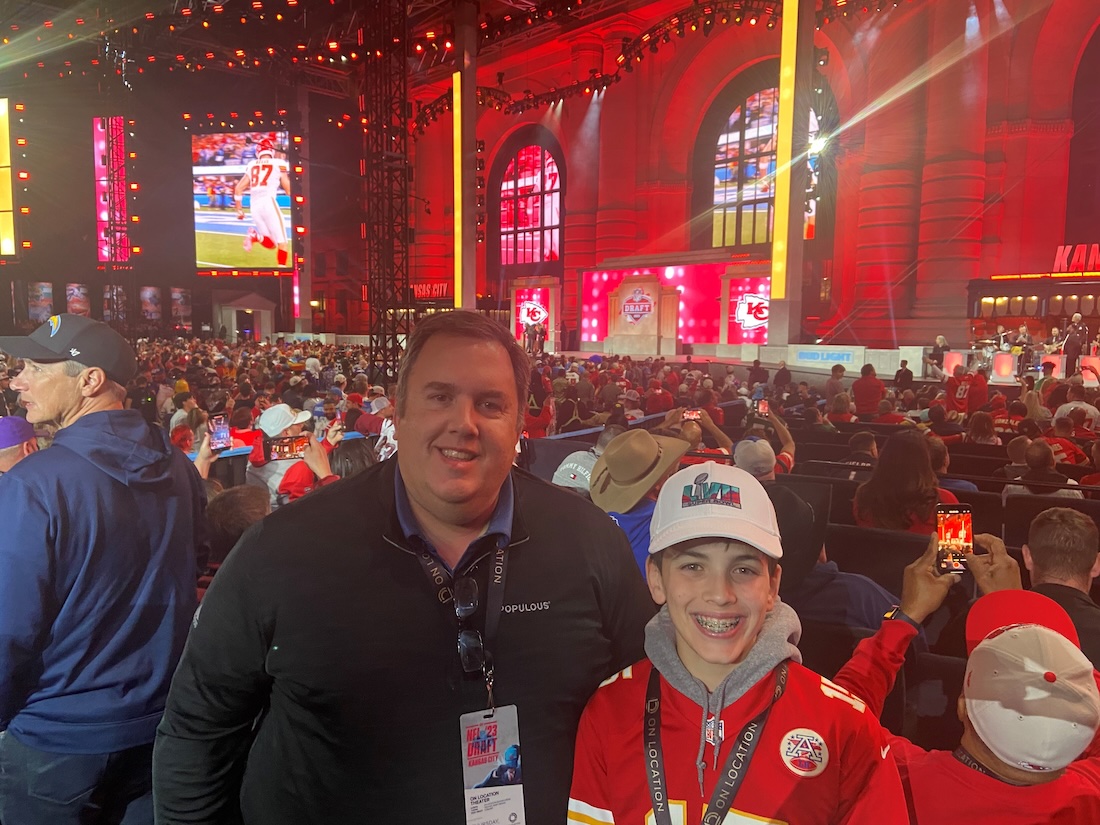
Brady Spencer with his son, John, outside Kansas City’s Union Station during the 2023 NFL draft.

The Populous impact on OKC sports venues & my friend, Brady Spencer

Sept. 17

A recent update in The Oklahoman newspaper on the new OG&E Coliseum under construction at the State Fairgrounds identified it as a venue designed by a firm named “Populous.”

In an even more recent story, I learned that Populous has been hired to design the new $71 million soccer stadium just south of OKC’s Bricktown.

I think I’m noticing a trend.

So, what exactly is Populous?

Solomon walking
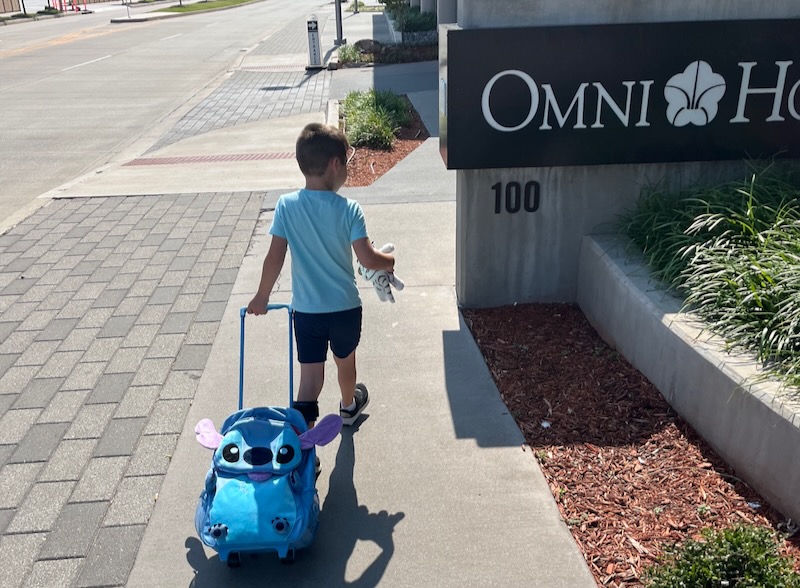
Solomon rolls his new backpack up to OKC’s Omni Hotel on Friday morning.

Solomon’s ‘road trip’ to OKC’s Omni Hotel

July 12

This is what happens when his GiGi is out of town on business and Papa is left in charge of entertainment on a Friday for our grandson, Solomon.

So, when it was just us two early Friday, Solomon said he wanted to go on a road trip. He suggested “the beach” and then Branson.

I said we couldn’t do either of those today, but maybe we could drive up to Guthrie and find a place to eat.

Solomon sort of accepted that, but later told me he wanted to go to that “nice Thunder hotel downtown.” All of us had stayed the night at OKC’s Omni Hotel last year when my wife, Paula, was booked there for a convention meeting.

Screenshot
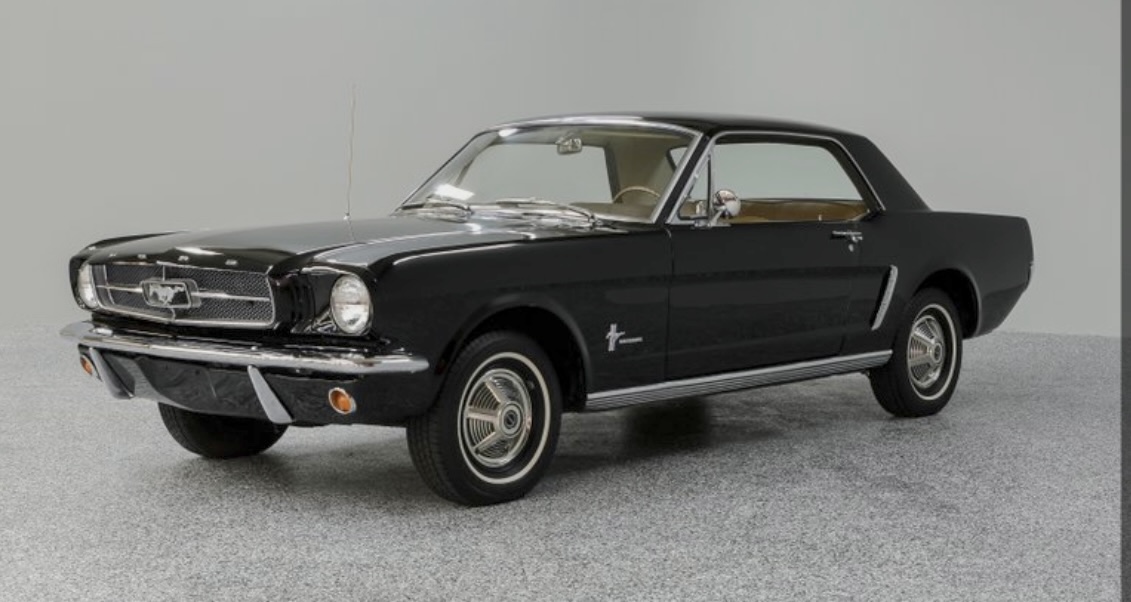
A black ’65 Mustang that looks exactly as I remember the one driven by my Aunt Dee.

The ’65 Mustang was my Aunt Dee’s ride or die

June 28

This is a story of the Ford Mustang. Or, rather, two Ford Mustangs. One of them did not have a happy ending, and I was in it.

If you are hazy on your Ford Mustang history, I’ll catch you up to date a bit. The Mustang was conceived by team at Ford led by Lee Iacocca, who later gained fame as the man who saved Chrysler.

The first Mustang was introduced to the public in April 1964, as the “1964-1/2” Mustang. It was an instant hit. The public fell in love with it because it had a unique, sporty body style compared to what U.S. autos had been, which were cars shaped like boxes and quite unattractive.

My dad was among the millions of Americans who were taken by the Mustang and eventually bought one when he was stationed on the island of Okinawa while in the military. I’ll come back to that.

Screenshot
Another shot of the ‘two Steves’ in the 1970s

Apple in 2024: Nobody likes a bully

March 23

I read a magazine article when I was in college in the 1970s about a scrappy startup called Apple Computer, founded by two guys named Steve who built their first computers in the garage at the home of one of the Steves.

I couldn’t get enough of their story; the David-vs.-Goliath way that Apple blazed the personal computer trail that forced the industry behemoth at the time, IBM, to play catchup. Steve Jobs and Steve Wozniak were my entrepreneurial heroes.

So, I admit that I am a long-time Apple fanboy and remain one today.

But my fandom has run smack into some ugly reality. Apple is no longer the scrappy industry underdog. In fact, it is one of the world’s largest companies by market value. Yet, it has begun to flex its financial muscles like a bully that nobody likes.


Screenshot

In my hometown, the long decline of a Fort Smith institution

Feb. 22

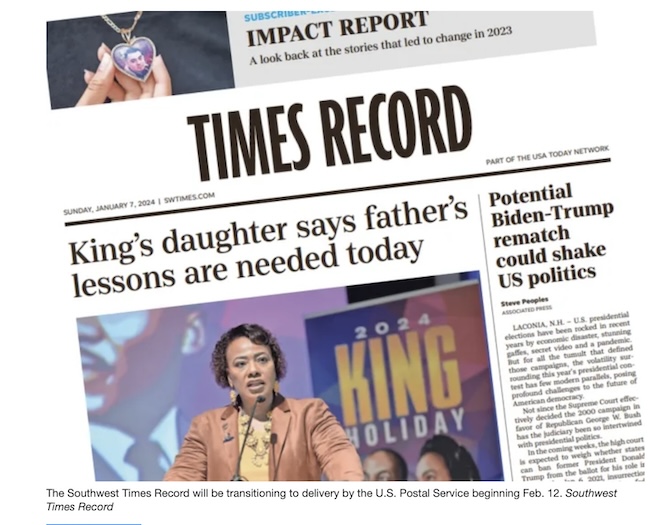
Here’s a bit of nostalgia for you. When I walked into the Southwest Times Record newsroom for the first time as an employee in 1978, I encountered a bustling community of talented writers, editors and photographers all scrambling to publish local news seven days a week.

The Fort Smith newspaper was a great place to learn the craft as my first job out of college. There are many folks among my former colleagues there whom I will never forget. I worked at the SWTR for five years in a variety of positions before moving to Oklahoma City and working for The Oklahoman for almost a quarter of a century.

So, it’s been disheartening to watch the SWTR decline as a community force over the past few years as the number of subscribers declined and employees were laid off. It’s a situation not unlike that in many other cities across the nation.

Evard and car
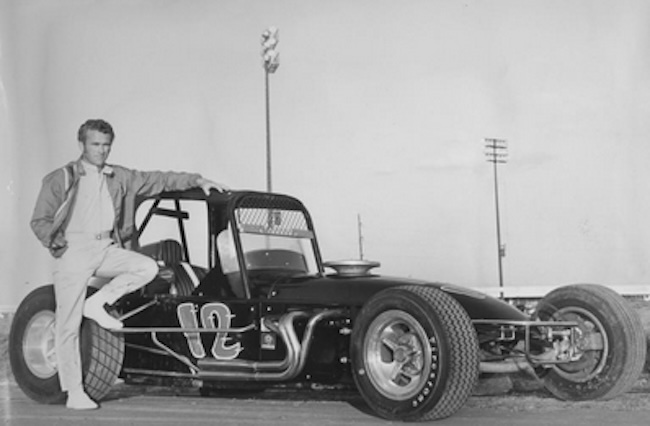
Evard Humphrey and his No. 12 super-modified sprint car

Why Evard Humphrey remains a sprint car hero to this child of the ’60s

Feb. 16

Editor’s Note: Don Mecoy is a friend and former colleague at The Oklahoman who retired as the newspaper’s managing editor at the end of 2022. A recent conversation about sports heroes from our youth when Don was a guest on the 3 Old Geezers podcast sparked his memory about a local race car driver fromthe late 1960s. Don wrote this guest blog post about that driver and those memories.

By Don Mecoy

I had my share of sports heroes when I was a kid. Roger Staubach, Lou Brock, Johnny Bench and Joe Washington were among my faves. But my personal hero — and it truly was personal — was a guy you probably never heard of: Evard “Kerfoot” Humphrey.

Evard was the driver of the No. 12 super-modified sprint car that ran every Friday night at State Fair Speedway during my youth in Oklahoma City.

tarps1
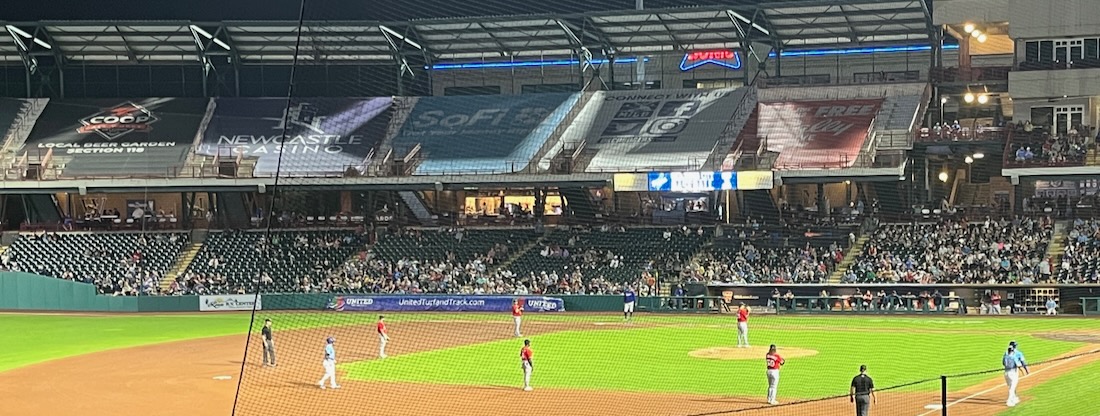
Advertising banners cover the entire upper deck seating area down the first base line of the Bricktown Ballpark.


Fading glory: Bricktown Ballpark needs upper deck rehab

Feb. 2

I was enjoying a summer evening at the Chickasaw Bricktown Ballpark with a friend last year, savoring the crowd, the game and the park’s immaculate green pasture.

Then my eyes landed on the upper deck along the first baseline that extends out into right field. There were no seats or bleachers visible. Only advertising banners draped across each section.

Don’t get me wrong. Oklahoma City has a beautiful ballpark that has retained its attractiveness since it opened in April 1998. However, the tarps do nothing but detract from the ballpark’s charm.

ACU Hall of Fame recognition for my friend Ron Hadfield … and a grand reunion

hadfield speaks
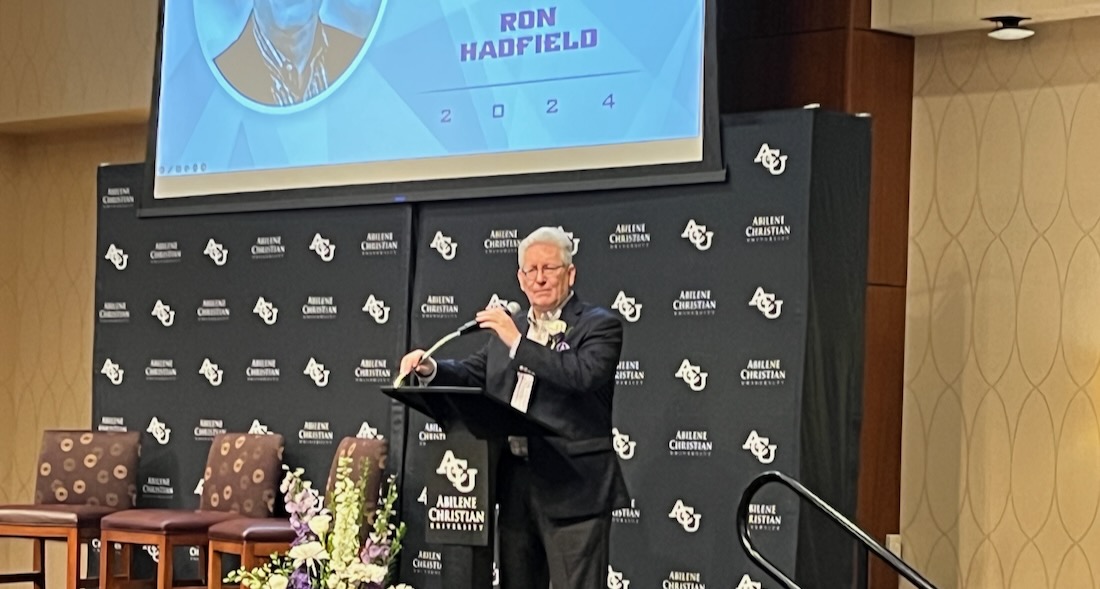
Ron Hadfield adjusts the mic as he speaks to the ACU Hall of Fame audience.

Ron Hadfield is a long-time friend who was my student editor on the Abilene Christian University newspaper, The Optimist, in 1977. Ron recently was recognized with a Lifetime Achievement Award at the ACU Athletic Hall of Fame ceremony that I was privileged to attend.

I showed up on ACU’s doorstep in 1976 as a transfer student with a dream to some day become a newspaper sportswriter, but with virtually no writing experience.

To say that I was a raw talent would be overstating my ability and potential. I didn’t have a clue.

Ron likes to tell the story that on the first assignment he sent me out on, I turned in some terrible copy and proudly showed him the quotes I made up.

I deny the accuracy of his memory.

But he was a patient editor who helped me begin to find my way as a writer.

I didn’t know the intricacies of sports — especially basketball — as well as I thought I did, and Ron helped me learn strategies such as the double high stack offense used by ACU men’s basketball coach Willard Tate.

As we shared both the Optimist newsroom and numerous ACU classes, Ron became a good friend. We each had a keen interest in sports, baseball in particular, and we traveled to Arlington, Texas, with our mutual friend, Scott Kirk, to catch Texas Rangers games on several occasions.

Ron and I even traveled to Kingsville, Texas, together to watch the 1977 ACU-Texas A&M-Kingsville game, spending the night on the North Padre Island beach.

Our 1977-’78 Optimist staff of perhaps a dozen people became a team of close friends who spent late nights getting the paper out and often playing touch football well after midnight on the ACU campus. We were popular with campus security.

Optimist3
Me (front row, right) with colleagues from The Optimist in 1978

Optimist staff members were all regulars at the home of Dr. Charlie Marler, who led ACU’s Journalism and Mass Communications department for many years both as professor and chair. I completed a guided study sportswriting course one summer where we met at the Marler home instead of on campus. Dr. Marler passed away in 2022.

Anyway, I graduated in August of 1978, while Ron went on to serve a second year as editor of The Optimist before graduating in 1979. I’ve never let our friendship totally lapse, even if communication was only through occasional emails or texts.

After his graduation, Ron briefly worked in private industry back in his home state of Michigan, then returned to ACU to lead the university’s marketing efforts.

For the next 40-plus years, virtually every written word, advertisement, branding strategy and logo created on behalf of Abilene Christian University was either produced or led by Ron. He was founding editor of the university’s fabulous alumni publication, ACU Today, and led the school’s development of its online presence with the emergence of the Internet.

Ron wrote many cover stories for ACU Today, as well as blog posts and news releases that captured some of the school’s iconic moments over the past four decades.

The only person to be twice named the university’s Staff Member of the Year, Ron was named ACU editor emeritus, senior writer and university historian in 2022.

So, when Dr. Cheryl Mann Bacon invited me to sit at her table at the Hall of Fame induction ceremony, I didn’t hesitate to say ‘yes.’ Also at the table were fellow former Optimist staff members Scott Kirk (and his wife, Nancy) and Corliss Hudson Englert (along with her husband, Brad), as well as Peggy Marler, Dr. Marler’s wife of 67 years.

Dr. Bacon also was part of our Optimist group, although she was working on her master’s degree by the time I landed on campus.

acu group
From left, Scott Kirk, Jim Stafford, Peggy Marler, Ron Hadfield, Corliss Hudson Englert, Brad Englert, Cheryl Mann Bacon

It was an awesome evening in a banquet hall setting among about 200 or so ACU alums who watched as Ron was honored with the Lifetime Achievement Award, and five former athletes were inducted into the Athletic Hall of Fame.

Although I’ve never had the opportunity to experience any of ACU’s class reunions, this was the best of reunions for me.

Thanks for the invitation, Cheryl.

Still an Apple fanboy after all these years

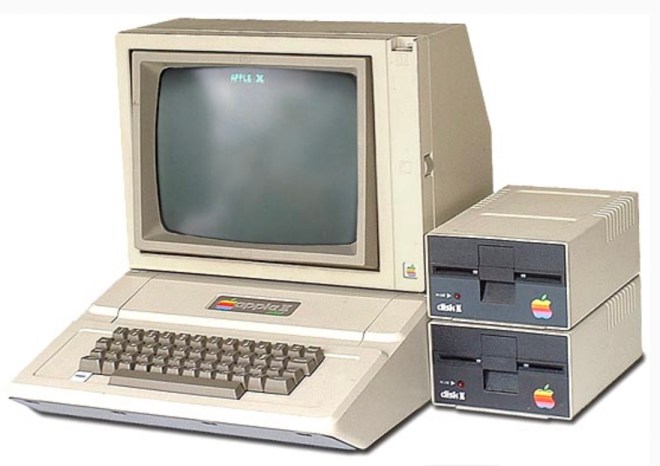
The Apple IIe with two 5-1/4 inch floppy disks, just like my first setup

I read a magazine article in the late 1970s about a couple of young Californians who built a new stand-alone computer in the garage of a Cupertino, Calif. home.

They started a company called Apple Computer to sell their innovation.

I had never used a computer at that point in life. As a journalism student at Abilene Christian University, we did all of our writing either on our own antiquated typewriters or on IBM Selectric typewriter in the newsroom of ACU’s student newspaper.

Anyway, the more I read about Apple and its Apple II computer, the more fascinated I became with both the company and the concept. Like most people, when I thought of computers, IBM and its massive room-sized mainframes came to mind.

After graduating from ACU, I went to work at the Southwest Times Record in Fort Smith, Ark. We worked on typewriters when I arrived in late August 1978, but by the Spring of 1979 the paper had installed its first computer terminals for reporters and editors to use.

They were so-called “dumb” terminals that were tied to a mainframe computer. They crashed a lot, usually right at deadline.

Meanwhile, I was still keeping up with Apple and its computer, but thought it was way beyond what I could afford.

Besides, who ever thought of having a computer in your house?

Fast forward about seven years. I was working at The Oklahoman when J.T. Goold, one of my co-workers, said he had a used Apple IIe for sale. It had been his father’s,

So, I ponied up about $500 and bought the Apple IIe, which came with a green monitor and two 5-1/4 inch floppy disks.

That Apple IIe sealed my love of all things Apple. I learned to use word-processing software on that computer, as well as a spreadsheet, a simple database and a page-design program.

In a few months, I added a 1,200-baud modem, which opened up a whole new online world of what were then known as bulletin boards. Then came AppleLink.

I tried my hand at learning some BASIC programming skills, but never got much further than making a little routine that filled the screen with a single sentence.

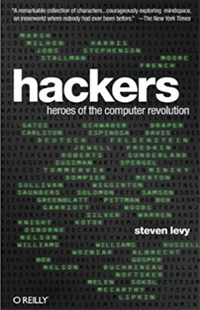
I’ve written all of this because I’m deep into Steven Levy’s book, “Hackers: Heroes of the Computer Revolution.” The Apple II and its creator, Steve Wozniak, play a huge role.

In Hackers, Levy detailed the founding and growth in the early 1970s of the Homebrew Computer Club in the San Francisco Bay Area. The club attracted scores of computer hackers who shared a vision of a future where everyone had a stand-alone computer of their own.

Levy wrote: “These were people intensely interested in getting computers into their homes to study, to play with, to create with … and the fact that they would have to build the computers was no deterrent.”

Steve Wozniak attended the very first Homebrew Club meeting, but it was a few years before he actually built his first computer. His friend Steve Jobs convinced him to create a company as partners and sell his computer invention.

So they began building computers in the garage of the home of Jobs’ parents. The Apple II became a runaway bestseller, bringing computers to millions of people.

I became an Apple fanboy after reading that early magazine article in the 1970s. The used Apple IIe that J.T. Goold sold me in the mid-1980s ensured it would last.

And here we are today.  I’m writing this on an Apple MacBook Air while the my Apple iPhone keeps buzzing with text alerts and notifications.  I’m reading Levy’s excellent “Hackers” on an Apple iPad Mini.

It’s been a long-term relationship, to say the least.  Still an Apple fanboy after all these years.

The newspaper visionary and the skeptical student

Selectric
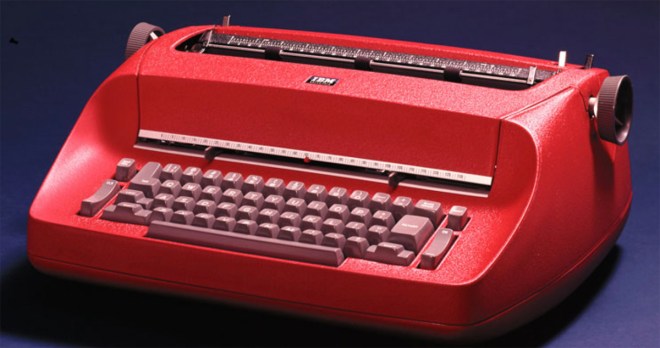
The 1970s vintage IBM Selectric typewriter

I was sitting in a news writing class at Abilene Christian University in 1977 when I heard something so preposterous that it has stuck with me for more than 40 years.

Our professor, Dr. Charlie Marler, speculated about the future of the newspaper industry. He said that some day we could get our news on a TV -like screen and have the choice to print out the stories that we wanted to read.

No one laughed out loud, but I had a good laugh to myself. Yeah, right, I thought. Not sure where Dr. Marler came up with this kooky idea.

At the time, the IBM Selectric typewriter was cutting edge technology for journalists. We were privileged to be able to type our stories on one in the late 1970s for The Optimist, ACU’s student newspaper.

Fast forward four decades.  We can now see how dead-on Dr. Marler’s prediction was in the 1970s.

The fact that most of the world now gets its news instantaneously via a screen attached to a computer, tablet or phone made my old college professor appear to be a modern-day Nostradamus.

The rapid decline of the newspaper industry has been well documented. From my perspective, it began in the late 1990s as the public began finding news sources online and accelerated in the 2000s when WiFi became ubiquitous and smart phone use proliferated.

In fact, I accepted an early retirement offer in 2008 because my employer, The Oklahoman, reduced its workforce that year by 150 people or so. That ended a 30-year newspaper career that I launched upon graduation from ACU in 1978.

The Oklahoman was (and I think remains) the largest newspaper in the state. It has undergone multiple rounds of reductions in the years since I left.

All of which led to this week’s announcement by The Oklahoman. Beginning on March 26, it would no longer print Saturday editions.

The paper will be “digital only” on Saturdays, meaning it will be found only on your screen. A host of other daily newspapers owned by the Gannett corporation have announced the end of print Saturday editions on the same date.

You called it 40-plus years ago, Dr. Marler. I’m pretty sure that the “digital only” newspaper model eventually will eliminate print publication on most other days of the week.

Maybe the Sunday edition will be the only day we can actually get our hands on a printed newspaper. If we’re lucky.

Perhaps I shouldn’t have been so skeptical of Dr. Marler’s prediction at the time I heard it. Because cartoonist Chester Gould, an Oklahoma native, had introduced an even bigger fantasy for his Dick Tracy comic strip back in the 1940s.

It was a two-way communications device worn on the wrist.

Dick Tracy
Dick Tracy using his two-way wrist communicator.

I was a huge fan of the Dick Tracy comic strip as a kid and infatuated by the device that Tracy wore on his wrist through which he had instantaneous communications.

The future was right there on the funny pages for decades and we didn’t recognize it.

Gould’s fantasy device became reality when the Apple Watch debuted in 2015. Today, millions of people wear Apple’s incredible two-way communication device on their wrists.

Not sure who laughed at Chester Gould’s vision when it appeared in the Dick Tracy comic in the 1940s.

Or who was laughing aside from me at the outrageous prediction of Dr. Charlie Marler in a 1970s ACU classroom.

But no one’s laughing now.