SidexSide OKC works under the radar to lift people up

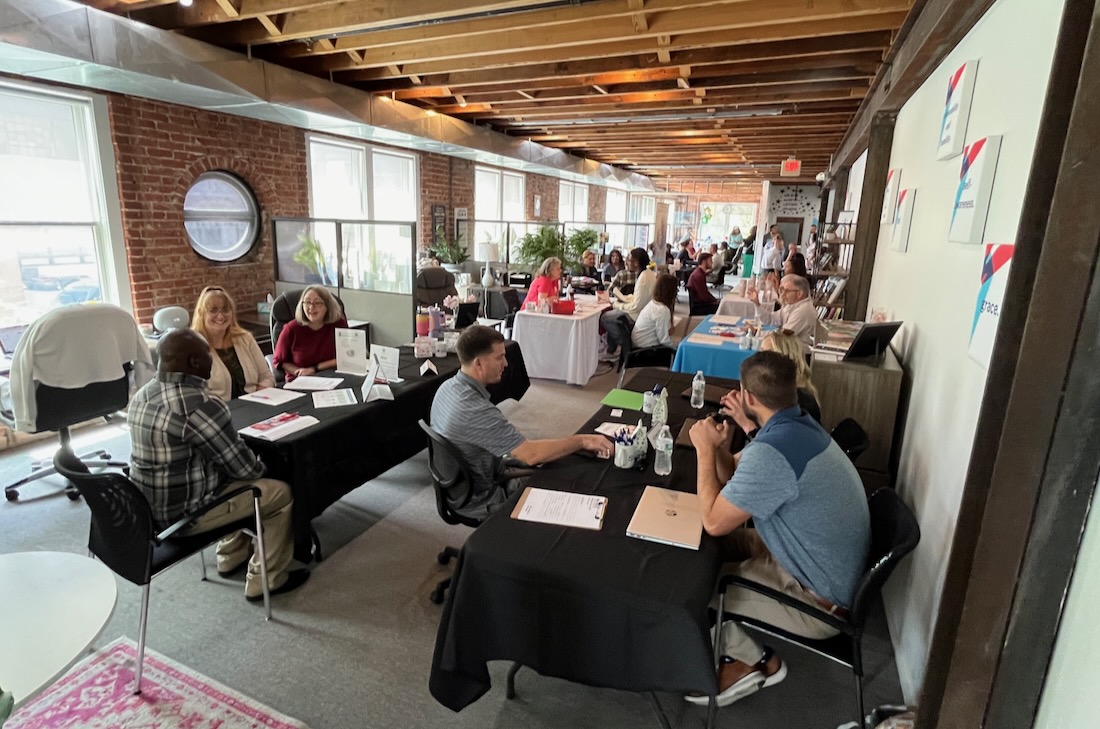
jobfair3
Participants in SidexSide’s latest job skills cohort meet with prospective employees at a recent job fair.

The 1993 movie ‘Dave’ starring Kevin Kline revolves around a community-minded man who runs a Washington, D.C.-based temporary employment agency with a goal of ensuring everyone who needs a job can find one. Dave has a saying: “Everybody works on Tuesday.”

It’s a wonderful movie that tells the story of how Dave so closely resembles the President of the United States that he is recruited to stand in for the President, who then takes advantage of Dave’s presence to hook up with an aide. When the President has a stroke, Dave is stuck in the job.

The story takes off from there, and I encourage you to watch it. It’s a feel good fantasy.

But reviewing Dave is not the purpose of this post. I recently discovered a local not-for-profit skills training and employment agency called SidexSide OKC that made me think of Dave and his “Everybody works on Tuesday” motto. Check out SidexSide’s website.  

In a mission statement on its website, SidexSide says it exists “to build a bridge between underemployed talent and local employers.” The agency provides paid skills training and employment opportunities to people who are referred to it from partner entities like the TEEM, Palomar, Sunbeam Family Services and others.

The “underemployed,” as SidexSide calls them, are placed in cohorts of about 12-15 people and coached up, so to speak, in a nine-week training course that requires them to be present and on-time for each session. Part of the course involves classroom sessions, followed by job shadowing with potential employers who partner with SidexSide.

I stumbled upon SidexSide recently when it held a job fair that included a Long Term Care facility that participates in the Care Careers Oklahoma, a workforce development initiative of Care Providers Oklahoma, where I work part time.

My mission at the job fair was to shoot photos and post them on social media for Care Providers.

SideSide doorSidexSide has offices on the second floor of a downtown building, which also houses a bicycle sales shop. You could walk around the building a dozen times and not spot the glass entrance door that displays the SidexSide logo.

I know, because it took me several tries to find it.

Anyway, when I walked in I discovered a large room filled with people sitting at tables and chatting with one another. Then a bell rang and one person got up from each table and sat down at a different table.

Turns out, this was a sort of ‘speed dating,’ get-to-know-you job fair.

I met several SidexSide employees, including Matt Tecmire, Director of Employment Services, Ricardo Lara, Career Navigator and Community Liaison, and Liz Honeyman, Programs Support Specialist. Those folks gave me a quick overview of how the agency operates before introducing me to Chad Jordan, SidexSide’s founder and Chief Executive Officer.

SidexSide Chad
Chad Jordan, SidexSide’s founder and Chief Executive Officer

Chad told me that SidexSide began about a year and a half ago with a federal grant, and that it now has support from several local entities. It lists multiple referral partners, education partners and employment partners on its website.

As we were chatting, I began to see the image of the fictional Dave in my mind, and his drive to make sure everyone has a job.

SidexSide works to ensure that folks who might be struggling because of life’s circumstances are provided paid skills training and long-term job opportunities.

Obviously, some great brainstorming went into this endeavor. And, from what I can see, SidexSide’s awesome work is being done below the radar of most everyone in our community.

My colleague Tanecia Davis, who is Director of Workforce Development for Care Providers Oklahoma and manages the Care Careers program, had a similar reaction after the SidexSide experience

“Today, I had the pleasure of visiting SidexSide OKC for their career fair, and I was thoroughly impressed by the exceptional work they are doing to support underemployed individuals,” she said in a Facebook post.  “Their primary objective is to help these individuals with the necessary resources and skills to secure sustainable employment.’

It’s encouraging to know there are people like those of the SidexSide team who are out there working for the greater good every day in Oklahoma City.

Say it with me. ‘Everybody works on Tuesday.’

BONUS CONTENT: Watch this video with SidexSide board member Teresa Rose, Executive Director, Communities Foundation of Oklahoma, as she talks about the mission and impact on our community of SidexSide.
An ode to the word flavor of the month

Screenshot
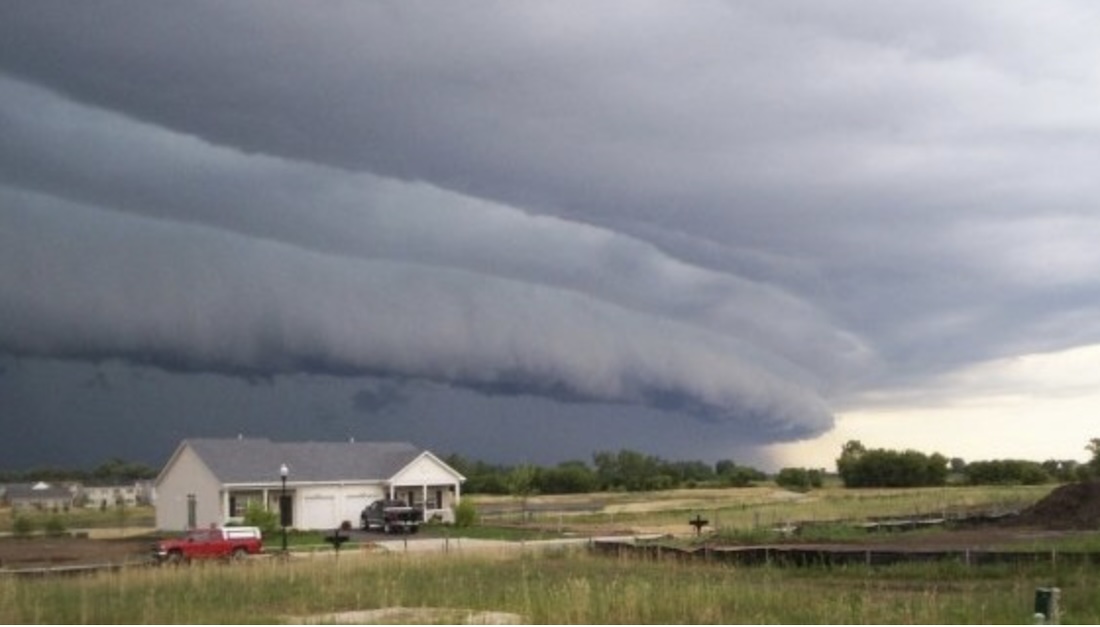
A ‘derecho,’ disguised as a big thunderstorm, is about to roll in. (National Weather Service photo)

Warning: Old Man rant ahead.

I’m not really a Get-Off-My-Lawn! guy, but sometimes things really bring out the Geezer in me. And chief of among them are hip new words or phrases that come into vogue out of nowhere.

Derecho, for instance. I’ve already debated this on the 3 Old Geezers podcast with my fellow cohost, whom I will call “Geezer Steve.” Steve argues that derecho has been in play for years and I just haven’t noticed.

I object to that, because it’s only in the last, maybe a year, that I ever saw or heard the word. And I consume a lot of media.

If you are like me and confused as to what a derecho is, think of it as a big thunderstorm. That’s what we called them back in my day.

“Wow, look at that line of clouds, I’m pretty sure a big thunderstorm is about to hit.”

But, nooo. Now it’s a derecho, defined as a widespread, long-lived wind storm that is associated with a band of rapidly moving showers or thunderstorms.

Although Geezer Steve has been sending me links to stories that make reference to derechos, I contend that it’s the word flavor of the month.

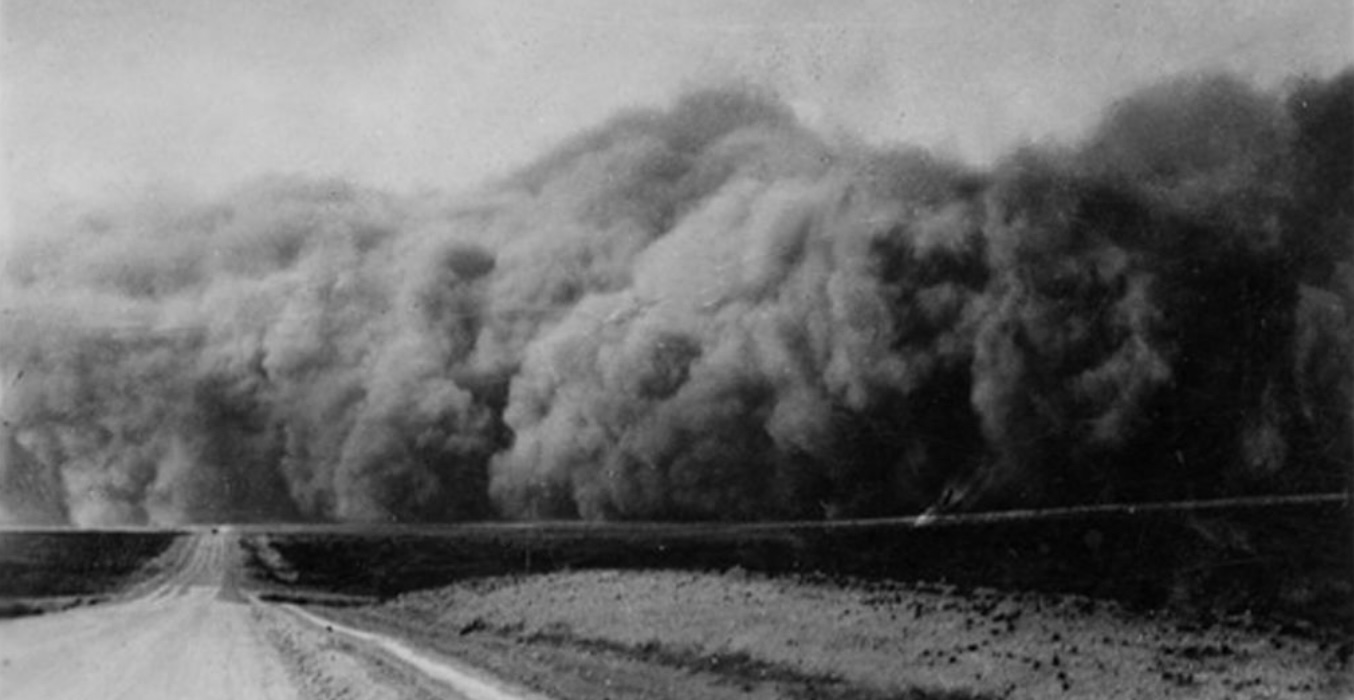
There are many others, of course. Let’s start with “haboob.” It’s a big sandstorm, and back in the day they were known as “sandstorms.”

Screenshot
A sandstorm rolls into Guymon back on ‘Black Sunday,’ April 14, 1935

I wonder how many Western Oklahoma farmers during the Depression ran into their house shouting “there’s a haboob” about the hit? None.

See what I mean? Thunderstorms evolve into derechos and sandstorms become haboobs.

Want more? Bomb cyclone. Polar Vortex. Atmospheric river. Flash drought. I could go on all day.

It’s not all related to weather, of course. In the NFL, we have “edge rushers,” when in the old days we had defensive ends. In baseball, it’s all about launch angles today.

In popular culture, we’ve got FOMO and ghosting and Finstas and Karens and Stans and on and on.

When you’ve reached the Old Man stage like I have, there’s so much to get riled up about. And one of them is KEEPING THOSE PESKY KIDS OFF MY LAWN.

So, I’m headed outside to police my neighborhood and keep an eye out for a dreaded derecho.

Walking tour showcases future impact of OKC’s Convergence project

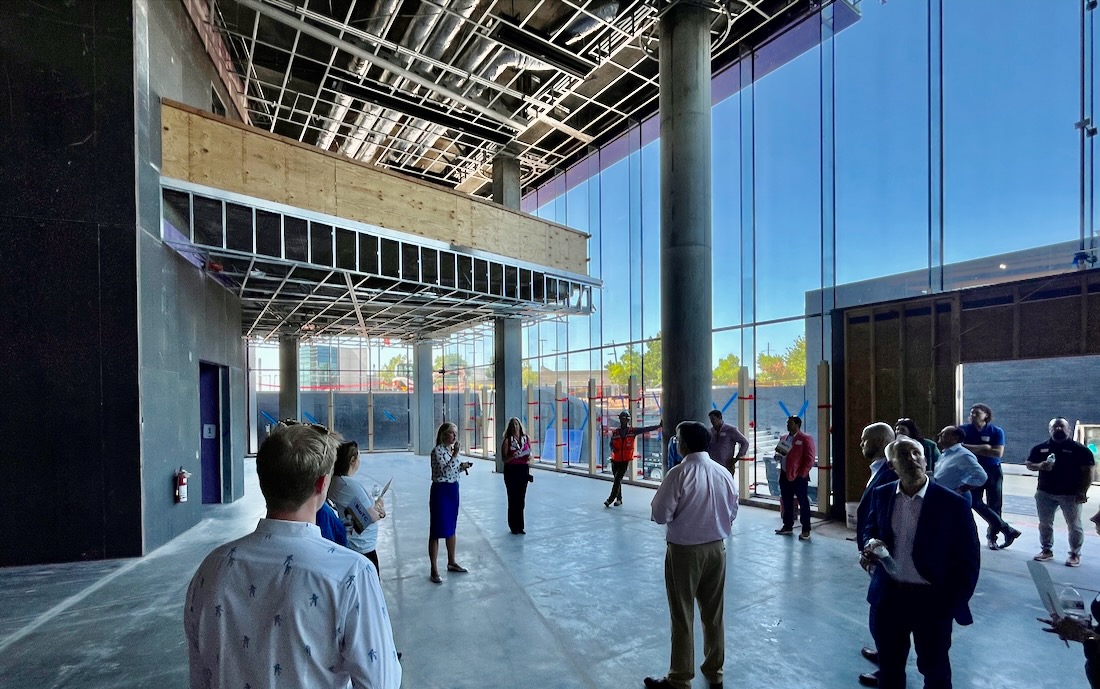
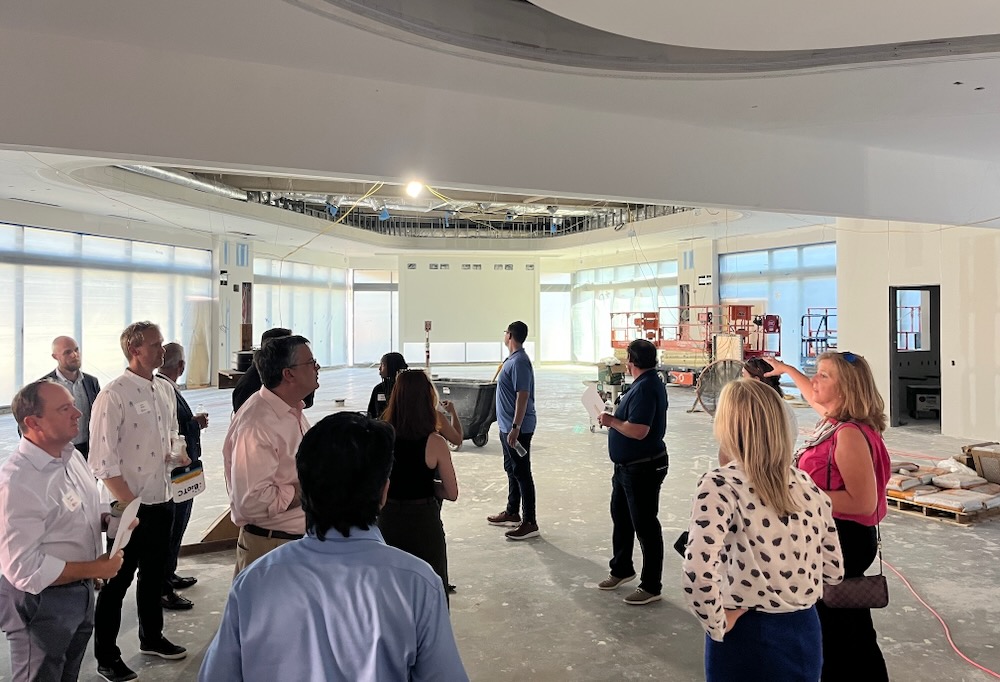
Convergence floor
Second floor of the Convergence tower under development in OKC’s Innovation District.

If you’re like me, you’ve been curious about the new Convergence tower rising from the ground the past couple of years along I-235 just east of downtown.

The eight-floor Convergence tower is a $200 million privately funded development in the heart of OKC’s Innovation District. The project includes the adjacent, MAPS funded Innovation Hall with a future hotel also planned for the site.

A pair of prominent OKC real estate investors/developers in Richard Tanenbaum, CEO of Tanenbaum Holdings, and Mark Beffort, CEO of Robinson Park Investments, have led the Convergence project.

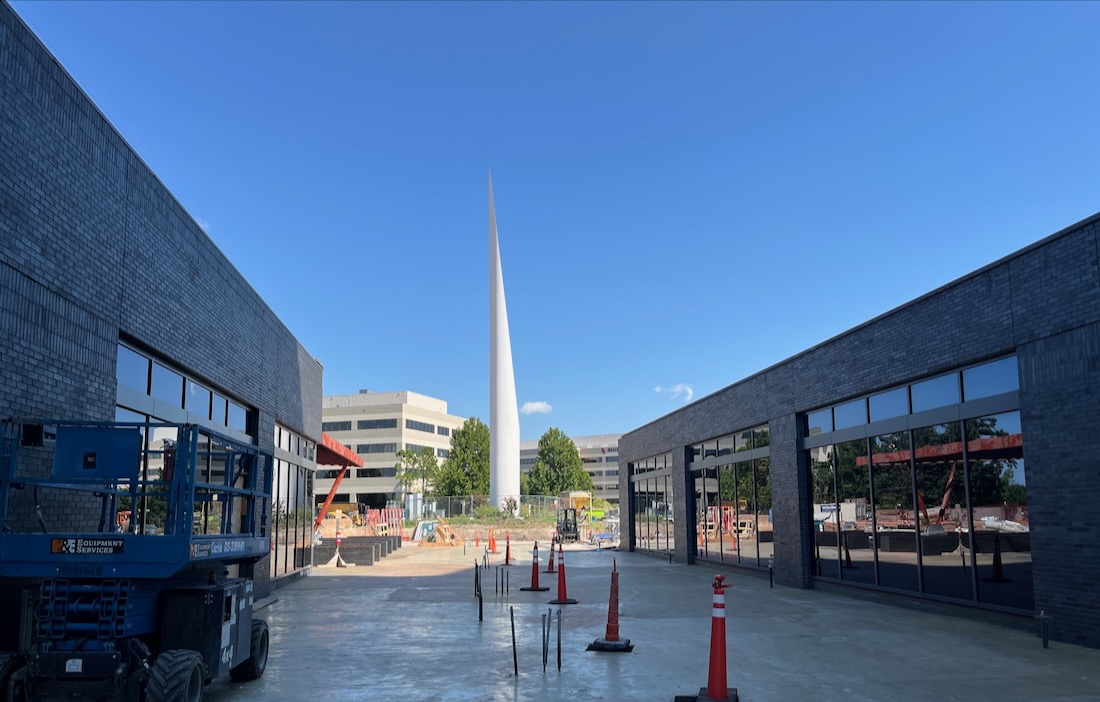
Convergence sits on a pretty small plot of land — 5.5 acres — that surrounds the tiny Stiles Park and its Beacon of Hope, which shines a green light into the night sky like a giant flashlight. The project will have underground parking.

Stiles park
Stiles Park holds its ground as part of the Convergence project

The Convergence website descibes the project as an “ecosystem reshaping Oklahoma City’s economy through innovation, collaboration, diversity and advanced technology.”

The project is certainly reshaping OKC’s Innovation District.

Anyway, I wrangled a ticket to attend the Greater OKC Chamber’s recent networking event and walking tour of the still-under-construction Convergence development.

My professional background includes many years of covering Oklahoma’s emerging biotech industry, first as a reporter for The Oklahoman newspaper and later as a writer and then freelancer for i2E, Inc., the not-for-profit that mentors and invests in many of the state’s entrepreneurial startups.

So, that led me to gather with about 75 folks at the Oklahoma  Our Blood Institute, which sits at the intersection of NE Eighth Street and Lincoln Blvd. It’s maybe a 50-yard walk from OBI to the new development.

Here’s what I learned that afternoon during the networking event and walking tour:

First, the Oklahoma Bioscience Association has been rebranded as Life Science Oklahoma, which made its debut at the annual BIO show in San Diego this past June. My friend, Dr. Craig Shimasaki, co-founder and CEO of OKC’s Moleculera Biosciences,  is co-chair of Life Sciences Oklahoma, along with Andrew Westmuckett, director of technology ventures at the Oklahoma Medical Research Foundation. 

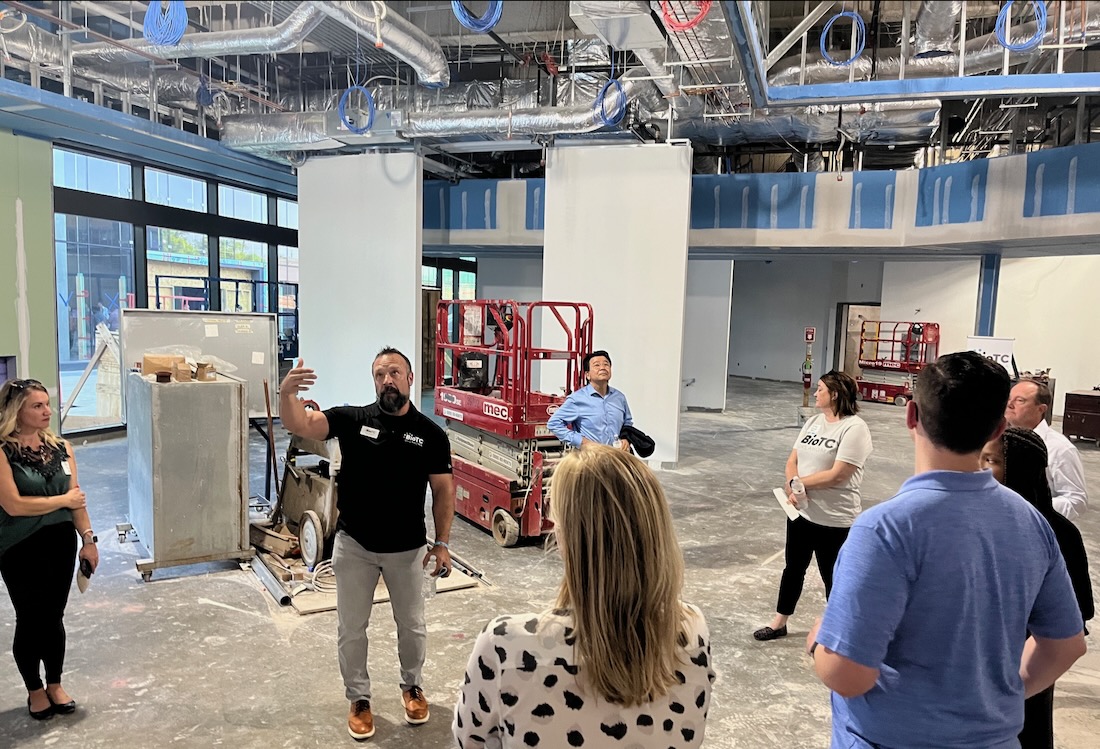
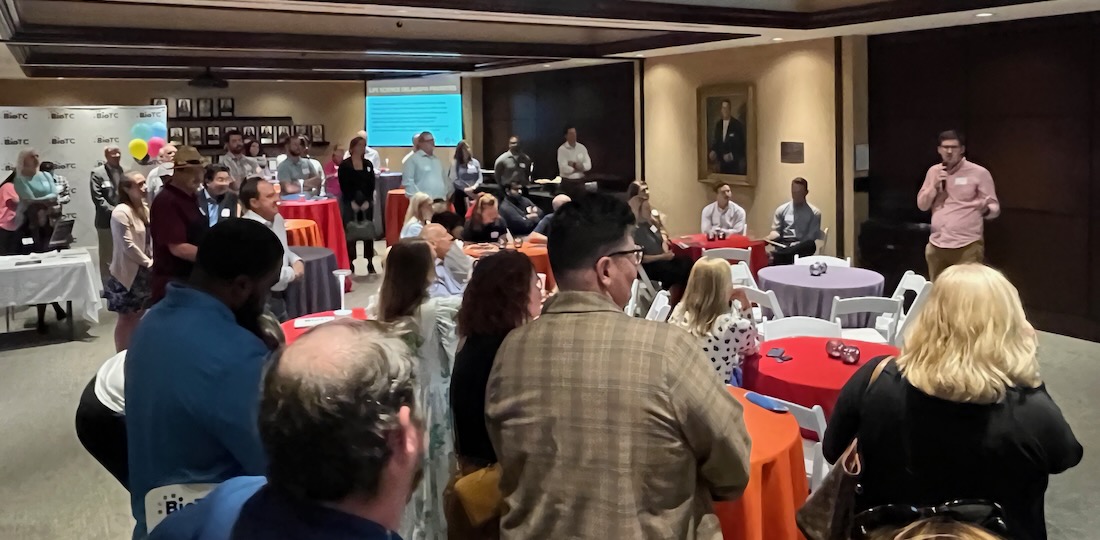
Education will play a major role at the Innovation Hall, which features a Bio Pharmaceutical Workforce Training Center called BioTC.  We received a good explanation of how the space will accommodate aspiring biotech workers from Koey Keylon, BioTC’s, executive director. It will offer one-week, hands-on short courses in biotechnology manufacturing in which students will learn the biotech process and how to use sophisticated technology involved. It also offers an advanced two-week certification curriculum.

BioTC
Koey Keylon, executive director of BioTC, shows off the educational space in the Innovation Hall

Innovation Hall also includes a large Event Hall, a cafe and lounge open to the public, four conference rooms and two small “phone booth” size work/meeting spaces.

Innovation Hall is part of MAPS 4 Innovation District funding, which contributed $11 million to the development, with another $10 million or so from non-MAPS sources, according to the City of OKC.

After we toured the Innovation Hall, we entered the first floor of the Convergence tower. Much of the first floor will be occupied by Wheeler Bio,  an up-and-coming contract development and manufacturing organization in the life sciences space. Wheeler Bio also will have administrative offices on upper floors of the building.

CrossFirst Bank has been announced as a tenant, while the University of OklahomaTinker Air Force Base  and an unnamed aerospace partner will occupy the eighth floor.

All this was empty space as we toured it, but you could see the possibilities and envision the future.

By the way, I highly recommend you crossing over I-235 onto Eighth Street to drive slowly past the Convergence project for a closer view, then meander through the Innovation District that includes OSU’s Hamm Institute for American Energy adjacent to Convergence on the north side, University Research Park to the south and OU Health Sciences Center to the north and east.

In a year or maybe less, Convergence tower and Innovation Hall should be filled with bioscience research and manufacturing professionals. as well as students aspiring for a biotech career, while offering great meeting and hangout space in the Innovation Hall.

I can’t wait to see it all in action.

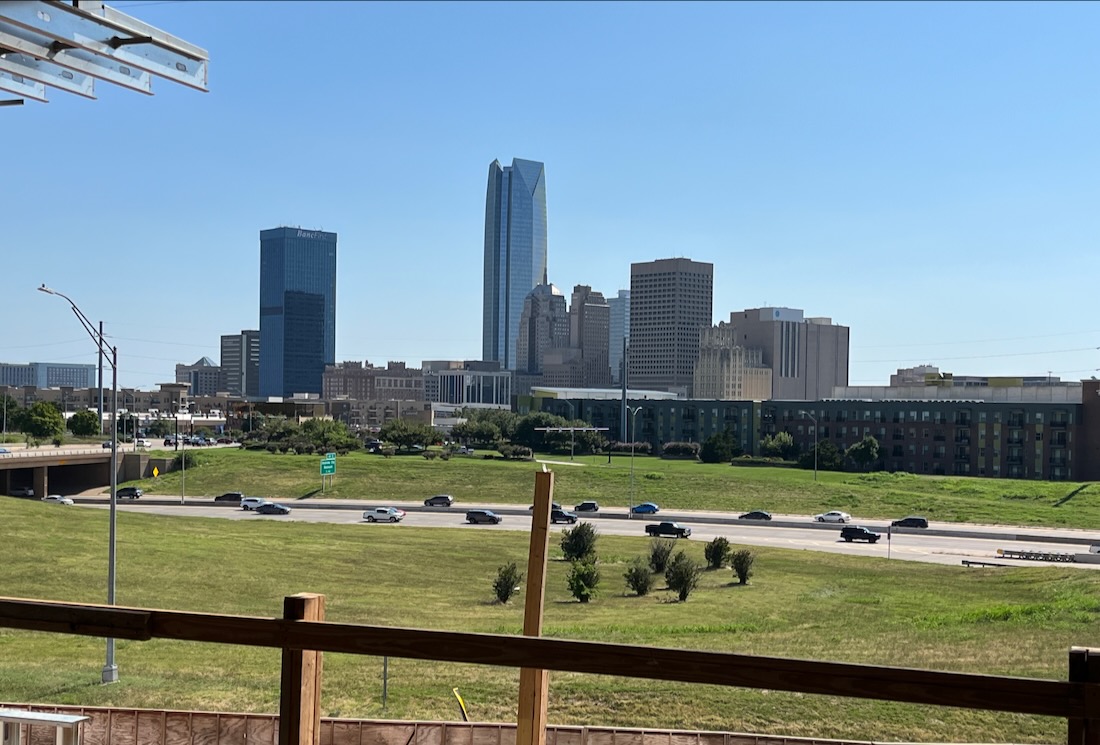
Downtown view
View of downtown OKC from second floor of the Convergence Tower
Innovation Events
Event space in the Innovation Hall
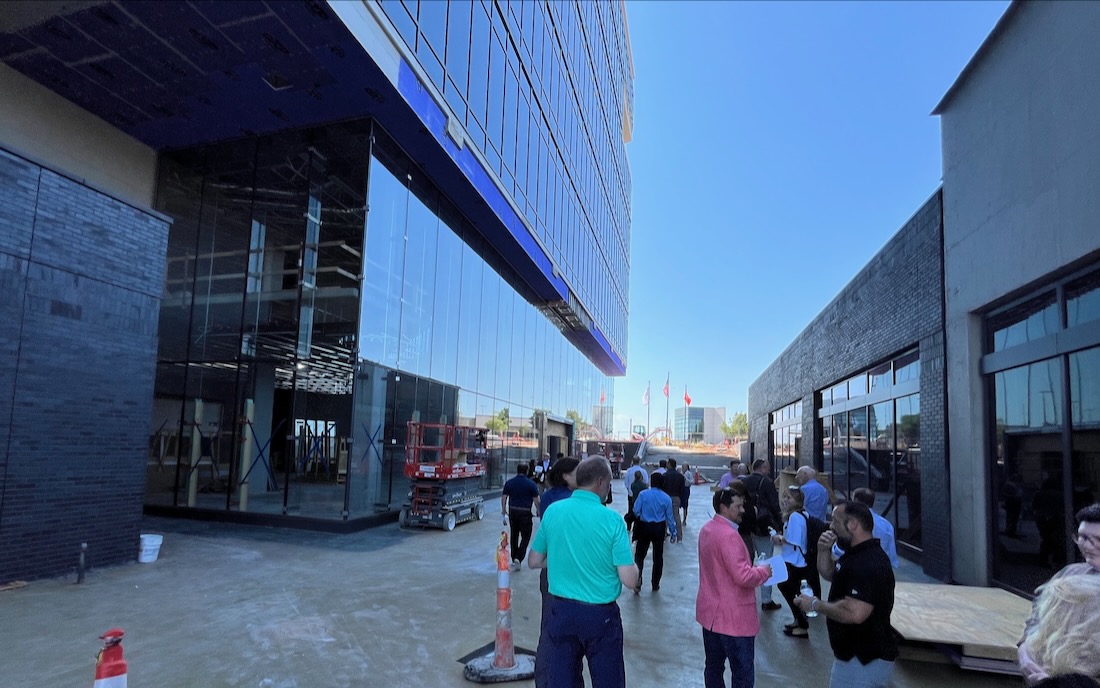
Buildings
Walking between buildings on a tour of the rising Convergence project in OKC.
Jeff Seymour
Jeff Seymour, executive vice president of the Greater OKC Chamber, welcomes guests to the recent networking event and Convergence project walking tour.

Solomon’s ‘road trip’ to OKC’s Omni Hotel

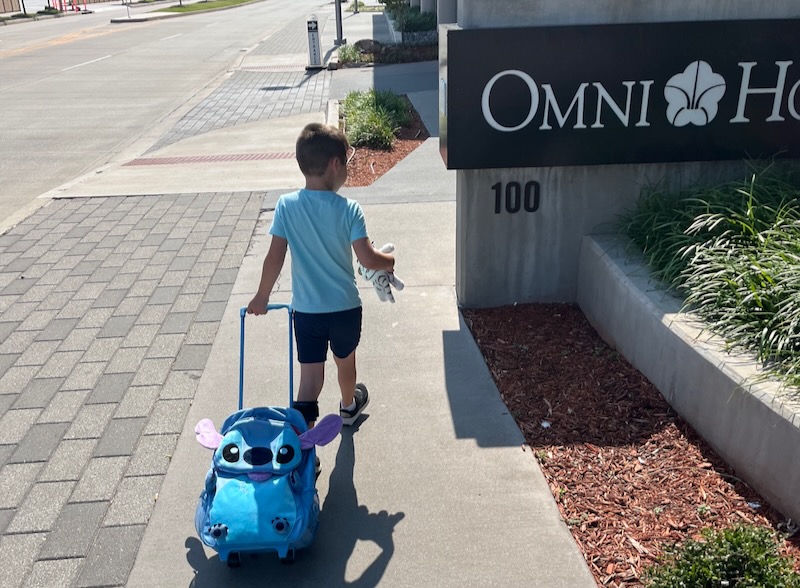
Solomon walking
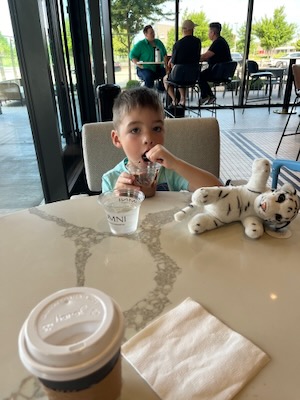
Solomon rolls his new backpack up to OKC’s Omni Hotel on Friday morning.


This is what happens when his GiGi is out of town on business and Papa is left in charge of entertainment on a Friday for our grandson, Solomon.

I’ll preface this with the fact that 5-year-old Solomon received a nice, “Lilo and Stitch” rolling backpack this week when some visiting relatives presented it to him.

So, when it was just us two early Friday, Solomon said he wanted to go on a road trip. He suggested “the beach” and then Branson.

I said we couldn’t do either of those today, but maybe we could drive up to Guthrie and find a place to eat.

Solomon sort of accepted that, but later told me he wanted to go to that “nice Thunder hotel downtown.” All of us had stayed the night at OKC’s Omni Hotel last year when my wife, Paula, was booked there for a convention meeting.

A visit to the Omni seemed the perfect time-killer. So, I said ‘sure.’

Next thing I knew is that Solomon was loading his backpack up with shirts, shorts and underwear for our trip. Three complete outfits.

He insisted I take my overnight case, too.

So, we loaded up the car and headed downtown about 9:30 am and found a parking space along the street just north of Scissortail Park.

I got Solomon’s backpack out of the trunk, and he immediately began marching toward the hotel. I trailed along behind.

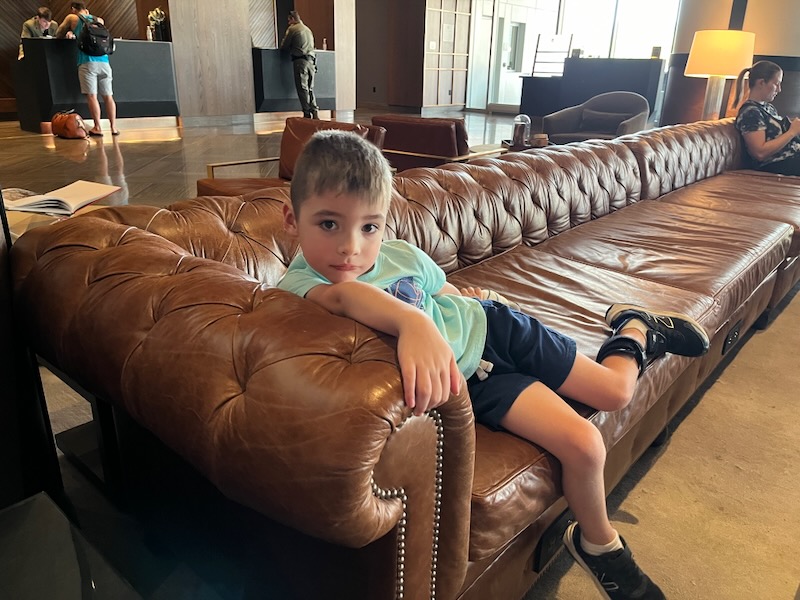
Anyway, we entered the lobby of the hotel and found a nice couch to lounge on and soaked up the cool air for a while. Solomon was great for a few minutes, then got a little restless.

ice creamI suggested we walk around and explore the hotel. We took the escalator the second floor and discovered the massive meeting spaces the hotel offers (I was surprised at the amount of meeting space because the hotel sits adjacent to OKC’s new convention center).
Then we headed back downstairs and found the hotel coffee shop, Park Grounds. I got a coffee and Solomon enjoyed a cup of ice cream.

We sat there for several enjoyable minutes. I met a young woman from St. Louis who was here in town for a national sorority meeting next door at the convention center.

My serenity was broken when Solomon finished his ice cream and walked over to my chair.

“Papa, I’m ready to go up to our room now.”

I had to break it to him that we had no room at the Omni. We were merely loiterers who were taking advantage of the hotel’s cool air and nice ambiance

So, we closed out our visit with another few minutes of lounging and people watching in the lobby.

Finally, I told Solomon we had to go. He grabbed his backpack and rolled it back onto the sidewalk outside.

We had killed most of the morning at the Omni. And that’s a winner!

lounging
Solomon lounging in the lobby of OKC’s downtown Omni Hotel.

The ’65 Mustang was my Aunt Dee’s ride or die

Screenshot
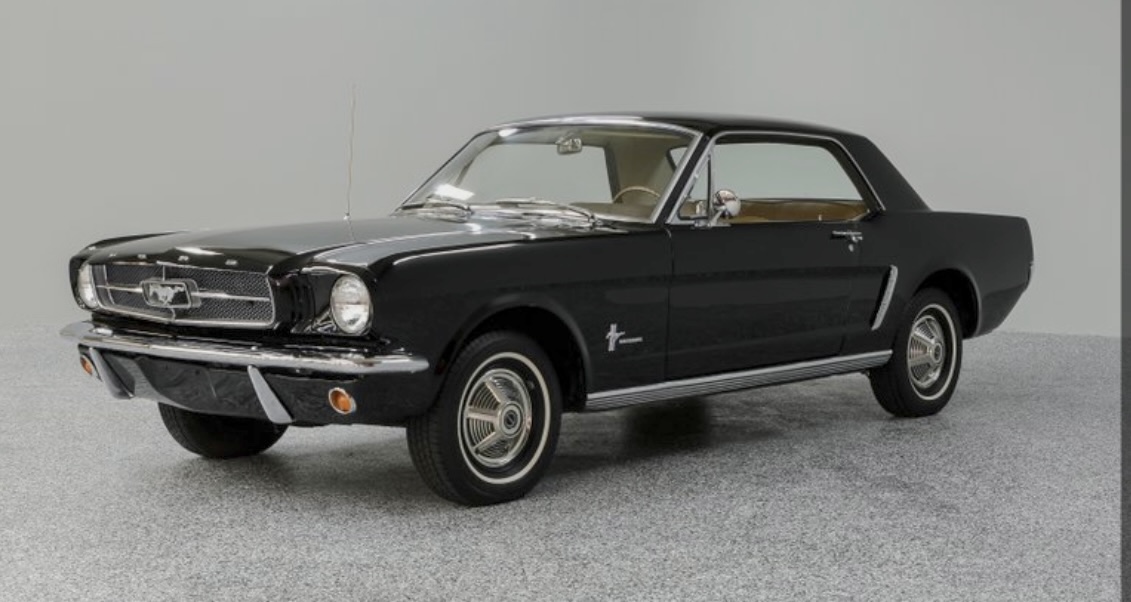
A black ’65 Mustang that looks exactly as I remember the one driven by my Aunt Dee.

This is a story of the Ford Mustang. Or, rather, two Ford Mustangs. One of them did not have a happy ending, and I was in it.

If you are hazy on your Ford Mustang history, I’ll catch you up to date a bit. The Mustang was conceived by a team at Ford led by Lee Iacocca, who later gained fame as the man who saved Chrysler.

The first Mustang was introduced to the public in April 1964, as the “1964-1/2” Mustang. It was an instant hit. The public fell in love with it because it had a unique, sporty body style compared to what U.S. autos had been, which were cars shaped like boxes and quite unattractive.

Purchasing a brand new Mustang off the showroom floor in 1964-65 would set you back $2,400, according to cars.com. Today, those antique vehicles bring from $16,000 for the coupe to $33,000 for the fastback model.

My dad was among the millions of Americans who were taken by the Mustang and eventually bought one when he was stationed on the island of Okinawa while in the military. I’ll come back to that.

Anyway, the Mustang was beloved by my dad and so many others because it had a long nose, short rear end and distinctive grill and tail lights. Eventually, it came in a 2-door coupe, convertible and the incredibly popular fast-back.

I’m writing about the Mustang because my 5 year-old grandson, Solomon, and I discovered a show on the Roku channel called “Counting Cars,” which follows a shop in Las Vegas that rehabs older vehicles and turns them into showpieces.

We streamed an episode this morning in which the shop refurbished a ’65 Mustang and turned it into a perfect candy apple-red rendition of how it must have looked on the showroom floor in 1965. Solomon could not get enough, running through the house to get his grandmother to come in and see the beautiful car.

So, two Mustang stories.

When I was a senior in high school, I lived with my aunt and uncle in Fort Smith, Ark. My aunt Dee drove a black ’65 Mustang and was so in love with the car that she told everyone she would never drive another.  Its compact size made it easy for her to maneuver on the road.

Fast forward to roughly 1980, when I was a young sports reporter at the Southwest Times Record, which had its offices and newsroom in downtown Fort Smith.

One day, as I stepped out of the building onto the sidewalk, my uncle, L.R. Mendenhall, drove up and parked Aunt Dee’s Mustang right outside the SWTR’s door along Rogers Ave.

At virtually the same moment, Leroy Fry, who was the newspaper’s managing editor, walked out of the building and spotted the Mustang. I introduced my Uncle “Blue Eyes” (as he was known to our family) to Leroy. The editor told him that he had to have that Mustang and how much would my uncle sell it to him for.

“It’s not for sale,” Blue Eyes told him. “It’s my wife’s car and she says it’s the only one she will ever drive.”

End of story.

That black Mustang was my Aunt Dee’s ride or die, and I’m pretty sure when she died in roughly 2000 that the car was still in her family’s possession.

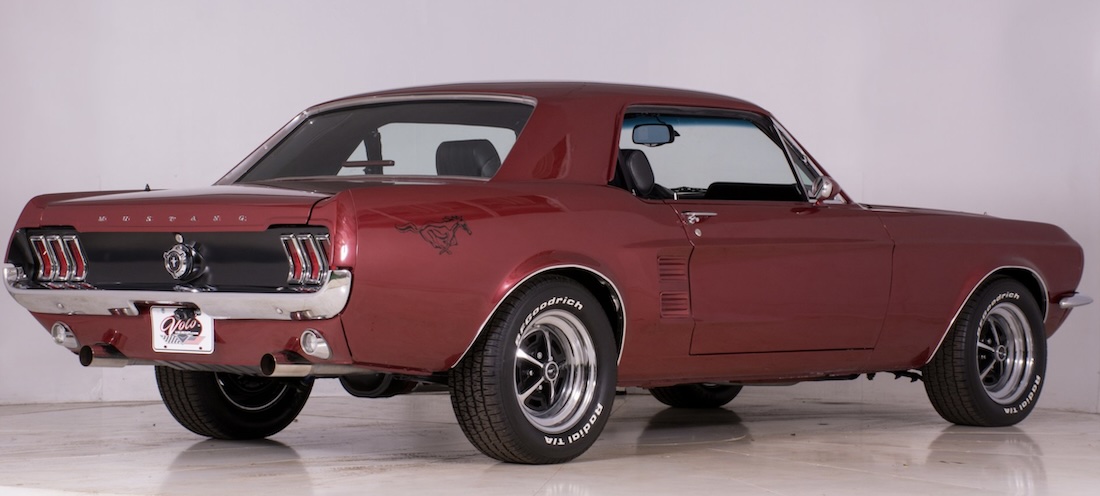
My second Mustang story involved the 1967 Mustang my dad bought while on Okinawa. He was in the Army, so our whole family lived on the island. This was in 1968 when I was 15 years old.

Dad loved his Mustang, which was painted in a sort of burnt-orange color, and drove it every day to work. He was a hot GI in a hot vehicle.

Screenshot
A ’67 Mustang similar to that owned by my dad, although his was more of a burnt orange in color.

I wanted to drive it, too, and begged him to let me get behind the wheel. So one weekend he asked the son of a family friend who was about 19 years old to drive me and the Mustang to an abandoned Japanese airstrip where I could drive it and stay out of harm’s way.

I remember driving back and forth on the airstrip multiple times and getting a feel for the car. Then we decided to head back to the military base where our families lived. I moved over to the passenger side, and the older kid (can’t think of his name now) took the wheel.

We drove off the airstrip and back onto the rural two-lane road that was adjacent to a field of sugar cane. My young driving instructor said, “let’s see what this car can do,” and gunned it.

I’m not sure how fast the car was traveling, but we roared down that rural road until my driver suddenly realized there was a 90-degree turn at the end and started screaming that we weren’t going to make it.

We didn’t.

The car flew off the end of the road at the hairpin curve, hit hard in the sugar cane field and landed on its side. Neither one of us had buckled our seatbelt (hey, this was the ’60s), but we were mostly uninjured. My friend cut his hand on the steering wheel when the padding came off.

We climbed out of the driver’s side, which was facing the sky and then tried to figure out how to contact our parents in this era before the cellphone was a gleam in anyone’s eye.

There was a military installation about a half mile away, so we walked to it, told the guards at the security gate what happened, and they let us call our parents. Of course, we told them exactly how it happened.

The car looked OK to me, but had to be towed to a shop somewhere on the island. Turns out the frame was bent and the insurance company declared it a total loss.

My dad was heartbroken, of course. But the fact that we were unhurt took some of the steam out.

He never owned another Mustang.

Another loss from our youth as time marches on

Screenshot
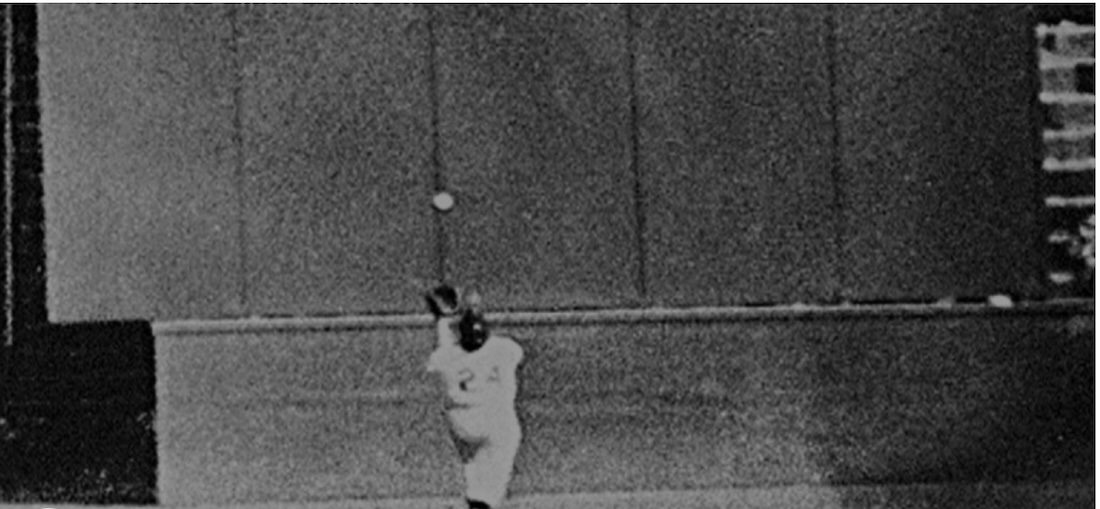
Willie Mays makes The Catch in the 1954 World Series

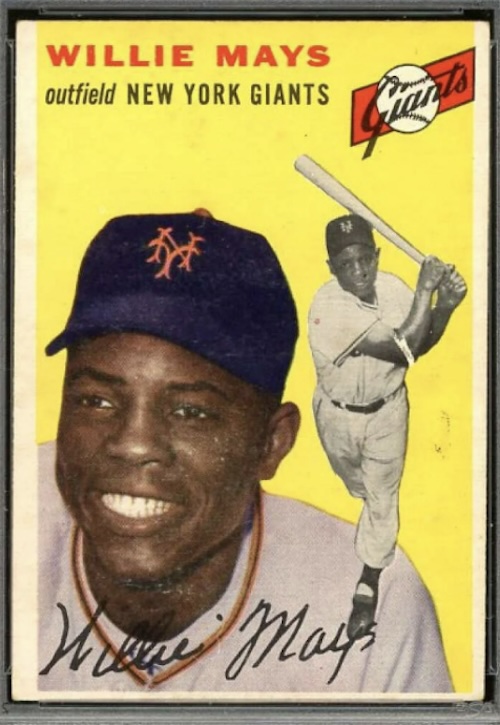
In his magnificent book “The Baseball 100,” author Joe Posnanski ranks Willie Mays as the top major league baseball player of all time. Better than Aaron. Better than Ruth. Better than Ted Williams.

Better than them all.

Here’s a sample of what Posnanski wrote about the Say Hey Kid:

“Who is the greatest player of all time? You know. Maybe your father told you. Maybe you read about him when you were young. Maybe you sat in the stands and saw him play. Maybe you bask in his statistics. The greatest player is the one who lifts you higher and makes you feel exactly like you did when you fell in love with this crazy game in the first place.

“The greatest player of all time is Willie Mays.”

Sure it’s Posnanski’s personal opinion, but who could argue? Mays played 23 seasons in the Major Leagues, from 1951 through 1973, but also played one season in the Negro Leagues. The list of the statistics he put together across the years is astounding.

To give his long career some perspective, I wasn’t born until 1953, and when I graduated high school in 1971, Mays was still playing.

Baseball and all of sports lost a titan this week in the death of Willie Mays at age 93.

It’s another loss of a part of my youth, which I’ve written about previously in this blog. I wasn’t old enough to be aware of Mays’ incredible back-to-the-plate catch in the 1954 World Series, but I’m pretty sure that by the time I developed an interest in baseball around the age of 8 or 9, I learned of The Catch.

Here’s a video clip that breaks down The Catch:

So we’re mourning more than just the passing of a bright star — maybe the brightest — but also the loss of another piece of our youth. Mays was a presence in box scores, sometimes on television and in baseball cards throughout my entire youth.

But it’s not just the death of Willie May that reminds me that time marches on. In the last month, the sports world has now lost three beloved giants of their sport. First was Bill Walton a couple of weeks ago, then Jerry West last week.

Time marches on, and we’re helpless to stop it.

So, the best we can do is preserve our memories, save our baseball cards and cherish our heroes who are still with us today.

Misheard mystery lyrics to our favorite songs

Screenshot

When I was a kid in the mid 1960s, there was no music that captivated me like that of the Beatles. Even as a pre-teen, I couldn’t get enough of their upbeat music, harmony and hair. I listened and read everything I could about the Fab Four.

The only drawback was that I couldn’t get the lyrics down correctly from the songs I heard on Top 40 radio or their albums. But I didn’t realize it then.

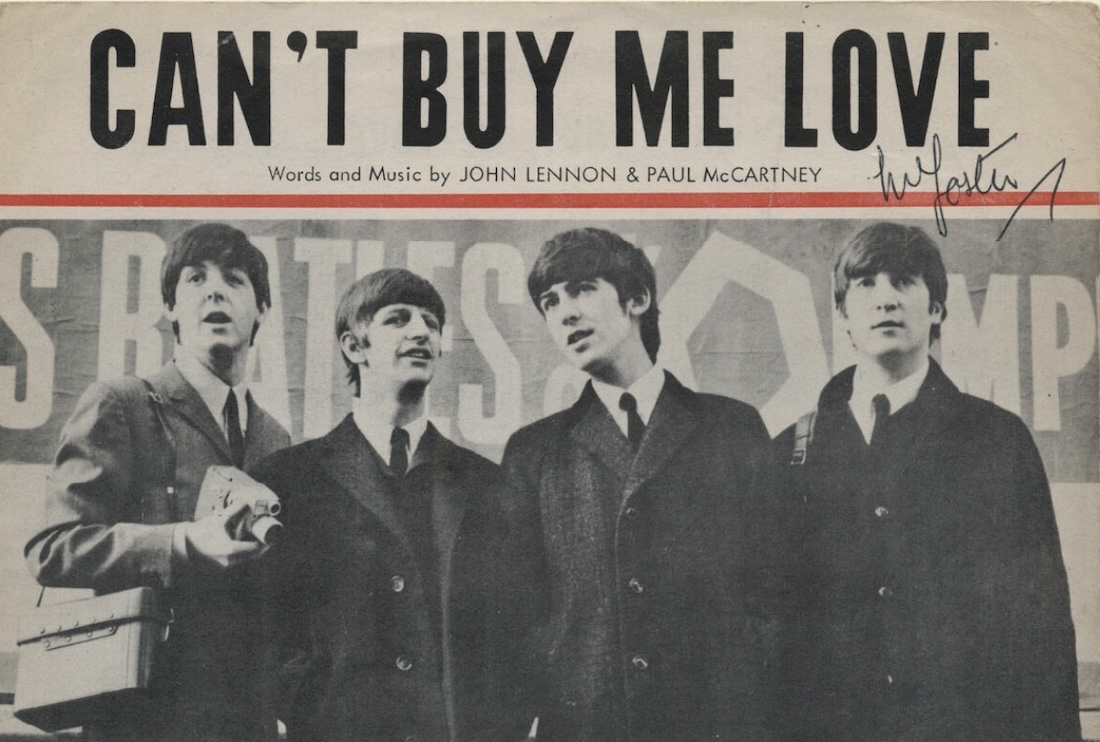
For instance, I loved to sing along to “Can’t Buy Me Love,” but butchered a key line all the way into adulthood. I misheard “I don’t care too much for money” as “I don’t care to munch for money.”

I know, makes no sense. But I would hear that in my head and even sing it until it dawned on my in my 20s that I had it wrong. Boy, was I embarrassed.

There’s more. I always heard the lyric of “I can’t hide, I can’t hide” in the song “I Want to Hold Your Hand” as “I get high, I get high.” Of course, there was so much written and rumored about the Beatles and drugs that it couldn’t be anything else to me.

Finally, the most embarrassing admission of all. I loved the song “Ticket to Ride,” and played the 45 record I bought many, many times on my cheap little record player. But I sang it as “She’s got a figure to ride.” I cringe today. Must have been hormones and wishful thinking that turned the key line, which was the actual song title, into a suggestive translation.

Of course, about that time the Kingsmen had a rocking version of “Louie Louie,” in which the lyrics were all but indecipherable. But all the boys in my College Station, Texas, neighborhood couldn’t get enough. The rumor was that the song contained the Queen Mother of all bad words, and we listened and strained to hear it. There were the know-it-alls who even translated it into a version we all went crazy over.

Listen for yourself and then decide:

The song was banned in some places in the U.S., although the singing was so slurred that there was no way to know what was actually sung. Here’s a link to a post on the Rare Records website that puts it all into context.

My point of all this is that lyrics in popular music have been misheard and misinterpreted forever. The most famous may be the scene from Friends in which Phoebe sings a line from Elton John’s Tiny Dancer as “hold me closer, Tony Danza.”

I polled friends here in OKC, and got some interesting responses. My friend Steve says his wife misheard “Suicide Blonde” by INXS as “Soup and Salad Bar.” I took a listen and could see how she could mistake it.

There’s another from Steve’s (unnamed to protect her identity) wife. She misheard the title line from George Michael’s “Father Figure” as “I’ll be your butterfinger.” That’s a stretch.

Another friend I’ll identify as “Ed,” says his wife (also unnamed to protect her dignity) has a long history of misinterpreting lyrics. The best example he gave me is hearing her enthusiastically singing the title lyric from Johnny Rivers “Secret Agent Man” as “Secret Asian Man.”

Of course, neither Steve nor Ed shared any misheard lyrics from themselves. Curious.

If you Google “misheard lyrics” or ask ChatGBT to give you a list, there are dozens of examples. Manfred Man’s “Blinded by the Light.” Nirvana’s “Smells Like Teen Spirit.” The Beach Boys “Good Vibrations.” Bon Jovi’s “Livin’ on a Prayer.” The list goes on an on.

It shows that we’ve all misheard lyrics from some of our favorite songs over time. Maybe we just interpreted them into what we wanted to hear.

I’m heading off to listen to “Whiter Shade of Pale” one more time so I can sing along with “She skipped a line fandango.” I mean, that’s the line, right? Right?

Show me the radar! A digital tale from 2004

Screenshot

Whenever weather threatens OKC or western Oklahoma, our local TV stations abandon network programming and go with wall-to-wall weather coverage.

My family tunes in every time, and not just for potential life-saving information. We’re fascinated by the combination of theatrical performance, legitimate weather warnings and relentless self promotion.

“We’re declaring a News9 tornado warning for you folks in Custer County!” weatherman David Payne practically screams as he directs Val and Amy into the path of the storm.

No waiting on those slackers at the National Weather Service.

It’s like passing a car wreck on the Interstate, you can’t NOT look at it. Everyone has their favorite/least favorite TV meteorologist. Our go-to weather Drama Queens happen to be from Channel 9.

Anyway, it seems like programming has been interrupted every other night this Spring, but I would never suggest that it’s related to climate change, would I?

As we’ve watched the powerful color-coded radar scans and learned that we’re seeing details THAT NO OTHER STATION IN OUR MARKET CAN PROVIDE, the whole scenario got me thinking back to something I wrote about two decades ago.

Today, we’re in a digital world in which we can track incoming storms on color radar not only only our television screens, but on our phones, computers and tablets. That was all just emerging in 2004 when I was a Business News reporter at The Oklahoman who embraced the digital life.

Not all of my colleagues were ready to move on from their analog past, so I wrote the following column as an ode to the great digital divide:

It is autumn 2004, and a pair of coworkers are sitting in opposite cubicles facing each other. One has his back to the window. His name is “Digital.” His co-worker goes by the moniker “Analog.”

Digital: Hey, there’s a weather alert crawling across the bottom of my computer screen!

Analog: (looking out the window over Digital’s shoulder) It looks sunny to me. There’s a little cloud to the south.

Digital: Yeah, but the color-coded radar I’m looking at on my screen shows a major thunderstorm headed this way. It’s just north of Chickasha.

Analog: I trust my eyes. I’ll worry about the weather when I look out this window and see a big black cloud.

Digital: You are so 1990s. (picks up the phone to call his wife) Hello, honey, you better monitor the weather, it’s looking rough outside. Where are the kids? Outside playing? Well, bring them in. The radar on my computer screen is showing a big storm just north of Chickasha, and it’s headed this way.

Analog: I still only see blue sky out the window.

Digital: (still speaking into phone) I don’t care if it’s sunny out, I’m telling you my radar is showing a big storm brewing just south of here. I’ll call you with further updates. Bring the kids inside! Call my cell phone when you have them rounded up (hangs phone up).

Analog: I think you are scaring your family for no reason. You should trust your eyes. Look out the window! It’s sunny.

Digital: I don’t need a window! I’m wired into the weather service right here. I can zoom in on the screen and see within a half mile where the storm is, which way it’s moving and what the temperature is. See, it’s 62 degrees outside.

Analog: I can just walk outside and get a feel for the temperature.

Digital: Then I assume you aren’t concerned about your family’s welfare. They won’t be ready for this one when it blows through town.

Analog: We have a “safe room” in our garage.

Digital: (wireless telephone rings) Hello. You’ve got the kids? Good. Now, what’s your plan for when the storm hits?

Analog: My eyes are telling me it’s still sunny outside.

Digital: (still speaking into phone) Will you have time to drive to the community shelter? Yes, I know it’s still sunny outside, but the radar shows the storm has moved closer to the metro area. Herd the kids to the hall closet if you need to. OK, love you. Bye.

Analog: Hey, I’ve got to run out on an assignment. I’ll be back this afternoon.

Digital: Well, let me have your cell phone number so I can contact you in case there’s a weather emergency or something.

Analog: I don’t have a cell phone. Never had a need for one.

Digital: (head bangs against desk; heavy sigh) I give up.

Analog: (starts to walk out of the office) Later.

Digital: (jumps up and runs after Analog) Here, take my umbrella just in case.

That’s how we rolled in 2004. It was a different era. Pre-iPhone. Pre-News9 tornado warning.

Any resemblance to actual people is mere coincidence.

OKC’s Golden Age of Tweetups & OpenBeta

Screenshot

I came across the obituary last week of Oklahoma City business leader Phil Scaramucci. I never met him, but his name was familiar. As I read further into his life story, I came across the name of his wife, Avis.

I don’t know Avis, either, but I know of her as the founder of the now departed Nonna’s Ristorante in Bricktown. That was in the obituary, as well.

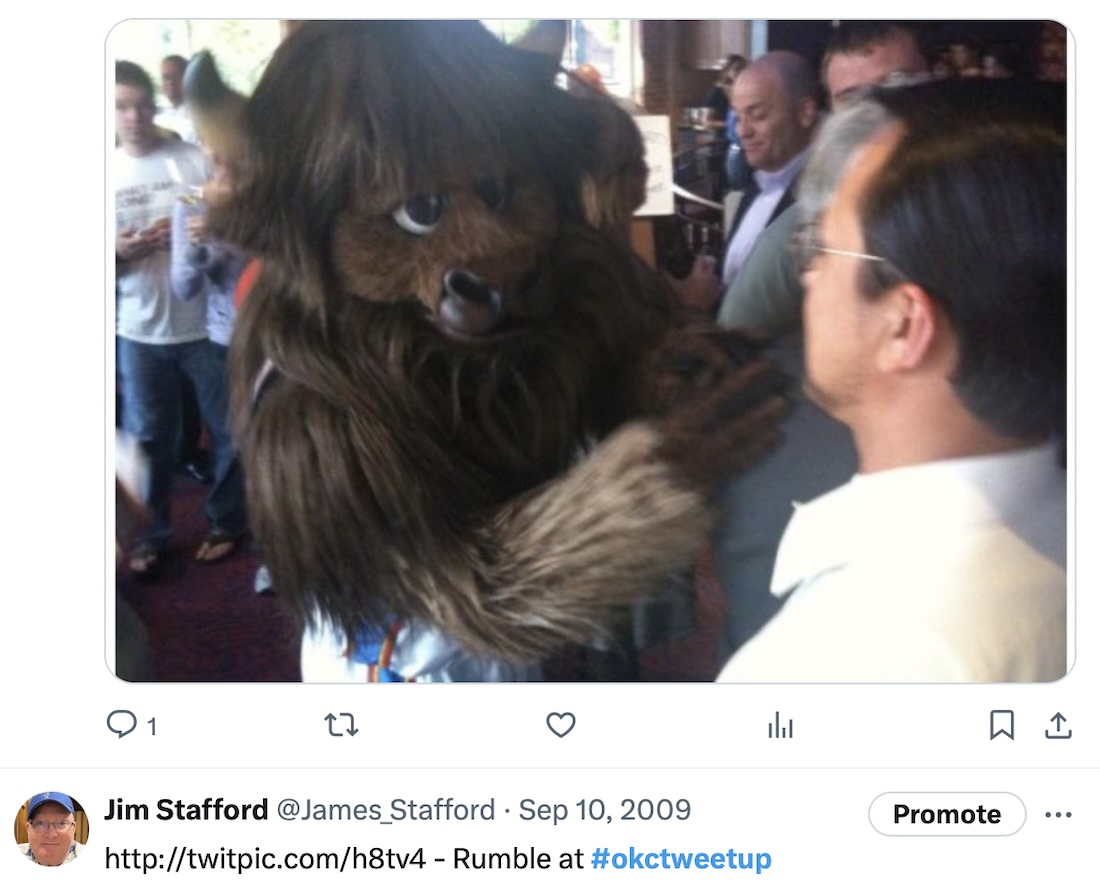
And THAT led me to recall an event I attended at Nonna’s in 2009. It was called a “Tweetup,” one among many such events that sprang up across OKC and elsewhere in that era, which provided the opportunity to meet my new Twitter friends in real life.

Screenshot

The Tweetup at Nonna’s was such fun. Probably well over 100 people attended, and, as I recall, there was free food and drink. I don’t know who paid for it. Great networking opportunities.

Tweetups became such a thing that I received an invitation to attend a Tweetup at the 2009 International BIO convention that I attended on behalf of i2E and the Greater OKC Chamber.

What set Tweetups apart — and what I call Early Twitter of the late 2000s — was how positive and upbeat everyone was. Folks were eager to lift one another up, and the concept of Twitter trolls had yet to appear to spoil the fun.

Social media was emerging in importance in that era. In fact, my friend Russ Florence, President and CEO of the Consulting and PR firm Schnake Turnbo Frank, recently told me that his firm was among the first to hire a social media and digital media specialist.

I found my way onto Twitter in the Spring of 2008 at Russ’s invitation. I worked as a Business News reporter at The Oklahoman, and discovered Twitter to be an incredible fountain of information and news.

So, I jumped into the deep end and have never left.

About that same time, another phenomenon occurred with the rise of co-working spaces. The first I recall was OKC CoCo — for Coworking Collaborative — created in downtown OKC by Derrick Parkhurst.

Derrick began hosting what he called “OpenBetas” on a semi-regular basis. OpenBetas were events where anyone could pitch their innovation or new business concept. There was food and drink and a festive upbeat atmosphere.

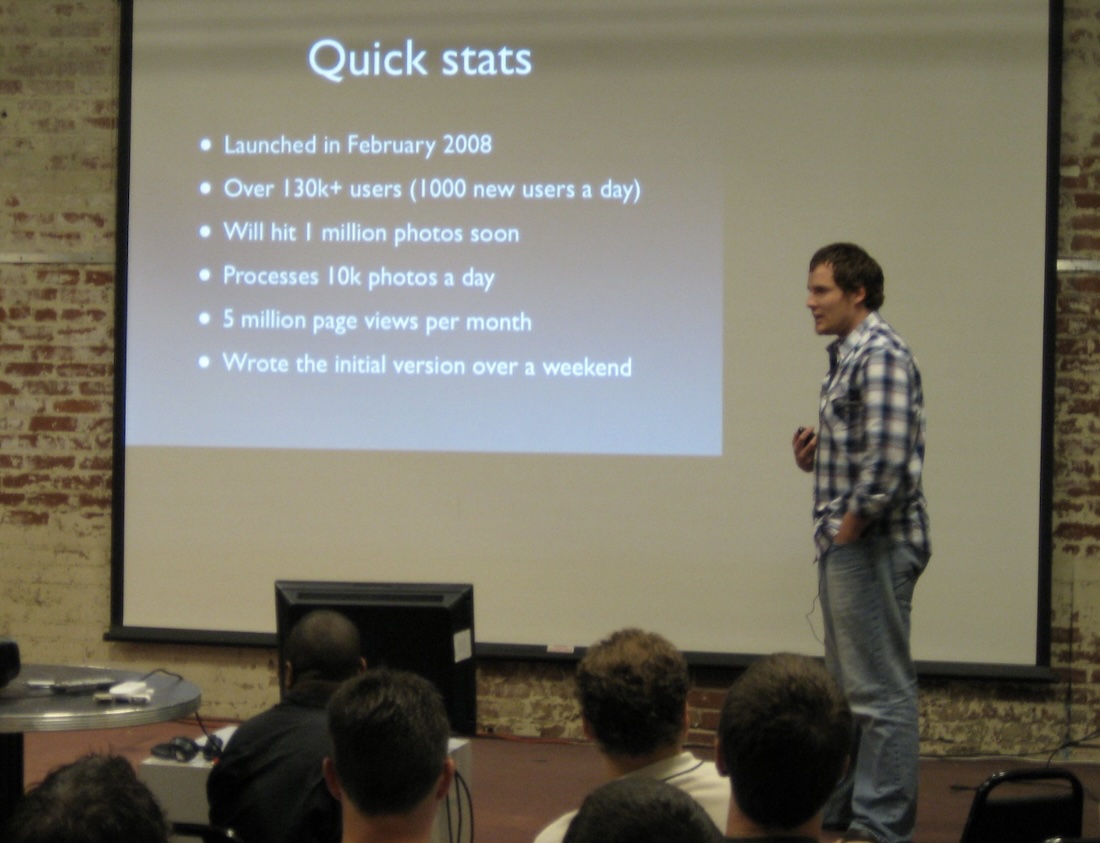
For example, Oklahoma native and entrepreneur Noah Everett shared details of his company called Twitpic at an OpenBeta event back in those days. Twitpic was huge in early Twitter as a way to post your photos.

Screenshot
Oklahoman and Twitpic founder Noah Everett discusses his venture at OpenBeta in 2009.

Another friend, Dan Lovejoy, today an Enterprise Architect Expert for OG&E, also fondly recalled the era of Tweetups and OpenBetas.

Screenshot“That really felt like an extension of the heyday of the blogosphere when so many people were blogging,” Dan told me. “I remember in those early days I would follow anyone from Oklahoma.
“I spoke at one of those (OpenBetas). They were fun.”

Fast forward to today’s Twitter, which is now known as “X” and owned by Elon Musk, who seems intent upon running into the ground. Many of my old Twitter friends have fled the site as the number of trolls increased exponentially and negativity is everywhere.

I’m still on Twitter (I refuse to call it “X”), if only because it remains a great source for breaking news, both local and beyond. I try my best to ignore the trolls, bots and MAGA acolytes.

But that’s where we are in 2024. Far removed from the naivety of Tweetups and OpenBetas.

So, I’m sorry for the loss of Phil Scaramucci, but I’m glad I got to read his life story in the paper. And how it reminded me of that 2009 Tweetup at Nonna’s.

Tweetups and Nonna’s are now only fond memories. Sadly, neither will ever be replaced.

Screenshot
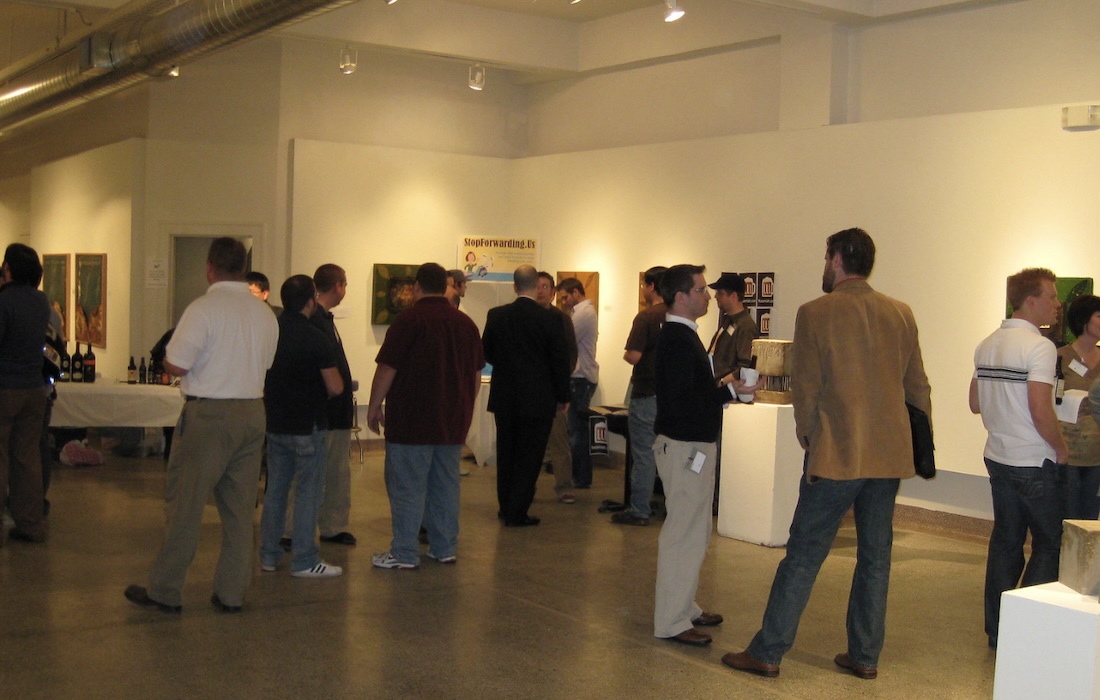
Networking at OpenBeta in roughly 2009.

A passion for the Thunder and game-day experience

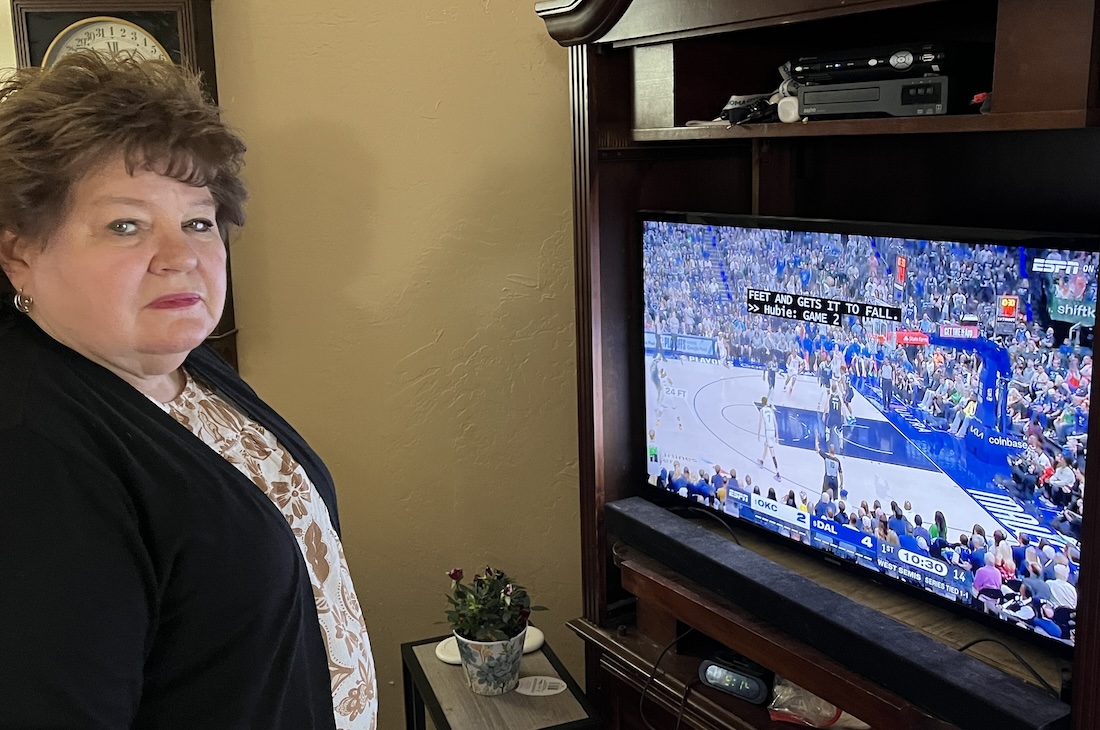
Paula TV
Paula Stafford stands close to the television as the Thunder-Mavericks games plays ojn

Watching the televised Thunder-Dallas game with my wife this past Saturday afternoon turned out to be a personal treat for me.

Not because the Thunder won or lost (they lost).

Paula and I were both disappointed to see our Thunder lose and go down 2-1 in their NBA second round playoff series to the Mavs.

Rather, it was the rare shared experience of watching a game together and being able to see Paula’s passion for the Thunder as the game progressed.

As a fan, Paula is a Thunder veteran. She’s attended a vast majority of Thunder games in the arena since the team relocated here in 2008. This year she saw most of their home games live as she accompanied her mother to the Paycom Center.

I mostly watched from home, and saw only a handful in person.

So, we watched separately most of the time. As for televised out of town games, they are usually played at night when we are trying to wind down and get our 4 year-old grandson in bed for the night.

It’s even worse for the playoffs when start times for NBA Western Conference teams like the Thunder are at 8:30 pm or later.

So Saturday afternoon brought us together in front of the TV for a rare shared watching experience.

Paula made it fun by wearing her passion on the sleeve of her Thunder T-shirt, so to speak.

Before the game, she offered a coaching tip to Thunder coach Mark Daigneault. Send Gordon Hayward out on the court to give Luka Doncic a couple hard fouls early and protect Lu Dort from accumulating fouls.

And when the Thunder have the ball, go hard at Luka, whom she perceives as soft on defense.

Later, we both decided that Hayward wasn’t tough enough to rough up Luka, so we settled on Kenrich Williams as a good matchup.

Daigneault did not heed her coaching tip.

Still, the Thunder hung with the Mavs throughout the game, even taking the lead several times.

Paula took to barking whenever Jalen Williams — J-Dub to fans — made a great play. J-Dub started the barking trend in post-game interviews, and it has spread to fans, even those at home.

As the game progressed, Paula would call her sister or our friend Donna and break down what just happened with them or celebrate a good play. Sometimes, they called her.

She chanted “Let’s go Thunder” periodically like they do in the arena, or “Rebound Thunder!” when they needed a boost.

The phone line was hot. In fact, out of the blue, her sister, JoAnne, suggested that the Thunder put Hayward on Luka to give him some hard fouls.

Where had I heard that?

But the Thunder couldn’t hold off the Mavs in the second half, and Paula was indignant over how the game was called by the refs.

“It’s hard to win when you are having to play against both the Mavericks and the refs,” she said. “Every call has gone Luka’s way because he’s getting star treatment.”

And so it went. I enjoyed watching her reaction as much as the game itself.

When it was over, Paula called her sister and our friend Donna, and they all commiserated over the loss and the unfair star treatment Luka received. The consensus was that Luka is a drama queen. I concur.

As for me, I enjoyed Paula’s enthusiasm for the Thunder to the end of the game and beyond.

It was a great afternoon of basketball.