In my hometown, the long decline of a Fort Smith institution

Screenshot
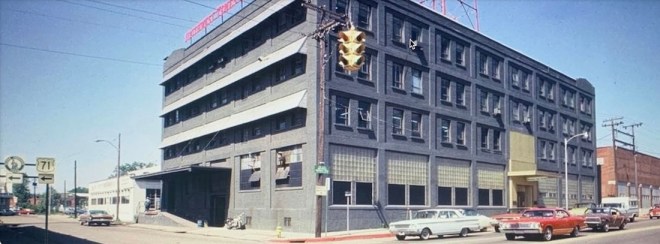
The Southwest Times Record building in what appears to be the early 1960s. (Photo courtesy of Southwest Times Record former employees Facebook group)

Here’s a bit of nostalgia for you. When I walked into the Southwest Times Record newsroom for the first time as an employee in 1978, I encountered a bustling community of talented writers, editors and photographers all scrambling to publish local news seven days a week.

The Fort Smith newspaper was a great place to learn the craft as my first job out of college. There are many folks among my former colleagues there whom I will never forget. I worked at the SWTR for five years in a variety of positions before moving to Oklahoma City and working for The Oklahoman for almost a quarter of a century.

My parents were among the 40,000 or so SWTR subscribers who fetched the newspaper off their driveway every morning. Established as the Fort Smith Times in 1884, the SWTR had a strong following not only in Fort Smith, but across a multi-county region of Western Arkansas and Eastern Oklahoma.

So, it’s been disheartening to watch the SWTR decline as a community force over the past few years as the number of subscribers declined and employees were laid off. It’s a situation not unlike that in many other cities across the nation.

Now owned by industry giant Gannett, I’m not sure there remains a single Fort Smith-based editor or reporter chasing down local news stories.

In fact, my 90-year old mother, who subscribed to the SWTR in our hometown of Fort Smith for more than five decades, finally gave it up a couple years ago because the paper had so little local news. Sometimes she still reads the obituaries published online.

As for me, I’ve stayed connected to the SWTR by subscribing to the paper’s free emailed daily newsletter that allows a peek at its headlines and free access to the obituaries.

It all makes you wonder when the hammer will fall and Gannett will halt publication of a physical paper for any remaining subscribers, leaving only online access.

Well, we’re close.

Screenshot

I received a notice recently that the SWTR was transitioning to a “mail only” newspaper with no more home delivery. Here’s what the email said, in part.

“Beginning tomorrow, look for your copy of the Southwest Times Record and our other regional publications to arrive with your daily mail. As announced in the Jan. 10 edition and in letters mailed to subscribers, the U.S. Postal Service will be delivering the Southwest Times Record to optimize resources amidst increasing digital readership demand.”

Now subscribers can read ‘news’ that is already at least 24-hours old when it arrives in the mail. What’s that old saying about nothing as stale as yesterday’s newspaper?

So, why am I writing this?

Well, it’s not a diatribe against the current ownership, because I see what’s happened to my old employer as a product of emerging technologies and a big change in how the public consumes news. Online access to news — much of it free — has removed the incentive to subscribe to a daily newspaper that lands on your driveway every morning.

I’m mourning the SWTR for its former employees and the folks who subscribed to the paper for decades. It’s like watching a close relative slowly fade away from an incurable cancer.

Here in OKC, I’m still a subscriber to The Oklahoman’s physical newspaper, which is delivered to my driveway every day but Saturday. Yet, when I look up and down my street as I pick up the newspaper each morning, I see no other papers on my neighbors’ driveways. None.

However, I’m confident the path determined for the Southwest Times Record won’t be a template for The Oklahoman. It remains an enterprising news organization, despite repeated rounds of staff reductions.

That notice I received of the SWTR’s “all mail” newspaper delivery prompted me to ask a couple of former colleagues and longtime SWTR employees who still live in the Fort Smith area their thoughts on what has become of their former newsroom.

Patti Cox was a longtime news editor at the SWTR with whom I worked on the news desk. She shared her perspective with me as both a former employee and a current subscriber.

“It is very sad turn of events for Fort Smith,” she said. “We still are taking the day-late-in-the-mailbox paper but not sure for how long or why. End of so many meaningful things like insightful, timely local news and commentary. Long gone are noisy newsrooms filled with reporters, editors, interns with common purpose and multiple deadlines.”

Carrol Copeland, longtime SWTR photographer and creator of a Facebook group called Southwest Times Record former employees that has 162 members, also shared his thoughts with me.

“Back in the day, we covered local news, and there was very little worldwide or nationwide news in it,” Carrol said. “Probably 80 to 90 percent of it was local news. At one point we had the Poteau office and the Van Buren office, and somewhere around 150 employees.”

That was then. This is now.

“There’s not even a physical location anymore,” Carrol said, who recalled tornadoes, spectacular crimes and criminal trials that he covered over the years. “I think it comes down to a lack of income. If you can’t sell advertising you can’t have people to work for you.

“Now that people are going to the Internet or Youtube for their news, no one is advertising anymore. The technology overtook them.”

How will the daily newspaper voice be filled for former SWTR subscribers who loved its local news angle? Digital news services that focus on local news offer some hope.

Here in Oklahoma City, we have Oklahoma Watch and Nondoc, among others, which are sort of complementary to The Oklahoman, for now.

In Fort Smith, there’s an online site called Talk Business & Politics that focuses on Fort Smith and Northwest Arkansas. It was started by a former SWTR editor. I read it first thing each morning five days a week.

Actually, as I think about it, I’m not sure folks aged 30 and younger will miss holding an actual newspaper because it’s likely they never read one on a daily basis anyway.

But for those who grew up with ink-stained hands, it’s a difficult transition.

“I just know I loved newspapers and the dedicated (mostly young) quirky stressed out folks who worked for them,” Patti Cox told me. “Grateful for the lifetime lessons learned there.

“Good memories, my friend.”

We’ll carry those memories with us long after the final edition is published. It’s coming.

Why Evard Humphrey remains a sprint car hero to this child of the ’60s

Evard and car
Evard Humphrey and his No. 12 super-modified sprint car

Editor’s Note: Don Mecoy is a friend and former colleague at The Oklahoman who retired as the newspaper’s managing editor at the end of 2022. A recent conversation about sports heroes from our youth when Don was a guest on the 3 Old Geezers podcast sparked his memory about a local race car driver from the late 1960s. Don wrote this guest blog post about that driver and those memories.

By Don Mecoy

I had my share of sports heroes when I was a kid. Roger Staubach, Lou Brock, Johnny Bench and Joe Washington were among my faves. But my personal hero — and it truly was personal — was a guy you probably never heard of: Evard “Kerfoot” Humphrey.

evard in car
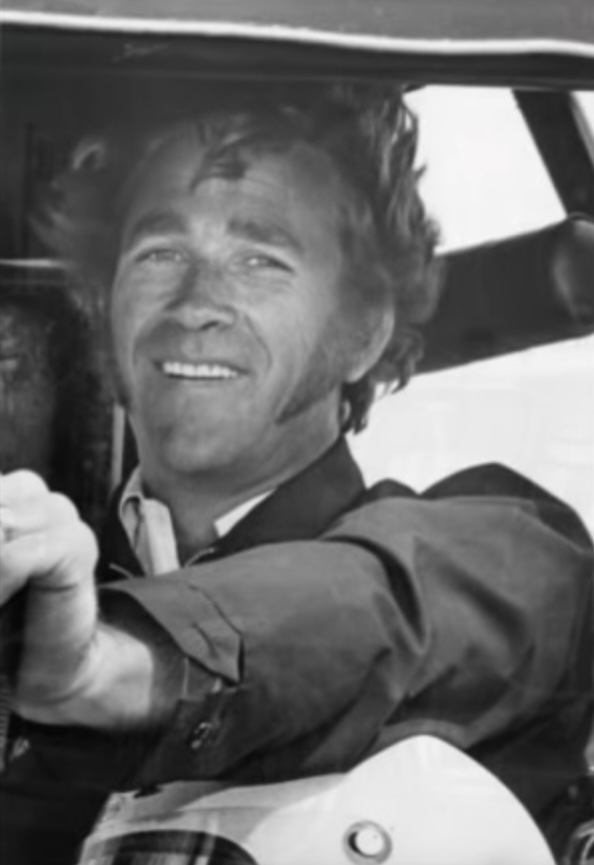
Evard in the Black Magic No. 12 super-modified dirt-track racer.

Evard was the driver of the No. 12 super-modified sprint car that ran every Friday night at State Fair Speedway during my youth in Oklahoma City. My Daddy — a preacher, shade-tree mechanic and race fan — liked Evard, so I did too. Evard won a couple of season championships at State Fair Speedway in the years just before my family moved to OKC in 1967. And he was highly competitive in the first several years we sat in the fourth-corner stands at the beloved dirt track.

Some grainy video of Evard’s “Black Magic” No. 12 is available on YouTube:

I watched Evard win a lot of races, and as I became more knowledgeable about racing, I could see that he was a smooth and cagey driver and a gentleman on the track. He cut other drivers a lot of slack. He didn’t tear up his equipment, or anyone else’s. Unlike most of my other sports heroes, Evard wasn’t a highly paid athlete — he ran a salvage yard.

I was grown and raising a family of my own when I saw Evard’s obituary in The Oklahoman in November of 2007. At the time, I was a writer on the business desk at the newspaper, and we had recently added blogs to our newspaper website. I decided to write a post about Evard. It was brief, but heartfelt.

‘Forty years after the first race I witnessed, I remain a fan of the sport. But there will never be a driver that I pull harder for than I did Evard Humphrey. According to his obituary, Evard was 72 and “loved by all” — even some folks who never met him.’

The day that short item appeared in the paper, my phone started ringing. I heard from Evard’s son-in-law, Terry Doss, who drove the “Black Magic” super-modified car after Evard hung up his racing suit. He thanked me on behalf of the family, and said Evard deserved all the love — not just as a successful driver but as an all-around great guy.

Shane Carson, one of the most successful dirt track racers and promoters to get his start in OKC, called to thank me and to tell me that his cars typically carried the number 12 because of his love for Evard. Others called to echo my feelings of Evard, and share memories of OKC’s wonderful dirt-track venue.

evard pat
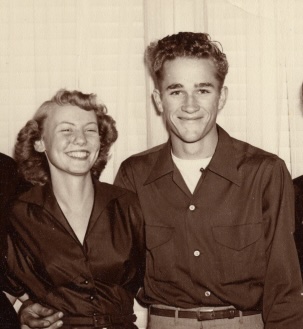
Pat and Evard Humphrey

The blog post also drew the attention of Evard’s charming wife, Pat, and she came to the newspaper office to meet me. I told her how I was thrilled sometimes to see Evard walking through the stands, wearing his racing suit, to sit with his family between races or when his car had failed. She told me I should have talked to him; he loved to mix it up with his fans. But for 9-year-old me, he was on a pedestal too high to approach.

She was delighted to flip through our file of her late husband’s photos in our library. A librarian told me all our photos were being digitized and then would be thrown out. Since Evard’s file had already been captured, we gave Patty those old black-and-white memories. That may have been one of my most rewarding moments in journalism.

In researching this article, I learned that Pat passed away last year. She seemed like a joyful person. I hope she enjoyed those photos.

Everd cash
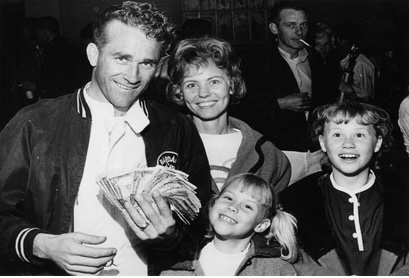
Looks like Evard won the trophy dash. He might even have pulled off the rare “sweep,” winning his heat race, trophy dash and the A feature.

Fading glory: Bricktown Ballpark needs upper deck rehab

Advertising banners cover the entire upper deck seating area down the first base line of the Bricktown Ballpark.

I was enjoying a summer evening at the Chickasaw Bricktown Ballpark with a friend last year, savoring the crowd, the game and the park’s immaculate green pasture.

Then my eyes landed on the upper deck along the first baseline that extends out into right field. There were no seats or bleachers visible. Only advertising banners draped across each section.

The faded tarps have been there for years, at least since the ownership group that renamed the team the OKC Dodgers took over, maybe longer. I mentioned to my friend Steve that I found the tarps covering the seating area unsightly.

“It’s not a good look,” replied Steve, who, like me, is a partial season ticket holder.

Don’t get me wrong. Oklahoma City has a beautiful ballpark that has retained its attractiveness since it opened in April 1998. However, the tarps do nothing but detract from the ballpark’s charm.

The sight stirs memories of when I attended an Oakland Athletics game in 2004 at what was then called McAfee Coliseum. I knew it as Oakland–Alameda County Coliseum growing up.

Anyway, there is no charm to that stadium, beginning with the chipped concrete exterior and on to the narrow, dark concourse.

But the A’s venue has come to be known for the massive tarps that circle the entire upper deck. It’s as if the team gave up on its fan base years ago. Which, of course, it did, and is relocating soon to Las Vegas.

Back to the Bricktown Ballpark. I’ve enjoyed many summer nights there over the years and seen some spectacular games and individual plays. The team continues to attract fans in large numbers, especially on weekends.

I guess it comes down to what the team’s management thinks detracts from the ballpark experience more: empty upper deck seating areas on most nights or fading advertising banners covering those seats. I take it as a sign that no one anticipates crowds large enough to need them ever again.

I contend that an entire second deck of seating covered in fading tarps makes the Ballpark looks less inviting and a little tired. It’s not sending a signal of anything fresh and exciting.

So, I’m proposing some changes that would help the look and appeal of the ballpark. I’m not sure if it’s the responsibility of the team or the city for upkeep, maintenance or rehab of the park.

But here goes.

First, I would reinstall seats in the first two upper deck sections closest to home plate. Then I would install bleacher seating in the remaining upper deck sections down the first base line.

The team could market the two sections with actual seats as special group sections or maybe for special events. My friend Russ even suggests carving out a “party deck” into the area.

As for the bleacher seating, the team could market that as general admission seating and invite the public in for $10 a ticket or something like that.

And the tarps all would go into the nearest dumpster.

The point of all this is to restore the beautiful Bricktown Ballpark close to its original look and make it even more inviting.

So, I’m asking the OKC Baseball Club and the City of Oklahoma City to consider the possibilities and make our ballpark look as beautiful as it was on April 18, 1998.

Let’s eliminate comparisons to a tired old stadium like that in Oakland. Our ballpark is better than that.

Bricktown Ballpark remains a beautiful venue.