Meet the International Man of Mystery from Stigler, OK

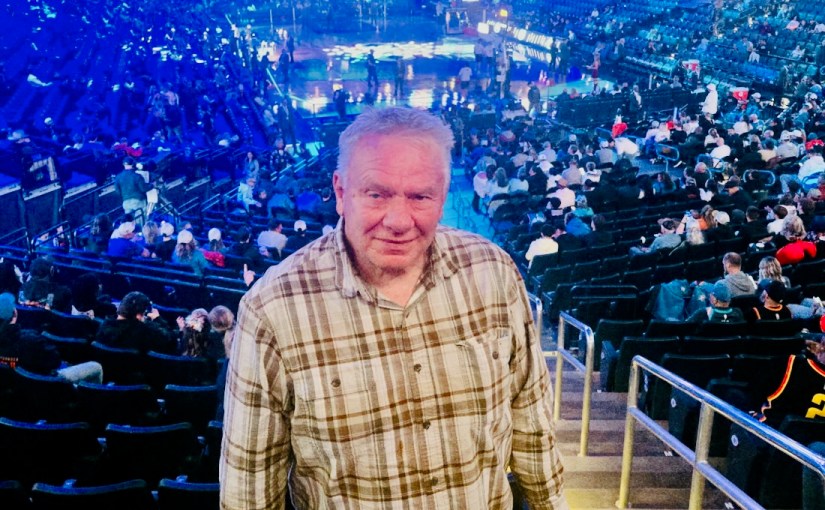
Hershel Prentice at recent OKC Thunder game


I’ve been everywhere, man

I’ve been everywhere, man
Crossed the desert’s bare, man
I’ve breathed the mountain air, man
Of travel I’ve a-had my share, man
I’ve been everywhere
“I’ve been everywhere” as sung by Johnny Cash

If you ask Stigler, OK, native Hershel Prentice where in the world he’s been lately, he’ll gladly tell you.

Dubai? Check. Oman? Check? Poland? Check. Austria? Check. Germany? Check, Newfoundland? Check? Labrador? Check. Check. Check.

Whew! And that’s just this year.

“I was in Croatia, Albania, Bosnia and Montenegro about a year ago,” he told me.

I listened with awe as Hershel recounted some of his travel experiences as I sat down with him at the home of our mutual friend, Ed Godfrey. Ed, with whom I worked for many years at The Oklahoman newspaper, is also a Stigler native and has known Hershel for even longer.

“I’ve been to about 90 countries so far,” Hershel said. “I’ve stood in Red Square in Moscow. I stood in Tiananmen Square in Beijing and I’ve been on the Great Wall of China.”

Did you catch that? Hershel has visited 90 — 90!– countries around the world. He told me that he lives out of hotels about half the time.

How does this happen, a country boy from rural Oklahoma literally traveling across the nation and the world virtually nonstop for decades?

A couple of things to note: Hershel is retired after 29 years of service with the Oklahoma Department of Human Services. A graduate of Northeastern State University in Tahlequah, he has no living immediate family.

Hershel said he often made road trips with his grandparents as a child, which sparked his love of travel, seeing new places and meeting interesting people.

“And I like maps, globes, far away names, Budapest, Istanbul,” he said. “I’d hear those names and knew I would go someday.”

His parents, who owned a trucking firm, are deceased, as well as a sister, his only sibling. He lives in the Stigler house that belonged to his parents, although it seems to be only for temporary respite between trips.

Hershel has a philanthropic side, too, in support of his hometown. He funds a scholarship for Stigler high school graduates to support their college education. And he’s a regular at Shelly’s Cafe whenever he’s in town.

“I’m the first customer,” he said. “5 a.m.”

When I asked Hershel how old he was, he was reluctant to reveal his age.

“I don’t do chronological things, I do situations,” said this International Man of Mystery.

So, what year were you born in?

“Just pick a number.”

All right, 1950. “OK,” Hershel said to the random number that I pulled out of the air. I’ll go with it. That would make him 75 years old, or somewhere in that neighborhood.

Never married, Hershel said he prefers to travel alone.

“Fast and free that way, when you’re alone,” he said.

Yeah, but don’t you get lonely?

“Not really.”

Hershel’s travel is arranged by a Fort Smith, Ark., travel agent. Most of his world travel is done as part of group tours with a set itinerary. That ensures he’s not totally alone on his sojourns, although he said he uses free time to explore on his own.

How has he been treated as an American tourist in all these foreign lands? He says he’s been treated well everywhere and never feared for his safety, including in Cuba, where he went as part of a program arranged by the U.S. Treasury Department.

Here are some fun facts about the International Man of Mystery’s travels both here and abroad:

Hershel has visited all 50 states, visiting famous and little known museums, national parks, Civil War battlegrounds and much more. He’s seen baseball games in all but eight Major League parks, along with dozens of minor leagues parks across the country. He’s been to NBA, NFL and college football games, NASCAR events, toured multiple halls of fame, every presidential library and points of interest like the site of Custer’s Last Stand in Montana or the big ball-of-yarn museum in Kansas. He’s visited every county seat in Oklahoma, as well as in Arkansas.

He’s made friends and met many interesting people along the way. Sometimes, he’s run into fellow Oklahomans in, say, Europe or Asia.

“People that you meet who are visiting Auschwitz, people that would go pay money and time to go do that, they’re gonna be pretty interesting,” he says. “Or you’ll have a common factor. If I meet someone on a trip, I tell them I’ve been by their house, because wherever someone is from, i’ve been by there or near there.”

The most interesting country Hershel has visited?

“Probably Cuba,” he said. “It’s just amazing how they live there, how it was for a long time and how it is now. They don’t have Internet, you couldn’t use a credit card; they didn’t have that infrastructure. We had to use pesos or American money or Euros. They like the Euro more than the dollar.”

He visited Havana, along with the infamous Bay of Pigs, Hemingway’s home, and coastal areas along the island.

I became acquainted with Hershel Prentice a few years ago through Ed when we all went to an OKC Dodgers (now Comets) game together. Hershel’s also a big fan of the OKC Thunder, and sent me a photo of himself at a recent game at Paycom Center. He has called Ed from many museums, ballparks and foreign cities. He often brings him souvenirs from his travels.

Hershel showed me a set of refrigerator magnets decorated to represent the flags of about a half dozen Scandinavian countries. Of course, he’s been to all of them.

So, what’s on Hershel’s travel itinerary for 2026? For now, he’s looking at traveling to Uzbekistan and Kaspiysk, located in former Soviet Union territories and now independent Russian states.

Still, I wanted to know what compels him to stay on the move. His answer was about modes of travel as much as about locations. He likes planes, trains, trolleys, subways.

“Anything that moves,” he said. “I like it when it takes off, that little thrust, the movement. Here we go to a new place, new time, new day, new people. Being free.”

Hershel, you really are the International Man of Mystery.

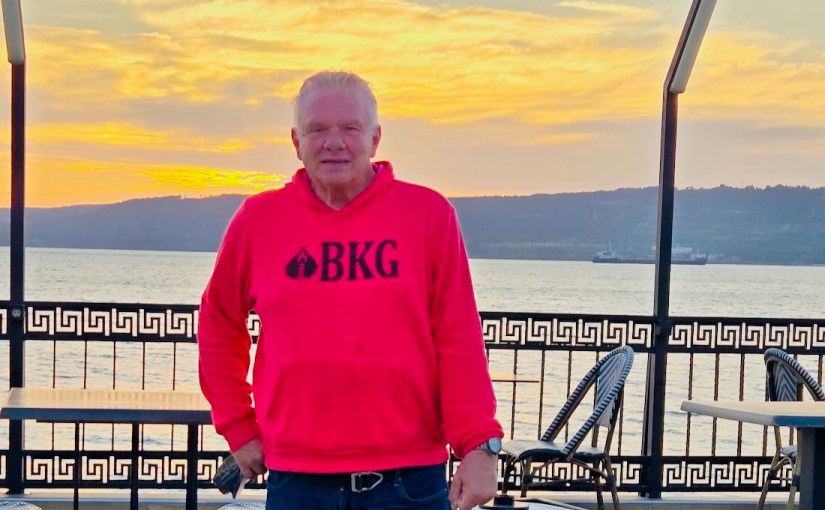
Hershel Prentice at the Dardenelles Strait in Turkey in 2024.

Frank Day’s labor of love honors the ‘dying art’ of quilting

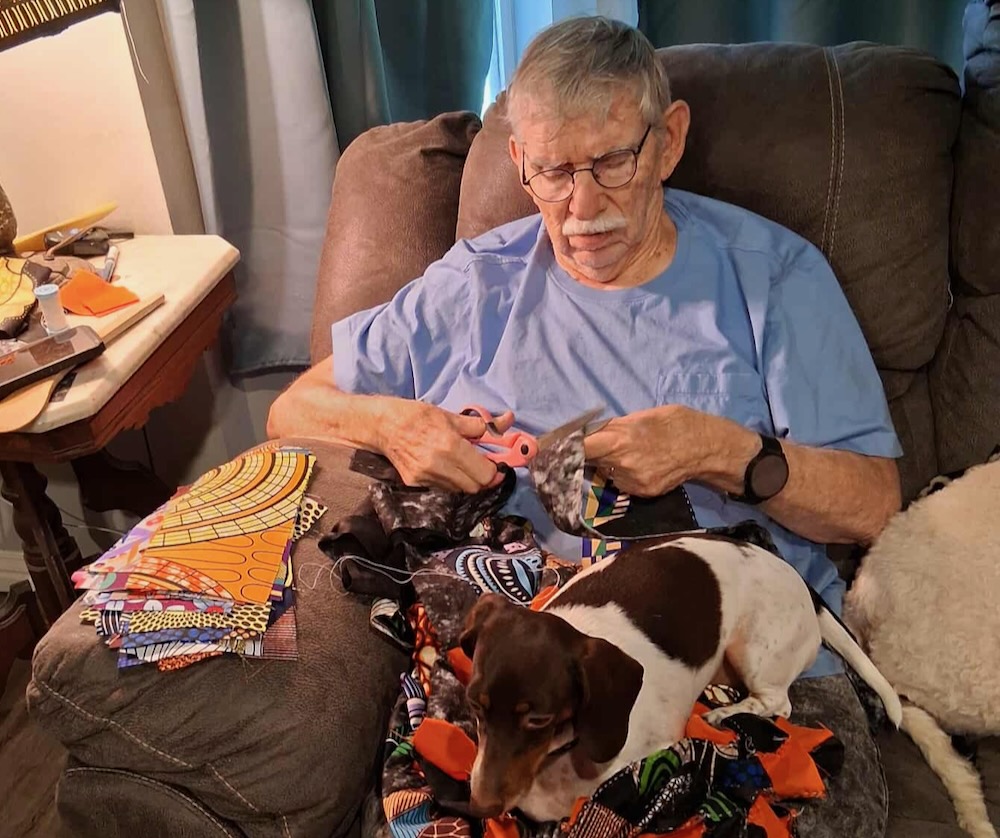
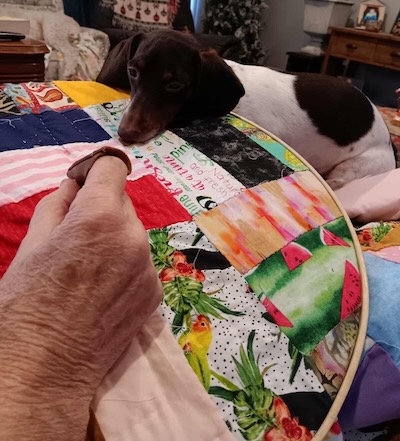
Frank Day works on a hand-stitched quilt, accompanied by one of his favorite pets.

Let me tell you about my friend Frank Day of Roland, OK, whom I have known since approximately 1971 when we both worked for Hunt’s Department Store in Fort Smith, Ark.

Frank was a recent graduate of Northeastern State University in Tahlequah and I was a senior at Southside High School.

Over the years, we drank gallons of coffee together, ran trot lines at 2 am in the Arkansas River and stalked raccoons in the middle of the night in the Paw Paw Bottoms, among other adventures.

But life took me to Oklahoma City in 1983 for a job with The Daily Oklahoman newspaper, so we haven’t seen a lot of each other in the intervening years.

Today Frank is 75 years old and retired after more than two decades as fleet sales manager for Fort Smith’s Randall Ford. I think he can best be described in 2025 as a one-man quilting bee.

What?

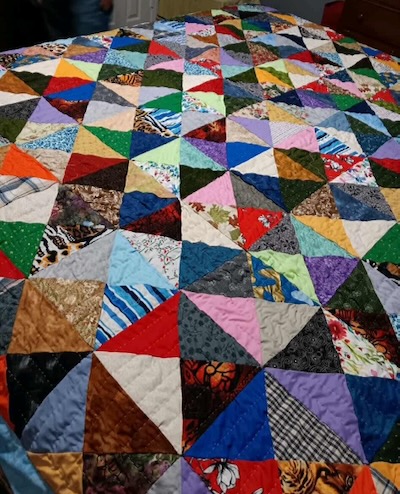
That’s right. Frank Day began hand-stitching beautiful quilts over two decades ago, and continues his quilting avocation today.
Frank, I thought I knew you.

There goes my image of the typical quilter as someone’s grandmother.

Turns out that quilting is something Frank learned as a child from his mother, Dortha Day and turned it into an ongoing hobby many decades later.

“When I grew up, Mother was quilting all the time,” Frank told me. “She belonged to a quilting club, a bunch of women who got together at someone’s house and could finish a quilt in one day. I grew up watching her, and she showed me how to do it.”

Frank’s wife of more than 50 years, Vicki, added her perspective.

“Frank’s mother Dortha always had a quilt rack on the ceiling,” Vicki said. “I remember Granny, everyone called her Granny, quilting on the old quilting frames and singing hymns. When the grandchildren came along they would all play under the quilt frame.”

However, Frank had never made a quilt until his first grandchild was born more than 20 years ago. He produced his first quilt for grandson, Trevor, and has continued quilting through the years.

“I said I’m going to get some material and make a quilt,” Frank said of that first attempt. “Vicki said ‘you don’t know how.’ I said, ‘you watch me.’ I got the material and sat down and started sewing. And I got it done.”

That first quilt led into one for each grandchild, then special quilts for relatives and friends. Sometimes he makes them for folks who’ve had a stretch of bad health or difficult life situation, like a former coworker at Randall Ford to whom he presented a quilt.

“She started crying, but it was because she was happy to get it,” Frank said.

A quilt is not made in a day. Or a week. It might require more than a month of work for a solo quilter like Frank Day.

“From start to finish, if it’s a king-sized quilt, you have about 250 hours in it,” he said. “That’s cutting the material out — I hand sew everything, nothing is made on a machine. I hand stitch it, get the backing for it, get the lining for it and put the blocks on top.”

Did you catch that … 250 hours for a single quilt. That’s 6-1/4 40-hour working weeks of quietly sitting alone stitching blocks of material together into what can be a beautiful pattern.

My own grandmother was a quilter, and I recall she had a large wooden frame that she let down from the ceiling that helped her make her quilts.

Frank uses a ‘hoop’ that he holds in his lap as he quilts. Usually, one of his favorite dogs is sitting nearby or even on his lap as he quietly works.
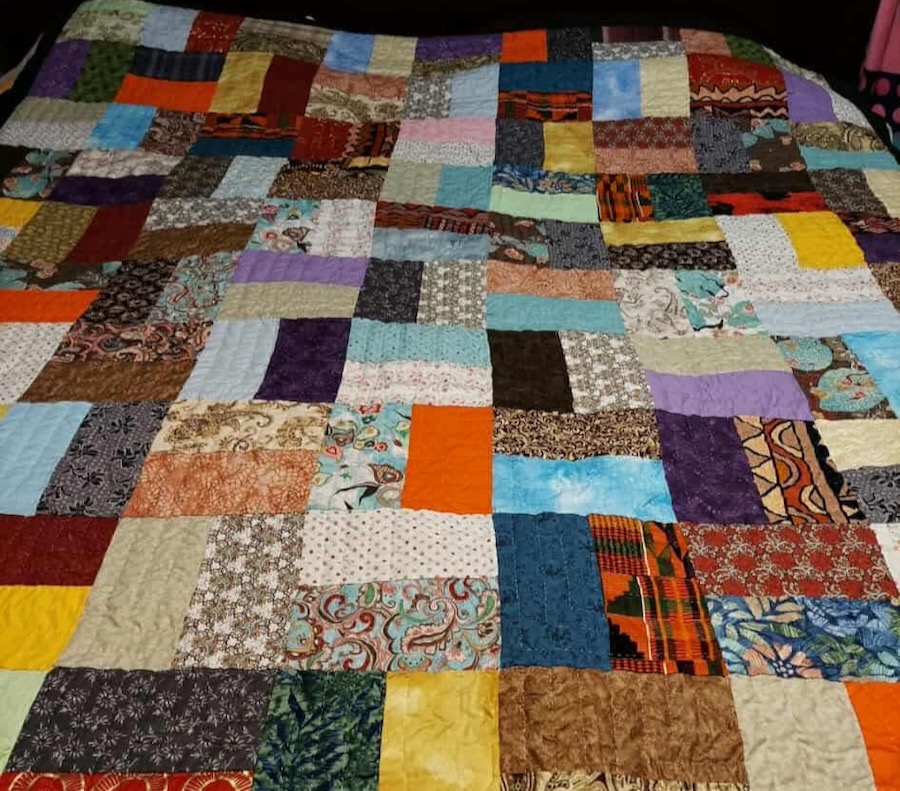
Although he hasn’t made quilts to sell, Frank told me that comparable hand-made quilts can be priced at $1,800-$2,500 because of all the time required to produce one.

“It’s very time consuming, and most people don’t have the patience for it,” he said.

I learned that Frank was a quilter after Vicki posted some pictures of beautiful quilts on Facebook and I complimented her on her quilting talent. She corrected me and said it was all Frank.

“When Frank made his first quilt before Trevor, our first grandchild, was born, we had been married for 30 years and he never made one before,” Vicki said. “I asked him why he never made one before and his answer was “I never had a reason to make one.”

“Frank’s quilting has bloomed over the years. He made one for our son, Paul, as a wedding gift and then for our daughter Jenny. He made one out of cancer warrior scarves that Ford gave to dealerships for Breast Cancer Awareness.”

Each quilt is made with a purpose.

“Frank had a good friend, Dudley Sparkman, who was the best man and friend you could ask for,” Vicki said. “Sadly, he had a massive heart attack on his 50th birthday and passed around two weeks later. Tina Sparkman, Dudley’s wife, asked Frank if he would make a lap quilt out of some of his shirts. That was probably one of the hardest quilts he ever made because on the friendship they shared.”

Quilters like Frank Day who make the time to sit and hand-stitch a beautiful design are a rarity in 2025. Today, most quilts are machine stitched.

Frank calls hand-made quilting a “dying art” that he’s keeping alive in his corner of the world. Currently, he’s working on a quilt for Vicki as he recovers from a recent knee-replacement surgery.

“It’s helped me keep my sanity when I’ve had to sit for long stretches as I recovered from knee surgery that put me down,” he said. “I’ve finished one and got close to half of another one put together.”

It’s one stitch after another after another for a quilter like Frank Day. That translates into hundreds of hours to produce just one quilt.
It’s a marathon, not a sprint.

Frank has run that marathon for more than two decades.

And that’s why I describe him as the ultimate one-man quilting bee.

BONUS CONTENT:

I asked ChatGPT to explain the concept of a “Quilting Bee” to me. Here’s what it told me:

A quilting bee is a social gathering where a group of people—traditionally women—come together to work on quilting projects, usually a large quilt, while also enjoying conversation and community.

Key Features:

– Collaboration: Multiple people contribute to making one quilt. Often, the quilt top is pieced together ahead of time, and the bee focuses on quilting (stitching the layers together).
– Social aspect: It’s as much about socializing and bonding as it is about the sewing. These gatherings were historically important social events, especially in rural communities.
– Tradition: Quilting bees have roots in 18th and 19th century America, when they served as a practical and communal way to create bedding before mass production.
– Modern bees: Today, quilting bees still exist, though they might be less formal or might happen in quilting guilds, workshops, or even online.
Think of a quilting bee as a mix of a sewing circle, a social event, and a creative collaboration.

Gov. Stitt, let’s value lives over dollars

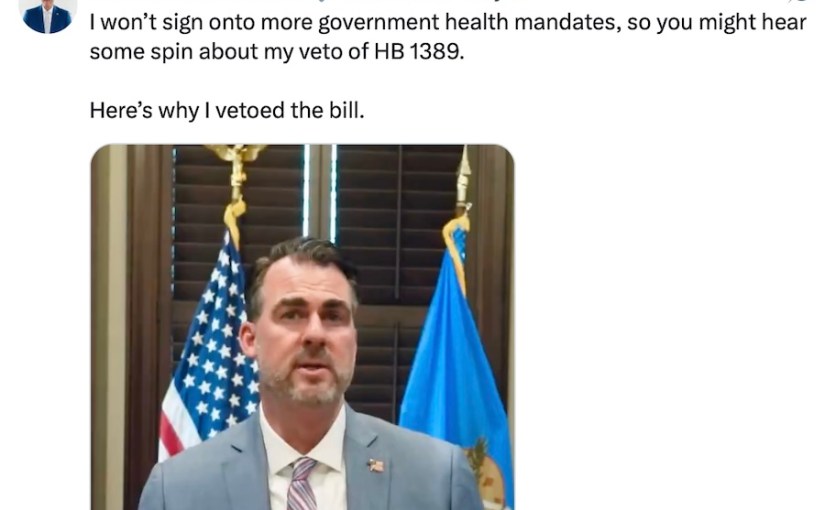
Gov. Kevin Stitt’s Twitter/X post about his veto.

I took a step this week that I’ve never taken before. I called my legislators urging them to help overturn Gov. Stitt’s veto of legislation that expands access for women to imaging technology that can detect breast cancer.

My wife, Paula, a breast cancer survivor, called our legislators, as well.

Another first.

HB 1389, passed by big margins in both houses, would require insurance plans to cover not only mammograms, but other diagnostics such as “enhanced mammogram, breast MRI, breast ultrasound or molecular breast imaging.”

Paula and I were surprised that Oklahoma’s Governor vetoed legislation that would undoubtedly save lives because, as he said in a statement, it would result in higher health insurance premiums across Oklahoma.

Here’s the Governor’s full statement on the veto:

“I am deeply sympathetic to the women across our state who have bravely fought breast cancer. While early detection and access to care are critical priorities, this legislation imposes new and costly insurance mandates on private health plans that will ultimately raise insurance premiums for working families and small businesses.”

Here’s what I take away from the Governor’s veto:

  • He values dollars over lives.
  • He devalues the lives of women.
  • He demonstrates a complete lack of empathy.
  • He’s obviously influenced by the insurance industry.

I’m pretty sure that the price of treating an advanced breast cancer would be far more than the cost of early detection.

I’ve seen a lot of outrage on social media at Stitt’s veto, much of it by women whose lives have been upended by breast cancer — thinking of you, Savannah.

In fact, one of the authors of HB 1389, was Melissa Provenzano, D-Tulsa, who is caught up in her own battle with breast cancer. Click here to read a story from the online news service, Oklahoma Voice, that details reactions to Stitt’s veto and efforts to override it.

Republicans and Democrats alike supported the legislation as it advanced through both legislative houses.

Of course, Stitt said on X/Twitter that he anticipates ‘spin’ on his veto.  It’s not spin Governor. It’s outrage.

So, I’m urging readers of this post to pick up the phone, call your legislators and urge them support the move to override the veto. Or email. Find your local legislators and contact info through this link. 

It will take a supporting vote by two-thirds of state legislators to overturn the veto, so it’s a high bar.

Remind them it’s about valuing lives of Oklahoma’s women over any added expense of diagnosing what often is a fatal disease if not detected early enough.

Take a stand.

For Ed, Cardinals baseball a lifelong ‘addiction’

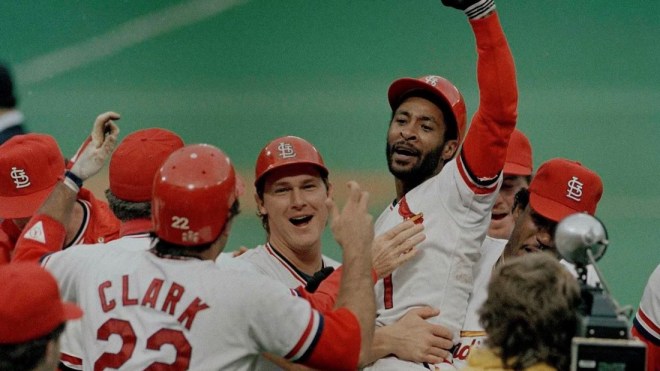
Ozzie Go Crazy
Ozzie Smith’s St. Louis Cardinals teammates celebrate his game-winning home run vs. the Dodgers in the 1985 playoffs

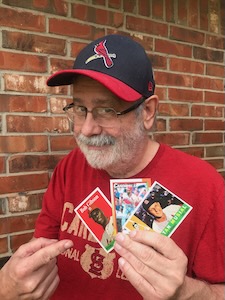
Editor’s note: My friend Ed Godfrey grew up in Eastern Oklahoma as a passionate St. Louis Cardinals fan, a devotion that began by listening to their games on his family’s big console radio. More than 50 years later, Ed remains a baseball fan and still follows the Cardinals with the same passion as he did as a 10-year-old Stigler Little Leaguer. I asked him to write about what sparked his fandom for the team from St. Louis, and he obliged with this essay.

By Ed Godfrey
When I was a kid, baseball was king. That gives you a clue to how old I am. Yes, I am old enough to draw Social Security.

Ed 2
Ed Godfrey

I played Little League baseball, proudly donning the uniforms of King’s Tire Service, Guaranty Abstract and Davis Packing Company, some of the generous sponsors in Stigler who allowed the town’s pre-teen youth to live out their summer dreams on the ball diamond.

Like the Cardinals great utility man in the ’80s, Jose Oquendo, I would play everywhere on the field at some point. Dad nixed my playing days at catcher after just one game because he was afraid I would get hurt.

Center field was my best position, but I also took the bump a lot. I didn’t have Nuke LaLoosh stuff, but I could do what often none of my other teammates could do. Throw the ball over the plate.

Man, I loved baseball. Whenever I had a dime, I would ride my bicycle the six blocks from home to the Five & and Dime store in downtown Stigler and buy a pack of baseball cards.

I was a pretty avid card collector in the early ’70s. And yeah, I stupidly put some of them on the spokes of my bike and glued others in a scrapbook, but most of my treasures are still intact. Thank you, mom, for not throwing away my baseball cards.

As you get older, I think the more you want to go back and be a kid again. That’s why I still buy baseball cards today. Nostalgia.

Back when I was a kid, I didn’t miss the major league game of the week on Saturday afternoons. Yeah, we got one baseball game on television each week. I also loved This Week in Baseball narrated by Mel Allen.

And I was a frequent listener of Major League Baseball games on the radio. This is how I became a St. Louis Cardinals fan.

First of all, the Cardinals were really good in the late ’60s. When I was 7, they won the ’67 World Series over the Red Sox. Then when I was 8, they lost the ’68 World Series to the Tigers.

(Don’t ask me about the ’85 World Series against the Royals, I am still ticked off about Game 6. Now, Game 6 of the 2011 World Series Game 6, that one was magical)

For many years, the Cardinals were the only major league team west of the Mississippi River and they developed a loyal following thanks to mighty KMOX-AM radio, which had a long reach throughout the South and Midwest.

KMOX helped turn countless families into Cardinals fans since 1926, including a kid in Stigler, Oklahoma.

When the Cardinals played on the West Coast and games started past my bedtime, I would sneak a transistor radio under my pillow so I could still listen to the broadcast without my parents knowing.

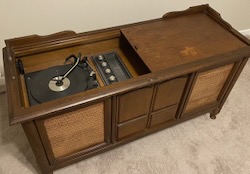
ConsoleOtherwise, I would listen to games on our bulky old stereo-record combo that we had in our living room. In 1971, and I can still hear Jack Buck’s call of Bob Gibson striking out Willie Stargell to end the game for Gibby’s only no-hitter of his career.
“If you were here, it would have made you cry,” Buck proclaimed.

I wasn’t there but I felt like I was, thanks to one of the great baseball announcers in history.

When the Cardinals made the playoffs in the ’80s, every game, of course, was televised. But I turned the volume down on the TV and tuned in the radio for the play by play to listen to Buck.
I got to hear his great “Go Crazy” call in the ’85 National League Championship Series against the Dodgers when Ozzie Smith unexpectedly hit the game-winning homer in Game 5.


I did “Go Crazy” in my apartment in Edmond, leaping from the sofa and landing on my knees in front of my TV in celebration.

A few years later I started dating my future wife. She tolerated my obsession with the Cardinals and actually enjoyed listening to Buck’s voice, even though she knew little about baseball.

Instead of going out on the town one Friday night, she drove from Norman to my apartment in Edmond and agreed to watch the Cardinals-Braves game with me on what was then Ted Turner’s superstation, TBS, which carried all the Braves games.

I promised we would go out for dinner after the game. It lasted 22 innings. My man Oquendo even came in and pitched when the Cardinals’ bullpen was depleted. (Told you he was a great utility player). He pitched several scoreless innings, but the Cards couldn’t get him a run and they lost.

Linda watched all 22 innings and never complained. Maybe she slept through an inning or two, I can’t remember for sure, but the point is she stayed until the end and then drove back home in the early morning hours. As Buck would say, “That’s a winner.”

I don’t listen to Cardinal games on the radio anymore because Buck and his broadcast partner, Mike Shannon, are no longer with us. Nothing against the new announcers, but it’s not the same for me.

This summer, I even stopped watching the Cardinals on TV because they stink this season. It’s been a long time since they have been this bad.

Well, the truth is I haven’t quit on them completely. I still sneak a peek once a while to see if the bullpen is going to blow another game and then I start cussing when they do.

It’s a lifelong addiction.

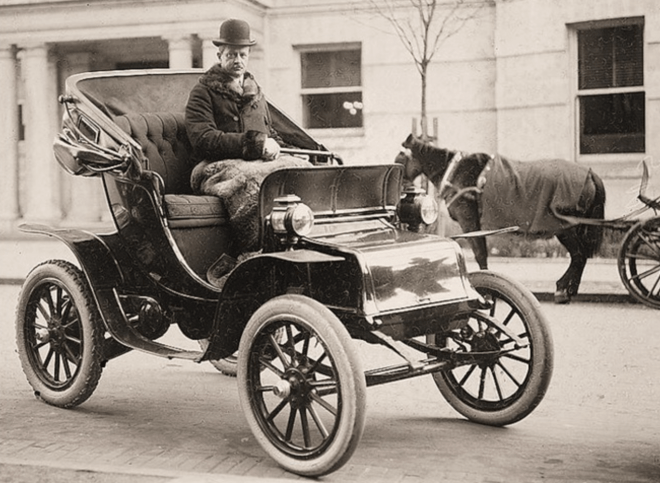
The horse is here to stay

horseless carriage
A turn of the 20th-Century horseless carriage.

‘The horse is here to stay, but the automobile is only a novelty — a fad.’ — American banker to potential investor in 1903

Even at the dawn of the 20th century, your crazy uncle was spouting off nonsense about things he didn’t know anything about.

I guess back in those days, social media rants took place at the local church, tavern or letter to the editor. New technologies have always brought out the doubters and naysayers, I guess.

One hundred years ago. Sarah T. Bushnell published a biography called “The Truth About Henry Ford” in which she told the story of the banker who advised the attorney that drew up incorporation papers in 1903 for Ford’s automotive company.

The attorney had been asked to invest in the Ford Motor Co., but was hesitant and sought out advice from his banker.

“My advice is not to buy the stock,” the banker said. “You might make money for a year or two, but in the end you would lose everything you put in. The horse is here to stay, but the automobile is only a novelty — a fad.”

We all know how that turned out.

Read more on the turn-of-the-20th-century opposition to the horseless carriage in “Get a Horse!”, an article written in the 1920s by one of the inventors of the automobile, Alexander Winton.

Fast forward 100 years.

We’re at the beginning of a revolutionary transition in which electric vehicles will replace gasoline and diesel powered vehicles. Auto manufacturers are building more EVs each year with commitments to make electric vehicles the vast majority of their production by the 2030s.

There seem to be an incredible number of Teslas already on Oklahoma roads.

Despite the upward trajectory and inevitable march of technology, I’m seeing rants against EVs every day on the social media platforms where I hang out. A lot of ‘crazy uncles’ are poo-pooing the potential of electric vehicles, along with alternative power generation from wind and solar energy.

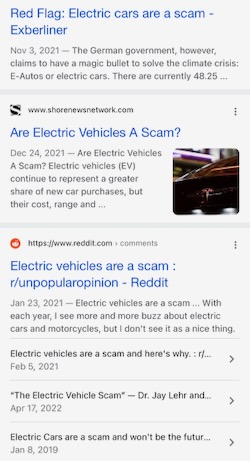
ev scamsI’ve seen photos and graphs and charts that allege that electric energy is just as harmful to the environment as fossil fuels because of the mining for minerals and the ultimate disposal of batteries.

If you Google “electric vehicles” and “scam,” you get dozens of articles showing that the world is being played.

I’m no expert, but I choose to believe that scientists and innovators have taken all of that into consideration.

So, I assume a lot of folks — especially Oklahomans — are feeling threatened by alternative power and transportation because of our long-standing ties to the oil and gas industry.

It’s sort of ironic that oil and gas-dominated Oklahoma is home to one of the world’s first large scale electric vehicle battery remanufacturing and recycling ventures, Spiers New Technologies.

Founded less than a decade ago by Dirk Spiers, the company has shown phenomenal growth, quickly outgrowing its original 23,000 square feet of manufacturing space to now occupying its current 200,000 square feet in its operations center along SE 89th Street just east of I-35.

Spiers also operates a European location and provides battery lifecycle services to virtually every automaker with the exception of Tesla. The company showed such potential that it was acquired in 2021 by Cox Automotive.

I’ve had the opportunity to interview Dirk on several occasions and hear his views on the future of electric vehicles. You can read an earlier post with Dirk here.

But I want to share some of his perspective again in this post, because I think it’s both worthy and accurate.

“In the next five years, the cost of an electric vehicle will be cheaper than a combustion engine,” Spiers said. “So, we are only at the beginning of where we are going.

“The Devon tower — and I think it is a great building — is now more than 50 percent empty. That shows you how they (and Oklahoma City) misread the future. And now the Devon tower stands there as a symbol of Oklahoma City prosperity, but it is half empty. A relic of an industry in decline.

“The good thing is that you know eventually that everyone will drive an electric car. Those cards have been played. So, we are on the right side of history” 

Although he added that the transition is not going to happen all at once, we’re watching Dirk’s predictions playing out every day.

Meanwhile, I’ll end this with the long-ago perspective of another futurist, former U.S. Supreme Court Justice H.B. Brown in a 1908 article entitled “The Horseless Carriage Means Trouble.”

“The automobile is doubtless a most useful vehicle, but one is not likely to lavish upon it the fond attention he bestows upon his horse or dog. A man may admire his own carriage, but his affections are reserved for the horse that draws it and the dog that follows it. Whatever the outcome may be, every true admirer of the horse will pray that it may not be the extinction or dethronement of the noblest of all domestic animals.”

Now there’s your crazy uncle.

negative screen]

Oklahoma’s Saab story: a prophecy fulfilled

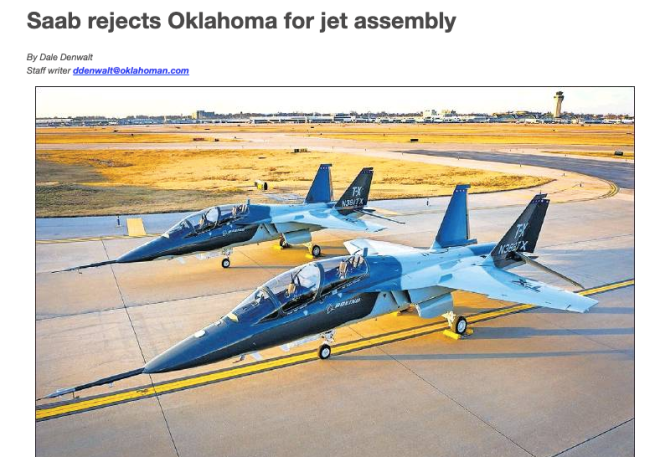
I hope you saw this story in Monday’s editions of The Oklahoman about the Saab Group, a Swedish Aerospace firm, reportedly passing on Oklahoma as the location to build a new military trainer jet because of workforce concerns.

If you didn’t read it, click this link to catch you up to date: 

The reporting by Oklahoman reporter Dale Denwalt made the words of Oklahoma City businessman Phil Busey seem almost prophetic. The story quoted State Sen. Adam Pugh, who said that the Saab Group decided it would not be able to find enough skilled workers to sustain its workforce at an Oklahoma location.

Saab reportedly wanted to know if it could find people to work at the plant. ‘In the end, they decided they couldn’t, and so they’re taking their business somewhere else,’ state Sen. Adam Pugh told members of Leadership Oklahoma at a recent aerospace forum.

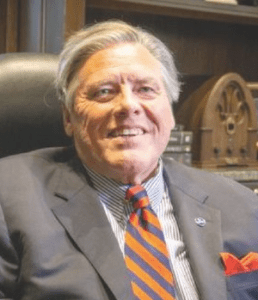
Busey is founder and CEO of a company called Delaware Resource Group (DRG), minority-owned aerospace industry federal defense contractor. DRG employs upwards of 700 people, including software engineers, worldwide who support contracts with the U.S. Department of Defense, as well as major aerospace companies such as Boeing and Lockheed Martin.

I recently had the opportunity to interview Mr. Busey along with Debbie Cox, my colleague from the Oklahoma Center for the Advancement of Science and Technology (OCAST). Our interview was the basis for an OCAST video and a column I wrote on behalf of the agency. You can read it and watch the video interview here. 

We were surprised by the urgency that Busey showed in advocating for an improvement in public education and workforce development across our state.

Phil Busey

“Our challenges really come back to the issues of workforce development,” Busey told us. “Public education is the No. 1 challenging issue we see here in Oklahoma.”

Thousands of aerospace positions in the state remain unfilled because there aren’t enough Oklahomans equipped with STEM skills – science, technology, engineering and mathematics, Busey said.

That means that we need to build a deeper pool of young Oklahomans equipped with STEM skills that are critical to the sustainability of the state’s aerospace industry.

But it goes beyond workforce development, he said. It’s also about the image of our state that is reflected in legislation like the recent open carry law that allows virtually anyone in Oklahoma to carry a gun without a license or shooter education.

“The challenge is that we are having to rebrand ourselves,” Busey said. “The social legislation issues, the open carry issues and the public education issues all have to be addressed. Because people really don’t understand who we are … We have to talk to them about what our culture is really like, who we are, what kind of values we have, that we are inclusive, that we have all types of development going on with MAPS and the successes we have had downtown.”

The bottom line is that there are currently between 1,500 and 2,000 open positions here in Oklahoma in the high paying aerospace industry. We have to fill that pipeline.

Busey has organized his own working group of community, education and business leaders to brainstorm ways to enhance Oklahoma’s workforce development and improve our image.

“We’re trying to develop pipelines with our universities,” Busey said. “And then be able to talk with people who we need to recruit from outside Oklahoma that it is a good place to live. We all don’t walk around with 45s on our hips. Public education, we have to do something to improve that. It is a deal breaker.”