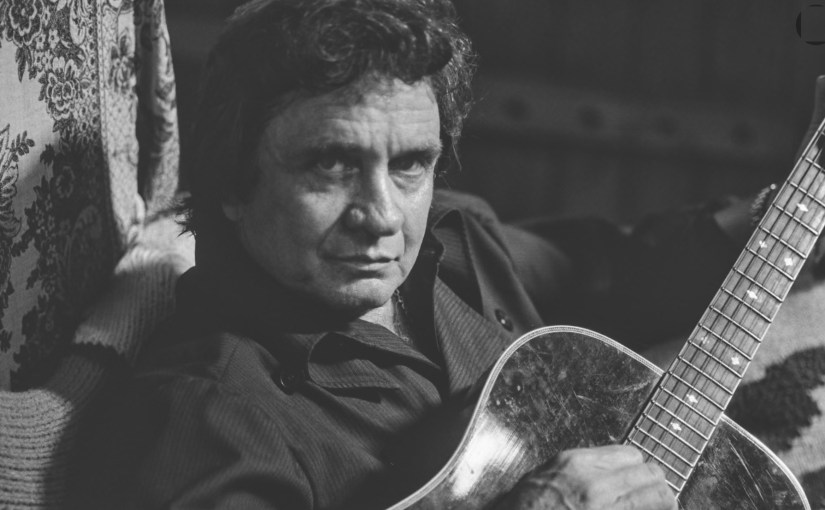
In 1968, my parents went to see a concert by Johnny Cash while we were living as a military family on the island of Okinawa. That should tell you how big of a star the Man in Black was in the ’60s, because my parents never, ever went to a concert unless it was Southern Gospel like the Gaithers.
Cash was an Arkansas native, as were my parents, so there was a connection. We were among the nearly 100,000 American military personnel and dependents living on the island that year at the height of the Vietnam war.
Johnny’s concert for military personnel on Okinawa occurred the same year that my dad bought the ‘Johnny Cash Live at Folsom Prison’ album, which got a lot of play in our house over the years.
Maybe because I heard the album so often I became a fan of Johnny Cash, although my knowledge of his song catalog from among his more than 100(!) albums doesn’t go very deep.
My friend Ed Godfrey can offer much more insight into Johnny’s music.
Johnny Cash began as sort of a rockabilly star in the 1950s, recording at the famous Sun Studios in Memphis. Then he became a genuine pop culture phenomenon in the 1960s when a wider audience embraced his music.
In fact, he starred in his own network TV show in the late ’60s and early ’70s, and recorded popular duets with his wife, June Carter Cash, Bob Dylan, Tom Petty and many others.
If you saw the movie “Walk the Line,” you know that Cash had some well documented run-ins with the law in the ’60s because of a drug addiction. He revived his career with help of June Carter and the release of the Live at Folsom Prison album.
His star power dimmed a bit in the ’80s and ’90s, although it seems to me the impact and legend of Johnny Cash has only grown since his 2003 death.
I think his legend endures because he was the complete package, great music, songwriter, deep bass vocals, the familiar guitar licks, the hair and, most of all, the courage to stand up for those rejected by society when that was far from the norm among entertainers.
Johnny Cash made it a point to vocally support for Native Americans, the imprisoned, the poor, and the oppressed. He said that was why he always wore black when performing.
Listen to his song, “Man in Black,” to gain some perspective.
In his final years, with his health waning, Johnny Cash covered other artists’ songs that I think are some of his best, even if he was frail and his voice had lost a lot of its force. My favorites are Hurt, and, especially, Further on Up the Road, an awesome cover of a Bruce Springsteen song.
Anyway, I decided to make a list of my top 10 favorite Johnny Cash recordings, whether written by him or covers of other artists. I’ve also invited Ed Godfrey to weigh in with his list, too.
Here are my top 10 songs recorded by Johnny Cash:
No. 1 — Folsom Prison Blues
A song he wrote in the early 1950s while still in the Air Force, it became probably his more popular recording and his signature song.
No. 2 — Ring of Fire
The horns, the imagery … a great song that was co-written by June Carter Cash before she married Johnny. Must have been a hot romance!
No. 3 — I Walk the Line
Cash’s deep bass voice, the guitar intro, Johnny’s hum at the beginning of each chorus, the pledge of fidelity — I love it all. Of course, the Gregory Peck movie based off this song was all about infidelity. Oh, the irony.
No. 4 — Sunday Morning Coming Down
I can just see a lonely, broke alcoholic ambling along on a big city sidewalk on a Sunday morning, longing for a life in this awesome Kris Kristofferson cover.
No. 5 — Further on Up the Road
Another superb cover, this one written by Bruce Springsteen. Ed says that he’s adding it to his funeral playlist. Me, too.
No. 6 — A Boy Named Sue
My dad and I had a great time listening to this song together back in the ’60s. Written by Shel Silverstein.
No. 7 — Girl from the North Country
A great song of lost love, and wonderful duet with Bob Dylan, the song’s author.
No. 8 — Jackson
Fun duet by Johnny and June Carter Cash; this got lots of airplay over the years.
No. 9 — Hurt
A late-in-life cover of a Nine Inch Nails song, Great guitar, piano that backed Johnny’s delivery.
No. 10 — The Man Comes Around
Johnny wrote this song and recorded it one year before his death. It’s obvious that he saw the end coming
BONUS SONGS
Don’t take your guns to town — Johnny had a way of telling a sad story; this one fits right in.
Five Feet High and Rising — Might not be everyone’s favorite, but I’ve liked this song for decades. I can just see Johnny as a kid with his family panicked over water that’s flooding the family’s hardscrabble acres.
Now, I present the Johnny Cash top 10 list from Ed Godfrey that you should really respect:
No. 1 – Sunday Morning Coming Down
When Cash first performed this on his TV show, network executives asked him not to sing the lyric “wishing I was stoned.” Cash sang it just as Kris Kristofferson wrote it anyway. I guess the network executives had no problem with having a beer for breakfast and one more for dessert.
No. 2 – Cocaine Blues
Cash’s version of this song on his “Live From Folsom Prison” album is just fantastic.
No. 3 – Ring of Fire
Cash said the idea to add Mexican trumpets to June Carter’s and Merle Kilgore’s lyrics came to him in a dream.
No. 4 – Unchained
Unchained is a song on Cash’s album by the same name produced by Rick Rubin. Their collaboration caused a resurgence of Cash’s career in the ’90s. Unchained is an album of covers and my favorite Cash album, even eclipsing “Live From Folsom Prison.” I have left instructions with my family to have Unchained played at my funeral.
No. 5 – I Walk The Line
Cash wrote the song as a promise of fidelity to his first wife. That didn’t work out, but the song is still great.
No. 6 – Flesh And Blood
I love the details in the lyrics of this song. It begins, “Beside a singin’ mountain stream, where the willow grew, where the silver leaf of maple, sparkled in the mornin’ dew.” Then in the next verse after the chorus, “I leaned against a bark of birch, and I breathed the honey dew, I saw a north-bound flock of geese, against a sky of baby blue.” I close my eyes and picture myself there.
No. 7 – Meet Me In Heaven
Another song off the Unchained album that I have asked to be played at my funeral.
No. 8 – Hurt
I am not a big fan of music videos, but this song is actually better and more powerful with the video. It was another collaboration with Rubin.
No. 9 – Folsom Prison Blues
I mean, this song has to be included, right? I can’t leave off Folsom Prison Blues on a list of best Johnny Cash songs.
No. 10 – I’ve Been Everywhere
Did I mention how much I like the Unchained album? This is another song off that album. Hank Snow first adapted it from a song originally written with Australian place names, but nobody performs it better than Cash.
Honorable Mentions: God’s Gonna Cut You Down and The Kneeling Drunkard’s Plea. Two more songs that came from the six albums Cash made with Rubin. The Kneeling Drunkard’s Plea also is on the Unchained album.
BONUS CONTENT FROM KENT TAYLOR:
You know Jim, I’ve been thinking about your Johnny Cash article since you posted it. I also grew up listening to my parent’s Johnny Cash vinyls. I’d have to put A Boy Named Sue at the top because it reminds me of my dad every time I hear it. He loved that song.
I thought that, as a kid, I had heard every JC song ever sung. However, it wasn’t until the past 10-15 years or so that I’ve heard songs I’d never heard before. One that I have grown fond of is Chicken in Black. If you’ve not heard it, I’d encourage you to listen to it.
 SPONSORED LINK: I purchased this Vekkia Rechargeable LED Neck Reading Light on Amazon, a book light for reading in bed, not knowing what to expect. I bought it so I could read in bed without disturbing my wife. Turns out, it’s perfect, because it shapes around your neck, with two LED lights that you can adjust to shine onto your book page. Check it out! https://amzn.to/3IPaDF4
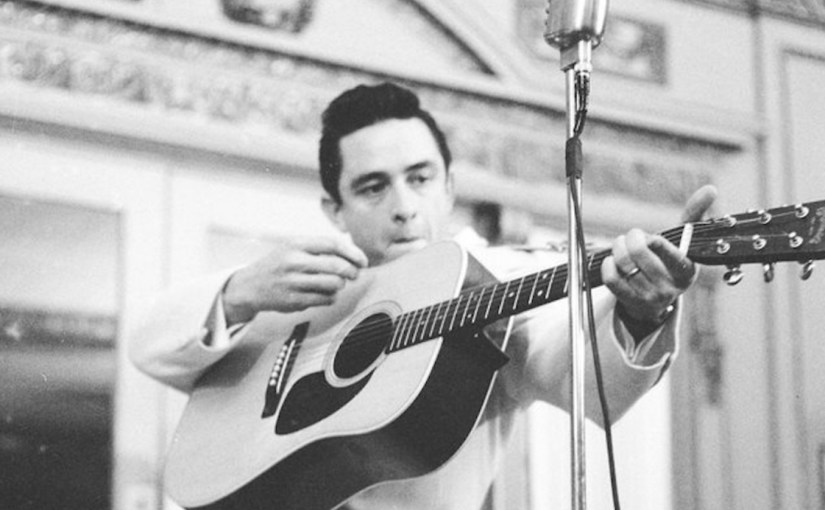
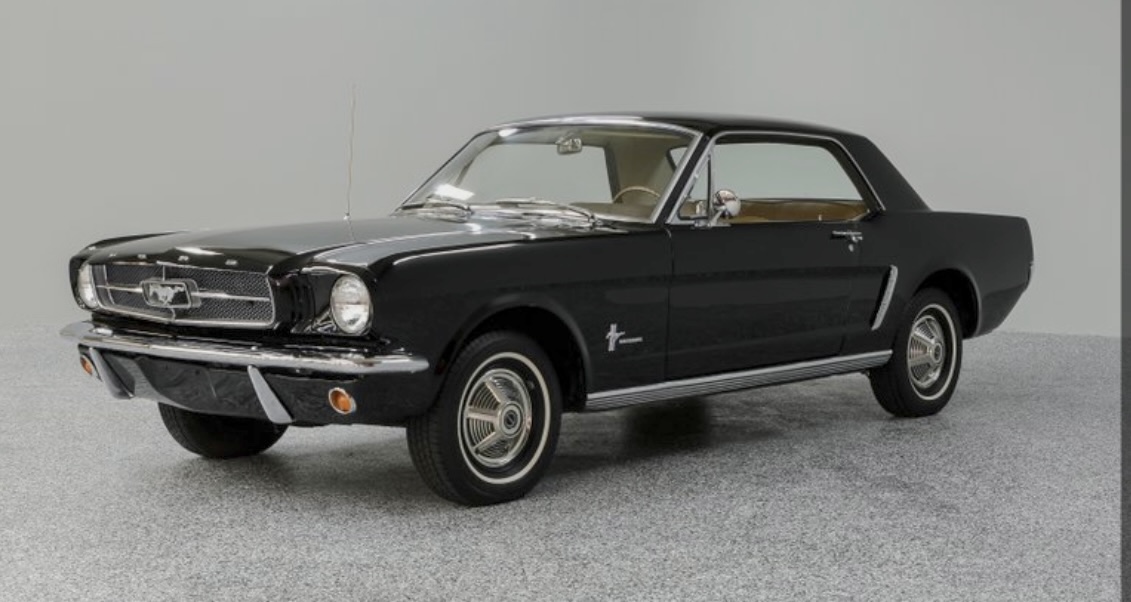
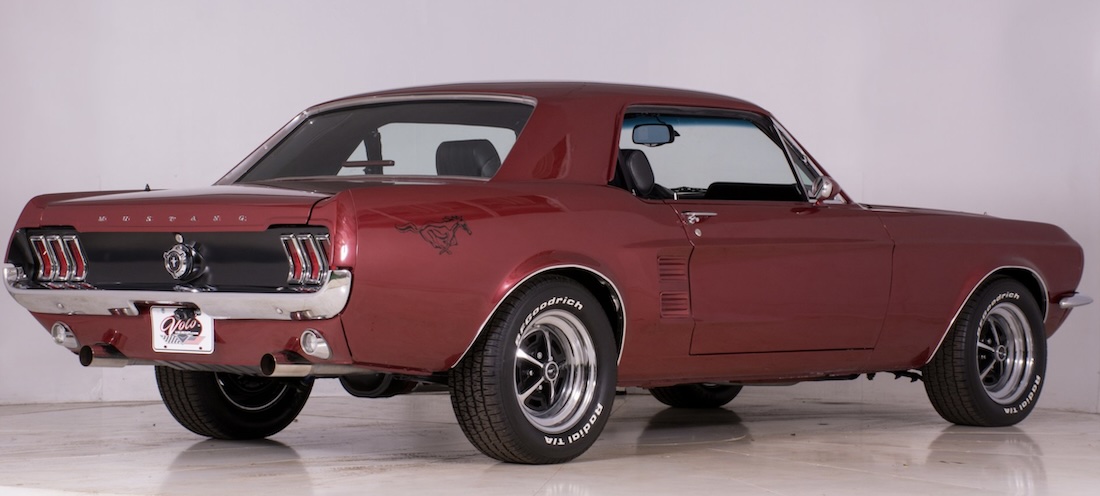

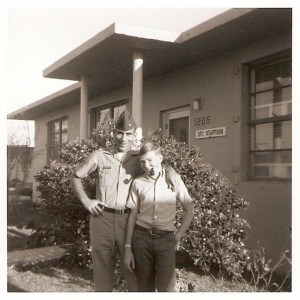 The second photo, posted to the left, shows my dad and me in the front yard of our home at Fort Buckner, on the island. It was military housing, with my dad’s name and rank posted near the front door.
 Jim Stafford's BlogOKC