Homeless — and unwanted — in America

Screenshot
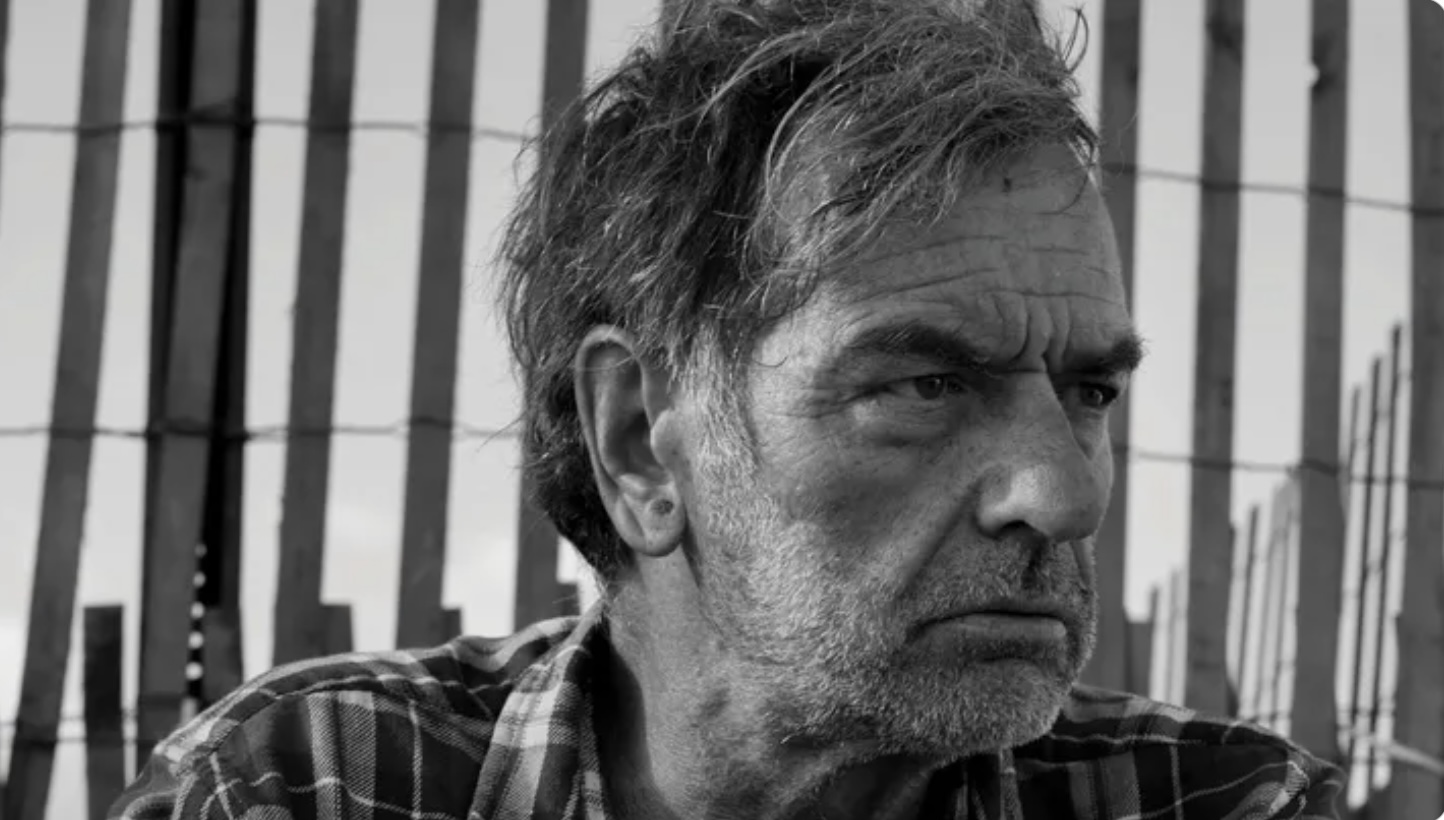
A portrait of Patrick Fealey, who wrote about his plight as a homeless person for Esquire magazine.

I’ve never been much of a social crusader like my friend and former high school classmate “Will,” about whom I wrote in a blog post last year.

Will was passing through town and asked if I would meet him for lunch, which I did. It was a great reunion after more than a half century of not seeing one another or even communicating.

Anyway, Will devoted much of his life to important work of helping lift the oppressed and bringing to justice the folks who actively sought to keep the “others” down.

Will, if you are reading this, I’m so awed and grateful for your efforts over the years.

Folks like Will make me realize that I’m more of an social activist wannabe who never really got up off the couch to help anyone, even those with whom I have great empathy.

That leads me to this disturbing Esquire magazine article my wife sent me last week. Entitled “The Invisible Man,” the article is a long, first-person account of a college educated, successful writer forced into living as a homeless person in his home state of Rhode Island.

Patrick Fealey found himself in this plight because of a mental illness that didn’t become apparent until he was a successful adult. Then his bipolar condition resulted in him being unable to hold a job, and the downward spiral began.

Read Fealey’s excellent account on the Esquire website.

For me, the most disturbing aspect of Fealey’s life is that no one really cared. He lived with his dog in an old car, but where ever he landed, he was constantly questioned by police, shunned by local citizens. The folks who operated shelters or housing programs offered little help, hope or sympathy.

Fealey was told to ‘move on’ a lot, even though one of the communities in which he stayed with the town in which he was raised. He was told by one policeman that if he didn’t move on he would be jailed or fined. People saw him as threatening or merely another drug addict.

(As an aside, some folks read about Fealey plight and started a Go Fund Me page that has received more than $169,000-and-counting to help him get into housing and deal with health issues.)

All of this sounds familiar, especially after reading recent newspaper articles about how the city of Shawnee has implemented ordinances that prevent the unhoused from sleeping or camping in public spaces or most any place outdoors within the city limits.

So, while the Shawnee citizens just want the homeless out of sight and out of mind — like most of us — what they are doing is turning homelessness into a crime.

That’s why I’m proud of the city of OKC for investing $55 million through MAPS4 to take on homelessness with its “housing first’ program that partners with innovative not-for-profits. And MAPs also is funding a new mental health crisis center, a restoration center and a transitional housing program that will make a difference.

It’s a start.

There are also several not-for-profits in our community like the SideXSide OKC program and Curbside Chronicle that are working to lift people up. Those are terrific initiatives that are making a difference.

As for myself, I have done nothing to brag about except for occasionally buying a Curbside Chronicle.

I’m not sure what my point in writing all of this is, but after reading Patrick Fealey’s story I think the point is that we have to do better.

Me. You. All of us. Do better.
Walking tour showcases future impact of OKC’s Convergence project

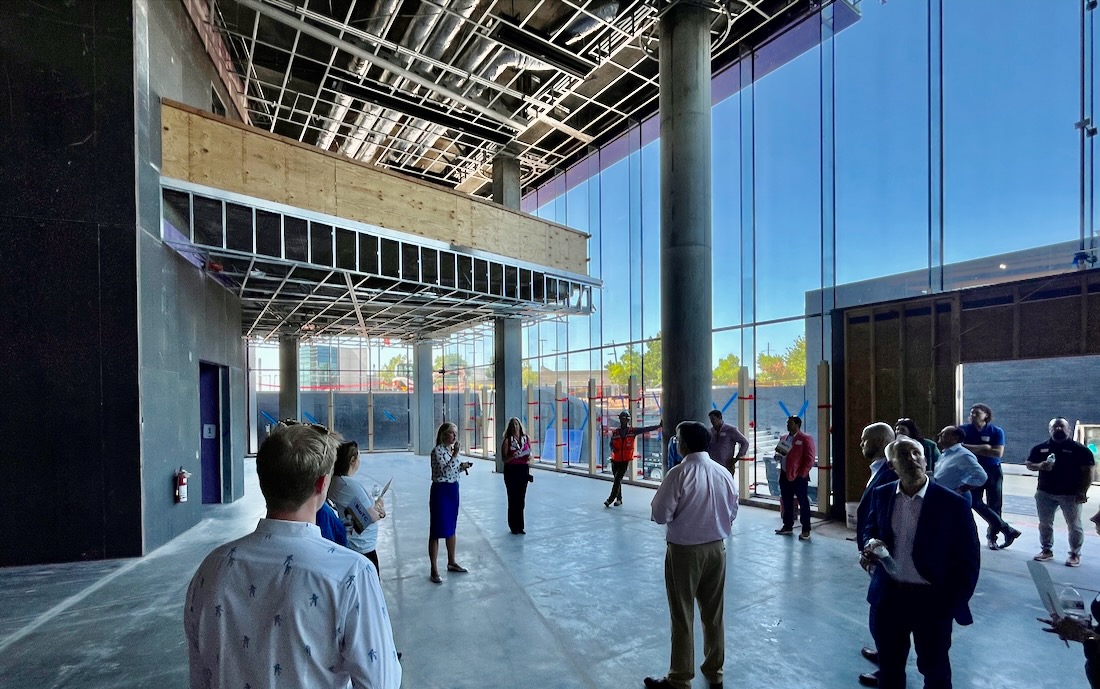
Convergence floor
Second floor of the Convergence tower under development in OKC’s Innovation District.

If you’re like me, you’ve been curious about the new Convergence tower rising from the ground the past couple of years along I-235 just east of downtown.

The eight-floor Convergence tower is a $200 million privately funded development in the heart of OKC’s Innovation District. The project includes the adjacent, MAPS funded Innovation Hall with a future hotel also planned for the site.

A pair of prominent OKC real estate investors/developers in Richard Tanenbaum, CEO of Tanenbaum Holdings, and Mark Beffort, CEO of Robinson Park Investments, have led the Convergence project.

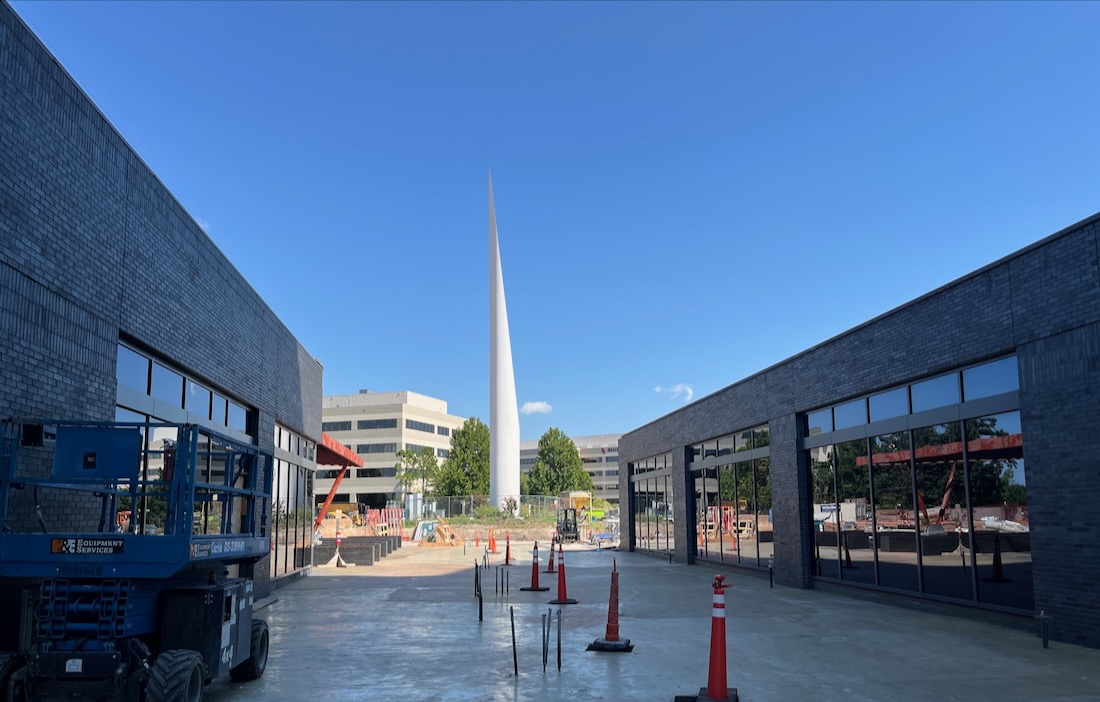
Convergence sits on a pretty small plot of land — 5.5 acres — that surrounds the tiny Stiles Park and its Beacon of Hope, which shines a green light into the night sky like a giant flashlight. The project will have underground parking.

Stiles park
Stiles Park holds its ground as part of the Convergence project

The Convergence website descibes the project as an “ecosystem reshaping Oklahoma City’s economy through innovation, collaboration, diversity and advanced technology.”

The project is certainly reshaping OKC’s Innovation District.

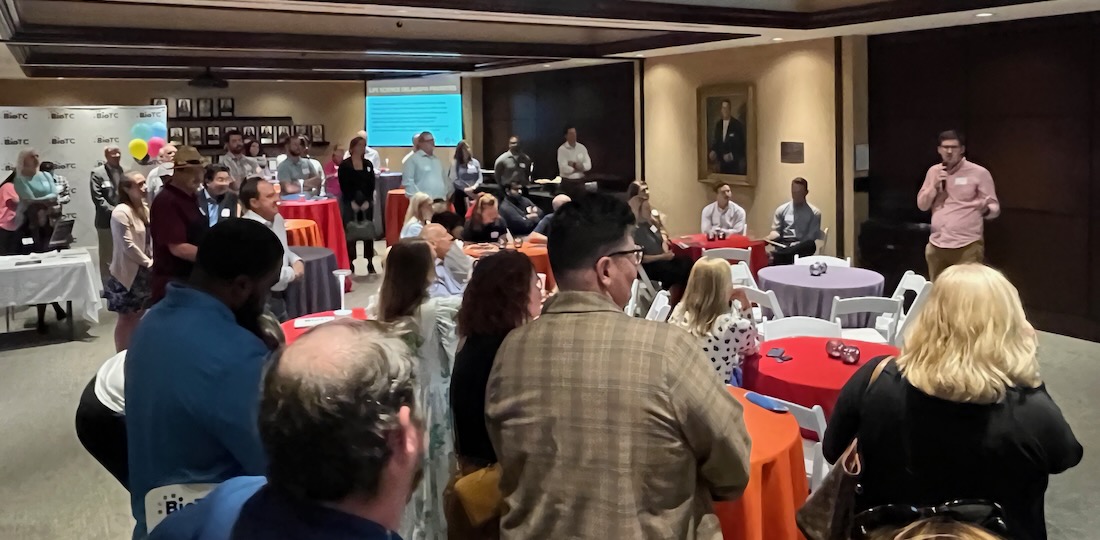
Anyway, I wrangled a ticket to attend the Greater OKC Chamber’s recent networking event and walking tour of the still-under-construction Convergence development.

My professional background includes many years of covering Oklahoma’s emerging biotech industry, first as a reporter for The Oklahoman newspaper and later as a writer and then freelancer for i2E, Inc., the not-for-profit that mentors and invests in many of the state’s entrepreneurial startups.

So, that led me to gather with about 75 folks at the Oklahoma  Our Blood Institute, which sits at the intersection of NE Eighth Street and Lincoln Blvd. It’s maybe a 50-yard walk from OBI to the new development.

Here’s what I learned that afternoon during the networking event and walking tour:

First, the Oklahoma Bioscience Association has been rebranded as Life Science Oklahoma, which made its debut at the annual BIO show in San Diego this past June. My friend, Dr. Craig Shimasaki, co-founder and CEO of OKC’s Moleculera Biosciences,  is co-chair of Life Sciences Oklahoma, along with Andrew Westmuckett, director of technology ventures at the Oklahoma Medical Research Foundation. 

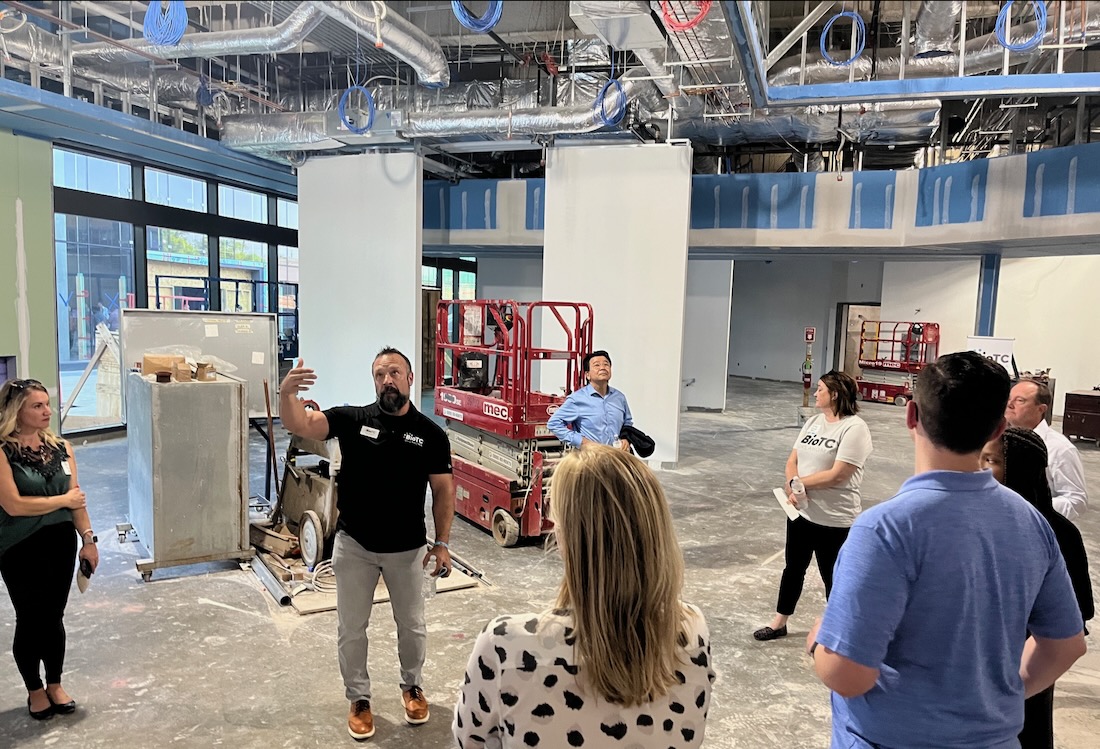
Education will play a major role at the Innovation Hall, which features a Bio Pharmaceutical Workforce Training Center called BioTC.  We received a good explanation of how the space will accommodate aspiring biotech workers from Koey Keylon, BioTC’s, executive director. It will offer one-week, hands-on short courses in biotechnology manufacturing in which students will learn the biotech process and how to use sophisticated technology involved. It also offers an advanced two-week certification curriculum.

BioTC
Koey Keylon, executive director of BioTC, shows off the educational space in the Innovation Hall

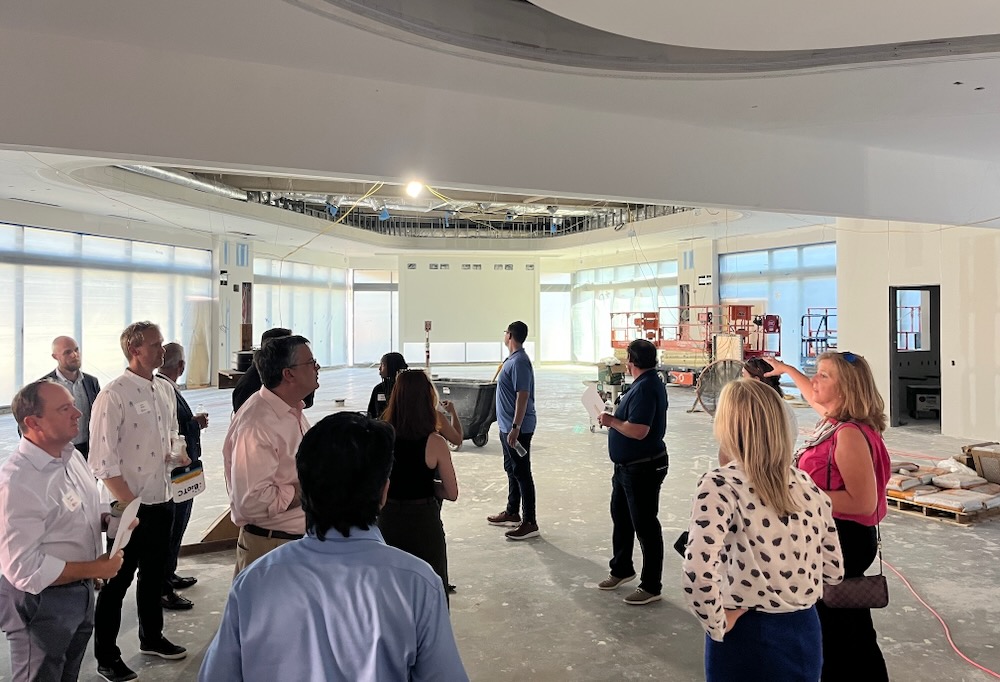
Innovation Hall also includes a large Event Hall, a cafe and lounge open to the public, four conference rooms and two small “phone booth” size work/meeting spaces.

Innovation Hall is part of MAPS 4 Innovation District funding, which contributed $11 million to the development, with another $10 million or so from non-MAPS sources, according to the City of OKC.

After we toured the Innovation Hall, we entered the first floor of the Convergence tower. Much of the first floor will be occupied by Wheeler Bio,  an up-and-coming contract development and manufacturing organization in the life sciences space. Wheeler Bio also will have administrative offices on upper floors of the building.

CrossFirst Bank has been announced as a tenant, while the University of OklahomaTinker Air Force Base  and an unnamed aerospace partner will occupy the eighth floor.

All this was empty space as we toured it, but you could see the possibilities and envision the future.

By the way, I highly recommend you crossing over I-235 onto Eighth Street to drive slowly past the Convergence project for a closer view, then meander through the Innovation District that includes OSU’s Hamm Institute for American Energy adjacent to Convergence on the north side, University Research Park to the south and OU Health Sciences Center to the north and east.

In a year or maybe less, Convergence tower and Innovation Hall should be filled with bioscience research and manufacturing professionals. as well as students aspiring for a biotech career, while offering great meeting and hangout space in the Innovation Hall.

I can’t wait to see it all in action.

Downtown view
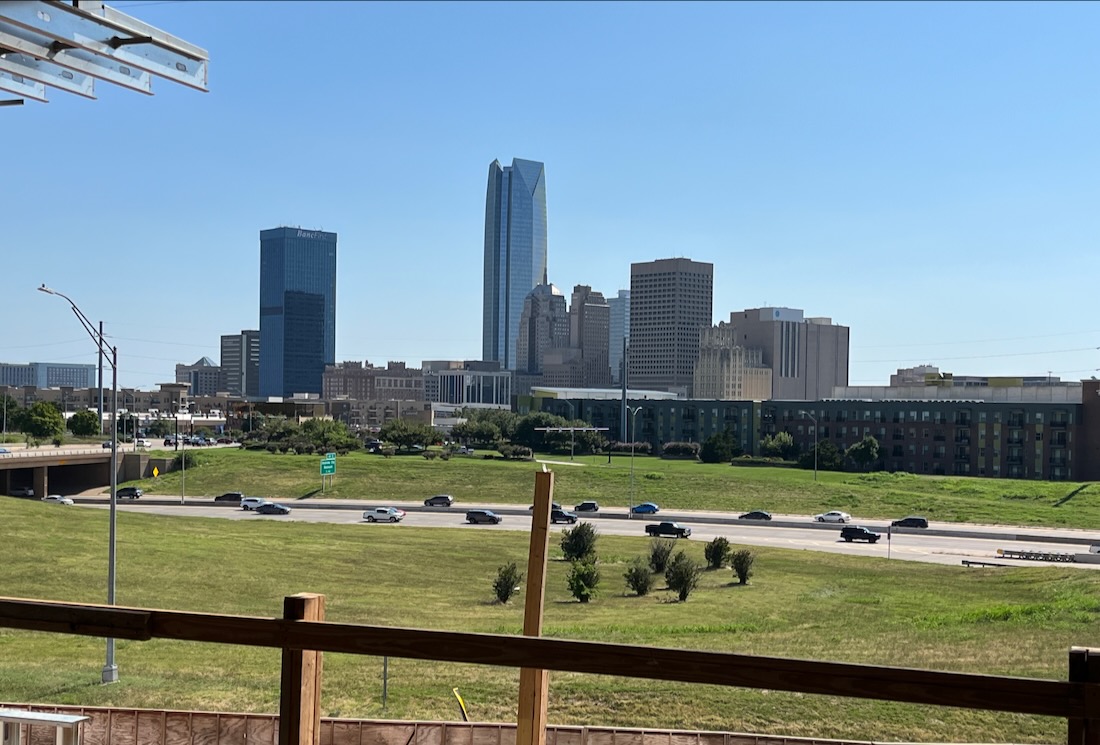
View of downtown OKC from second floor of the Convergence Tower
Innovation Events
Event space in the Innovation Hall
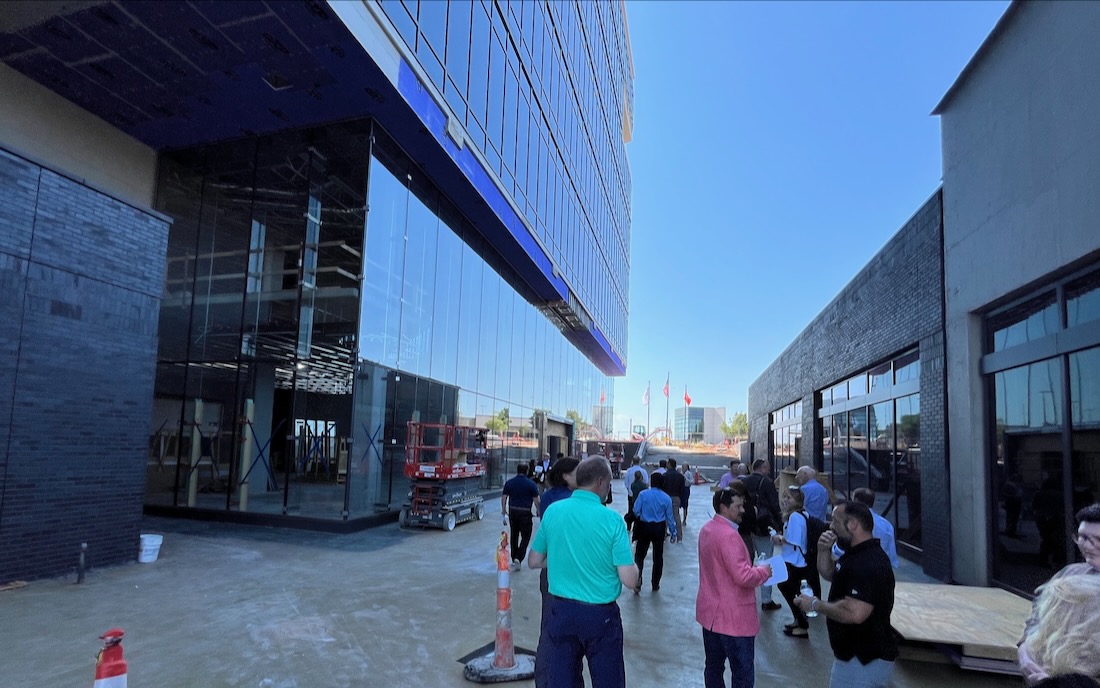
Buildings
Walking between buildings on a tour of the rising Convergence project in OKC.
Jeff Seymour
Jeff Seymour, executive vice president of the Greater OKC Chamber, welcomes guests to the recent networking event and Convergence project walking tour.