Two decades ago, I was one of a group of more than 50 Oklahomans who represented Oklahoma’s life science community at the annual BIO — Biotechnology Innovation Organization — conference in San Francisco.
It was my first time to attend the BIO show and to travel as part of the group that identified itself as OKBio. The annual BIO show brings thousands of people — scientists, entrepreneurs, investors, economic development professionals and reporters — together for a week of networking and showcasing emerging life science technologies.
There was a joke that we had to travel 1,600 miles to get to know our neighbors.
Only it was not a joke, but, in fact, reality.
That 2004 BIO show was my first of what became more than a dozen trips with the OKBio group to pitch Oklahoma and our growing life sciences community in major cities like San Francisco, Chicago, San Diego, Washington, D.C., and more.
So, I met a lot of people on that first BIO trip who became important sources to me as a newspaper reporter for future articles about local startups or emerging research.
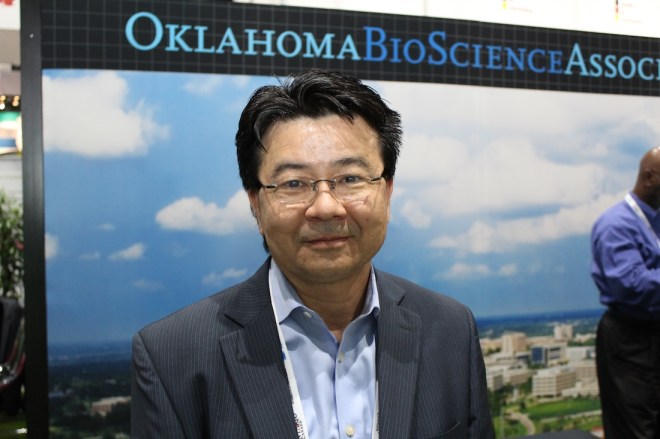
In fact, I specifically recall meeting Craig Shimasaki, MBA, Ph.D., on the floor of San Francisco’s Moscone Center. Dr. Shimasaki was stationed along with his wife in front of a display that showcased the OKC-based startup he was guiding at the time.
If you’re not familiar with Dr. Shimasaki, he’s a California native who emigrated from his home state to Oklahoma to help develop a technology that diagnosed the flu virus. Along the way, he also earned his MBA from Northwestern University, his Ph.D. in Molecular Biology and Biotechnology from the University of Tulsa, and never left the state.
Since that first introduction, I’ve become friends with Dr. Shimasaki and interviewed him probably a dozen times or more for newspaper articles on Oklahoma-based startups he founded or guided, groundbreaking research in which he was involved and books on entrepreneurship he wrote.
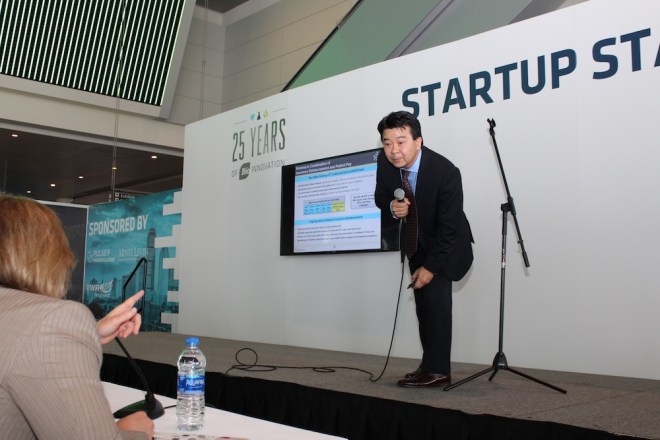
I’ve watched him participate in a panel discussion on ‘gut health’ at one BIO show and engage with potential investors in a Startup Stadium presentation at another. I’ve sat in on Love’s Entrepreneur’s Cup pitches by college teams for which he served as advisor. He’s led me on a tour of a world class laboratory that he oversees.
It was from Dr. Shimasaki as he discussed one of his books on biotech entrepreneurship years ago that I first encountered the term “you don’t know what you don’t know.”
And, you know, I don’t know.
I’ve written all of this because of how life sometimes leads you back to where you began.
Recently, I reconnected with Dr. Shimasaki through Moleculera Labs, the Oklahoma City-based company for which he co-founded and serves as CEO. Molecular Labs describes itself as “a precision medicine company focused on identifying the underlying immune-mediated root of neurologic, psychiatric, and behavioral disorders.”
The company has gained a lot of attention both local and nationally for its technology that can identify the underlying cause of apparent psychiatric and behavioral disorders that afflict both children and adults. Moleculera Labs has tested more than 15,000 patients since it began offering its test panel on a commercial basis about a decade ago.
So, when Dr. Shimasaki asked me to provide some assistance in crafting press releases for breaking news the company sought to share, I was all in.
Over the past two weeks, Molecular Labs announced the addition of a long-time life science industry veteran to its Board of Directors, and also revealed that it has been awarded a $500,000 grant from the Oklahoma Center for the Advancement of Science and Technology (OCAST) that will help it develop AI technology that will be integrated into its test panels.
Here’s a link to the announcement of Rodney Cotton as a new Moleculera Board member.
And here’s a link to the news release about OCAST Oklahoma Applied Research Support grant the company received.
There is even more breaking news from Moleculera Labs this month. The company announced this past week a strategic collaboration with Quest Diagnostics by which its offers patients of its neuropsychiatric autoantibody test services the option to provide blood specimens to any of Quest’s lab centers across the U.S.
Here’s a link to the Quest Diagnostics announcement.
It’s all big news not only for Moleculera Labs, but for the state’s entire life sciences community and all of Oklahoma.
For me, it’s the latest development in a relationship that began two decades ago on the floor of the BIO show 1,600 miles from OKC.
We’ve been good ‘neighbors’ ever since.
BONUS COMMENT FROM DR. SHIMASAKI:
“The BIO International Conferences allowed us to connect, and it’s been a wonderful relationship working with Jim Stafford over the many years as he has been actively covering the biotech and life science scene in Oklahoma,” Dr. Shimasaki said. “Jim has an innovative way to tell audiences about the interesting stories in a way that inspires and informs,”
Thanks for the kind words, Dr. Shimasaki, but it’s innovators like you who have shown me the impact that your research can have — and is having — on human health worldwide.

 Jim Stafford's BlogOKC