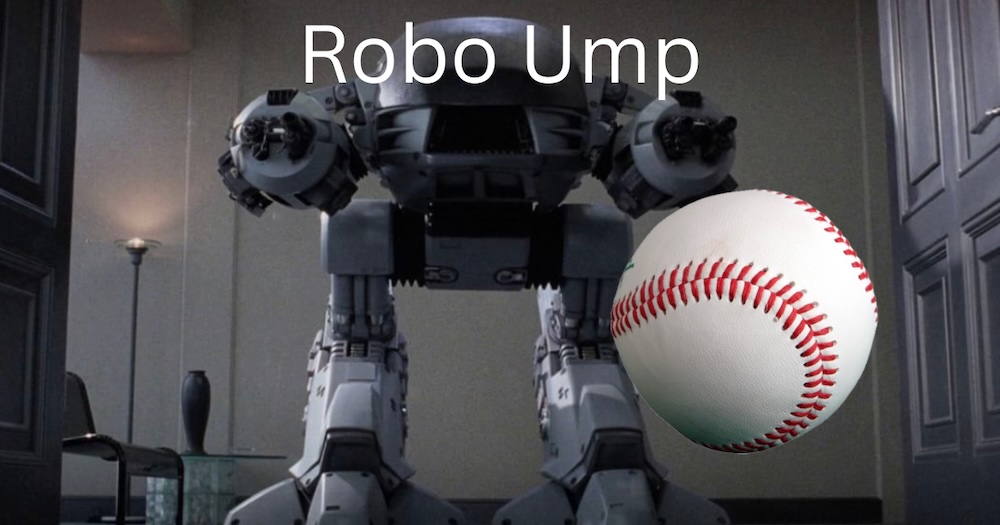
 I was listening to a late-night sports talk radio show recently when the host began talking excitedly about ‘robo umps’ coming to Major League Baseball. He was totally opposed to the concept because, as he said, ‘it takes the human element’ out of the game.
What?
In my mind I saw images of a menacing, out-of-control robot standing behind the catcher.
Turns out that Major League Baseball IS implementing the Automated Ball/Strike Challenge System in the 2026 season. But there’s no resemblance to a robo ump.
Yet, that’s how it’s presented by broadcasters and headline writers across the World Wide Web. I wince every time I hear or see the words ‘robo ump’ used to describe the new system because of how misleading it is.
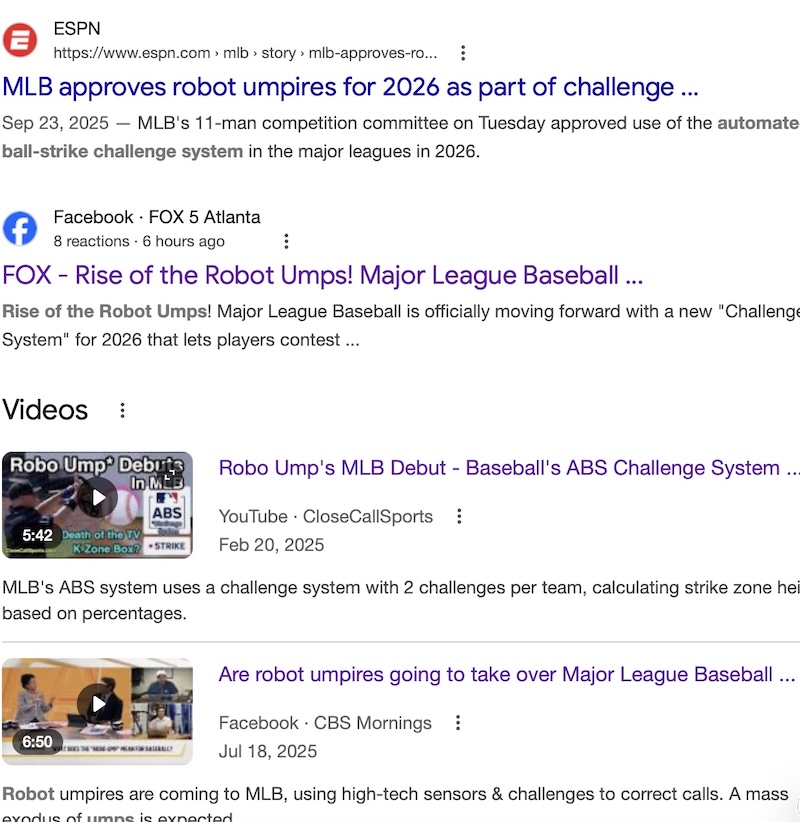
A sample of ‘robo ump’ returns from a Google search
So, what is the Automated Ball/Strike Challenge System, also known as ABS, if it’s not a robotic replacement for home place umps?
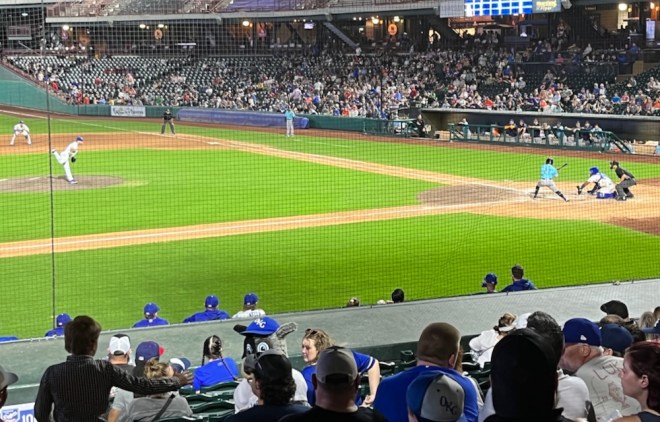
If you’ve attended any OKC Comets games at Chickasaw Bricktown Ballpark over the last couple of years, you’ve seen the ABS system in action. You may not even have noticed, because an umpire is still behind the plate calling every pitch.
However, each team can challenge two pitches per game, and then the ABS system takes over. Multiple cameras focused on home plate reveal whether the pitch crosses through the strike zone, and the results are shown on the park’s video board.
The whole process takes only a few seconds, is very low key, and the game quickly resumes. There are no hitters and catchers loudly complaining or angry managers charging home plate.
Don’t ask me how it works, because geometry is above my pay grade.
The MLB website offers up a good explanation of how the ABS Challenge System works. Here’s a quote from the article:
“The ABS Challenge System monitors the exact location of each pitch, relative to the specific batter’s zone. Players can request a challenge of a ball or strike call they feel the umpire got wrong, and, when they do, a graphic displaying the result is then transmitted over a 5G network from T-Mobile’s Advanced Network Solutions and nearly instantaneously shown to those in attendance via the videoboard and to home viewers via the broadcast.”
The MLB article goes on to describe the ABS System as a way to ensure calls are correct while keeping the human element.
“The Challenge System is seen as a way to get more of the most important calls correct without dramatically altering the sport overnight. It is a middle ground between full ABS and tradition,” MLB says in the article.
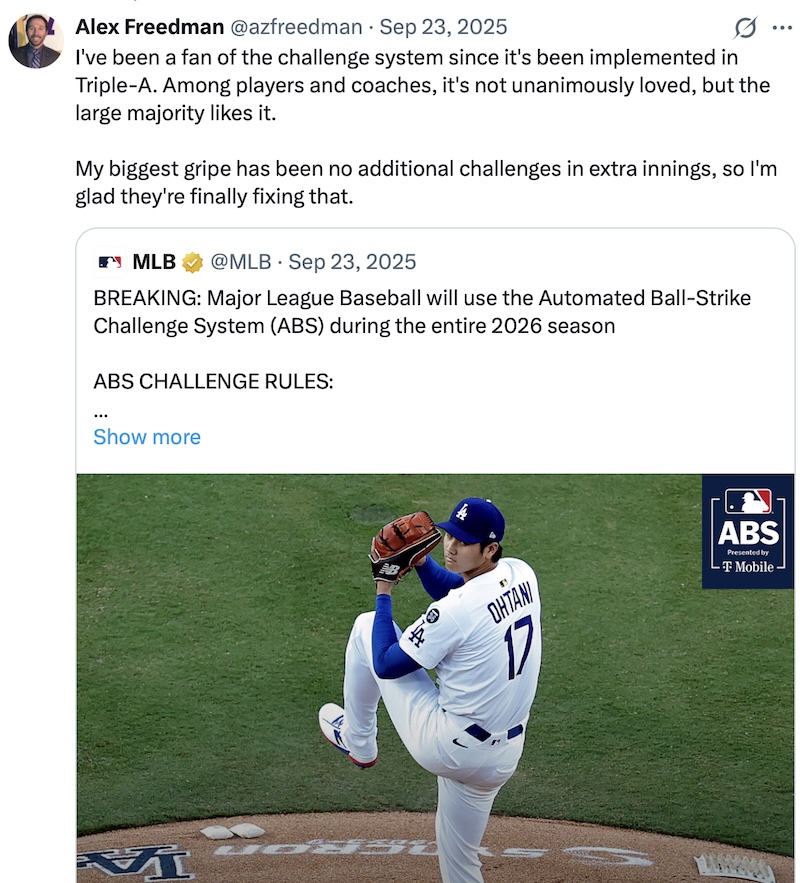
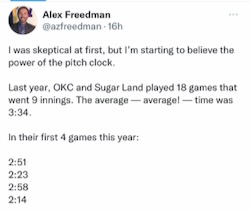
When MLB implementation of the ABS Challenge System was made last September, Alex Freedman, Broadcaster/Communications Director the OKC Comets, tweeted his support of the technology. He’s seen every Comets game in which it has been used, so he would be aware of any potential glitches.
“I’ve been a fan of the challenge system since it’s been implemented in Triple-A. Among players and coaches, it’s not unanimously loved, but the large majority likes it,” Freedman said on his X (formerly Twitter) feed.
I discussed my disdain of the term ‘robo ump’ to describe the ABS System on the most recent 3 Old Geezers podcast in which I participate. My fellow geezers scoffed at my dislike of the term, saying it’s no big deal.
Ed Godfrey said he objects more to the ‘ghost runner’ used in extra innings, but that argument can wait for another day.
Ed also reminded me that a ‘Robo Niner’ mascot once roamed All Sports Stadium back when the team was known at the 89ers.
So, call me the Robo Ump Police then, because I hate the term.
Here’s what Dan Patrick, my favorite sports broadcasting host, had to say about the ABS System and the way it’s been described on the Dan Patrick radio show, which is also simulcast on the Peacock Network:
“You still have to have an umpire. There’s not going to be a robot out there. It’s not going to be a robot; it’s going to be automated balls and strikes. Everybody thinks (it’s) like that Fox football robot’s out there.”
Yep, that’s how it’s presented in countless headlines and on sport talk shows. Go ahead and do a Google search for ‘robo ump,’ and see the dozens of headlines and videos proclaiming the coming of the robot
Well, it’s not. But the robo ump hype and hysteria is real, even if the robots are not.

 For reference,
  Jim Stafford's BlogOKC